

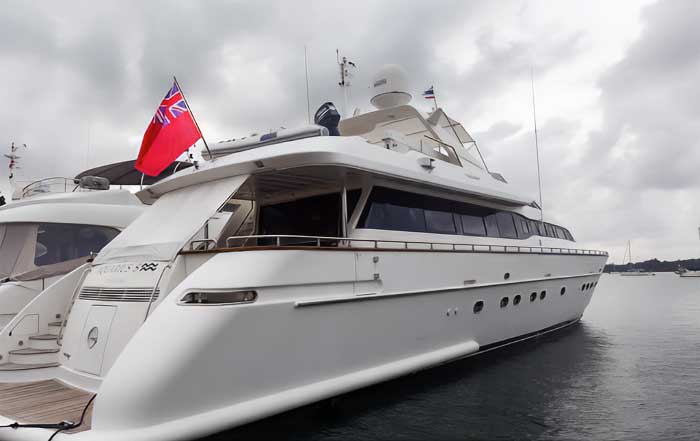
Super Yacht Craftsmanship: Where Human Mastery Meets the Modern Sea
Super yachting continues to represent one of the most concentrated expressions of human artistry, technical mastery, and strategic innovation anywhere in the world. For the global audience of Yacht Review, spanning North America, Europe, Asia, Africa, and beyond, these vessels are far more than floating symbols of wealth; they are moving testaments to what happens when centuries of maritime heritage intersect with cutting-edge engineering, digital intelligence, and a rapidly maturing commitment to sustainability. From the Atlantic coasts of the United States and Europe to the cruising grounds of the Mediterranean, the Caribbean, Southeast Asia, and the South Pacific, super yachts today embody a dialogue between tradition and transformation that is reshaping what luxury at sea truly means.
At the core of this transformation stand the world's most respected shipyards and design studios. Names such as Benetti, Oceanco, Heesen, Sanlorenzo, and Royal Huisman have become synonymous with peerless craftsmanship and technical authority, and their work is chronicled continuously in the reviews and features on Yacht Review. These organizations operate at a scale that is difficult to appreciate from the outside: each super yacht is the result of years of planning and thousands of coordinated decisions, involving naval architects, structural engineers, interior designers, software developers, artisans, and project managers across multiple countries. Shipyards in the Netherlands, Germany, Italy, the United Kingdom, France, Spain, and increasingly in the United States, Turkey, and Asia, operate less like factories and more like integrated innovation campuses, where digital twins, robotic fabrication, and hand-finishing coexist in an intricate choreography.
In this environment, experience and expertise are not marketing catchphrases but operational necessities. The demands of global owners from the United States, the United Kingdom, Germany, Canada, Australia, Singapore, the Middle East, and emerging markets in Asia and South America have grown more complex, and with them the expectations placed on every new build or refit. As Yacht Review has observed across its business coverage, the super yacht is now a strategic asset as much as a personal indulgence, often integrated into family offices, charter operations, philanthropic programs, and multi-generational estate planning. This heightened scrutiny has pushed the industry to elevate its standards of safety, transparency, and environmental performance, reinforcing its credibility as a serious and forward-looking sector.
Tradition Reimagined for a Data-Driven, Climate-Conscious Age
The roots of modern super yacht craftsmanship stretch back to the grand steam yachts of the 19th and early 20th centuries, commissioned by European aristocracy and industrial magnates from the United Kingdom, France, Italy, and the United States. Those vessels established the language of maritime luxury: sweeping sheer lines, generous deck space, and richly appointed interiors. Yet the world of 2026 bears little resemblance to that era, and the most sophisticated shipyards have responded by reinterpreting this heritage through the lens of digital design, regulatory rigor, and environmental responsibility.
Traditional craftsmanship now unfolds within an ecosystem defined by computational fluid dynamics, 3D parametric modeling, and advanced materials science. Hull forms are optimized through millions of simulated sea states to reduce drag and fuel burn, while still maintaining the visual grace expected of a super yacht. Interior layouts are modeled in virtual reality, allowing owners in New York, London, Zurich, Singapore, or Sydney to walk through their future vessel in real time, long before the keel is laid. This fusion of empirical data and aesthetic judgment is documented in the technology insights on Yacht Review, where the evolution from intuition-based design to analytics-driven decision-making is evident in every major project.
At the same time, regulatory and social pressure around climate change has fundamentally altered how responsible owners and builders view their obligations. Sustainability is no longer treated as an optional add-on but as a core design constraint and a marker of trustworthiness. Hybrid propulsion, energy recovery systems, shore-power capability, and low-emission operational profiles are rapidly becoming standard expectations at the top of the market. Organizations such as the Water Revolution Foundation and classification societies like DNV have helped provide frameworks and tools that enable shipyards to quantify and reduce environmental impact; readers can explore broader maritime decarbonization trends through DNV's maritime resources, which increasingly inform the strategies of leading yacht builders.
For the editorial team at Yacht Review, this shift has been particularly significant. Coverage on the sustainability pages has moved from speculative concept studies to real-world case studies of hydrogen-ready platforms, battery-hybrid explorer yachts, and refit programs that extend vessel lifespans while upgrading them to modern environmental standards. The narrative of craftsmanship has expanded from pure beauty and performance to include lifecycle thinking, responsible sourcing, and long-term stewardship of the oceans that make yachting possible.
Balancing Form, Function, and Emotion
One of the defining challenges of super yacht craftsmanship in 2026 is achieving a balance between aesthetics, performance, and emotional resonance. The exterior profile of a yacht must satisfy hydrodynamic constraints, structural integrity, and regulatory rules, while also conveying a distinct personality that aligns with the owner's identity. Designers such as Andrew Winch, RWD, Nuvolari Lenard, and Zaniz Studio are now expected to be as comfortable discussing CFD-optimized hull geometries and glass load calculations as they are exploring narrative concepts, art direction, and cultural references.
In practice, this means that the curvature of a bow or the taper of an aft deck overhang is shaped by both engineering calculations and an intuitive understanding of how light will fall across surfaces in Monaco, Miami, Sydney, or Phuket. Superstructure volumes are refined to minimize windage and weight while maximizing panoramic views and outdoor living space. The design coverage on Yacht Review frequently illustrates how these competing priorities are resolved, with case studies that show how a single line change on paper can cascade into structural, stability, and aesthetic implications.
Interior craftsmanship has become even more intricate, as owners from Europe, North America, the Middle East, and Asia seek to bring elements of their cultural heritage and personal lifestyles aboard. The best interiors are no longer defined solely by marble, rare woods, or exotic leathers, but by coherence, proportion, and emotional clarity. A master suite on a Northern European-built yacht may blend Scandinavian minimalism with Italian joinery, Japanese-inspired calm, or Mediterranean warmth, while still meeting stringent marine safety and durability requirements. Publications like Architectural Digest and Dezeen have increasingly featured these interiors alongside landmark residences and hotels, reinforcing the perception that super yacht design belongs firmly within the canon of contemporary architecture and interior art.
For Yacht Review, this evolution has deepened the way interiors are evaluated in its detailed reviews. It is no longer sufficient to note luxury materials and high-end brands; the focus has shifted to spatial flow, acoustic comfort, daylight management, and the subtle integration of technology into a serene, human-centered environment. Craftsmanship is judged not only by how things look, but by how they feel and function over weeks of continuous cruising, whether along the coasts of Greece and Croatia, the fjords of Norway, the islands of Thailand, or the remote anchorages of New Zealand.
Smart Yachts and the Rise of the Connected Ocean
If the last decade was defined by the introduction of hybrid propulsion, the current moment is defined by the rise of the truly "smart" yacht. Digital architecture has become a central pillar of craftsmanship, and in 2026, the most advanced vessels could not exist without an invisible layer of software, sensors, and connectivity that orchestrates life on board.
Integrated automation systems now manage lighting, HVAC, shading, audiovisual environments, security, and even wellness features from unified interfaces. Crew can monitor real-time energy consumption, tank levels, machinery status, and navigation data through digital dashboards, while predictive maintenance algorithms flag anomalies before they manifest as failures. Owners and guests benefit from personalized cabin environments, where climate, lighting scenes, and entertainment presets adapt to individual profiles. These capabilities are explored in depth in the technology-focused features on Yacht Review, which track how artificial intelligence and machine learning are quietly reshaping operational reliability and onboard experience.
The maturation of satellite communications has been equally transformative. Services such as Starlink Maritime and Inmarsat Fleet Xpress have pushed connectivity closer to land-like performance, enabling high-bandwidth work, entertainment, and telemedicine even in remote stretches of the Pacific or Indian Ocean. For many owners and charter guests from the United States, Canada, the United Kingdom, Germany, Switzerland, Singapore, and Japan, the ability to maintain seamless digital lives at sea has become a non-negotiable requirement. Industry resources such as Marine Insight and Superyacht Technology News trace the technical underpinnings of these systems, but for the end user, the hallmark of good craftsmanship is that all this complexity disappears into a sense of effortless comfort.
From an editorial standpoint, Yacht Review has increasingly treated digital systems as an integral component of yacht evaluations rather than a specialist niche. In the same way that hull efficiency or interior joinery quality are assessed, the platform considers cybersecurity measures, software update strategies, redundancy of critical systems, and the long-term maintainability of bespoke digital architectures. In an era where yachts may be managed remotely and monitored continuously from shore-based operation centers, trust in the underlying technology is inseparable from trust in the overall vessel.
Sustainability as a Core Expression of Craftsmanship
By 2026, sustainability has moved beyond rhetoric and into the tangible specification sheets of new builds and major refits. The confluence of regulatory pressure, owner expectations, and reputational risk has created a powerful incentive for shipyards to invest in greener technologies and smarter operational practices. The most progressive projects are now conceived from the outset as low-impact platforms, rather than retrofitting green features as afterthoughts.
Hybrid propulsion systems that combine diesel engines with battery banks and electric motors have become widely adopted in Europe and North America, especially for yachts operating in emission-controlled areas such as the Norwegian fjords or the Mediterranean's increasingly regulated zones. Research into hydrogen fuel cells, methanol-ready engines, and alternative fuels is advancing quickly, supported by cross-sector collaboration with commercial shipping and offshore energy. Readers interested in the broader maritime context can follow developments through outlets like Maritime Executive, which regularly covers decarbonization strategies influencing yacht design.
Materials and onboard systems have evolved in parallel. Recycled aluminum, sustainably certified teak alternatives, low-VOC coatings, and optimized insulation systems are now part of the standard vocabulary at leading yards. Wastewater treatment plants, heat recovery from exhaust systems, and intelligent energy management software reduce both resource consumption and operational costs. These developments are documented across Yacht Review's sustainability coverage, where case studies from shipyards in the Netherlands, Germany, Italy, and beyond illustrate how environmental engineering is now inseparable from high-end craftsmanship.
For owners, particularly from markets such as Germany, Scandinavia, Switzerland, the United Kingdom, Canada, Australia, and New Zealand, sustainability has become a defining component of brand and personal reputation. Many are actively seeking ways to align their yachts with philanthropic initiatives, scientific research programs, or conservation efforts, turning vessels into platforms for positive impact. The editorial team at Yacht Review has seen a marked increase in projects where explorer yachts are designed to support marine biology expeditions, climate monitoring, or educational voyages, blending private enjoyment with global responsibility.
Global Talent, Local Heritage, and the Human Hand
Despite the rise of automation and digital tools, the essence of super yacht craftsmanship remains deeply human. The construction of a 60-, 80-, or 100-meter vessel depends on a global network of talent that stretches from Northern Europe and the Mediterranean to North America and Asia-Pacific. Naval architects in the Netherlands may work with interior designers in Italy, structural engineers in Germany, lighting specialists in the United Kingdom, and carpenters in Turkey or Poland. This international collaboration is one of the strengths of the industry and a recurring theme in Yacht Review's global reporting.
Yet, within this global matrix, local heritage still matters. Shipyards in Bremen, Hamburg, and Rendsburg carry the disciplined engineering culture of German industry; yards in Viareggio, Livorno, and La Spezia express the artistic flair and material sensibility of Italian design; Dutch yards in Aalsmeer, Kaag, and Oss reflect a centuries-long seafaring tradition and a national obsession with water management and precision. Scandinavian designers bring a restrained, nature-focused minimalism, while British studios often blend heritage cues with contemporary luxury in ways that appeal strongly to clients in the United States, Canada, and the Middle East.
The human stories behind this work are increasingly central to how Yacht Review approaches its community coverage. Master welders, joiners, upholsterers, metalworkers, and finishers may spend years on a single vessel, and their accumulated experience often spans decades. Many began as apprentices and have progressed through structured programs that now combine traditional hand skills with training in CAD, CNC machinery, and advanced materials. Organizations such as the International Superyacht Society and advocacy platforms like The Superyacht Life Foundation-which can be explored further at thesuperyachtlife.com-have helped bring these individuals and their stories into the public eye, reinforcing the message that true luxury is built on the dedication of real people, not just on the specifications of machinery.
For the readership of Yacht Review, which includes industry professionals, owners, captains, and aspiring crew from across Europe, North America, Asia, and Africa, this human dimension is often a decisive factor in evaluating a yard's credibility. The continuity of skills from one generation to the next and the willingness of shipyards to invest in training, safety, and worker well-being are now seen as integral to their long-term reliability as partners.
Economic, Cultural, and Experiential Impact
Super yachts occupy a unique place in the global economy. A single large new build can support hundreds of direct jobs and many more in the supply chain, spanning everything from advanced composites and propulsion systems to bespoke furniture, fine art, and hospitality services. According to industry analyses from sources such as Superyacht Times, the market has remained resilient and increasingly diversified, with strong demand from North America, Europe, and growing interest from Asia, particularly China, Singapore, South Korea, and Japan.
Yachting hubs such as Fort Lauderdale, Miami, Monaco, Antibes, Palma de Mallorca, Porto Cervo, Dubai, Phuket, Auckland, and Sydney have developed sophisticated ecosystems of marinas, refit yards, chandlers, and service providers. Major events like the Monaco Yacht Show, Cannes Yachting Festival, and Fort Lauderdale International Boat Show serve as focal points for this ecosystem, showcasing not only new vessels but also the latest advances in technology, design, and sustainability. The events coverage on Yacht Review offers a front-row view of how these gatherings function as both commercial marketplaces and cultural stages for the industry.
From a travel and lifestyle perspective, super yachts have also reshaped how affluent families and entrepreneurs experience the world. Increasingly, owners from the United States, the United Kingdom, Germany, France, Italy, Spain, the Netherlands, Switzerland, South Africa, Brazil, and Australia are using their vessels as mobile bases for multi-generational travel, remote work, and extended exploration. The cruising, travel, and family sections of Yacht Review chronicle this shift, highlighting how itineraries now extend beyond classic Mediterranean and Caribbean routes to include the Arctic, Antarctica, the South Pacific, and lesser-known corners of Asia and Africa.
In parallel, the charter market has matured into a sophisticated segment in its own right, offering access to high-caliber vessels without the capital and operational responsibilities of ownership. This has broadened the demographic base of super yachting, bringing in clients from emerging markets and younger entrepreneurial cohorts. For shipyards and designers, this trend reinforces the importance of versatility, durability, and operational efficiency as hallmarks of good craftsmanship, since charter vessels must perform reliably across a wide range of use cases and guest expectations.
Looking Ahead: Craftsmanship as a Long-Term Commitment
As of today, the trajectory of super yacht craftsmanship points toward deeper integration of sustainability, digital intelligence, and emotional design, but its foundations remain rooted in patient, incremental refinement rather than sudden disruption. The most credible players in the industry understand that yachts must be designed not just for launch-day spectacle, but for decades of safe, comfortable, and responsible service across multiple ownership cycles.
For Yacht Review, this long-term perspective shapes how vessels are assessed and how stories are told across news, history, and lifestyle coverage. A yacht's true measure of excellence is revealed not only in its first season in the Mediterranean or the Bahamas, but in how gracefully it adapts to technological upgrades, regulatory changes, and shifting owner needs over time. The most advanced projects of today are designed with modularity, upgradability, and refit potential in mind, acknowledging that propulsion technologies, connectivity standards, and sustainability expectations will continue to evolve.
In a world where automation and artificial intelligence increasingly permeate daily life, the super yacht remains one of the clearest examples of what happens when human creativity and technical rigor are given a demanding, unforgiving canvas: the sea itself. Every successful project is a testament to experience, expertise, authoritativeness, and trust-qualities that Yacht Review is committed to highlighting, analyzing, and, where necessary, challenging on behalf of its global audience.
For readers across the United States, Europe, Asia, Africa, and South America who wish to follow this ongoing story of innovation, craftsmanship, and exploration, the editorial team at Yacht Review continues to expand its coverage across boats, design, business, technology, sustainability, and more. The yachts that cross the world's oceans are not only marvels of engineering and luxury; they are enduring symbols of what humanity can achieve when art, science, and responsibility are brought together with clarity of purpose and respect for the sea.
To explore these themes in greater depth, readers are invited to visit and bookmark the Yacht Review homepage, where the evolving narrative of super yacht craftsmanship continues to unfold with every new launch, refit, and voyage.