

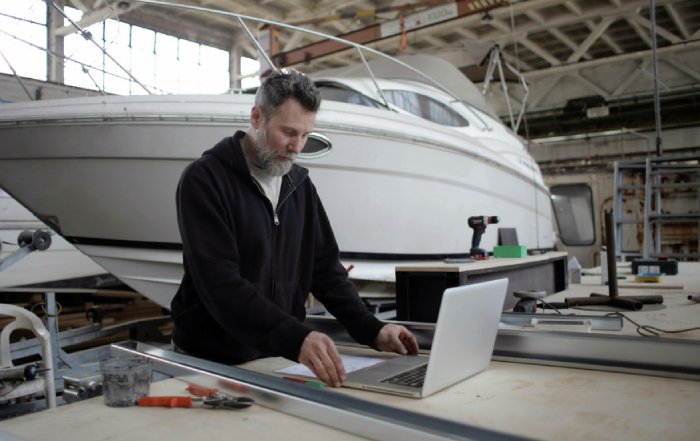
How AI is Redefining Yacht Maintenance
Artificial intelligence has moved from a promising experiment to a core operational technology across the global maritime sector, and nowhere is this more visible than in the luxury yacht market. By 2026, owners, captains, shipyards, and management companies from the United States, United Kingdom, Germany, Italy, France, Spain, Netherlands, Australia, Singapore, and beyond have begun to treat AI not as an add-on, but as critical infrastructure. For the audience of yacht-review.com, which has followed this evolution closely through its coverage of technology, business, and reviews, AI-driven maintenance has become one of the most strategically important developments of the decade.
In a sector defined by high capital expenditure, demanding clients, and global cruising patterns that stretch from the Mediterranean and Caribbean to Asia-Pacific and the high latitudes of Norway, Sweden, Finland, and South Korea, the ability to keep vessels running flawlessly is not simply a technical challenge; it is a business imperative. AI now underpins that reliability. It is transforming maintenance from a reactive necessity into a predictive, data-driven discipline that enhances safety, preserves asset value, and supports more sustainable operations across Europe, North America, Asia, Africa, and South America.
From Scheduled Servicing to Predictive Intelligence
For decades, yacht maintenance followed fixed schedules dictated by engine hours, class requirements, and yard availability. That model was inherently conservative and often inefficient, resulting in over-maintenance of some systems and under-maintenance of others. In 2026, AI-enabled predictive maintenance has become the reference standard for new-build superyachts and is increasingly retrofitted to existing fleets.
Leading manufacturers such as Rolls-Royce Power Systems, MTU, and Caterpillar Marine now integrate dense sensor networks into propulsion, generators, and auxiliary systems, feeding continuous data streams into onboard and cloud-based analytics platforms. These platforms apply machine learning techniques similar to those used in advanced industrial environments, where organizations have long used predictive analytics to reduce unplanned downtime. Readers can see how these principles are applied in other sectors through resources from McKinsey & Company and IBM that discuss AI-driven asset management and industrial IoT.
On board a modern 60-metre or 90-metre yacht, these predictive engines monitor vibration signatures, exhaust gas composition, oil condition, thermal patterns, and power quality in real time. Instead of relying on a mechanic's intuition to detect a subtle change in engine note, AI systems quantify deviations from normal operating baselines and calculate the probability of component failure days or weeks in advance. The result is a maintenance regime that is scheduled around actual condition and risk, not arbitrary intervals.
For owners and family offices in Switzerland, Canada, China, Singapore, and the Middle East, this predictive capability translates into measurable business value. It reduces unplanned yard periods, protects charter revenue, and safeguards the reputational capital that comes with delivering an uninterrupted guest experience. For captains and engineers, it provides a defensible, data-backed framework for requesting yard time and budget, strengthening their authority in discussions with management companies and insurers.
Remote Diagnostics and the Global Service Cloud
As yachts roam further afield to destinations such as Thailand, Japan, New Zealand, Brazil, South Africa, and Malaysia, the traditional model of relying on local technicians becomes less reliable. In 2026, AI-driven remote diagnostics have effectively created a global service cloud around each vessel, allowing shore-based experts to see what the onboard systems see, often in finer detail than could be captured by a quick visual inspection in port.
Engine, HVAC, stabilizer, and power management systems now routinely stream encrypted operational data via satellite links to manufacturer service centers and fleet operations rooms operated by major management firms such as Fraser, Burgess, and Camper & Nicholsons. Using AI tools, shore teams can monitor entire fleets, identify outliers, and prioritize technical support long before a guest notices an issue. For readers interested in how similar remote monitoring architectures are deployed in commercial shipping and offshore energy, the International Maritime Organization and DNV provide useful background on digitalization trends in maritime operations.
Remote diagnostics are no longer limited to passive reporting. When an AI system detects an anomaly-perhaps a small but consistent increase in fuel burn on one engine, or irregular cycling in a chiller plant-it can recommend specific tests to the onboard engineer, push updated control logic to the affected subsystem, or in some cases automatically adjust parameters to stabilize performance. These interventions are logged, time-stamped, and stored in the vessel's digital maintenance record, creating an audit trail that supports classification society inspections and resale due diligence.
For the international readership of yacht-review.com, particularly those overseeing multi-asset portfolios from London, New York, Monaco, Dubai, Hong Kong, and Singapore, this convergence of AI and connectivity has effectively turned every high-value yacht into a continuously supervised, globally supported asset. The owner may be hosting guests in the Aegean, while a technical team in Germany or the Netherlands fine-tunes systems in real time based on AI-generated insights.
Automation of Routine and High-Risk Maintenance Tasks
Beyond forecasting failures and enabling remote support, AI is now embedded in a new generation of autonomous tools that handle some of the most repetitive, hazardous, or technically demanding aspects of yacht upkeep. This is particularly visible in hull, topside, and underwater maintenance, where access and safety have always been challenging.
AI-guided aerial drones and underwater inspection vehicles are increasingly deployed by shipyards and management companies across Europe, North America, and Asia to perform regular structural and cosmetic inspections. High-resolution cameras and LIDAR or sonar sensors capture detailed imagery of hull surfaces, appendages, and superstructures; AI models trained on thousands of images from commercial and naval fleets detect corrosion, osmosis, coating failure, weld issues, and biofouling with a consistency that human inspectors cannot match over long periods. For readers interested in the broader state of marine robotics and inspection technology, the MIT Sea Grant and Woods Hole Oceanographic Institution provide accessible overviews of current research.
On board, AI-enabled control systems now manage tasks such as load-sharing between generators, balancing hotel loads, optimizing chiller staging, and orchestrating battery charging on hybrid or fully electric yachts. These functions were once handled by programmable logic controllers with fixed rules; in 2026, they are increasingly governed by adaptive algorithms that learn from the vessel's operational history and environmental context. When integrated with voyage planning tools, they can prioritize efficiency during long repositioning passages, comfort during guest-intensive charters, or redundancy when operating in remote regions with limited support infrastructure.
At yacht-review.com, this shift is frequently reflected in our design and boats coverage, where AI-driven automation is now as central to the specification of a new yacht as layout, interior style, or range. Owners in Italy, Spain, France, and the United States increasingly view intelligent automation as a hallmark of a modern, future-ready vessel rather than a niche technical feature.
Intelligent Inventory and Supply-Chain Coordination
Maintenance is not only about diagnostics and labor; it is also about ensuring that the right parts, consumables, and tools are available at the right time, in the right harbor. Historically, chief engineers relied on spreadsheets, experience, and cautious over-stocking to manage this challenge. AI is now reshaping this domain as well, integrating onboard inventory management with global supply chains.
By analyzing patterns of component wear, part replacement histories, cruising itineraries, and lead times from preferred suppliers in regions such as Northern Europe, North America, and Asia-Pacific, AI systems can forecast future demand for critical spares and consumables. They can suggest optimized reorder points, recommend consolidating orders across fleets managed by the same company, and even factor in geopolitical or logistics risks that might affect deliveries to certain ports. Business leaders evaluating these systems often draw on broader supply-chain best practices described by organizations such as the World Economic Forum and Harvard Business Review, where AI-enhanced forecasting and just-in-time strategies are now mainstream.
For yacht owners and operators, especially those running busy charter programs in the Caribbean, Mediterranean, and Indian Ocean, this means fewer last-minute delays caused by missing parts, lower capital tied up in unused inventory, and better alignment between yard periods and part availability. It also contributes to sustainability by reducing waste from components that age on the shelf rather than in service. Through our sustainability and global sections, yacht-review.com has observed that this data-driven approach is increasingly seen as both a financial and environmental best practice.
Elevating Crew Expertise with AI-Enhanced Training
The most advanced AI systems do not replace crew; they amplify their capabilities. In 2026, the most forward-looking yacht owners, management firms, and training academies in the UK, Netherlands, Denmark, Norway, South Africa, and Australia are investing heavily in AI-supported learning environments to close the gap between rapidly evolving onboard technology and traditional seafaring skills.
Virtual reality and augmented reality platforms, powered by AI-generated scenarios, now simulate complex maintenance tasks and fault conditions in realistic digital twins of specific yachts. Engineers can practice diagnosing a fuel system problem or reconfiguring a power distribution board in a risk-free environment that mirrors the exact layout, brand mix, and software versions installed on their vessel. AI tracks their performance, identifies recurring mistakes, and recommends targeted modules to strengthen weak areas.
This individualized training approach is especially valuable for yachts that operate globally with internationally sourced crews from Europe, Asia, South America, and Africa, where prior exposure to specific OEM systems may vary widely. It also supports succession planning, as senior engineers can transfer knowledge more systematically to junior team members. Readers interested in how AI and immersive technologies are transforming professional education more broadly can explore research and case studies compiled by Stanford University and other leading institutions.
From a business perspective, the link between crew competence and asset protection is clear. Fewer human errors, faster diagnosis, and better-planned interventions reduce both direct repair costs and the indirect costs of disrupted itineraries. Through our cruising and lifestyle coverage, yacht-review.com frequently hears from captains that AI-supported training has become a differentiator when recruiting and retaining high-caliber crew, particularly in competitive markets such as Monaco, Fort Lauderdale, and Antibes.
AI-Informed Design for Maintainability and Lifecycle Value
Crucially, AI's influence on maintenance now begins long before a yacht touches the water. Naval architects, exterior stylists, and interior designers are increasingly working with AI-driven simulation tools from the earliest concept stages to optimize not only performance and aesthetics, but also maintainability and lifecycle cost.
Advanced computational fluid dynamics and structural analysis platforms, supported by AI, enable designers to explore thousands of hull variations, structural arrangements, and machinery layouts, assessing not only resistance and seakeeping but also access routes for maintenance, vibration characteristics, and long-term fatigue behavior. This approach reflects broader trends in digital engineering and generative design seen in aerospace and automotive sectors, as documented by organizations such as Siemens and other industrial technology leaders.
For owners commissioning new builds in Italy, Germany, the Netherlands, Turkey, and South Korea, this means that maintainability can be engineered into the yacht from day one. Service corridors, machinery spaces, and technical voids are optimized for human access and robotic inspection; cable runs and piping networks are laid out to simplify future modifications; and materials are selected not only for visual impact but also for durability, reparability, and environmental performance.
At yacht-review.com, this evolution is increasingly visible in our design and history features, where we contrast legacy vessels-often beautiful but maintenance-intensive-with the new generation of AI-informed yachts that balance elegance with long-term practicality. Owners in the United States, UK, France, and Asia are recognizing that AI-assisted design choices made today can significantly influence resale value and operating costs a decade from now.
Sustainability: AI as a Strategic Enabler
Environmental expectations on yacht owners have risen sharply across Europe, North America, Asia, and Oceania, driven by evolving regulations, port policies, and changing social norms. AI has become a powerful enabler for aligning luxury yachting with modern sustainability standards without compromising comfort or range.
Energy management systems now use AI to balance engines, generators, batteries, and alternative energy sources such as solar arrays and, increasingly, fuel cells. By analyzing weather forecasts, sea states, guest profiles, and itinerary plans, they can recommend optimal speeds, routing, and operating modes to minimize fuel burn and emissions. Owners and captains who wish to understand how similar optimization strategies are being applied at scale in commercial shipping can explore resources from the International Energy Agency, which regularly publishes analysis on maritime decarbonization.
Beyond propulsion, AI monitors water production and consumption, waste handling, and provisioning patterns. It can identify opportunities to reduce single-use plastics, optimize fresh-produce orders based on actual guest behavior, and ensure that waste treatment systems operate within regulatory parameters in sensitive regions such as the Mediterranean, Caribbean, Arctic, and South Pacific. This aligns closely with the themes covered in our sustainability and travel sections, where readers increasingly seek guidance on how to enjoy global cruising while minimizing environmental impact.
For family-owned yachts and charter programs catering to multi-generational clients from the US, UK, Germany, Canada, Australia, Japan, and Singapore, sustainability is no longer an optional narrative; it is part of the value proposition. AI provides the data, transparency, and optimization needed to substantiate claims of responsible operation, reinforcing trust with guests, regulators, and coastal communities.
Governance, Risk, and Trust in AI-Enabled Operations
With AI now embedded in critical systems, questions of governance, risk management, and trust have moved to the forefront. Yacht owners, managers, and insurers are increasingly focused on ensuring that AI-enabled maintenance enhances, rather than undermines, safety and reliability.
Classification societies and regulators are responding with guidelines and notations covering autonomous and semi-autonomous systems, cybersecurity, and data integrity. The same principles that govern AI deployment in commercial shipping, aviation, and healthcare-transparency, human oversight, and robust testing-are being adapted to the yacht context. Industry stakeholders frequently look to frameworks developed by organizations such as the OECD and national regulators for guidance on responsible AI use, recognizing that reputational risk is as significant as technical risk in the luxury segment.
For the readership of yacht-review.com, which includes family offices, legal advisors, and corporate executives, this governance dimension is particularly significant. They expect not only cutting-edge features but also clear accountability: who is responsible when an AI system makes a recommendation, how data is secured across global networks, and how systems are updated and audited over time. Our business and news coverage increasingly reflects these concerns, highlighting contracts, warranties, and service agreements that explicitly address AI-enabled functionality.
A More Seamless Ownership and Cruising Experience
Ultimately, the purpose of AI in yacht maintenance is not merely technical sophistication; it is to support a more seamless, enjoyable, and secure ownership experience for individuals and families across Global, Europe, Asia, Africa, North America, and South America. When maintenance becomes predictive, remote support becomes routine, and automation handles many of the repetitive tasks that once consumed crew bandwidth, the result is more time and attention available for hospitality, itinerary planning, and personalized service.
For charter guests embarking in Miami, Nice, Palma, Sydney, Vancouver, or Singapore, the benefits are largely invisible but deeply felt: fewer delays due to technical issues, more reliable comfort systems, and quieter, smoother operation. For owners balancing yachting with complex business and family commitments, AI-enabled maintenance translates into confidence that the yacht will be ready when needed, wherever it is in the world.
From its vantage point as a dedicated platform for yacht owners, professionals, and enthusiasts, yacht-review.com has seen AI evolve from a buzzword into a structural force shaping community, events, and the broader lifestyle that surrounds luxury yachting. As 2026 progresses, the most successful projects are those that combine advanced AI capabilities with experienced human judgment, strong governance, and a clear commitment to sustainability.
For decision-makers evaluating refits, new builds, or fleet upgrades, the strategic question is no longer whether to adopt AI-driven maintenance, but how to integrate it intelligently into vessel design, operational processes, and long-term ownership plans. In that sense, AI has become not just a technological innovation, but a defining element of modern yacht stewardship-one that yacht-review.com will continue to analyze, review, and document as the industry moves into its next chapter.