

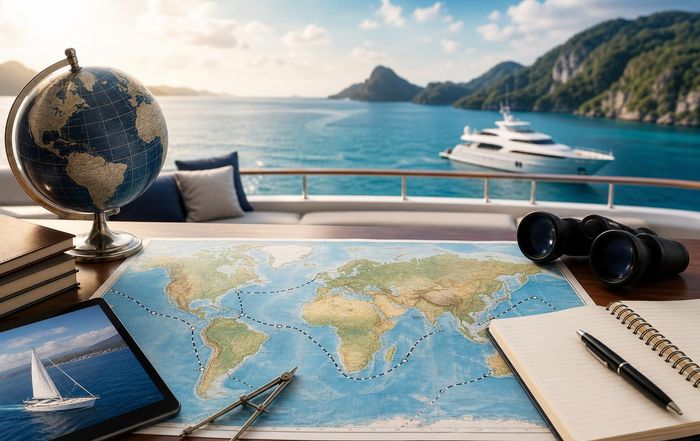
How to Plan a Worldwide Yacht Cruising Itinerary
Planning a worldwide yacht cruising itinerary is one of the most ambitious and rewarding projects an owner or charterer can undertake. It is also a complex, multi-year exercise in strategy, seamanship, logistics and diplomacy. For the community at yacht-review.com, where long-range cruising, design, lifestyle and global exploration come together, the process itself can be as fascinating as the voyage.
This article examines how experienced owners, captains and expedition planners structure a global itinerary, which regions they prioritise, how they sequence seasons, and what tools and partnerships they rely on. While every circumnavigation is unique, certain principles consistently underpin successful world cruises, from the initial vision through to the final landfall.
Defining the Vision: Purpose Before Ports
The most resilient worldwide itinerary begins not with a chart but with a clear sense of purpose. Before identifying routes or seasons, experienced planners ask what they want the voyage to achieve: cultural immersion, high-latitude adventure, family time, business networking, scientific collaboration, or a carefully curated mix of all of these. The answers determine the size of yacht, crew composition, pace of travel and even the choice of onboard technology.
Owners focused on relaxed blue-water passages and extended stays in anchorages tend to prioritise classic trade-wind routes, avoiding extreme latitudes and minimising complex clearances. Those interested in expedition-style cruising, often inspired by reports from organisations such as Royal Cruising Club Pilotage Foundation and Jimmy Cornell's publications, increasingly look to high-latitude destinations such as Svalbard, Greenland, Patagonia and Antarctica, where regulatory, environmental and safety requirements are significantly more demanding.
For many clients of the global brokerage and management houses, including Fraser, Burgess and Northrop & Johnson, a world itinerary is also a lifestyle and business decision. The yacht becomes a mobile base for board meetings, family gatherings and philanthropic engagements, often timed to coincide with major events such as the Monaco Yacht Show, Fort Lauderdale International Boat Show or cultural festivals along the route. Owners who plan in this way typically work with family offices and specialist maritime lawyers to integrate tax, privacy and security considerations from the outset.
Readers who are still refining their overall vision often find it useful to review long-range yacht and superyacht evaluations on the yacht-review.com reviews page at yacht-review.com/reviews, where vessel capabilities and cruising profiles are discussed in detail.
Choosing the Right Yacht for Global Cruising
Selecting an appropriate yacht for worldwide cruising is as critical as the itinerary itself. The ideal vessel balances range, comfort, redundancy and serviceability, while remaining compatible with the owner's preferred style of travel and intended cruising grounds.
For many circumnavigations, long-range displacement or semi-displacement motor yachts in the 25-60 metre range, or blue-water sailing yachts from reputable yards, provide the best compromise between autonomy and access. Builders such as Feadship, Amels, Oceanco, Sanlorenzo, Oyster Yachts, Hallberg-Rassy and Nautor's Swan have extensive experience delivering yachts that routinely cross oceans. Their designs often incorporate large fuel capacities, efficient hull forms, stabilisation systems and thoughtful engine room layouts that simplify maintenance during long passages.
Owners planning polar or remote cruising increasingly look to purpose-built explorer yachts, often with ice-reinforced hulls, dynamic positioning, extensive cold-weather protection and expanded storage for tenders, submersibles and specialist gear. Publications such as Boat International and SuperYacht Times regularly profile new explorer builds and refits, providing valuable benchmarks for range, autonomy and technical specification that can inform early decision-making.
From a design and layout perspective, world cruisers benefit from flexible guest accommodations, generous crew quarters, practical galley and provisioning spaces, and robust laundry and waste management systems. Long-term comfort at sea is often determined less by luxury finishes and more by noise and vibration control, storage solutions and ease of movement in all weather. The design-focused features and case studies presented at yacht-review.com/design provide additional insight into how interior and exterior design support global cruising lifestyles.
Mapping the World by Seasons and Weather Windows
Once the vision and vessel are aligned, the next step is to map the world according to seasons and weather patterns rather than political boundaries. Successful global itineraries respect prevailing winds, ocean currents and cyclone seasons, using them as allies rather than adversaries.
Resources such as NOAA's Climate Prediction Center, the UK Met Office, Météo-France, and the World Meteorological Organization provide authoritative seasonal data. For practical routing, many captains rely on a combination of pilot charts, routing software and professional meteorologists, particularly for ocean crossings and high-latitude passages. The fundamental principles remain consistent: follow the trade winds where possible, avoid cyclone-prone regions during their active seasons, and schedule high-latitude cruising for the brief windows of relative calm and daylight.
In the Atlantic, this often means departing from Europe or the eastern United States in late autumn to cross towards the Caribbean, taking advantage of the northeast trades, and then transiting the Panama Canal in late winter or early spring. The Pacific crossing is commonly staged through the Galápagos, the Marquesas and the Tuamotus towards French Polynesia and onward to Fiji, Vanuatu and New Caledonia, before reaching Australia or New Zealand in time to avoid the most active cyclone months.
In the Indian Ocean, world cruisers frequently route via Indonesia or Papua New Guinea, then through the Torres Strait or around the southern coast of Australia, before visiting the Maldives, Seychelles and East Africa, or transiting the Red Sea to return to the Mediterranean. Security assessments in certain regions, particularly parts of the Gulf of Aden and the western Indian Ocean, are essential and should be informed by up-to-date guidance from maritime security organisations and flag states.
For those planning extensive coastal cruising and regional exploration, the curated cruising narratives and destination features at yacht-review.com/cruising provide inspiration that complements the more technical routing data.
Integrating Iconic Regions into a Coherent Route
A worldwide itinerary is often built around a series of iconic cruising regions, with ocean passages serving as the connecting threads. The challenge is to sequence these regions in a way that respects seasonal patterns while allowing sufficient time for meaningful exploration.
The Mediterranean remains a cornerstone of many global itineraries, offering a dense concentration of culture, cuisine and maritime infrastructure. Western Mediterranean hubs such as the Côte d'Azur, the Balearics and the Amalfi Coast are typically combined with longer-range ventures into Croatia, Greece and Turkey. For owners interested in the historical dimension of yachting and maritime trade, institutions such as The National Maritime Museum in Greenwich and the Musée national de la Marine in France provide rich context that can be woven into a Mediterranean leg, and readers can deepen this perspective through the historical analyses at yacht-review.com/history.
Beyond Europe, the Caribbean and Bahamas offer sheltered waters and excellent facilities, making them a natural first destination after an Atlantic crossing. From there, a westbound circumnavigation often proceeds through Central America and the Pacific, while an eastbound route might return to the Azores and Northern Europe before exploring Arctic Norway, Iceland or Greenland during the summer months.
Asia and the broader Indo-Pacific have become increasingly attractive to long-range cruisers, with destinations such as Thailand, Indonesia, the Philippines and Japan offering diverse cruising grounds and growing superyacht infrastructure. Organisations such as the Asia Pacific Superyacht Association and regional guides from Asia-Pacific Boating provide current information on marinas, regulations and services in these emerging hubs.
Owners with a strong lifestyle focus frequently integrate extended stays in global cities, combining marina berths in locations such as Barcelona, Miami, Sydney, Singapore and Vancouver with time at anchor in remote bays. The lifestyle-oriented content at yacht-review.com/lifestyle illustrates how yachting, gastronomy, wellness and culture intersect across these global waypoints.
Regulatory, Legal and Diplomatic Considerations
Worldwide cruising requires careful attention to flag state requirements, port state control, visas, customs, immigration and environmental regulations. The complexity increases when a yacht is commercially registered or available for charter, as cabotage laws and local charter regulations vary significantly between jurisdictions.
Flag states such as the Cayman Islands, Isle of Man, Marshall Islands and Malta provide detailed guidance on safe manning levels, survey schedules and operational requirements for large yachts. Classification societies including Lloyd's Register, DNV and Bureau Veritas add another layer of technical oversight. Owners and captains must ensure that survey windows and yard periods are integrated into the itinerary, often aligning them with convenient shipyard hubs in Europe, the United States or Asia.
On the immigration front, Schengen rules in Europe, visa policies in countries such as the United States, Australia and China, and evolving entry requirements in smaller island nations necessitate forward planning. Specialist yacht agents and global service providers, such as BWA Yachting and Y.CO, play a vital role in coordinating clearances, pilotage and local compliance, particularly in regions with less familiar procedures.
Environmental regulations have become a defining feature of global cruising. Emission control areas (ECAs) in parts of Europe and North America, restrictions on grey and black water discharge, ballast water management rules and special protections around marine reserves all shape where and how yachts can operate. Owners looking to understand the broader regulatory landscape and its business implications can find further analysis at yacht-review.com/business and through resources such as the International Maritime Organization.
Sustainability and Responsible Cruising Practices
As environmental awareness grows, many world cruisers are rethinking how they travel, seeking to minimise their footprint while maximising positive impact. This trend is visible across new builds and refits, with hybrid propulsion systems, advanced hull coatings, energy-efficient hotel systems and improved waste management becoming more common. Builders such as Sunreef Yachts and Silent-Yachts have drawn attention with solar-assisted and electric catamarans, while larger yards experiment with battery systems, methanol-ready engines and alternative fuels.
Sustainable cruising is not limited to technology. Operational choices, such as slower passage speeds to reduce fuel consumption, careful anchoring practices to protect seagrass and coral, and support for local conservation initiatives, all contribute to a more responsible voyage. Organisations such as Ocean Conservancy, Blue Marine Foundation and WWF offer guidance on marine conservation priorities, while several charter brokers now promote "green charter" principles that can be adapted for private world cruises.
The dedicated sustainability features at yacht-review.com/sustainability explore how yacht owners and crews are embracing cleaner technologies, supporting scientific research and engaging with coastal communities in constructive ways. Many global itineraries now include collaborations with marine biologists, citizen science projects and educational outreach in remote regions, turning a world cruise into a platform for learning and advocacy.
Crew, Logistics and Shore Support
Behind every successful circumnavigation is a highly capable crew and a robust shore support network. Captains undertaking global itineraries must combine traditional seamanship with project management skills, cultural sensitivity and a deep understanding of the owner's priorities. Department heads in engineering, deck, interior and galley roles need to be prepared for extended periods away from major hubs, with contingency plans for sourcing parts, medical care and provisions.
Crew recruitment and retention become particularly important on long voyages, where continuity and morale directly affect safety and guest experience. Training standards set by the STCW Convention and additional courses in polar operations, medical care and crisis management are increasingly valued. Crew agencies and training providers, including Bluewater and Warsash Maritime School, have responded by offering programmes tailored to expedition and world cruising.
Logistics partners handle everything from bunkering and spare parts to concierge services and event coordination. In remote regions, advance shipments of critical components and careful planning around customs and import duties are essential. Many owners choose to work with a central yacht management company, which coordinates financial reporting, compliance, maintenance and insurance across the entire itinerary.
The technology-focused content at yacht-review.com/technology highlights how advancements in satellite communications, remote diagnostics and digital navigation tools are transforming these logistics, enabling yachts to maintain high standards of operation far from traditional support centres.
Balancing Passage-Making and Time Ashore
One of the most nuanced aspects of planning a worldwide itinerary is balancing the desire to cover distance with the need to slow down and truly experience destinations. It is tempting to compress a circumnavigation into a single year, but many seasoned cruisers advocate for a more measured approach, extending the voyage over several seasons and pausing in regions that resonate with the owner and family.
Long ocean passages can be deeply rewarding, offering a rare sense of detachment and focus, yet they also demand careful preparation in terms of watch schedules, medical readiness, spares, and psychological resilience. Shorter coastal hops and archipelago cruising provide contrast, with frequent opportunities to go ashore, engage with local communities and pursue activities such as diving, hiking, gastronomy and cultural visits.
Families cruising with children often align the itinerary with academic calendars, online schooling options or dedicated onboard tutors, ensuring that education continues seamlessly. The family-oriented perspectives at yacht-review.com/family illustrate how multi-generational cruising can be integrated into a world voyage, turning the yacht into both home and classroom.
Many owners find it helpful to build "anchor legs" into the plan: periods of several months based in a particular region, such as the Western Mediterranean, South Pacific or Pacific Northwest, interspersed with more intensive passage-making. This pattern allows for deeper local engagement, more efficient use of seasonal windows and a better balance between travel and rest.
Staying Connected to the Global Yachting Community
A worldwide itinerary does not isolate an owner from the broader yachting world; it often deepens those connections. Participation in regional regattas, rendezvous and boat shows provides opportunities to meet like-minded cruisers, discover emerging destinations and stay abreast of technological and regulatory developments.
Events such as the St. Barths Bucket Regatta, Loro Piana Superyacht Regatta, Sydney Hobart Yacht Race and local cruiser rallies in the Pacific and Atlantic create natural gathering points along common routes. Industry news outlets, including The Superyacht Group, Yachting World and Cruising World, provide ongoing coverage of new regulations, marina developments and navigation updates that can influence itinerary planning.
The global and events coverage at yacht-review.com/global and yacht-review.com/events allows readers to align their cruising plans with key happenings around the world, from regattas and festivals to business forums and sustainability conferences.
Community is also fostered through informal networks: online forums, regional cruising guides, social media groups and word-of-mouth recommendations from other captains and owners encountered along the way. These connections often yield practical local knowledge that complements official publications, particularly in less-charted or rapidly changing regions.
The Strategic Role of Refits and Upgrades
For yachts engaged in multi-year global cruising, periodic refits and upgrades are not disruptions but integral components of the itinerary. A well-planned yard period can incorporate class and flag surveys, technical upgrades, interior refreshes and sustainability enhancements, ensuring that the vessel remains safe, efficient and aligned with the owner's evolving preferences.
Strategic choices about where to undertake refits are influenced by shipyard capabilities, local expertise, cost, and the broader cruising plan. Europe, the United States, Turkey and increasingly parts of Asia and Australia host major facilities capable of handling large yachts and complex projects. Owners often schedule refits during seasons when cruising conditions in their preferred regions are less favourable, using the time ashore for business, travel or other pursuits.
News and analysis of refit trends, new technologies and major yard projects, such as those regularly reported by TradeWinds, MarineLink and other maritime outlets, can guide decisions about timing and scope. At yacht-review.com, the news section at yacht-review.com/news frequently highlights significant refits and innovations that are particularly relevant to long-range cruisers.
Turning a Global Itinerary into a Legacy
For many owners, a worldwide yacht cruising itinerary becomes more than a personal adventure; it evolves into a legacy project that shapes family narratives, business relationships and philanthropic initiatives. The experiences gained while navigating diverse cultures, economies and ecosystems often inform future investments, charitable projects and long-term lifestyle choices.
Some yachts transition from private world cruises into expedition charter programmes, scientific platforms or educational vessels, extending the impact of the original voyage. Others inspire follow-on projects, such as shore-based retreats, marine conservation initiatives or collaborations with universities and research institutions.
Throughout this process, the core strengths that define successful global cruising-strategic planning, respect for the sea, cultural curiosity, environmental responsibility and a commitment to excellence in seamanship-remain central. The broader travel and exploration stories at yacht-review.com/travel underscore how these values continue to resonate long after the circumnavigation is complete.
Conclusion: A Structured Path to an Extraordinary Journey
Planning a worldwide yacht cruising itinerary is a demanding undertaking, yet it is entirely achievable when approached with clarity of purpose, rigorous preparation and the right partners. By aligning vessel choice with vision, mapping routes according to seasons, integrating regulatory and sustainability considerations, investing in capable crew and shore support, and allowing time for genuine engagement with destinations, owners can transform an ambitious dream into a coherent, rewarding reality.
For the audience of yacht-review.com, this process represents the ultimate expression of the yachting lifestyle: a synthesis of design, seamanship, business acumen, global awareness and personal discovery. As technology advances, regulations evolve and new destinations open to responsible cruising, the possibilities for world itineraries will continue to expand, offering ever more refined ways to explore the oceans while contributing positively to the communities and environments encountered along the way.
Readers contemplating their own global voyage can continue their research across yacht-review.com, from in-depth boat profiles at yacht-review.com/boats to broader perspectives on the industry at yacht-review.com. With careful planning and an open, informed approach, a worldwide cruising itinerary becomes not only a route on a chart but a defining chapter in a life spent at sea.