

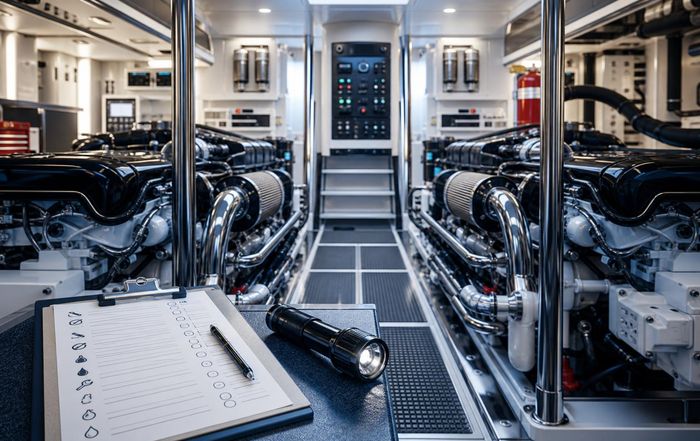
How to Review a Yacht Engine Room Properly
Reviewing a yacht's engine room is one of the most consequential activities in modern yachting, whether the vessel is a compact semi-custom cruiser or a fully bespoke superyacht. For owners, captains, surveyors and serious buyers, the quality, layout and condition of the machinery space will determine not only the reliability and lifecycle cost of the yacht, but also the safety and comfort of everyone on board. At the editorial studio here engine rooms are never treated as an afterthought; they are the technical heart that underpins every positive cruising experience described elsewhere on the site.
A proper review of a yacht engine room requires a structured approach that blends technical understanding, safety awareness and an appreciation of how design and engineering choices translate into real-world usability. It is not enough to glance at the paintwork and count the engines; a professional-level assessment considers access, redundancy, systems integration, noise and vibration management, compliance with class and flag requirements, and the way the space will be lived with by crew over many years of operation.
This painstakingly created article examines how to review a yacht engine room properly, drawing on current best practices from classification societies, professional surveyors and leading shipyards, and connects these principles to the broader themes of design, cruising, sustainability and technology that shape contemporary yachting.
Safety First: Preparing to Enter the Machinery Space
Any serious review of a yacht engine room begins with safety. Machinery spaces are inherently hazardous environments, combining high temperatures, rotating equipment, electrical systems, fuel, lubricants and often confined access. Professional surveyors and classification societies such as Lloyd's Register and DNV emphasise that entry should follow a clear safety protocol.
Before stepping through the watertight door, the reviewer should confirm with the captain or engineer whether machinery will be operating during the visit, what systems are live, and whether any tests or manoeuvres are planned. It is prudent to wear appropriate personal protective equipment, including non-slip footwear, ear protection if engines or generators are running, and in some cases safety glasses and gloves. Reputable sources such as the International Maritime Organization provide guidance on safe machinery space practices, and while large private yachts may not be subject to all commercial rules, the underlying principles remain sound.
A properly managed yacht will have clear emergency escape routes from the engine room, marked and unobstructed, with illuminated signage and ideally a secondary exit. A thorough review confirms not only that these routes exist and are compliant, but that they are realistically usable by crew under stress, taking into account door weights, ladder angles and the presence of any stored items that might compromise egress. This is also the moment to observe the general housekeeping culture: tidy cable runs, clearly labelled valves and uncluttered decks are early indicators of a safety-focused operation.
Layout, Access and Working Space
Once safely inside, the first impression should be of order and logic. On a well-designed yacht, the engine room layout reflects a deliberate engineering philosophy rather than a mere attempt to fit components into available volume. Reviewers with experience across multiple brands quickly recognise the difference between a machinery space designed from the outset and one that has evolved through compromises.
Adequate access is central to any evaluation. Engines, gearboxes, generators, filters, strainers, pumps, seacocks and major valves should be reachable without contortion, ideally from more than one side for critical equipment. Leading classification and survey organisations consistently highlight maintainability as a key factor in long-term reliability, and this is particularly important for yachts that cruise extensively, as discussed frequently in the cruising-focused features on yacht-review.com such as those in the cruising section.
A reviewer should walk the space slowly, imagining routine tasks such as changing fuel filters, adjusting belts, servicing sea strainers or replacing a raw-water pump. If any of these jobs appear to require dismantling unrelated equipment, excessive crawling or working over hot surfaces, that is a negative mark against the design. Overhead clearance and the ability to stand upright near major service points is especially valuable on larger yachts, where professional engineers may spend many hours each day in the machinery spaces.
Access routes to the engine room deserve equal scrutiny. Dedicated crew stairways, watertight doors, and clear separation between guest and crew circulation are all positive attributes, as is the presence of a small workshop or technical space adjacent to the main machinery room. In many modern builds, leading yards and naval architects, including those profiled in the design features on yacht-review.com, have invested heavily in improving crew workflow and technical ergonomics, recognising that a well-designed engine room directly contributes to operational excellence.
Cleanliness, Housekeeping and Visual Condition
Engine room cleanliness is more than a cosmetic concern; it is a proxy for the standard of care applied to the entire vessel. Professional surveyors and marine engineers consistently note that clean, dry bilges, neatly arranged tools, labelled storage and orderly cable management correlate strongly with well-maintained machinery and lower incident rates.
During a review, attention should be paid to whether bilges are free of oil, fuel and standing water, whether absorbent pads are in place under potential leak points, and whether any staining suggests unresolved problems. Paint condition on machinery foundations, structural members and bulkheads can reveal past leaks or corrosion. While some wear is inevitable on older yachts, a pattern of neglected rust, peeling coatings or improvised repairs is a warning sign.
Cable runs and plumbing should be secured and supported, with proper clips and trays rather than ad hoc tie-wrap clusters. Clear labelling of circuits, valves and breakers is a hallmark of professional installations. International best practice, as reflected in guidance from organisations such as the American Boat and Yacht Council (ABYC), emphasises that well-organised systems are easier to troubleshoot, safer to operate and more resilient under fault conditions. A reviewer should also note whether documentation such as wiring diagrams, piping schematics and maintenance logs are available nearby or in the engineer's office, and whether they appear up to date and aligned with the actual installation.
Engines, Gearboxes and Propulsion Systems
At the core of the machinery space are the main engines and propulsion systems. Whether the yacht is powered by conventional diesel engines, diesel-electric propulsion or hybrid arrangements, a structured review begins with identification of the equipment: manufacturer, model, rated power, hours of operation and service history. Leading engine manufacturers such as Caterpillar, MTU, MAN and Volvo Penta publish detailed specifications and maintenance schedules on their official sites, and reviewers should cross-check that the installed engines match the documentation provided.
Visual inspection of the engines should focus on signs of leaks, corrosion, damaged insulation, chafed hoses, loose clamps or non-standard modifications. Exhaust lagging should be intact and properly secured, with no evidence of heat damage to nearby structures or cabling. Engine mounts should be inspected for deterioration or misalignment, as issues here can lead to vibration, noise and accelerated wear on drivetrain components.
Gearboxes and shaft couplings deserve careful attention, particularly in yachts that have seen extensive long-range cruising. Alignment marks, condition of seals, cleanliness around dripless shaft seals or stuffing boxes, and the presence of any vibration monitoring equipment are all relevant indicators. For buyers and owners interested in the broader propulsion landscape, resources such as Marine Propulsion & Auxiliary Machinery and technical papers from SAE International provide context on evolving drivetrain technologies, including hybrid and pod systems.
A proper review also considers the integration of propulsion with control systems. Engine room observations should be matched with bridge controls, electronic throttle and shift systems, and any integrated automation. If the yacht employs dynamic positioning, joystick docking or advanced manoeuvring aids, the reviewer should confirm that the supporting hydraulic and electrical systems are logically arranged and accessible in the machinery spaces.
Fuel, Lubrication and Cooling Systems
Fuel systems are a critical focus area because failures can be both dangerous and operationally disruptive. A comprehensive review traces the fuel flow from deck fills through venting, day tanks, filters, transfer pumps and supply lines to the engines and generators. Filters should be accessible and ideally configured with duplex arrangements to allow changeover under load. Day tanks, where fitted, should be located and sized appropriately, with clear level indication and safe access for inspection.
Industry best practice, as described by organisations such as ABS and RINA, emphasises the importance of proper fuel polishing, water separation and contamination control, especially for yachts that refuel in diverse regions where diesel quality can vary. Reviewers should look for evidence of fuel treatment systems, sampling points and procedures, and should cross-check logbooks where available for any history of contamination issues.
Lubrication systems, including engine oil storage, transfer pumps and waste oil handling, should be logically arranged and compliant with environmental regulations. Dedicated, clearly marked waste oil tanks and the absence of improvised containers or unlabelled drums indicate a responsible approach. Environmental compliance is increasingly central to yacht operations, and owners interested in this dimension can explore broader themes in the sustainability section of yacht-review.com, which examines how machinery choices intersect with emissions, waste management and regulatory trends.
Cooling systems, both raw-water and closed-loop, should be inspected for hose condition, clamps, strainers and seacocks. Sea strainers must be accessible for cleaning, with safe access even in rough conditions. A review should verify that seacocks are operable, labelled and reachable without obstruction, and that their materials are appropriate for the vessel's operating environment. Corrosion, verdigris or signs of electrolysis around through-hull fittings warrant further investigation, and may prompt reference to technical resources such as BoatUS or Yachting Monthly for comparable case studies and prevention strategies.
Electrical Power, Distribution and Automation
Modern yachts are increasingly defined by their electrical systems, and the engine room is often the primary hub for power generation and distribution. Reviewing this aspect requires a combination of visual inspection and informed questioning of the captain or engineer.
Generators should be identified by make, model, capacity and hours, with attention to access for major service tasks such as alternator removal or heat exchanger cleaning. Leading manufacturers like Kohler and Northern Lights provide detailed guidelines on installation and ventilation requirements, and a reviewer should confirm that the installation appears to follow recognised standards, including adequate airflow, sound shielding and vibration isolation.
The main switchboard, distribution panels and any automation cabinets deserve careful scrutiny. Panels should be clearly labelled, with logical segregation of essential and non-essential loads, emergency circuits and shore power interfaces. Evidence of professional wiring practices, including proper terminations, strain reliefs and protective covers, is a strong positive indicator. Conversely, improvised add-ons, mismatched breakers or unlabelled circuits suggest a history of ad hoc modifications.
Automation and monitoring systems, increasingly common on larger yachts and high-end production models, centralise alarms, tank levels, power management and machinery status. During a review, it is important to understand how these systems interface with the physical equipment in the engine room, whether there is redundancy in critical sensors, and how alarms are annunciated and logged. For readers interested in how these technologies are reshaping yacht operations, the technology coverage on yacht-review.com offers wider context on digitalisation, remote monitoring and integrated bridge solutions.
Battery installations, in some cases including large lithium-ion banks for hybrid propulsion or hotel loads, require particular attention. Industry incidents over recent years have made clear that correct installation, ventilation, battery management systems and fire protection are essential. Reviewers should verify that any lithium-based systems are from reputable manufacturers, installed in accordance with relevant standards, and supported by appropriate monitoring and safety systems, with guidance from sources such as DNV and the Maritime and Port Authority of Singapore where applicable.
Ventilation, Noise and Vibration Management
A well-designed engine room balances thermal management, noise control and crew comfort. Ventilation is central to this equation, as engines and generators require large volumes of air for combustion and cooling, while the space must also be kept within acceptable temperature limits for equipment longevity and human occupancy.
During a review, it is important to identify the main intake and exhaust ducts, fans, dampers and fire flaps, and to understand how airflow is controlled under different operating conditions. Overheating in the engine room is a common issue on yachts that cruise in warmer regions, and a reviewer should ask for temperature records or anecdotal evidence from the crew. Resources such as Professional BoatBuilder magazine have published detailed analyses of ventilation challenges and solutions, which can provide useful benchmarks.
Noise and vibration management directly influence both guest comfort and crew working conditions. Engine and generator foundations, flexible couplings, exhaust systems and acoustic insulation should be reviewed for design quality and condition. On a sea trial, the reviewer can correlate observations in the engine room with noise levels in guest cabins and common areas, and with vibration felt at different speeds. While subjective, these impressions are crucial in understanding how the yacht will be experienced in real cruising scenarios, complementing the lifestyle-oriented perspectives explored in the lifestyle section of yacht-review.com.
Fire Detection, Suppression and Emergency Systems
Fire safety in the engine room is non-negotiable. A thorough review verifies the presence, type and condition of fixed fire suppression systems, such as CO₂, FM-200 or other approved agents, as well as portable extinguishers, fire detection sensors and alarm interfaces. Systems should be serviced in accordance with manufacturer and regulatory schedules, with clear records available.
Reviewers should confirm that fire dampers on ventilation ducts are accessible and operable, that manual release controls are clearly marked and protected against accidental activation, and that crew are familiar with emergency procedures. International standards from organisations such as the International Maritime Organization and SOLAS for larger commercial yachts provide a benchmark, even where not strictly mandated for smaller private vessels.
Emergency systems also include bilge pumps, emergency lighting, escape route markings and, on larger yachts, emergency generators or battery-backed essential circuits. The location, capacity and redundancy of bilge pumps should be reviewed, as well as the arrangement of bilge manifolds and valves. A well-designed system will allow the crew to isolate compartments and respond flexibly to flooding scenarios. Owners and operators interested in how these safety systems integrate into the broader business and regulatory environment can explore related analysis in the business section of yacht-review.com, where compliance, insurance and risk management are frequently discussed.
Documentation, Maintenance Culture and Crew Competence
Even the best-designed engine room will underperform if maintenance is neglected or crew are not properly trained. A professional review therefore extends beyond the physical space to examine documentation, maintenance records and the human dimension.
Logbooks, digital maintenance systems and class or flag survey reports should be requested and cross-checked against observable condition. Regular oil analysis, scheduled overhauls, coolant and fuel system checks, and adherence to manufacturer intervals all indicate a proactive maintenance culture. Reputable management companies and surveyors often stress that consistent, documented maintenance is as important as initial build quality for long-term asset value.
Crew competence is more difficult to assess directly, but conversations with the chief engineer or captain can be revealing. A reviewer should listen for evidence of systematic problem-solving, familiarity with systems, engagement with training and a realistic understanding of the yacht's technical strengths and limitations. External training bodies such as The Maritime and Coastguard Agency (MCA) and STCW-aligned academies set recognised standards for professional crew, and many of the most reliable yachts are operated by teams that invest heavily in ongoing technical education.
At yacht-review.com, sea trial reports and yacht reviews frequently highlight the interplay between design, build quality and crew professionalism, because in real-world cruising it is this combination that determines whether an engine room remains a point of pride or becomes a source of recurring problems.
Sustainability, Efficiency and Future-Proofing
Engine room reviews are increasingly shaped by sustainability and regulatory considerations. Emissions control technologies, fuel efficiency measures and readiness for alternative fuels or hybridisation are now central topics for serious owners and charter operators. International regulations such as IMO Tier III for NOx emissions in designated areas, as well as regional requirements in places like the United States and Europe, are driving adoption of selective catalytic reduction systems, particulate filters and optimised combustion technologies.
A forward-looking review therefore considers not only current compliance but also the yacht's ability to adapt to evolving environmental expectations. Space reservations for future equipment, modular design of exhaust and aftertreatment systems, and the presence of energy management tools such as variable-speed generators or advanced battery systems are all positive signs. External resources from organisations like the International Council on Clean Transportation and leading shipyards' sustainability reports provide useful context on the trajectory of marine emissions and efficiency standards.
Within the broader editorial mission of yacht-review.com, this dimension connects the technical realities of the engine room with global trends in sustainable luxury and responsible travel, themes also explored in sections such as global yachting and travel features, where destination regulations, port infrastructure and environmental stewardship are increasingly central.
Integrating Engine Room Insights into Purchase and Ownership Decisions
For prospective buyers, charter clients or family offices managing yacht portfolios, the findings of an engine room review must be integrated into broader decision-making. A yacht with an exemplary machinery space, documented maintenance and thoughtful engineering may justify a premium price and inspire confidence in long-range cruising plans. Conversely, a vessel with compromised access, evident deferred maintenance or improvised modifications may require substantial investment to bring up to standard, and may carry hidden risks.
Professional pre-purchase surveys by accredited surveyors remain essential, and reputable organisations such as the Society of Accredited Marine Surveyors (SAMS) and the International Institute of Marine Surveying (IIMS) provide frameworks for comprehensive assessments. However, informed owners and buyers who understand the fundamentals described in this article are better equipped to interpret survey findings, ask the right questions and align their expectations with the technical realities of each yacht.
For existing owners, periodic engine room reviews-whether conducted internally by the captain and engineer, or externally by independent experts-can serve as a strategic tool. They highlight opportunities for incremental upgrades, from improved insulation and lighting to advanced monitoring and fuel treatment systems, that enhance reliability, comfort and resale value. Readers interested in how such technical enhancements intersect with broader market trends and newbuild activity can follow developments in the news section and boats coverage on yacht-review.com, where engine room innovations increasingly feature in coverage of new launches and refits.
Conclusion: The Engine Room as the Foundation of Yachting Enjoyment
A proper review of a yacht engine room is not a narrow technical exercise but a holistic evaluation of the vessel's capability, safety, efficiency and long-term viability. It demands attention to layout, access, cleanliness, propulsion, fuel and cooling systems, electrical power, ventilation, fire safety, documentation and crew culture. It also increasingly requires an understanding of sustainability, regulatory change and technological evolution.
For the many boat owners coming here, some of whom operate or aspire to operate yachts across diverse cruising grounds from the Mediterranean and Caribbean to the Pacific and high latitudes, the engine room is where ambitions meet engineering reality. A carefully conceived and well-maintained machinery space allows owners and guests to enjoy the freedom, comfort and inspiration that define the yachting lifestyle, confident that the technical heart of their vessel is equal to the journeys they envision.
By approaching engine room reviews with the same seriousness and curiosity applied to exterior styling, interior design and cruising itineraries, the yachting community reinforces a culture of professionalism and responsibility. In doing so, it ensures that each voyage, whether a coastal weekend or an ocean passage, rests on a foundation of robust engineering, diligent maintenance and informed decision-making-values that Yacht Review is committed to championing across its coverage of reviews, design, cruising, technology and beyond.