

Innovative Hull Designs for Performance Sailing in 2026
A New Hydrodynamic Era for Performance Yachting
By 2026, performance sailing has entered a mature yet still rapidly evolving phase in which hydrodynamics, materials science and data-driven design have converged into a coherent new standard, rather than an experimental fringe. For the global readership of yacht-review.com, from long-distance cruisers in the United States and Europe to competitive owners in Australia, Asia and South Africa, hull design is now a central strategic consideration that influences purchase decisions, charter choices, refit priorities and long-term asset planning. The performance hull of 2026 is expected to deliver not only speed and handling, but also safety, comfort, sustainability and strong residual value across diverse markets including the United Kingdom, Germany, Canada, France, Italy, Spain, the Netherlands, Switzerland, China, Sweden, Norway, Singapore, Denmark, South Korea, Japan, Thailand, Finland, South Africa, Brazil, Malaysia and New Zealand.
This shift is driven by the relentless innovation of leading design studios and builders such as Nautor's Swan, Beneteau, Oyster Yachts, Hallberg-Rassy, McConaghy Boats, Baltic Yachts, Gunboat and the design teams behind the America's Cup syndicates. Their projects, closely followed and analysed by yacht-review.com through its dedicated design, technology and reviews coverage, are no longer isolated prototypes. Instead, they set expectations for a new generation of performance cruisers, racer-cruisers and high-end charter yachts that must compete in a global marketplace where owners are better informed, more data-driven and more environmentally conscious than ever.
From Classic Displacement to Hybrid Performance Platforms
To understand the 2026 landscape, it remains essential to recall the journey from classic displacement hulls to today's hybrid performance platforms. For much of the twentieth century, offshore performance yachts were relatively narrow, deep-keeled displacement designs optimised around rating rules such as the International Offshore Rule and later the International Measurement System. These yachts, many of which still cross oceans and appear in the history features of yacht-review.com, prioritised sea-kindliness, predictable motion and heavy-weather robustness, often at the expense of sustained high speeds except in extreme conditions.
The progressive relaxation of rating constraints, coupled with the emergence of carbon composites and advanced hydrodynamic modelling, opened the door to wider sterns, flatter aft sections and more powerful bows. Concepts proven in offshore grand-prix arenas such as the IMOCA 60 class and the former Volvo Ocean Race fleets filtered down into performance cruisers and production racer-cruisers. Academic and industry research, including work from institutions like Delft University of Technology and MIT, helped quantify trade-offs between wetted surface, form stability and wave-making resistance, enabling designers to push hulls toward semi-planing behaviour without completely sacrificing all-round capability. Readers seeking a broader technical context can explore professional resources from bodies such as the Society of Naval Architects and Marine Engineers to deepen their understanding of hull resistance and seakeeping.
By 2026, the once-clear divide between displacement and planing sailing hulls has largely dissolved. A new generation of yachts, frequently profiled in yacht-review.com boats and cruising sections, operates across a hybrid regime, with hulls that change character as heel angle, speed and sail plan evolve. This transformation has reshaped owner expectations in markets from North America and Europe to Asia-Pacific, where buyers now assume that a performance-oriented yacht will combine ocean-going robustness with semi-planing potential on reaching and downwind legs.
Beamy Sterns, Chines and the Geometry of Power
One of the defining visual signatures of contemporary performance hulls is the prevalence of beamy sterns and hard chines. Where a fine, tapered transom once symbolised racing elegance, many of today's high-performance yachts carry maximum beam well aft, creating broad, powerful sterns that dramatically increase form stability when heeled. This geometry enables designers to reduce ballast, carry larger sail plans and maintain high average speeds, while sophisticated structural engineering preserves integrity for offshore passages.
Hard chines, often running from midships to the stern and in some cases extending further forward, serve multiple hydrodynamic and handling functions. At low heel angles they can reduce wetted surface and improve tracking; at higher heel they effectively form a new, narrower waterline that recalls more traditional hulls, enhancing upwind behaviour. When reaching or sailing downwind in swell, the chines contribute dynamic lift, helping the hull surf or semi-plane with greater control and reduced risk of broaching. Builders such as J/Boats, X-Yachts and Dehler have successfully integrated these features across a range of models that must satisfy both competitive sailors and family crews.
For the business-oriented audience of yacht-review.com, this evolution has clear commercial implications. A single hull platform can now be configured through different keel options, rigs and interior layouts to serve multiple segments, from performance-minded owners in Germany, the United Kingdom and the United States to blue-water families in Australia, New Zealand and South Africa. This modularity, frequently examined in the site's business coverage, reduces development risk for builders while giving owners the flexibility to tailor yachts to their preferred mix of racing, cruising and charter activity.
Scow Bows and Full-Volume Forward Sections
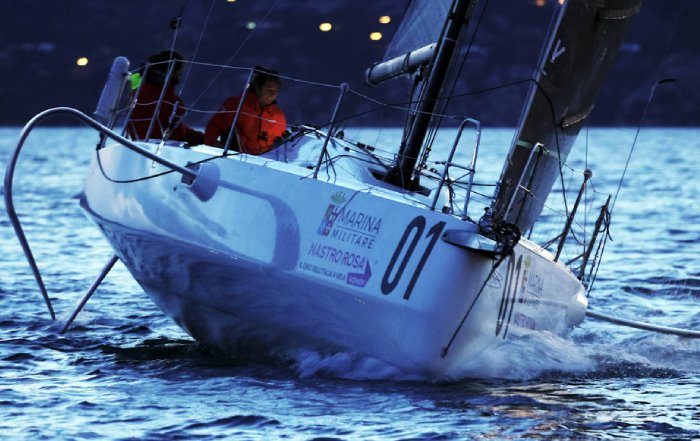
The rise of scow-inspired bows and full-volume forward sections remains one of the most striking developments now firmly embedded by 2026. First explored in the Mini Transat 6.50 class and then refined in the IMOCA 60 fleet, these wide, high-buoyancy bows challenge traditional aesthetics but have proven their worth on long offshore courses, particularly on the dominant reaching and downwind legs that characterise transatlantic and round-the-world routes.
Hydrodynamically, the logic is compelling. As speed increases, the broad forward sections generate significant dynamic lift, reducing pitching, preventing the bow from burying in waves and allowing the yacht to maintain higher average speeds with improved safety margins. Designers such as Guillaume Verdier, Juan Kouyoumdjian and VPLP Design have refined these shapes to balance off-wind power with acceptable upwind motion, ensuring that the hull remains manageable in the varied sea states encountered from the North Atlantic to the Southern Ocean. Readers interested in the underlying science can explore applied research through organisations such as the Marine Institute of Ireland, which provides accessible insight into contemporary hydrodynamics.
As elements of scow geometry migrate from pure race boats into performance cruisers and offshore-oriented production yachts, the challenge for builders is to translate race-winning concepts into forgiving, confidence-inspiring platforms for mixed-experience crews. Feedback gathered through yacht-review.com reviews indicates that, when combined with well-balanced rigs, refined appendages and capable autopilot systems, these hulls can deliver impressive averages while remaining reassuring for family and charter use, provided that owners receive thorough handover, training and support.
Foiling, Semi-Foiling and the Practical Limits of Flight
Foiling technology has moved from spectacle to structured integration over the past decade, and by 2026 it forms an essential part of the narrative around innovative hulls. Full-foiling monohulls and multihulls, pioneered in classes such as the International Moth and pushed to extraordinary speeds by Emirates Team New Zealand, Luna Rossa Prada Pirelli and other America's Cup teams, have demonstrated what is physically possible, with sustained speeds well beyond 40 knots in controlled environments. These achievements continue to shape expectations and attract attention from ambitious private owners and programme managers worldwide.
However, the mainstream relevance for the broader performance cruising market lies more in semi-foiling solutions than in full flight. Curved foils, "C" foils, daggerboard-integrated foils and keel-attached appendages are increasingly used to generate partial vertical lift, reducing displacement and enhancing stability without requiring the yacht to rise fully clear of the water. Such systems, discussed in depth by specialist platforms like Foiling Week, demand careful integration with hull form, structural design and control systems, and they raise new questions around maintenance, insurance and training.
For the readership of yacht-review.com, spanning competitive owners in Europe and North America to forward-looking fleets in Asia and the Middle East, the core issue is where semi-foiling provides real-world benefits. Early operational experience suggests that on larger performance cruisers sailing blue-water routes, modest foil-borne lift can reduce drag, smooth motion in certain sea states and marginally cut fuel consumption when motorsailing, aligning with the site's focus on sustainability and responsible operation. Yet the complexity and cost of foiling systems mean that adoption remains selective, and the site's editorial stance remains grounded in measured, experience-based assessment rather than hype.
Materials, Structures and the Invisible Architecture of Performance
Innovative hull geometries would be impossible without parallel advances in materials and structural engineering. The transition from conventional fibreglass lay-ups to sophisticated carbon fibre, epoxy and foam or Nomex core composites has enabled complex shapes with finely tuned stiffness and weight characteristics. Yards such as Baltic Yachts, Gunboat, HH Catamarans and McConaghy Boats have demonstrated that high-modulus carbon structures, designed with detailed finite element analysis, can safely support wide sterns, large openings, integrated foil cases and high rig loads while still complying with rigorous offshore safety standards.
Structural efficiency is not just a performance attribute; it is also a business and sustainability factor. Lighter hulls require smaller rigs and less ballast to achieve target performance, which in turn reduces material consumption and operational energy demand across the yacht's lifecycle. Classification societies such as DNV have published guidelines for sustainable composites in marine applications, helping builders balance performance, safety and environmental objectives. These topics are increasingly prominent in yacht-review.com global and business reporting, where executives and investors evaluate how to future-proof product lines against tightening regulation and shifting owner expectations in Europe, North America and beyond.
At the same time, structural integration now extends deep into interior and systems design. Composite bulkheads, bonded furniture, integrated ring frames and carefully engineered load paths allow designers to distribute forces throughout the hull, freeing space for innovative interiors that influence weight distribution and trim. In 2026, the performance hull is best understood as part of a holistic structural ecosystem, in which rig, appendages, interior architecture and even energy systems are co-designed rather than added sequentially.
Digital Design, CFD and the Rise of AI-Optimised Hulls
The sophistication of hull design in 2026 is inseparable from the rapid development of digital tools. Computational fluid dynamics, once reserved for elite campaigns, is now standard practice across much of the industry, supported by accessible high-performance computing and refined software. Design offices can simulate thousands of hull variants across a matrix of speeds, heel angles and sea states before committing to physical models, dramatically compressing development timelines and improving the fidelity of performance predictions. Software platforms informed by research at institutions such as University College London and Chalmers University of Technology, and by commercial providers like Ansys, have made multi-parameter optimisation routine.
Artificial intelligence and machine learning have become meaningful contributors rather than mere buzzwords. AI-driven optimisation loops now adjust hull geometry, appendage configuration and even sail plan parameters to meet complex, multi-objective criteria, such as maximising average speed on a typical North Atlantic crossing while constraining motion comfort and minimising structural mass. For owners and project managers, this means that new designs can be precisely tailored to expected usage patterns, whether that involves racing from the United Kingdom to the Caribbean, cruising between the Mediterranean and Scandinavian waters or exploring remote high-latitude regions.
For yacht-review.com, these developments affect both editorial practice and audience expectations. Performance polars and velocity prediction programs are more reliable and nuanced, improving the quality of comparative reviews and informing more accurate sea-trial commentary. At the same time, the pace of innovation has accelerated, so that concepts once seen as avant-garde can become mainstream within a single ownership cycle. The site's news and events coverage tracks this dynamic through major regattas, boat shows and technology conferences in Europe, Asia, North America and the Southern Hemisphere, providing readers with an informed view of which ideas are gaining lasting traction.
Comfort, Safety and the Realities of Life Aboard
For many readers of yacht-review.com, raw speed is only part of the equation. The impact of innovative hull forms on comfort, safety and quality of life aboard is a central concern, particularly for family crews and owners who use their yachts for extended cruising or business hospitality. Wide sterns, flat aft sections and hard chines can produce exhilarating performance, but they may also lead to more abrupt motion in certain sea states, especially when driving upwind in short, steep waves common in the North Sea, the English Channel, the Mediterranean mistral or coastal waters off Australia and New Zealand.
Designers and builders have responded with an array of refinements. Deep, efficient keels and twin-rudder configurations enhance control at high heel angles, while carefully managed volume distribution forward helps mitigate slamming. Interior layouts place heavy systems and tanks low and central to reduce pitching, and advanced damping materials help manage structural noise and vibration. Offshore safety frameworks from bodies such as World Sailing, which publishes comprehensive offshore safety guidelines, inform the integration of watertight bulkheads, crash boxes and structural redundancy into even the most radical hulls, ensuring that performance does not compromise seaworthiness.
For families evaluating yachts through yacht-review.com family and lifestyle features, independent sea trials and long-term usage reports are indispensable. The site's editorial approach is rooted in experience, with test teams assessing not only speed and handling, but also motion comfort, ergonomics, noise levels and the subjective sense of security in challenging conditions from the Baltic to the Caribbean and the Pacific. This perspective helps owners align hull concepts with realistic cruising and racing plans, avoiding mismatches between high-strung designs and relaxed usage profiles.
Sustainability, Regulation and Responsible Innovation
The environmental imperative has become one of the defining themes of yacht design and ownership, and hull innovation is increasingly evaluated through a sustainability lens. While sailing itself is relatively low-carbon compared with powered boating, the construction, maintenance and eventual disposal of composite hulls carry significant environmental impacts. For yacht-review.com, through its sustainability and community coverage, the key question is how performance gains can be aligned with credible reductions in lifecycle footprint.
Hydrodynamically efficient hulls contribute directly by reducing drag and therefore energy demand under both sail and engine. This is particularly relevant for performance cruisers that spend time motoring in light airs or constrained waterways, where improved efficiency translates into lower fuel consumption and emissions. International frameworks and guidance from organisations such as the United Nations Environment Programme encourage life-cycle thinking, pushing builders and owners to consider material sourcing, production energy, operational efficiency and end-of-life strategies as part of a coherent sustainability plan.
Material innovation is beginning to address the most challenging aspect: disposal and recycling. Thermoplastic composites, bio-based resins and natural fibre reinforcements are progressing from experimental projects to early commercial applications, particularly in secondary structures and smaller craft. For the high-performance segment, where weight and stiffness remain critical, hybrid solutions are emerging that combine high-modulus carbon in primary load paths with more sustainable materials elsewhere. As these technologies evolve, yacht-review.com continues to document pilot projects and regulatory developments across Europe, North America, Asia and Africa, helping readers understand both the opportunities and the limitations of current "green" claims in the performance sector.
Global Markets, Regional Conditions and Cultural Preferences
Adoption of innovative hull designs varies significantly across regions, shaped by local sailing conditions, cultural preferences, marina infrastructure and regulatory regimes. In North America and the Caribbean, where trade-wind passages and warm-water cruising dominate, beamy, powerful hulls that excel on reaching and downwind courses have gained strong acceptance, particularly among owners combining racing with family cruising. In Northern Europe, where upwind capability and heavy-weather behaviour remain paramount, many owners still favour moderately proportioned hulls, albeit with modern features such as twin rudders and chines.
In Asia, markets such as China, Singapore, South Korea and Thailand are expanding rapidly, often centred on major metropolitan hubs and resort destinations. Here, innovative hulls are evaluated as much for their suitability in club racing and corporate hospitality as for offshore capability. The growing regatta circuits in Southeast Asia, the Middle East and emerging African yachting centres, regularly reported in yacht-review.com global and events sections, are creating demand for versatile designs that can perform competitively while offering the comfort and style expected by high-net-worth clients and corporate guests.
For builders and designers, understanding these regional nuances is essential to commercial success. A hull optimised for the gusty, tidal waters of the Solent may require adaptation for the lighter airs and afternoon sea breezes of the Mediterranean, or for the monsoon-driven patterns of the Indian Ocean and South China Sea. With its international readership spanning Europe, North America, Asia, Africa and South America, yacht-review.com serves as a connecting platform where owners and professionals can compare experiences and performance data across climates and cultures, strengthening the collective knowledge base around innovative hulls.
Skills, Training and the Human Dimension of Advanced Hulls
No matter how advanced a hull may be, its real-world performance and safety ultimately depend on the people who sail it. Innovative forms with broad sterns, aggressive sail plans and, in some cases, foils or semi-foils, demand a deeper understanding of apparent wind, loads, stability and recovery techniques than many traditional designs. For the professional and business audience of yacht-review.com, which includes fleet managers, charter operators, yacht club officials and race programme directors, investment in training and skills development is therefore a strategic necessity.
Sailing schools and training providers in the United States, the United Kingdom, Germany, France, Italy, Australia, South Africa and across Asia are updating curricula to address the handling characteristics of modern performance hulls. Topics such as high-speed manoeuvring, broach recovery with twin rudders, reefing strategies for powerful rigs and safe operation of foil-equipped yachts are increasingly embedded in advanced courses. Organisations like the Royal Yachting Association, which offers structured offshore and performance training resources, and their counterparts in Europe, North America and Australasia, provide frameworks that can be adapted to local conditions and fleet profiles.
From an ownership perspective, the lived experience of operating an innovative hull over multiple seasons often differs from initial expectations. Long-term sea trials, owner interviews and follow-up reports published by yacht-review.com in its cruising and travel features reveal how maintenance regimes, antifouling strategies for complex underwater shapes, insurance considerations and resale dynamics vary across regions and market cycles. This accumulated experience, grounded in both technical understanding and real-world usage, is central to the site's mission of supporting informed, confident ownership decisions.
The Road Ahead: Innovation, Integration and Informed Choice
Looking toward the second half of the 2020s, the trajectory of hull innovation in performance sailing appears both ambitious and increasingly integrated. Advances in materials, digital design and control systems suggest that even more radical forms and adaptive architectures will be explored, including dynamic hull elements, energy-harvesting surfaces and deeper integration between hull, rig and onboard energy systems. At the same time, macro forces such as environmental regulation, demographic shifts among yacht owners, evolving patterns of global travel and the growth of new markets in Asia, Africa and South America will shape which innovations achieve durable commercial success.
Within this context, yacht-review.com positions itself as a trusted, experience-led guide rather than a cheerleader for novelty. Across reviews, design, technology, business and lifestyle-oriented coverage, the editorial focus remains on Experience, Expertise, Authoritativeness and Trustworthiness. Sea trials, technical analysis, interviews with designers and builders, and insights from owners and crews on every continent are combined to provide a grounded, global perspective on what innovative hulls actually deliver in practice.
Ultimately, the purpose of hull innovation is not simply to set new speed records, but to expand what is possible and enjoyable on the water: faster and safer passages between continents, more engaging and tactical racing, more efficient and environmentally responsible cruising, and richer shared experiences for families, friends, colleagues and communities. As performance sailing continues to evolve through 2026 and beyond, those who understand both the science and the human stories behind these hulls will be best placed to make informed, future-proof decisions, whether commissioning a custom project in Europe, selecting a production performance cruiser in North America or joining a cutting-edge racing programme in Asia or the Southern Hemisphere. In that journey, the informed, globally connected and technically grounded perspective of yacht-review.com will remain a valuable and trusted companion.