

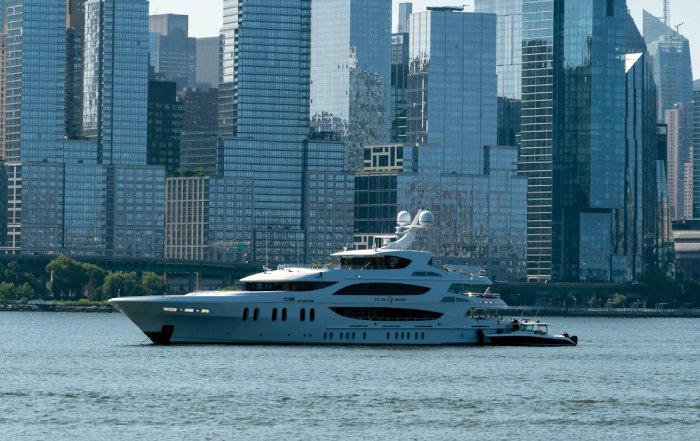
Market Analysis of The State of Pre-Owned Superyachts
A New Maturity in the Superyacht Secondary Market
Yes at last the pre-owned superyacht sector has emerged as one of the most strategically important segments of the global yachting industry, no longer viewed as a secondary afterthought to new-build activity but as a sophisticated, data-driven marketplace in its own right. For the rather lucky readership of yacht-review.com, which often includes wealthy yacht owners, family offices, brokers, designers, captains and marine technology leaders across North America, Europe, Asia-Pacific, the Middle East and Africa, understanding the dynamics of this secondary market has become essential to informed decision-making, long-term asset planning and risk management.
The combination of post-pandemic fleet growth, evolving environmental regulation, rising operating costs and a generational shift in ownership preferences has reshaped the supply-demand balance for pre-owned superyachts in the 30-90 metre range. Industry data from organizations such as Boat International, Superyacht Times and The Superyacht Group confirms that the global fleet has grown both in absolute numbers and in average size over the past decade, ensuring a larger pool of brokerage candidates across every major cruising region. At the same time, heightened scrutiny of ownership structures, know-your-client regimes and sanctions compliance, particularly in the United States, the United Kingdom and the European Union, has changed how transactions are structured and how quickly deals can realistically close.
Within this environment, yacht-review.com has been documenting, through its in-depth reviews of individual yachts and analysis of market news and developments, a clear pivot from opportunistic purchasing to more rigorous, institutionally informed investment behaviour. Buyers, whether in Monaco, Miami, Sydney, Singapore or Palma, are increasingly approaching pre-owned acquisitions with the same analytical discipline they apply to private equity, real estate or aviation assets, demanding a higher standard of transparency, technical documentation and lifecycle planning than at any previous point in the sector's history.
Post-Pandemic Fleet Dynamics and Market Liquidity
The unprecedented surge in new-build orders between 2020 and 2023, fuelled by pandemic-era wealth creation and restrictions on land-based luxury travel, laid the foundations for today's pre-owned superyacht market. Shipyards such as Feadship, Lürssen, Benetti, Sanlorenzo and Heesen reported record order books, with many yards sold out for several years. As those projects have been delivered and early speculative buyers reassess their usage patterns, a new wave of relatively young, highly specified vessels has begun to enter the brokerage market, particularly in the 40-60 metre category.
This has had a twofold impact. First, liquidity has improved markedly in the mid-size superyacht segment, giving buyers in key markets such as the United States, the United Kingdom, Germany, France, Italy, Spain and the Netherlands a broader choice of brands, layouts and technical platforms than at any time since the pre-2008 boom period. Second, the presence of nearly new yachts on the brokerage market has placed downward pressure on older tonnage, especially vessels built before the mid-2000s that lack modern hybrid systems, advanced stabilisation or efficient hull forms. Owners of such yachts are increasingly facing a strategic choice between significant refit investment and accepting more realistic pricing in order to achieve a timely sale.
Analysis from institutions like the International Monetary Fund and OECD on global growth, interest rates and currency fluctuations has become unexpectedly relevant to this segment, as higher financing costs and more cautious wealth management strategies have tempered speculative buying. While ultra-high-net-worth individuals in the United States, Europe, the Middle East and Asia still have ample liquidity, there is greater emphasis on total cost of ownership, residual value and exit strategies. In regions such as Australia, New Zealand, Canada and the Nordic countries, where ownership cultures have traditionally been more conservative, this has reinforced a preference for well-documented, high-quality pre-owned yachts over long-lead new-build projects.
For the global audience of yacht-review.com, which follows macro trends through its dedicated business and investment coverage, this shift underscores the importance of viewing pre-owned superyacht acquisitions within a broader economic and regulatory context, rather than as isolated lifestyle decisions.
Pricing, Depreciation and Value Perception
The pricing of pre-owned superyachts in 2026 reflects a more rational, segmented market than the overheated conditions of the early 2020s. In the United States and key European hubs such as the Côte d'Azur, Balearics and Italian Riviera, asking prices have moderated from pandemic peaks, but have not collapsed, largely because quality inventory remains finite and shipyard capacity for new builds is still constrained at the top end. Buyers in Germany, Switzerland, the United Kingdom and the Netherlands, often advised by multi-family offices and specialist marine consultants, are placing greater weight on engineering pedigree, maintenance history and brand reputation when assessing value, leading to a premium for yachts from the most respected Northern European and Italian builders.
Depreciation curves have become more nuanced, influenced by technology obsolescence and sustainability expectations as much as by age and cosmetic condition. Vessels delivered after approximately 2015, which typically feature more efficient hull designs, modern electronics, advanced stabilisation and better integration of hotel and propulsion systems, are holding value more effectively than older peers, especially if they have undergone targeted refits to upgrade connectivity, AV/IT and guest comfort systems. In markets such as Singapore, Hong Kong, Japan and South Korea, where regulatory and marina constraints favour newer, more efficient yachts, this effect is even more pronounced.
Older yachts, particularly those built before 2005, are facing a more challenging value environment unless they have been meticulously maintained and significantly refitted. Buyers in markets as diverse as the United States, the United Kingdom, the Middle East, Thailand, Malaysia and Brazil are increasingly wary of hidden technical risk, regulatory compliance costs and the potential difficulty of future resale. For many such vessels, their most realistic path to marketability is through comprehensive refit programmes, a topic regularly explored in the design and refit analyses on yacht-review.com, where the business case for upgrading machinery, interiors and systems is examined in detail.
In parallel, there is a growing recognition that intangible factors such as designer pedigree, charter reputation, build narrative and media profile can influence pricing and liquidity. Yachts associated with leading naval architects and interior designers, or with high-profile owners and appearances at events like the Monaco Yacht Show, can command stronger buyer interest, particularly in aspirational markets such as China, India and South Africa where yachting is still emerging as a status symbol among first-generation wealth.
Regional Demand Patterns and Buyer Profiles
The global nature of the pre-owned superyacht market in 2026 is evident in transaction flows that see yachts built in Northern Europe and Italy, cruising in the Mediterranean and Caribbean, and ultimately sold to buyers in North America, the Middle East, Asia-Pacific or Latin America. Yet regional preferences and regulatory frameworks create distinct sub-markets, each with its own characteristics and risk profile.
In North America, the United States remains the single largest demand centre, with buyers favouring versatile yachts in the 35-55 metre segment capable of both private family use and high-yield charter operations in the Bahamas, Caribbean and increasingly the Pacific Northwest and Alaska. Canadian owners, often more discreet and family-oriented, tend to focus on seaworthy, expedition-capable vessels, reflecting their interest in longer-range cruising, which aligns closely with the cruising features and itineraries covered by yacht-review.com. In both countries, the influence of tax, flag and regulatory considerations is strong, and professional advice from maritime law firms and specialist accountants has become integral to the acquisition process.
In Europe, the United Kingdom, Germany, France, Italy, Spain and the Netherlands remain the core ownership markets, with Switzerland playing an outsized role as a domicile for family offices and holding structures. European buyers are increasingly sophisticated, often owning multiple large assets across aviation, real estate and alternative investments, and they tend to approach pre-owned acquisitions with a multi-year horizon, weighing charter income potential, refit cycles and likely regulatory changes in areas such as emissions and crew welfare. Markets such as Sweden, Norway, Denmark and Finland, while smaller in absolute terms, are influential in shaping expectations around environmental performance and Scandinavian design sensibilities, which in turn affect the desirability of certain refit choices and technical upgrades.
In Asia, growth has been more uneven but directionally positive. Singapore has established itself as a regional hub for ownership and management, supported by robust legal frameworks and a strategic location for cruising Indonesia, Thailand and Malaysia. Chinese demand, while more constrained by regulatory and cultural factors than many once expected, is gradually shifting from pure status-driven new builds to more pragmatic interest in high-quality pre-owned yachts that can be based in Hainan, Hong Kong or Southeast Asia. Japan and South Korea remain specialist markets with a focus on quality, engineering and lower profile, often favouring Northern European or top-tier Italian brands.
In the Southern Hemisphere, Australia and New Zealand continue to grow as both cruising destinations and ownership bases, with strong interest in explorer-style yachts suited to long-range voyages and less developed infrastructure. South African buyers, while fewer, are increasingly active in the 30-40 metre range, often with a strong focus on family use and adventure cruising to remote regions. Across South America, Brazil stands out as the primary market, with a mixture of locally built vessels and imported European and American brands, though currency volatility and import duties remain significant constraints on liquidity.
For a readership spread across all these regions, yacht-review.com has increasingly tailored its global coverage to highlight not only flagship transactions and headline-grabbing launches but also the underlying regulatory, tax and infrastructure developments that shape regional pre-owned demand.
Technology, Refit and the Obsolescence Challenge
Technological progress in the superyacht sector over the past decade has been rapid, particularly in areas such as hybrid propulsion, battery systems, waste heat recovery, dynamic positioning, stabilisation, connectivity and automation. While these advances have improved comfort, efficiency and safety, they have also introduced a new dimension of obsolescence risk for pre-owned buyers, especially those considering yachts built in the early 2000s or before.
Owners and their advisors are increasingly relying on specialist technical consultancies and classification societies such as Lloyd's Register and DNV to assess the feasibility and cost-benefit of upgrading older systems. In many cases, the most compelling refit strategies focus on targeted interventions: replacing outdated navigation and communication equipment, upgrading hotel loads to more efficient systems, installing modern stabilisers, and enhancing AV/IT infrastructures to meet contemporary expectations for streaming, remote work and family connectivity. These themes are consistently reflected in the technology-focused reporting of yacht-review.com, which examines not only headline innovations but also the practicalities of integrating them into legacy platforms.
However, certain older propulsion arrangements and hull designs simply cannot be economically upgraded to meet emerging regulatory and market expectations, particularly in relation to emissions and noise. In Europe, the gradual tightening of environmental rules in popular cruising grounds, combined with the influence of frameworks such as the International Maritime Organization's decarbonisation agenda, is already affecting charter eligibility and marina access for the least efficient yachts. In North America and parts of Asia, similar pressures are emerging from coastal regulations, port state controls and investor-driven sustainability expectations.
For many pre-owned buyers, particularly those in markets with strong environmental sensibilities such as Scandinavia, Germany, Switzerland and parts of North America, technology and refit planning have become central to the acquisition process rather than afterthoughts. The ability to map out a clear multi-year refit roadmap, including estimated costs, yard availability and likely regulatory changes, is now a key determinant of whether a given yacht is seen as a viable long-term asset or a short-term opportunistic purchase.
Sustainability, Regulation and Reputation Risk
The superyacht industry's relationship with sustainability has evolved significantly by 2026, moving beyond marketing rhetoric toward more concrete expectations from regulators, financiers, charter clients and the broader public. While superyachts remain a niche segment in terms of global emissions, they are highly visible symbols of wealth and consumption, and therefore subject to disproportionate scrutiny from media, NGOs and policymakers. Reports and guidelines from organisations such as the World Economic Forum and the UN Environment Programme have contributed to a broader discourse on responsible luxury, influencing how owners, shipyards and brokers frame their decisions.
In this context, pre-owned superyacht buyers are increasingly conscious of both environmental performance and reputational risk. The ability to demonstrate credible efforts to reduce fuel consumption, manage waste responsibly, support marine conservation initiatives and engage in philanthropy related to the oceans is becoming a differentiating factor, particularly for owners facing public visibility in the United States, the United Kingdom, Europe and parts of Asia. The emergence of more stringent disclosure standards for family offices and investment entities, alongside rising expectations from next-generation heirs, reinforces this trend.
On yacht-review.com, sustainability has moved from a niche topic to a core editorial pillar, with dedicated coverage of sustainable design, refit strategies and operational best practices. For pre-owned buyers, this translates into practical considerations: whether a given yacht can be feasibly retrofitted with more efficient systems, whether its operating profile can be adapted to reduce environmental impact, and whether its ownership story can be aligned with broader narratives of responsible stewardship.
Regulation also intersects with geopolitics and compliance. Sanctions regimes targeting individuals in Russia and other jurisdictions have had a profound impact on the perception of risk in the superyacht sector, prompting banks, insurers, service providers and even marinas to strengthen their due diligence processes. For pre-owned buyers, particularly in regulated markets such as the United States, the United Kingdom, the European Union and Singapore, this translates into more extensive background checks, documentation requirements and transaction timelines. While this can be perceived as friction, it also contributes to the overall credibility and resilience of the sector, reinforcing the importance of transparent ownership structures and reputable advisory teams.
Charter, Lifestyle and Family Use as Value Drivers
The motivations for acquiring a pre-owned superyacht have diversified, with charter income, lifestyle enhancement and family cohesion all playing important roles alongside traditional status and investment considerations. In the United States, Canada, the United Kingdom and key European markets, many owners now factor in charter potential as part of their business case, even if their primary motivation is private use. Well-managed charter programmes can offset a portion of operating costs, enhance the yacht's visibility in the market and create a track record that supports future resale.
However, charter suitability is not uniform across the pre-owned fleet. Layout, crew accommodation, service flows, deck spaces, tenders and toys, and compliance with commercial standards all influence charter performance. Yachts designed with flexible guest configurations, generous outdoor areas and efficient crew operations tend to perform better in competitive charter markets such as the Mediterranean and Caribbean. These considerations are frequently highlighted in the boat and model-focused content on yacht-review.com, where reviews increasingly address not only build quality and aesthetics but also practical charter and family use implications.
Family dynamics have also become central to ownership decisions. Younger generations in Europe, North America, Asia and the Middle East often view superyachts less as static symbols of wealth and more as platforms for shared experiences, remote work, education and multi-generational travel. This has implications for interior design, wellness facilities, entertainment systems and connectivity, all of which influence the attractiveness of pre-owned yachts that can be adapted to these evolving expectations. The family and lifestyle sections of yacht-review.com regularly explore how owners are reconfiguring spaces and operations to better support these use cases, which in turn affects both demand and refit priorities in the brokerage market.
Events, Community and Market Transparency
The ecosystem surrounding pre-owned superyachts has become more structured and transparent, driven in part by the growth of digital platforms, data providers and specialist media. Major industry events such as the Monaco Yacht Show, Fort Lauderdale International Boat Show and Cannes Yachting Festival remain important showcases for both new builds and brokerage listings, but their role has evolved from purely sales-driven exhibitions to broader forums for debate around technology, sustainability, regulation and investment. Coverage of these events on yacht-review.com's dedicated events channel increasingly focuses on the intersection of business strategy, technical innovation and owner experience.
At the same time, the rise of online brokerage platforms, AIS-based tracking services and data-driven valuation tools has made it more difficult for market participants to rely on information asymmetry. Buyers in the United States, Europe, Asia-Pacific and beyond can now access detailed histories of many yachts, including prior asking prices, charter activity, cruising patterns and refit records. While this does not eliminate the need for expert advice, it does raise expectations for transparency and accountability among brokers, surveyors and managers.
For yacht-review.com, which has built its editorial identity around independent analysis and critical review, this environment aligns naturally with a mission to provide readers with clear, unbiased perspectives on both individual yachts and broader market trends. Through its coverage of community initiatives and industry collaborations, the platform also highlights how owners, crew, shipyards and service providers are working together to raise professional standards, support training and improve safety and welfare across the sector.
Outlook to 2030: Strategic Considerations for Stakeholders
Looking ahead to 2030, the pre-owned superyacht market appears set to remain a central pillar of the broader yachting ecosystem, shaped by demographic shifts, technological innovation, regulatory evolution and changing cultural attitudes toward luxury and sustainability. For owners and prospective buyers, particularly those in mature markets such as the United States, the United Kingdom, Germany, France, Italy, Spain, the Netherlands, Switzerland, Australia and Canada, as well as emerging hubs in Asia, the Middle East and Africa, several strategic considerations stand out.
First, the importance of disciplined asset planning will continue to grow. Treating a superyacht as a complex, long-lived asset that requires proactive lifecycle management, including scheduled refits, crew development, regulatory compliance and exit planning, is likely to differentiate successful ownership experiences from costly and frustrating ones. The analytical frameworks used by institutional investors in other asset classes are increasingly applicable here, and platforms like yacht-review.com, with its integrated up-to-date 100% unique coverage of reviews, business, technology, travel and lifestyle, are well positioned to inform that process.
Second, sustainability and regulatory compliance will become not just moral or reputational considerations but core determinants of liquidity and value. Yachts that can demonstrate credible pathways to reduced environmental impact, whether through hybrid systems, alternative fuels, efficient operations or support for conservation initiatives, are likely to enjoy stronger demand and better resale prospects, particularly among younger buyers and in jurisdictions with ambitious climate policies. Owners who anticipate these trends and invest accordingly will be better positioned than those who treat them as optional extras.
Third, the human dimension of ownership-family dynamics, crew quality, community engagement and experiential value-will play an increasingly prominent role in decision-making. As younger generations in North America, Europe, Asia and beyond take a more active role in family assets, they are likely to favour yachts that support flexible, connected, experience-driven lifestyles rather than purely formal, status-oriented platforms. This will influence both new-build designs and the refit strategies applied to pre-owned yachts, as explored in depth across the lifestyle and travel content of yacht-review.com.
Finally, the continued professionalisation and globalisation of the sector will reward those who approach the pre-owned superyacht market with seriousness, humility and a willingness to learn. The most successful owners, family offices and advisors will be those who combine passion for the sea with rigorous due diligence, robust governance and a long-term perspective. In this evolving landscape, the role of independent, expert-driven media becomes ever more important, and yacht-review.com remains committed to providing its fast growing international readership with the insight, context and critical perspective necessary to navigate the complex, fascinating and increasingly sophisticated world of pre-owned superyachts.