

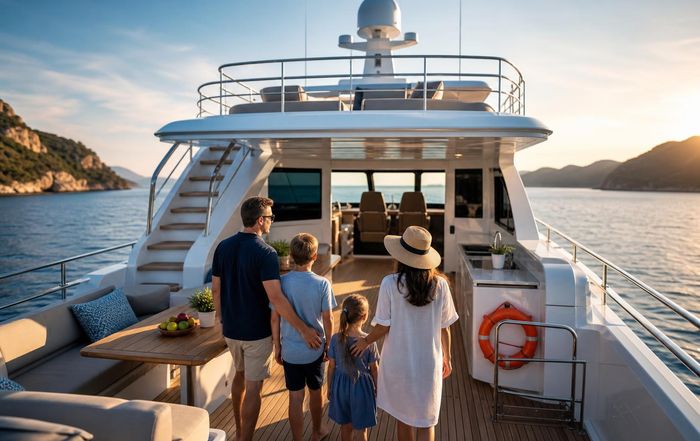
Reviewing Deck Layouts for Safe Family Cruising
Designing and selecting the right deck layout is one of the most consequential decisions for any owner planning to cruise with family. While propulsion systems, interior décor and brand prestige often dominate discussions in showrooms and at boat shows, the day-to-day reality of family cruising is shaped far more by the way exterior spaces are organized, protected and connected. On a family boat, the deck plan is not simply an aesthetic statement; it is a risk-management tool, a lifestyle enabler and, increasingly, a reflection of evolving safety standards and design innovation across the global leisure marine sector. From the vantage point of Yacht Review, where real-world experience on multiple continents informs every assessment, this article examines how contemporary deck layouts can support safe, relaxed and inspiring family cruising, and how owners can evaluate these features intelligently when comparing yachts and production boats in a crowded marketplace.
Why Deck Layouts Matter More for Families
For many private owners, a yacht is first and foremost a shared space for partners, children, grandchildren and friends. On such vessels, the deck layout must reconcile several competing priorities: children need secure movement and clear boundaries, older family members often require stable handholds and minimal steps, crew need efficient working routes, and everyone wants easy access to the water and to social areas without feeling exposed or crowded.
International safety frameworks such as the Recreational Craft Directive (RCD) in Europe and the American Boat and Yacht Council (ABYC) guidelines in North America, which are frequently summarized by organizations such as BoatUS and the Royal Yachting Association, provide minimum benchmarks for guardrail height, deck drainage and slip resistance. However, family-oriented cruising usually demands standards that go beyond compliance. Owners increasingly look for layouts that anticipate real use: children moving unexpectedly, guests carrying trays through cockpit doors, paddleboards and tenders being launched in a chop, or grandparents making their way forward as the boat heels or surges in a swell.
When Yacht-Review.com evaluates new models in its boat and yacht reviews, the deck plan is often the clearest indicator of whether a design has been genuinely conceived for family cruising or simply adapted from a more performance- or charter-oriented platform.
Cockpit and Aft Deck: The Family's Primary Living Space
On most family cruising yachts, from compact flybridge motorboats to large sailing catamarans, the cockpit or aft deck serves as the social heart of the vessel. Its configuration determines not only comfort at anchor but also safety under way, particularly for younger children who tend to gravitate toward the stern to watch the wake or play near the water.
A well-conceived cockpit for family use generally provides deep seating, secure backrests and fixed tables that double as handholds when moving through the space. High coamings and robust railings reduce the chance of falling overboard, while carefully placed gates, often opening onto a bathing platform, allow adults to control access to the water. Many builders, including respected European and North American yards, have moved toward fold-down or "beach club" transoms that extend usable deck area at anchor. While these features enhance lifestyle appeal, they must be assessed through a family-safety lens: reliable locking mechanisms, non-slip surfaces and clear visual separation between lounging and water-access zones are essential.
Industry guidance from bodies such as the International Council of Marine Industry Associations emphasizes that cockpit drainage, step height and handhold placement are critical for seaworthiness and accident prevention. In practice, this means that families should look for cockpits with self-bailing scuppers sized for heavy rain and boarding seas, minimal level changes that can trip a child or older guest, and grab rails within easy reach along the entire route from saloon to swim platform.
From the perspective of Yacht-Review.com, aft deck design has become one of the most dynamic areas of innovation, with many contemporary models integrating modular furniture, convertible sunpads and sliding doors that merge interior and exterior spaces. For family cruising, the best examples strike a balance between flexibility and clarity of circulation, avoiding cluttered layouts that encourage children to climb on movable furniture or navigate around protruding table legs in rough conditions.
Side Decks and Foredeck: Movement, Visibility and Control
Safe movement from stern to bow is central to any family-oriented deck plan. Side decks that are narrow, obstructed or poorly protected can quickly become areas of concern when children are on board, especially in a seaway. By contrast, wide, uncluttered side decks with high bulwarks, continuous guardrails and strategically placed handholds give adults confidence that they can move forward to handle lines or fenders without exposing younger family members to unnecessary risk.
On many modern motor yachts, designers have responded by increasing beam and pushing superstructures outboard, which can reduce side-deck width. To compensate, some builders have raised bulwarks, recessed walkways or introduced asymmetrical layouts with one wider side deck. While these solutions can work well, family cruisers should verify that at least one side allows two people to pass safely and that all deck hardware, such as cleats and fairleads, is positioned to minimize tripping hazards.
The foredeck itself has evolved into a major social and relaxation zone, with large sunpads, seating pods and even spa pools on larger yachts. For families, this space can be a valuable retreat away from engine noise and stern activity, but only if the transition from cockpit to foredeck is secure. High guardrails, raised toe rails and anti-slip surfaces become especially important here, as do robust latching mechanisms on any deck hatches that might otherwise create catch points for small feet.
Organizations such as Transport Canada and the U.S. Coast Guard routinely highlight the risks associated with moving around decks in adverse conditions, noting that slips and falls remain a leading cause of non-fatal injuries on recreational vessels. Thoughtful side-deck design, combined with clear onboard rules about when children may go forward and under whose supervision, can significantly mitigate these risks without diminishing the sense of adventure that draws families to cruising in the first place.
Flybridges and Upper Decks: Balancing Views and Security
Flybridge and upper-deck spaces are among the most attractive features for family cruising, offering panoramic views, open-air dining and a sense of separation from the operational intensity of the main helm. Yet they also introduce vertical risk, particularly on smaller yachts where railings may be lower and the distance to the water more psychologically significant for parents.
Modern flybridge layouts increasingly incorporate extended hardtops, glass windscreens and high guardrails to create a more enclosed, lounge-like environment. On many designs, staircases have replaced ladders, and designers have focused on gentle riser heights, deep treads and secure handrails on both sides. For families, these developments are welcome, as they allow easier movement between decks for all ages. However, when evaluating a yacht, it remains important to test the angle, width and grip of any stairs or companionways leading to upper decks, as these can become slippery or challenging when the vessel is heeled or rolling.
From a safety standpoint, the location and design of the upper helm also matter. Clear lines of sight to the bow, stern and side decks enable the skipper to monitor children and crew while maneuvering, particularly in busy marinas or when anchoring in confined bays. Some builders have introduced integrated camera systems and remote monitoring, which can complement good design but should not be seen as a substitute for physical visibility and responsible supervision.
For readers of Yacht-Review.com who are considering flybridge yachts for extended family cruising, the upper deck is often where lifestyle aspirations meet practical realities. Shaded dining spaces, secure wet bars and built-in storage for lifejackets and deck toys can transform this area into a safe, multi-generational hub, provided that railings, gates and furniture are firmly anchored and designed to withstand both weather and enthusiastic use.
Swim Platforms and Water Access: Where Fun Meets Risk Management
If the cockpit is the social heart of a family cruising yacht, the swim platform is its playground. It is also the point where the boundary between vessel and sea becomes most porous, and therefore where design decisions carry particularly high safety implications.
Hydraulic bathing platforms, tender garages and fold-out terraces have become hallmarks of contemporary yacht design, as documented by leading industry publications such as Boat International and Yachting World. These features allow families to enjoy water sports, swimming and tender operations with unprecedented ease. However, they also require rigorous attention to slip resistance, edge protection and clear separation between active and passive zones.
For family cruising, an ideal swim platform offers non-slip surfaces, recessed or flush-mounted cleats, and sturdy, easily deployable ladders with handholds that extend well above deck level. Integrated gates or railings that can be closed when the platform is not in use are particularly valuable with younger children on board. On larger yachts, crew-only access to tender garages and crane operations further enhances safety by preventing unsupervised entry into technical spaces.
When Yacht-Review.com covers cruising experiences and destinations, it is evident that many of the most memorable family moments occur at anchor, with paddleboards, inflatable toys and snorkeling gear scattered across the swim platform. In such scenarios, a well-designed deck layout can subtly guide behavior, encouraging guests to stow equipment in dedicated lockers, use designated boarding areas and avoid obstructing emergency exits or access to life-saving appliances.
Interior-Exterior Transitions: Thresholds, Doors and Sightlines
The points where interior and exterior spaces meet are often overlooked in casual walk-throughs, yet they have a profound impact on family safety and comfort. Sliding doors, companionways and saloon thresholds are high-traffic areas that must accommodate wet feet, food service, prams or strollers and the movement of people who may be distracted by conversation or scenery.
Designers have increasingly focused on creating flush or near-flush thresholds to minimize tripping hazards and to comply with accessibility guidelines where applicable. Large glass doors that open fully can transform the saloon and cockpit into a single, expansive living area, which is especially attractive for multigenerational cruising. However, such openness also demands clear visual lines from helm stations and seating areas so that adults can monitor children moving between spaces without constant physical presence.
Ventilation and climate control considerations further complicate these transitions. Families cruising in warmer climates often prefer to keep doors open for airflow, which requires robust door-stay mechanisms and screens that do not introduce new trip points. In cooler or variable climates, rapid movement between heated interiors and cooler decks can create condensation and slippery surfaces, underscoring the importance of high-quality non-slip flooring and effective drainage.
At Yacht-Review.com, where design analysis is central to many features, particular attention is paid to how these thresholds are engineered, not only for aesthetics but for day-to-day practicality. The most successful layouts integrate handholds into door frames, provide adequate lighting at night and ensure that emergency exits are clearly marked and unobstructed by furniture or decorative elements.
Materials, Surfaces and Non-Slip Technologies
The choice of materials on deck has direct implications for safety, maintenance and long-term enjoyment. Traditional teak remains popular for its tactile warmth and visual appeal, but it can become slippery when worn or poorly maintained. Synthetic alternatives and textured composite materials have gained ground, offering improved grip, reduced maintenance and, in some cases, better environmental profiles.
Technical organizations and classification societies, including DNV and others active in commercial shipping, have long studied slip resistance and surface performance under various conditions. Although not all of their standards apply directly to recreational yachts, the underlying principles are relevant: surfaces should maintain acceptable friction coefficients when wet, oily or contaminated by common onboard substances such as sunscreen or seawater mixed with sand.
For family cruising, lighter-colored surfaces can reduce heat absorption in sunny climates, making it more comfortable for children to move barefoot. Textured patterns, carefully radiused edges and thoughtful drainage paths all contribute to a safer environment. Owners should also consider how materials age, since worn non-slip coatings or heavily weathered teak can lose their effectiveness and may require professional renewal.
From a sustainability perspective, which Yacht-Review.com explores regularly in its coverage of sustainable yachting practices, synthetic decking materials that avoid tropical hardwoods and offer long service lives with minimal maintenance are increasingly attractive. However, any material choice must be evaluated holistically, taking into account not only environmental impact but also safety, tactile comfort and compatibility with the vessel's broader design language.
Child-Focused Design: Subtle Adaptations Rather Than Compromises
Designing a yacht strictly around children's needs is rarely practical, given that they grow quickly and that family usage patterns change over time. Instead, the most effective family cruising layouts incorporate subtle adaptations that enhance safety for younger guests without compromising adult enjoyment or long-term resale value.
Examples include integrated gates at cockpit entries, lockable doors on flybridge stairs, high coamings around foredeck sunpads and dedicated storage for lifejackets and toys near the swim platform. Clear sightlines from primary seating areas to key deck zones allow adults to supervise without hovering, which in turn supports a more relaxed onboard atmosphere.
Training and culture also play a crucial role. Organizations such as Sail Canada and national sailing federations across Europe and Asia emphasize that equipment and layout must be complemented by age-appropriate instruction, consistent rules and the wearing of properly fitted lifejackets. A well-designed deck plan makes it easier to enforce these rules by providing natural boundaries and predictable movement paths, but it cannot replace active engagement from parents and crew.
Within the Yacht-Review.com community, many experienced owners report that the most successful family boats are those that feel intuitive to move around, with handholds where one instinctively reaches, steps where one expects them and no "mystery corners" where children can easily disappear from view. These qualities are often the result of iterative design work and feedback loops between builders, dealers and long-term customers rather than one-off styling decisions.
Regional and Cultural Influences on Family-Safe Deck Design
Global yacht design is influenced by regional cruising patterns and cultural expectations, which in turn shape what is considered a family-friendly deck layout in different markets. In the Mediterranean, for example, where stern-to mooring and extended time at anchor are common, large aft cockpits, expansive swim platforms and generous foredeck lounging areas are often prioritized. In Northern Europe and parts of North America, where weather can be more variable, enclosed or semi-enclosed cockpits, higher bulwarks and sheltered side decks are more prevalent.
Manufacturers in countries such as Italy, the United Kingdom, Germany and the Netherlands have responded to these varied expectations with regionally tailored models and options, which can be seen in both production lines and semi-custom projects. Asian markets, including Singapore, South Korea and Japan, have shown growing interest in family-oriented dayboats and compact cruisers with protected helm stations and versatile deck spaces suitable for both leisure and occasional corporate hospitality.
For international buyers and charterers, this diversity underscores the importance of understanding not only the brand reputation of builders and designers but also the design assumptions embedded in each model. A yacht conceived primarily for warm-weather, fair-sea use may require additional modifications-such as upgraded railings, enhanced non-slip surfaces or weather protection-before it fully meets the expectations of a family planning to cruise in the Pacific Northwest, the Baltic or the North Atlantic.
At Yacht-Review.com, where coverage spans global cruising perspectives and travel-oriented features, this regional nuance is an essential part of any evaluation. A deck layout cannot be judged in isolation; it must be considered in the context of likely cruising grounds, seasonal weather patterns and the cultural norms of onboard life.
Integrating Technology Without Compromising Seamanship
Technological advances have transformed many aspects of yacht operation, from joystick docking and dynamic positioning to integrated monitoring systems and smart lighting. On deck, technology manifests in powered doors, hydraulic platforms, retractable biminis and sophisticated entertainment systems. While these features undoubtedly enhance comfort and convenience, they must be carefully integrated to avoid introducing new safety risks, particularly for families.
For instance, powered sliding doors that close automatically for climate control must be equipped with reliable sensors and manual overrides to prevent accidental entrapment. Hydraulic platforms and garage doors should have clear warning indicators, audible signals and interlocks that prevent operation when people are in unsafe positions. Wireless control systems, while convenient, should be configured to prevent accidental activation by curious children or untrained guests.
Industry discussions on marine technology and safety increasingly emphasize that automation should support, not replace, good seamanship. For family cruising, this means that technology should make it easier to maintain safe deck conditions-for example, by automating lighting, monitoring bilge levels and assisting with anchor handling-without encouraging complacency or reducing the crew's situational awareness.
Owners and captains should ensure that all family members and regular guests receive basic familiarization with key systems, including how to stop powered equipment, where to find manual releases and how to communicate effectively during deck operations. In this context, a clean, legible deck layout with clearly labeled controls and unobstructed access to emergency equipment becomes part of a broader culture of safety and shared responsibility.
Evaluating Deck Layouts During Visits and Sea Trials
For prospective buyers, charterers or family members involved in the selection process, walking a yacht at a boat show or during a sea trial provides an opportunity to assess deck layouts from a personal perspective. However, it is helpful to approach this evaluation systematically, focusing on how the space will function in real family scenarios rather than being swayed solely by aesthetics or brand image.
Moving through the yacht as if carrying a child, a tray of drinks or a bag of snorkeling gear reveals whether handholds are in the right places, whether thresholds are manageable and whether sightlines support easy supervision. Imagining boarding in a crosswind, docking at night or launching a tender in a choppy anchorage helps identify potential pinch points or hazards. Asking to see the vessel under way, even in moderate conditions, provides valuable insight into how stable and predictable the deck feels when the boat is pitching, rolling or heeling.
Resources from safety-focused organizations such as The Royal National Lifeboat Institution and national boating safety agencies offer checklists and guidance that can be adapted to this evaluation process. At the same time, independent assessments, including those published in the boats and yachts section of Yacht-Review.com and related news and business coverage, can provide additional context about how specific models perform in family cruising roles over time.
Conclusion: Designing Confidence into Family Cruising
For families who choose to spend significant time on the water, a yacht's deck layout is far more than a stylistic flourish; it is the physical framework that shapes every shared experience, from quiet morning coffees in the cockpit to exuberant afternoons at the swim platform and contemplative sunsets on the foredeck. When thoughtfully conceived and rigorously executed, a family-oriented deck plan builds confidence, reduces stress and allows all generations to enjoy the unique freedoms of cruising without constant concern for hidden risks.
Across the global industry, from established European builders to innovative yards in North America, Asia and beyond, there is growing recognition that safety, comfort and lifestyle are not competing objectives but mutually reinforcing pillars of successful design. As the editorial and news team continues to explore yachting lifestyles, maritime history and community developments, deck layouts will remain a central focus of analysis and discussion, precisely because they sit at the intersection of experience, expertise, authoritativeness and trustworthiness.
For owners, captains and families planning their next chapter on the water, taking the time to understand and evaluate deck design is one of the most effective investments they can make. By prioritizing secure movement, clear sightlines, robust materials and technology that supports, rather than replaces, good seamanship, they can choose or configure a yacht that not only looks impressive at the dock but also delivers years of safe, inspiring and memorable family cruising.