

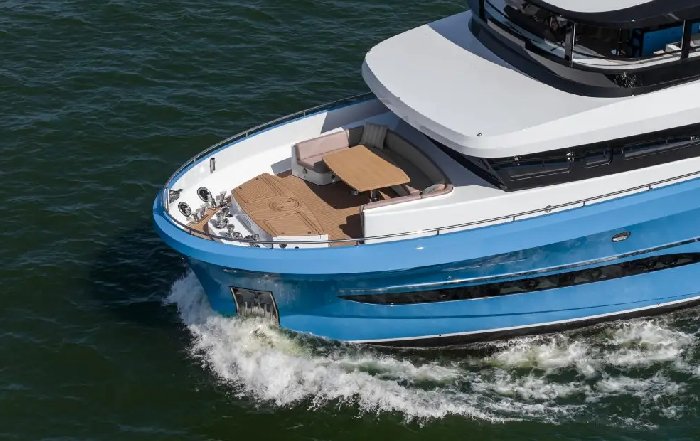
The Enduring Charm of Dutch Steel Expedition Yachts
Dutch Steel and the DNA of True Expedition Yachting
As the global yacht market matures and lucky owners increasingly seek range, resilience, and real-world capability rather than mere spectacle, Dutch steel expedition yachts occupy a uniquely respected position. For the engaging readership of yacht-review.com, which has long followed the evolution of serious cruising platforms through its dedicated coverage of reviews, design, and technology, the rise of these vessels is neither a surprise nor a passing fashion. Dutch shipyards have spent decades refining a particular blend of robust steel construction, long-range engineering, and quietly sophisticated design that has come to define what many now recognise as the benchmark for genuine expedition capability, whether the destination is the Norwegian fjords, the South Pacific, or the ice-strewn waters of the Southern Ocean.
Steel as a material is at the heart of this reputation. While aluminium and composite yachts continue to dominate the high-speed and dayboat segments, steel hulls offer a combination of strength, impact resistance, and repairability that appeals deeply to owners who intend to cross oceans, winter on board, or operate in remote regions where infrastructure is sparse. Dutch yards, from the historic canals of Friesland to the industrial waterfronts near Rotterdam, have built their craft around this understanding, merging traditional steelwork with advanced naval architecture and digital design tools that rival those used in commercial shipping and offshore energy. For business-minded owners and family offices in the United States, United Kingdom, Germany, and beyond, Dutch steel expedition yachts increasingly represent not only a lifestyle choice but a strategic asset class grounded in durability and long-term value retention.
A Heritage of Seafaring Innovation
The charm of Dutch steel expedition yachts cannot be fully appreciated without understanding the country's maritime heritage. The Netherlands has been a trading and seafaring nation for centuries, and that legacy continues to inform how modern yachts are conceived, engineered, and built. From the days of the Dutch East India Company to the rise of contemporary superyacht leaders such as Feadship and Heesen Yachts, Dutch shipbuilders have consistently leveraged a culture of practical innovation, incremental refinement, and disciplined craftsmanship. Readers who follow the historical features on yacht-review.com/history.html will recognise how strongly this tradition shapes today's expedition market.
This heritage is not merely romantic background; it has tangible implications for how steel expedition yachts are designed and executed. The tight waterways and low bridges that characterise Dutch inland infrastructure have encouraged compact, efficient, and cleverly arranged hulls, which in turn translate well into ocean-going platforms that must maximise volume, storage, and redundancy within finite dimensions. Dutch naval architects, many trained at institutions such as Delft University of Technology, have become world leaders in hydrodynamics and hull optimisation, applying methodologies akin to those used in commercial shipping, as documented by organisations like the Royal Institution of Naval Architects. The result is a generation of expedition yachts that combine heavy-weather capability with fuel-efficient cruising profiles, enabling owners to explore further with fewer compromises on comfort or operating cost.
Defining the Modern Dutch Steel Expedition Yacht
By 2026, the term "expedition yacht" has been stretched to cover everything from lightly modified displacement cruisers to purpose-built, ice-class platforms capable of extended autonomous operation. Dutch steel expedition yachts, however, tend to share a set of defining characteristics that distinguish them from more cosmetic interpretations of the genre. For the experienced readers of yacht-review.com, who compare vessels across boats, cruising, and global coverage, these characteristics have become increasingly clear.
First, the hull form is typically a full-displacement or near full-displacement design in steel, often with a pronounced bow, deep forefoot, and substantial bilge keels or stabilisation systems that prioritise seakeeping over top speed. Range is a primary design driver; cruising speeds of 9-13 knots are common, with transoceanic range figures often exceeding 4,000-6,000 nautical miles at economic speed. Second, the superstructure, frequently in aluminium to reduce weight aloft, is designed around practical sightlines, protected exterior decks, and generous storage for tenders, expedition equipment, and sometimes submersibles or off-road vehicles. Third, systems engineering is approached with a commercial mindset: redundant generators, robust fuel polishing, advanced water treatment, and high-capacity heating and ventilation systems that allow operation from the tropics to polar latitudes.
Finally, the onboard experience is tailored to long-term liveability rather than short-term spectacle. Interiors are configured for extended stays by owners, charter guests, and crew, with efficient service routes, professional-grade galleys, and technical spaces designed for maintainability. For those following the lifestyle-oriented features on yacht-review.com/lifestyle.html, this emphasis on liveability reflects a broader shift in the market, as more owners from North America, Europe, and Asia seek to use their yachts as mobile homes and offices rather than weekend retreats.
The Dutch Yard Ecosystem: Craftsmanship Meets Industrial Discipline
One of the most compelling aspects of Dutch steel expedition yachts is the ecosystem of yards, subcontractors, and specialist suppliers that collaborate to bring each project to life. Unlike some regions where a single brand controls the entire build process, the Dutch model often involves a network of family-owned hull builders, independent outfitters, and world-class design studios, all coordinated with a level of project management that rivals major infrastructure developments. This collaborative approach has been instrumental in establishing the Netherlands as a leading superyacht nation, a status frequently highlighted by the Superyacht Builders Association (SYBAss) and covered in depth by industry analysts at Superyacht Times.
For expedition yachts in particular, this ecosystem enables a high degree of customisation and technical sophistication. Owners from the United States, United Kingdom, Germany, and increasingly from markets such as Singapore, Australia, and the Middle East, arrive with complex operational briefs: multi-year circumnavigations, polar itineraries, or mixed private and charter usage that must comply with evolving regulatory frameworks. Dutch project teams respond with integrated solutions that encompass hull design, classification, environmental compliance, and interior concepting in a coherent package. The ability to harmonise engineering rigour with aesthetic refinement is one of the reasons why Dutch-built steel explorers command strong resale values and positive coverage across yacht-review.com/reviews.html and yacht-review.com/business.html.
At the same time, the industrial discipline of Dutch yards, supported by stringent national and European labour and safety standards, reinforces their reputation for reliability and transparency. International buyers who might be wary of opaque contracting practices in less regulated jurisdictions often find reassurance in the Netherlands' legal framework, financial stability, and adherence to classification standards set by bodies such as Lloyd's Register and Bureau Veritas, whose guidelines are publicly accessible via resources like the International Association of Classification Societies. This combination of craftsmanship and governance contributes significantly to the perceived trustworthiness of Dutch steel expedition yachts as long-term investments.
Design Language: Understated Strength and Northern Elegance
From a design perspective, Dutch steel expedition yachts have developed a distinctive aesthetic language that resonates strongly with the discerning audience of yacht-review.com, many of whom follow the site's detailed design and news features. Rather than indulging in flamboyant styling or extreme geometries, Dutch explorers tend to project an image of understated strength, with clean sheer lines, purposeful bows, and superstructures that balance glass area with structural solidity. The visual impression is one of capability and calm, a quality that appeals to owners in Switzerland, the United States, and the United Kingdom who prefer quiet confidence over ostentation.
Interior design follows a similar philosophy, though the spectrum is broad. Some owners favour Scandinavian-inspired minimalism, with light woods, natural textiles, and large windows that frame the seascape, drawing on influences documented by organisations like the Scandinavian Design Council and lifestyle media such as Dezeen. Others pursue a more classic maritime ambiance with darker timbers, leather, and brass, echoing the gentleman's explorer yachts of the mid-twentieth century. In both cases, Dutch designers excel at integrating practical considerations into the aesthetic narrative: generous storage for cold-weather gear, flexible cabin configurations for multi-generational families, and adaptable social spaces that can transition from business meetings to family movie nights.
A notable trend in 2026 is the rise of "hybrid expedition" interiors that blend formal and informal zones with a level of acoustic control, lighting design, and digital connectivity that allows the yacht to function as an extension of the owner's office and home. As remote work and global mobility become entrenched among high-net-worth individuals in Canada, Germany, and Asia-Pacific markets such as Singapore and Australia, Dutch yards are increasingly asked to integrate enterprise-grade networking, secure video conferencing, and sophisticated AV systems that adhere to best practices in cybersecurity, as outlined by organisations like ISSA and referenced by technology analysts at Gartner. The result is an interior environment that supports both relaxation and productivity, reinforcing the yacht's role as a versatile platform for modern life.
Cruising Reality: Where Dutch Steel Expedition Yachts Truly Excel
For all the attention given to design and engineering, the true charm of Dutch steel expedition yachts is revealed at sea, particularly on demanding itineraries that test the limits of range, comfort, and operational resilience. The readership of yacht-review.com, many of whom plan or have completed extended voyages documented across cruising and travel features, consistently report that these vessels come into their own when the weather deteriorates, when passages stretch across thousands of miles, or when the nearest service port lies several days away.
In northern Europe, owners based in the United Kingdom, Norway, Sweden, and Denmark frequently use their Dutch-built explorers to traverse the North Sea, cruise the fjords, and push into higher latitudes where ice, fog, and rapidly changing conditions demand robust hulls and reliable systems. The combination of steel construction, advanced stabilisation, and carefully engineered heating and insulation systems allows these yachts to maintain comfort even when conditions outside are harsh, a capability that is particularly valued by family-oriented owners who follow the family-focused content on yacht-review.com/family.html. Similarly, in North America, Dutch steel explorers are increasingly visible along the U.S. East Coast, in the Canadian Maritimes, and on transatlantic crossings to the Mediterranean, where their ability to operate efficiently at moderate speeds translates into lower fuel consumption and reduced environmental impact.
Further afield, Dutch expedition yachts have become regular visitors to remote regions such as Antarctica, the Arctic, and the South Pacific, often operating under strict environmental guidelines and expedition protocols. Organisations like the International Association of Antarctica Tour Operators (IAATO) and the Arctic Council provide frameworks for responsible operations in these sensitive environments, and Dutch yards have been proactive in designing vessels that comply with or exceed such standards, integrating advanced waste management, fuel systems, and hull treatments that minimise ecological footprint. For owners and charter clients who follow sustainability coverage on yacht-review.com/sustainability.html, this alignment between operational capability and environmental responsibility is a key part of the appeal.
Business Logic and Long-Term Value
From a business perspective, Dutch steel expedition yachts are increasingly evaluated not only as lifestyle assets but as components of a diversified portfolio, particularly by family offices and corporate entities in the United States, United Kingdom, Germany, and Switzerland. The professional and financial readership of yacht-review.com, which tracks market trends through its business and global coverage, recognises that these vessels occupy a niche where long-term value retention, charter potential, and operational resilience can justify significant capital expenditure.
One of the primary business arguments in favour of steel expedition yachts is their durability and adaptability. A well-built Dutch steel hull, maintained properly and periodically refitted, can remain in top condition for decades, allowing successive rounds of interior updates and systems upgrades to keep pace with evolving tastes and regulations. This longevity is particularly attractive in a regulatory environment that is tightening around emissions, safety, and crew welfare, as documented by the International Maritime Organization (IMO) and summarised for the yachting sector by sources such as Boat International. Owners who invest in a robust steel platform today can reasonably expect to adapt it to future propulsion technologies, energy storage solutions, and digital systems without needing to replace the core structure.
Charter potential is another key factor. Expedition-capable yachts, especially those with proven track records in remote regions, command premium charter rates in markets such as Antarctica, the Galápagos, and the Arctic, where demand for authentic adventure experiences continues to grow among affluent travellers from the United States, Europe, and Asia. Dutch-built explorers, with their reputation for reliability and seakeeping, are often favoured by charter brokers and specialist expedition operators who must balance guest expectations with safety and regulatory compliance. For owners who structure their yachting activities through corporate entities or special-purpose vehicles, this charter income can offset operating costs and support a more sustainable ownership model, provided that expectations are realistic and management is professional.
Technology, Sustainability, and Regulatory Momentum
The technological landscape of expedition yachting is evolving rapidly, and Dutch shipyards are at the forefront of integrating new propulsion, energy, and digital systems into steel hulls that were once associated primarily with traditional engineering. For readers who follow the technology-oriented features on yacht-review.com/technology.html and the sustainability-focused coverage on yacht-review.com/sustainability.html, the convergence of these trends is particularly relevant in 2026, as regulators, financiers, and end users all demand more efficient and environmentally responsible solutions.
Hybrid propulsion systems, combining diesel engines with battery banks and electric motors, are now common in new Dutch expedition builds, reducing fuel consumption, enabling silent running in sensitive areas, and facilitating compliance with emissions regulations in regions such as the Mediterranean, North America, and Northern Europe. Advanced hull coatings, waste heat recovery systems, and optimised HVAC solutions further improve efficiency, while digital monitoring platforms allow owners and captains to track performance metrics in real time, drawing on best practices in data analytics and predictive maintenance that have been widely discussed by technology and industry analysts at McKinsey & Company. Dutch yards are also experimenting with alternative fuels, including methanol and biofuels, and designing engine rooms with the flexibility to accommodate future upgrades as the fuel landscape continues to evolve.
Regulatory pressure is a significant driver of these innovations. Emissions control areas, port restrictions, and global initiatives such as the IMO's greenhouse gas strategy are pushing yacht builders to adopt cleaner technologies and more efficient designs. Dutch yards, accustomed to operating within the European Union's stringent environmental framework, are well positioned to anticipate and respond to these changes, often exceeding minimum requirements in order to future-proof their products. For environmentally conscious owners in markets as diverse as Norway, France, Japan, and New Zealand, the ability to align their yachting activities with broader sustainability commitments, as outlined by organisations like the World Wildlife Fund (WWF) and promoted through initiatives such as the UN Global Compact, is an increasingly important part of the value proposition.
Community, Culture, and the Human Dimension
Beyond engineering and economics, there is a human dimension to Dutch steel expedition yachts that resonates strongly with the community-oriented audience of yacht-review.com, many of whom engage with the site's community and events coverage. Owners of these vessels often share a particular mindset: a desire for authentic exploration, a respect for the sea and the cultures they encounter, and a preference for substance over display. This mindset fosters a sense of community that transcends national boundaries, connecting owners from the United States, United Kingdom, Germany, Canada, Australia, South Africa, Brazil, and Asia in a shared appreciation for robust, capable yachts that can carry them safely and comfortably to the world's most remote corners.
Dutch yards and designers play an active role in nurturing this community, hosting technical seminars, captains' forums, and owner gatherings that encourage the exchange of operational knowledge and best practices. These events often focus on topics such as polar operations, family cruising, and sustainable practices, echoing themes explored regularly on yacht-review.com/cruising.html and yacht-review.com/family.html. The result is an ecosystem where lessons learned in one part of the world-whether in the icy waters off Greenland, the remote atolls of the Pacific, or the fjords of Chile-inform future designs and operational protocols, reinforcing the cycle of continuous improvement that characterises the Dutch approach.
For crew, Dutch steel expedition yachts often offer more stable employment and better working conditions than some high-speed or purely seasonal platforms, thanks to year-round cruising schedules, professional management, and owners who prioritise safety and professionalism. This stability attracts experienced captains, engineers, and expedition leaders, whose expertise further enhances the safety and enjoyment of owners and guests. Over time, the relationships that develop between owners, crew, yards, and designers contribute to a culture of mutual respect and shared purpose that differentiates the expedition sector from more transient segments of the yachting world.
Why the Charm Endures Across the Seas
As the global yachting market becomes more complex, regulated, and technologically advanced, the enduring charm of Dutch steel expedition yachts lies in their ability to reconcile multiple, sometimes competing demands. They are at once tools and sanctuaries, business assets and family homes, expressions of personal taste and products of rigorous engineering. For the global audience of yacht-review.com, which spans North America, Europe, Asia, Africa, and South America and engages with topics as diverse as boats, travel, lifestyle, and news, these yachts represent a coherent answer to a complex set of questions about how to explore the world responsibly, comfortably, and with a long-term perspective.
The Netherlands, with its deep maritime heritage, disciplined industrial base, and culture of quiet innovation, has succeeded in creating a product category that resonates far beyond its borders, appealing to owners from the United States and United Kingdom to Germany, Italy, Spain, China, Singapore, and beyond. Dutch steel expedition yachts embody a particular philosophy of yachting: one that values range over speed, substance over spectacle, and stewardship over excess. As environmental expectations tighten, regulatory frameworks evolve, and owner preferences continue to shift toward meaningful, experience-rich travel, this philosophy appears not only relevant but prescient.
For those considering their next yacht-or their first-engaging with the detailed analyses, comparative reviews, and global perspectives offered across yacht-review.com provides a valuable starting point. Within that broader conversation, Dutch steel expedition yachts stand out as a compelling synthesis of experience, expertise, authoritativeness, and trustworthiness, offering a platform from which to explore the world's oceans with confidence, curiosity, and a clear conscience. Don't forget to subscribe and bookmark us and we'll see you back here tomorrow.