

Nordic Elegance in Global Hospitality: How Scandinavian Aesthetics Are Redefining Luxury on Land and at Sea
Scandinavian aesthetics stand at the center of a profound shift in how luxury hospitality is conceived, delivered, and experienced worldwide. What began as a regional design language rooted in the landscapes and cultural values of Norway and Sweden has matured into a global benchmark for understated elegance, ethical responsibility, and human-centered comfort. For the international readership of Yacht-Review.com, this evolution is especially resonant, because the same Nordic principles guiding the reinvention of hotels and resorts are increasingly shaping yacht interiors, marina developments, and oceanfront hospitality from North America to Asia.
Scandinavian design, with its emphasis on clarity, proportion, and authenticity, first captured international attention in the mid-twentieth century through the work of pioneers such as Alvar Aalto, Arne Jacobsen, and Bruno Mathsson, whose "form follows function" philosophy redefined how beauty and usability could coexist. Their legacy is now visible not only in iconic furniture and architecture, but also in the way contemporary hoteliers, shipyards, and designers think about experience as a holistic journey. On Yacht-Review.com, this journey is reflected in the way yacht interiors and hospitality concepts are assessed in the design features and reviews, where Scandinavian influence has become impossible to ignore.
Today, as climate urgency, digital transformation, and shifting traveler expectations converge, Nordic aesthetics offer a coherent framework that aligns experience, expertise, authoritativeness, and trustworthiness. They provide a model of luxury that is emotionally intelligent, technologically advanced, and environmentally responsible-qualities that discerning owners, charter clients, and hotel guests across Europe, North America, Asia, and beyond now regard as non-negotiable.
Nature as First Principle: From Nordic Landscapes to Global Hospitality
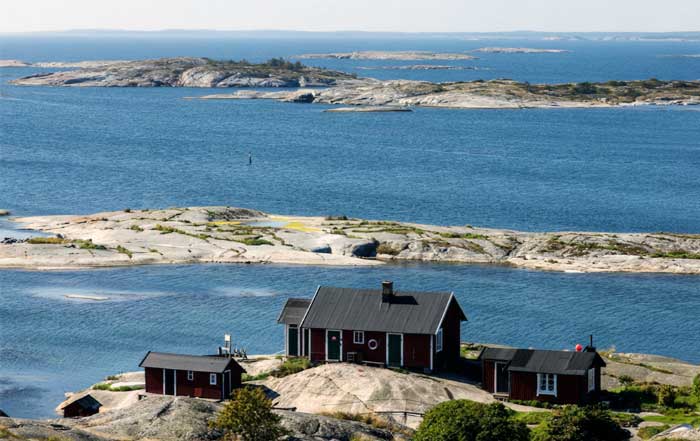
At the heart of Norwegian and Swedish design lies an unambiguous reverence for nature, expressed not as a decorative theme but as a structural principle. The fjords of western Norway, the archipelagos of Sweden, and the forests stretching across Scandinavia have shaped a design culture in which materials, light, and space are orchestrated to echo the calm, clarity, and resilience of the natural world. Hotels such as The Thief in Oslo and Ett Hem in Stockholm use birch, oak, wool, stone, and linen in ways that feel both elemental and sophisticated, creating interiors that are visually quiet yet sensorially rich.
This nature-first mindset has become a key differentiator in global hospitality. Properties in the United States, Germany, Australia, Japan, and Singapore now emulate Nordic biophilic strategies, prioritizing daylight, views, and natural textures to reduce stress and enhance well-being. The design goal is not to imitate Scandinavian landscapes, but to translate their emotional qualities into context-sensitive environments, whether in a coastal resort in Thailand or an alpine lodge in Switzerland. Parallel developments are visible at sea, where yacht designers are opening interiors to the horizon through larger glazing, lighter palettes, and a more seamless relationship between decks and water, themes often highlighted in Yacht-Review.com's cruising coverage.
Crucially, the Nordic connection to nature is inseparable from a deep commitment to sustainability. Scandinavian hotels increasingly integrate lifecycle thinking into every phase of development, from sourcing FSC-certified timber to embedding low-carbon structural systems and smart energy management. Certifications such as BREEAM and LEED have become commonplace among leading Nordic properties, not as marketing badges but as operational baselines. Globally, this approach is influencing resort developments in Canada, New Zealand, and South Africa, where investors and regulators now expect measurable environmental performance. For readers who follow similar shifts in yacht building and marina infrastructure, the sustainability section of Yacht-Review.com chronicles how Nordic thinking is reshaping eco-conscious design at sea.
Human-Centered Comfort: Hygge, Lagom, and the Psychology of Space
Despite its reputation for minimalism, Scandinavian design has never been about austerity. It is, at its core, about people. Concepts like "hygge"-the Danish and Norwegian term associated with warmth, intimacy, and everyday comfort-and "lagom", the Swedish ideal of balance and moderation, have become shorthand for an emotional design philosophy that prioritizes how spaces make people feel. Hotels such as Juvet Landscape Hotel in Valldal and Treehotel in Harads demonstrate how a restrained palette and uncluttered layouts can create profound psychological ease, replacing visual noise with spatial clarity.
This human-centered ethos is increasingly supported by research in environmental psychology and wellness. Organizations such as the World Health Organization and design-focused think tanks like the World Green Building Council have highlighted how daylight, acoustics, air quality, and material tactility affect sleep, cognition, and emotional stability. Learn more about healthy indoor environments on World Green Building Council's website. Scandinavian hotels have been early adopters of these insights, integrating them into everything from room layout to bedding choices and lighting strategies.
For the yachting community, these principles are equally relevant. Onboard spaces that minimize visual clutter, optimize circulation, and prioritize tactile comfort are increasingly preferred by owners from Italy, Spain, the Netherlands, and the United Kingdom, who associate luxury with calm rather than ostentation. In Yacht-Review.com's lifestyle features, this shift is evident in the growing interest in wellness-focused yachts, spa decks, and contemplative lounges that mirror the serene atmospheres of the best Scandinavian hotels.
Light as Material: Seasonality and Emotional Atmosphere
No discussion of Nordic aesthetics is complete without addressing light. The extreme seasonal variations in Norway and Sweden-from the near darkness of winter to the endless days of summer-have trained generations of architects and designers to treat light as a precious and malleable material. Hotels throughout the region leverage expansive glazing, carefully modeled apertures, and layered artificial lighting to create interiors that respond to changing skies and circadian rhythms.
Designers such as Ilse Crawford and Claesson Koivisto Rune, and lighting manufacturers like Louis Poulsen, have helped codify an approach in which illumination is soft, indirect, and warm, avoiding glare and harsh contrasts. This approach has been widely adopted by international hospitality projects, from boutique hotels in London and Berlin to high-rise properties in Seoul and Shanghai, where lighting designers now work closely with neuroscientists and engineers to develop schemes that support rest and recovery. The International WELL Building Institute has been instrumental in defining standards for such human-centric lighting; readers can explore its guidelines on wellcertified.com.
In the maritime realm, advances in LED technology and control systems have enabled similar sophistication aboard yachts and expedition vessels. As documented in Yacht-Review.com's technology analyses, Scandinavian-inspired lighting strategies now play a central role in reducing energy consumption while enhancing onboard ambiance, especially on long-range cruisers operating in high-latitude waters where natural light is highly variable.
Heritage Reimagined: Adaptive Reuse and Architectural Integrity
One of the most persuasive expressions of Scandinavian design maturity is its capacity to reconcile heritage and innovation. Across Oslo, Stockholm, Copenhagen, and other Nordic cities, historic buildings are being transformed into contemporary hotels that honor their origins while meeting twenty-first-century expectations for comfort and efficiency. The Amerikalinjen Hotel in Oslo, once the headquarters of a transatlantic shipping line, and the Nobis Hotel Stockholm, housed in a former bank, are emblematic of this trend, preserving original structural and decorative elements while introducing calm, modern interiors.
This approach aligns with global movements in adaptive reuse and circular construction, which organizations such as the Ellen MacArthur Foundation and UN Environment Programme have identified as critical to reducing the carbon footprint of the built environment. Learn more about sustainable business practices on Ellen MacArthur Foundation's website. By extending the life of existing buildings, Scandinavian hoteliers demonstrate that environmental responsibility and cultural continuity can reinforce one another.
For the Yacht-Review.com audience, this philosophy finds a parallel in the refit and conversion sector, where classic vessels are being modernized rather than scrapped. The same respect for original lines, combined with updated systems and interiors, is evident in many of the projects covered in the site's business and innovation section, underscoring a broader industry move toward preservation over replacement.
Craftsmanship, Materiality, and the Pursuit of Authenticity
Scandinavian aesthetics are inseparable from the region's deep-rooted tradition of craftsmanship. Designers such as Hans Wegner, Carl Malmsten, and Greta Magnusson Grossman helped establish a culture in which every joint, seam, and surface is considered, and where the tactile qualities of wood, leather, and textile are as important as their visual appearance. In hotel interiors from Copenhagen to New York, their influence is evident in the continuing popularity of finely crafted chairs, tables, and lighting that feel timeless rather than fashionable.
In leading Norwegian and Swedish hotels, this devotion to material integrity manifests in custom joinery, handwoven rugs, and locally produced ceramics that ground each property in its region. Guests in France, Italy, Canada, and Brazil increasingly recognize and value this authenticity, associating it with durability, transparency, and ethical production. The same sensibility is reshaping expectations in the superyacht market, where owners now ask not only about the appearance of materials, but also about sourcing, traceability, and long-term performance. These questions are frequently addressed in Yacht-Review.com's boats coverage, which examines how Scandinavian-inspired craftsmanship is influencing fit-out standards from Germany to South Korea.
Discreet Technology: Smart Systems, Quiet Luxury
As hospitality and yachting enter an era defined by data, automation, and artificial intelligence, Scandinavian design offers a compelling model for integrating technology without sacrificing warmth or visual calm. Properties such as At Six Hotel in Stockholm and Clarion Hotel The Hub in Oslo use smart controls, occupancy sensors, and energy management platforms that are largely invisible to guests, embedded behind natural finishes and intuitive interfaces. Technology is present, but not performative; it supports rather than dominates.
This philosophy is increasingly mirrored aboard yachts, where complex navigation, stabilization, and hotel systems are concealed behind minimalist interiors. Owners from the United States, the United Kingdom, China, and Singapore are embracing this "quiet tech" approach, favoring seamless, app-based control over visible hardware. The result is a new expression of luxury in which convenience and personalization are expected, yet the overall aesthetic remains calm and human. Yacht-Review.com documents these developments extensively in its technology section, highlighting the convergence between Nordic hospitality and advanced marine engineering.
Sustainability as Identity, Not Strategy
By 2026, sustainability is no longer a differentiator in Scandinavian hospitality; it is a baseline expectation and a core component of brand identity. Projects such as Svart Hotel in Norway, designed by Snøhetta as an energy-positive destination, and Arctic Bath Hotel in Sweden, constructed from locally harvested timber and floating on the Lule River, embody an approach in which architecture, landscape, and ecology are conceived as a single system. These properties are designed to generate more energy than they consume, minimize material waste, and foster local economic resilience.
Internationally, this model is influencing resorts in Thailand, Malaysia, South Africa, and Chile, where developers are increasingly judged by their ability to deliver measurable environmental and social value. Institutions like the World Tourism Organization (UNWTO) have reinforced this trend by promoting regenerative tourism frameworks that go beyond "do no harm" to "leave a place better." Readers can explore these frameworks further on UNWTO's website.
For yachting, the implications are clear. Owners and charter guests from Switzerland, the Netherlands, Japan, and Australia are asking more detailed questions about fuel efficiency, alternative propulsion, and onboard waste management. The Nordic mindset-where environmental performance is integral to design, not an optional add-on-is increasingly reflected in the hybrid and electric yachts, shore-power-ready marinas, and low-impact cruising itineraries featured in Yacht-Review.com's sustainability coverage.
Urban Nordic: Community, Culture, and Lifestyle Hotels
While remote landscape hotels often capture the imagination, the most dynamic testing ground for Scandinavian aesthetics is arguably the urban environment. In Stockholm, Gothenburg, Oslo, and Copenhagen, hospitality concepts such as Hobo Hotel Stockholm and Comfort Hotel Grand Central Oslo have blurred the line between hotel, coworking space, cultural venue, and neighborhood hub. Their interiors are designed not only for overnight guests, but also for local residents, freelancers, and creatives who use lobbies and lounges as extensions of their living and working spaces.
This community-oriented approach is increasingly influential in cities like New York, London, Berlin, Barcelona, and Singapore, where "lifestyle hotels" emphasize social connection, cultural programming, and inclusivity. Scandinavian aesthetics support this model by offering flexible, modular spaces that can adapt to events, exhibitions, and informal gatherings while maintaining visual coherence. On Yacht-Review.com, similar themes surface in the global section, where the site examines how marinas, yacht clubs, and waterfront developments are evolving into mixed-use social ecosystems rather than exclusive enclaves.
Maritime DNA: Scandinavian Design at Sea
For a platform dedicated to the world of yachts and maritime lifestyle, the convergence between Scandinavian hospitality and nautical design is particularly significant. Both Norway and Sweden possess centuries-old seafaring traditions, and their contemporary design cultures often reference this heritage through a focus on navigation, horizon lines, and the sensory experience of water. The interiors of vessels influenced by Nordic aesthetics-whether custom superyachts or expedition cruise ships-tend to favor open sightlines, light woods, low-sheen finishes, and a close visual relationship with the sea.
Shipowners and builders across Europe, Asia, and North America have increasingly turned to Scandinavian studios such as Snøhetta, Wingårdhs, and Space Copenhagen to design or consult on maritime projects. The new generation of coastal cruise ships operating in Norway, including those of Havila Voyages, demonstrates how Nordic hospitality principles can be scaled up without losing intimacy: panoramic lounges, quiet cabins, and regionally sourced materials all contribute to a sense of place and purpose. Yacht-Review.com regularly highlights these crossovers in its cruising and reviews, underscoring how land-based design innovations migrate onto the water.
Emotional Minimalism and the Future of Luxury
Perhaps the most enduring contribution of Scandinavian aesthetics to global hospitality is the redefinition of luxury itself. In an era characterized by digital saturation, geopolitical uncertainty, and environmental anxiety, many travelers from the United States, United Kingdom, Germany, China, and the Middle East no longer equate luxury with excess. Instead, they seek experiences that offer psychological clarity, sensory balance, and ethical coherence. Nordic design answers this demand through what might be called emotional minimalism: a disciplined restraint that leaves room for reflection, connection, and meaning.
Hotels like Hotel Brosundet and Miss Clara Hotel in Stockholm exemplify this new paradigm. They avoid spectacle in favor of proportion, natural light, and carefully curated details; they favor narrative over novelty. The same is true of the most compelling yachts profiled on Yacht-Review.com, where owners are increasingly drawn to interiors that feel like calm, livable sanctuaries rather than floating showpieces. For readers interested in how these sensibilities have evolved over time, the site's history section traces the gradual shift from ornate, compartmentalized vessels to the open, light-filled layouts that dominate 2026.
A Global Language with Nordic Roots
By 2026, the Scandinavian aesthetic has become a shared design language that transcends borders while retaining its ethical and cultural core. From boutique hotels in California and Barcelona, to eco-resorts in Thailand and Costa Rica, to superyachts cruising the coasts of Italy, Greece, and Croatia, the influence of Norwegian and Swedish design is unmistakable. International brands such as IKEA, Muuto, and Hay have familiarized a global audience with Nordic forms and materials, making it easier for hoteliers and yacht designers to adopt and adapt these principles to local contexts.
What distinguishes genuine Scandinavian-inspired projects from superficial imitations, however, is the depth of commitment to the underlying values: respect for nature, investment in craftsmanship, human-centered comfort, and a long-term view of sustainability. These are precisely the values that Yacht-Review.com emphasizes across its news and analysis, where design is always considered in relation to operational reality, regulatory trends, and user experience.
As climate pressures intensify and expectations for responsible luxury continue to rise across Europe, Asia, Africa, South America, and North America, the Nordic model offers a roadmap that is both aspirational and practical. It shows that beauty, comfort, and innovation need not be at odds with environmental stewardship and social responsibility.
For the global community of yacht owners, charter guests, designers, and industry professionals who rely on Yacht-Review.com, the ongoing evolution of Scandinavian aesthetics is more than a design trend. It is a lens through which to evaluate future investments, partnerships, and experiences-on land, at sea, and in the liminal spaces where hospitality and maritime culture meet.