

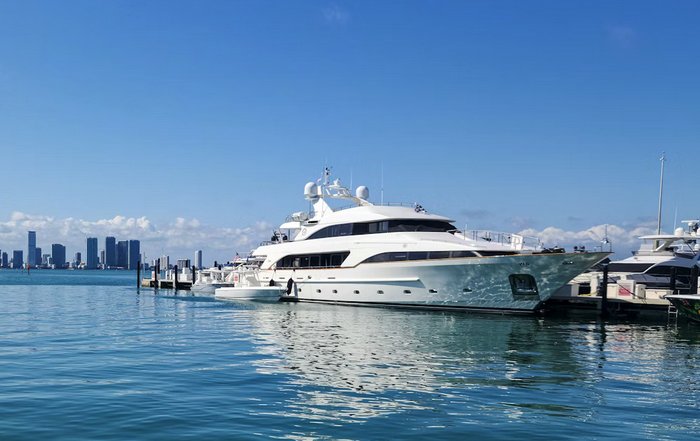
Luxury Yachting Trends from International Boat Shows
Global Shows as Strategic Barometers for a New Era
Now the world's major boat shows have consolidated their position as strategic barometers for the direction of the luxury yachting sector, shaping expectations in design, technology, ownership models, and sustainability rather than merely reflecting them. Events such as the Monaco Yacht Show, Fort Lauderdale International Boat Show, Singapore Yachting Festival, and the fast-expanding circuits in the Middle East and Asia-Pacific have become pivotal meeting points where shipyards, designers, technology partners, and buyers from North America, Europe, Asia, Africa, and South America converge to define what the next generation of yachts will look and feel like. For the editorial team at yacht-review.com, which devotes daily attention to evolving trends across reviews, design, technology, and sustainability, the 2024-2025 show cycle has provided unusually clear evidence that the sector is moving from a focus on sheer size and spectacle toward a more nuanced blend of experience, responsibility, and intelligent innovation.
International boat shows have always mirrored the economic and cultural climate of their host regions, yet what distinguishes the current period is the degree of convergence in buyer expectations across continents. American visitors at Fort Lauderdale now raise similar questions about emissions, energy efficiency, and lifecycle impact as European clients in Monaco, while prospective owners from Singapore, Hong Kong, Sydney, Dubai, and Seoul demand the same digital integration, wellness-centric layouts, and family-oriented features that are now standard talking points in London, New York, Zurich, and Toronto. From its vantage point as a specialist publication, yacht-review.com has used direct conversations with naval architects, interior designers, brokers, captains, and technology providers at these shows to connect individual product launches with broader structural shifts, giving its audience a more strategic view of where luxury yachting is heading as a global business and lifestyle ecosystem.
Design Evolution: Experiential Retreats Rather Than Floating Palaces
The most visible transformation at international shows through 2025 has been the evolution of yacht design away from ostentatious "floating palaces" toward what leading studios increasingly describe as experiential retreats, where every square meter is engineered to enhance life on board rather than simply to impress on the quay. Firms such as Winch Design, Nuvolari Lenard, and the maritime collaborators of Zaha Hadid Architects have used Monaco, Cannes, Genoa as stages to present concepts that emphasize open, flowing decks, blurred thresholds between interior and exterior spaces, and multi-functional zones that can adapt seamlessly from intimate family cruising to formal corporate entertaining. Regular readers of yacht-review.com who follow the site's design coverage will recognize this as part of a longer-term arc that began before the pandemic and accelerated as owners re-evaluated how they wanted to spend extended periods aboard with family and friends.
Glass has become the defining material of this new design language, enabled by advances in structural engineering, classification standards, and glazing technology. At Cannes Yachting Festival, European builders showcased models in which full-height windows, fold-down balconies, and expanded beach clubs create a continuous social landscape from main saloon to waterline, even on yachts in the 24-30 meter range. This shift mirrors developments in high-end hospitality and residential architecture, where transparency, daylight, and biophilic design are now central pillars of guest experience; those interested in the broader design context can explore how leading architecture platforms such as Dezeen document similar moves toward openness and material honesty in luxury hotels and private residences worldwide.
Material choices have evolved in parallel with spatial concepts, as shipyards in Italy, the Netherlands, Germany, Turkey, and the United Kingdom experiment with lightweight composites, sustainably sourced timbers, recycled metals, and low-VOC finishes that satisfy both aesthetic expectations and tightening environmental scrutiny. The editorial team at yacht-review.com has observed that clients in the United States, United Kingdom, Germany, Switzerland, and Scandinavia increasingly request documentation on material provenance, certification, and recyclability during specification phases, a trend underscored by the growing presence of sustainability pavilions and dedicated panel discussions at major shows. This is no longer a matter of public relations alone; for a new generation of owners in markets as diverse as Sweden, Canada, Australia, and Singapore, the yacht is expected to express personal values around responsibility, wellness, and connection to nature as clearly as it expresses wealth.
Technology Integration: From Smart Yachts to Connected Ecosystems
In parallel with the aesthetic and spatial evolution of yachts, technology has shifted from being a collection of discrete onboard systems to an integrated ecosystem that shapes every aspect of the owner and guest experience. Across the 2024-2025 show circuit, from Fort Lauderdale and Miami to Dubai International Boat Show and Singapore Yachting Festival, the phrase "smart yacht" has moved beyond marketing jargon to denote vessels in which navigation, propulsion, hotel functions, entertainment, security, and maintenance are orchestrated through unified digital platforms. yacht-review.com, through its dedicated technology section, has traced how expectations have risen sharply: owners now demand the same seamless connectivity, personalization, and reliability at sea that they enjoy in their homes, offices, and private jets.
On the technical side, collaborations between shipyards, classification societies, and industrial technology leaders such as Siemens Energy, ABB Marine & Ports, and Rolls-Royce Power Systems were especially prominent at European and Asian shows. Their hybrid propulsion packages, energy management systems, and vessel automation platforms are enabling quieter operation, optimized fuel consumption, and predictive maintenance, while also creating a foundation for future integration of alternative fuels and more autonomous navigation features. Industry professionals and technically minded owners seeking deeper insight into these developments increasingly turn to resources from organizations such as DNV and Lloyd's Register, where guidance on digitalization, safety, and cyber-resilience in maritime operations is shaping the standards to which new yachts are built.
On the guest-facing side, the integration of audiovisual, IT, and communications systems has become a critical differentiator in the 30-90 meter segments. At Monaco, Cannes, and Fort Lauderdale, yards and integrators demonstrated immersive cinema rooms with 8K displays, spatial audio environments, gaming suites, and virtual meeting spaces designed for hybrid work and entertainment. Satellite, VSAT, and emerging 5G maritime solutions are being combined to provide robust connectivity in the Mediterranean, Caribbean, and increasingly remote expedition regions such as Antarctica and the South Pacific. For many of the entrepreneurs, executives, and family offices that form the readership of yacht-review.com and follow its business-oriented coverage, the ability to treat a yacht as a mobile executive hub-with secure video conferencing, dedicated offices, and enterprise-grade cybersecurity-has become a core requirement rather than a luxury add-on, particularly in markets like the United States, United Kingdom, Germany, Singapore, and the United Arab Emirates.
Sustainability: From Aspirational Messaging to Operational Reality
The most consequential change visible at international boat shows through 2025 has been the transition of sustainability from aspirational messaging to operational reality. In Monaco, Cannes, Hamburg, Genoa, environmental discussions have moved from side events to the center of conference programs, with CEOs of major shipyards, leaders of classification societies, policymakers, and technology innovators debating pathways to decarbonization, cleaner fuels, and circular-economy principles in yacht construction, operation, and refit. For the analysis team at yacht-review.com, which has significantly expanded its sustainability coverage, this shift is welcome, but it also highlights the complex trade-offs and transitional challenges that owners and builders must navigate in the second half of the 2020s.
Hybrid propulsion has become a mainstream proposition in the 24-60 meter bracket, with European and North American builders presenting serial-production and semi-custom models that combine traditional diesel engines with electric motors, battery banks, shore-power interfaces, and energy recovery systems. While these configurations do not eliminate fossil fuel use, they enable low-emission, low-noise operation in sensitive areas such as Norwegian fjords, Mediterranean marine parks, parts of the Great Barrier Reef, and increasingly regulated zones in the United States and Asia. Owners from Germany, the Netherlands, Scandinavia, Switzerland, and the United Kingdom have been among the early adopters, often motivated both by personal environmental convictions and by the desire to future-proof their assets against tightening regulations. Those seeking to understand the regulatory backdrop can follow developments at the International Maritime Organization, whose frameworks, although primarily targeted at commercial shipping, are influencing the expectations and direction of travel in the yacht sector.
Beyond propulsion, sustainability at the shows now encompasses full lifecycle thinking. Italian, Dutch, French, and British yards have unveiled research collaborations with universities and classification bodies aimed at developing recyclable composites, modular interiors that can be refreshed with minimal waste, and digital twins that support more efficient operation and refit. yacht-review.com has paid particular attention to the financial and strategic implications of these developments, examining how sustainable design choices may influence long-term asset value, charter demand, and access to sensitive cruising grounds. This perspective resonates strongly with business-minded owners and family offices in the United States, United Kingdom, Canada, Singapore, Hong Kong, and the Middle East, who are accustomed to assessing investments through the lens of environmental, social, and governance criteria. Those interested in the broader corporate context can explore how organizations such as the World Business Council for Sustainable Development frame sustainable business practices and reporting standards that are increasingly relevant to luxury sectors including yachting.
Ownership Models and the Rise of Experience-Led Chartering
International boat shows have always been crucial marketplaces for brokerage and management companies, but the conversations around ownership and usage emerging in 2025 are notably different from those of a decade ago. At Monaco, Fort Lauderdale, Palma, and Cannes, yacht-review.com's editorial team has observed a marked increase in interest in fractional ownership structures, co-ownership arrangements among families or business partners, and highly curated charter programs that prioritize unique experiences over simple access to hardware. Younger high-net-worth individuals and next-generation family members from the United States, United Kingdom, Germany, Canada, Australia, France, Italy, Spain, Singapore, and the United Arab Emirates are often less focused on traditional notions of status and more concerned with flexibility, sustainability, and the quality of time spent on board.
Brokerage leaders such as Fraser Yachts, Camper & Nicholsons, Burgess, and Northrop & Johnson have responded by using boat shows not only to exhibit individual yachts but also to present integrated lifestyle concepts, including expedition itineraries, cultural journeys, and wellness retreats that span multiple regions and seasons. This aligns closely with the editorial direction of yacht-review.com's cruising and travel sections, where coverage increasingly centers on narrative-rich journeys-such as Arctic and Antarctic expeditions, Mediterranean cultural circuits from Italy and France to Greece and Spain, or Southeast Asian island-hopping in Thailand and Indonesia-rather than simply listing destinations. The broader luxury travel industry, as documented by networks like Virtuoso and other high-end travel consortia, reinforces this trend toward "transformational travel," in which authenticity, learning, and family connection are paramount.
For owners, this shift toward experience-led chartering and flexible access models introduces both opportunities and complexities. Designing yachts with versatile layouts, robust commercial compliance, and operational flexibility can significantly enhance charter appeal and yield, helping offset running costs and contributing to asset performance. At the same time, cross-border charter operations spanning regions such as the United States, European Union, Caribbean, Asia-Pacific, and Indian Ocean require careful navigation of regulatory, tax, and insurance frameworks. yacht-review.com has increasingly highlighted the role of specialized advisory firms that integrate yachting, legal, and financial expertise, especially for globally mobile clients in North America, Europe, and Asia who view yachts as part of diversified portfolios rather than isolated luxury purchases.
Regional Dynamics: A Global Market with Distinct Local Nuances
Although the luxury yachting market is now more global and interconnected than at any point in its history, the 2024-2025 boat show cycle has underlined that regional nuances remain decisive in shaping product offerings, service expectations, and marketing strategies. Through its global and travel reporting, yacht-review.com has mapped how different regions are evolving and how ideas and practices circulate between them.
In the United States, shows such as Fort Lauderdale, Miami International Boat Show, and Newport continue to emphasize large production yachts, center-console fleets, sportfishers, and versatile flybridge models, reflecting a boating culture in which family use, fishing, and coastal cruising often coexist. American buyers increasingly value hybrid propulsion options, advanced stabilization, and digital integration, but place particular emphasis on dealer networks, after-sales support, and resale prospects, which drives strong demand for established brands and proven platforms. In Europe, by contrast, shows like Monaco, Cannes, Genoa, prioritize custom and semi-custom superyachts, design innovation, and conceptual showcases, catering to a clientele from the United Kingdom, Germany, France, Italy, Spain, the Netherlands, Switzerland, and Scandinavia that is often more willing to embrace bold styling, experimental layouts, and cutting-edge sustainable technologies.
In Asia, the Singapore Yachting Festival and events in Thailand, Japan, South Korea, and China highlight a market that is expanding rapidly in both size and sophistication. Buyers in Singapore, Hong Kong, Shanghai, and Seoul frequently seek yachts that can serve dual roles as corporate hospitality venues and multi-generational family retreats, with high-spec interiors, strong climate control, and adaptable indoor-outdoor spaces that support both formal entertaining and relaxed leisure. Australia and New Zealand, meanwhile, display a pronounced preference for robust, long-range cruisers and explorer yachts capable of handling the demanding conditions of the Pacific, Southern Ocean, and remote archipelagos, reflecting a culture of adventure and self-reliant cruising that is increasingly influential globally as expedition yachting gains momentum.
Africa and South America remain smaller in terms of ownership numbers, but their visibility at major boat shows is growing, particularly in relation to charter demand and the development of marinas, service hubs, and refit facilities in countries such as South Africa and Brazil. For yacht-review.com, which maintains a broad international lens, these emerging markets are important indicators of future shifts in cruising routes, winter and summer seasons, and the global distribution of technical talent and infrastructure. Readers interested in the macroeconomic and wealth-distribution trends that underpin these developments often consult analyses from financial institutions such as Credit Suisse, whose global wealth reports help explain why new yachting hubs are appearing in regions once considered peripheral to the sector.
Family, Lifestyle, and the Human Dimension of Yachting
Beyond the hardware and business models, international boat shows in 2025 have placed a renewed emphasis on the human dimension of yacht ownership and chartering, reflecting a broader societal focus on wellbeing, family, and purposeful living. At Monaco, Cannes, Fort Lauderdale, and Palma, yacht-review.com's editors have noted that presentations by shipyards, designers, and brokers increasingly center on how yachts can support multigenerational family life, personal health, and meaningful connection to the sea, rather than simply highlighting gross tonnage, top speed, or the number of decks.
In its dedicated family and lifestyle sections, yacht-review.com has documented the practical manifestations of this shift: layouts with flexible cabins that can be reconfigured as children grow; dedicated playrooms and study spaces; wellness suites with gyms, spa facilities, and treatment rooms designed in collaboration with health professionals; and beach clubs that double as safe, supervised areas for water sports and relaxation. Owners from the United States, Canada, the United Kingdom, Germany, France, Italy, Spain, Scandinavia, Singapore, Japan, and Australia increasingly describe their yachts as sanctuaries where they can step away from the intensity of their professional lives, reconnect with family and friends, and cultivate hobbies ranging from diving and sailing to art collecting and gastronomy.
Boat shows themselves have evolved into important community-building platforms, where owners, captains, crew, designers, technical suppliers, and service providers share knowledge and form long-term partnerships. Through its events and community reporting, yacht-review.com has highlighted how philanthropic initiatives, ocean conservation campaigns, and maritime education programs are becoming more visible at major shows, reflecting an understanding that the future of yachting depends not only on technological innovation and financial capital but also on social license and talent development. Partnerships with NGOs, marine research institutions, and educational organizations, often discussed alongside new launches, signal that many stakeholders recognize their responsibility to support healthier oceans and more inclusive pathways into maritime careers, particularly in Europe, North America, Asia, and emerging coastal economies.
yacht-review.com as a Trusted Guide in a Complex Ecosystem
As the luxury yachting environment becomes more technologically sophisticated, globally interconnected, and socially scrutinized, the need for independent, expert analysis has never been greater. yacht-review.com positions itself as a trusted guide at the intersection of news, business insight, design intelligence, and in-depth boat and yacht reviews, serving owners, charter clients, industry professionals, and aspirational enthusiasts across the United States, United Kingdom, Germany, Canada, Australia, France, Italy, Spain, the Netherlands, Switzerland, China, Sweden, Norway, Singapore, Denmark, South Korea, Japan, Thailand, Finland, South Africa, Brazil, Malaysia, New Zealand, and beyond. Its editorial philosophy is grounded in experience, expertise, authoritativeness, and trustworthiness, supported by continuous engagement with shipyards, designers, technologists, captains, and regulatory bodies.
By attending and critically analyzing the major international boat shows, yacht-review.com goes beyond surface-level reporting of new models and headline-grabbing concepts. Articles in its history and global sections trace how current trends in hybrid propulsion, explorer yachts, minimalist interiors, and experiential layouts are rooted in decades of incremental innovation and shifting owner expectations, while forward-looking pieces in the technology and sustainability areas assess how regulatory changes, scientific advances, and macroeconomic forces may reshape the industry through 2030 and beyond. For newcomers to yachting, the site's structured navigation from the homepage through reviews, design, cruising, business, technology, sustainability, and lifestyle content offers a curated pathway into a complex world, helping readers understand not only what is available today but also how to make decisions that align with their long-term aspirations and responsibilities.
Looking ahead from 2026, the signals emerging from international boat shows suggest that luxury yachting will continue to evolve toward deeper integration of digital technologies, more rigorous environmental stewardship, and more personalized, experience-driven usage patterns. Owners and charter clients across North America, Europe, Asia, Africa, and South America will bring diverse cultural perspectives and priorities, yet they will be increasingly united by a desire for authenticity, reliability, and meaningful engagement with the marine environment. In this context, yacht-review.com will remain committed to providing clear, evidence-based insight that helps its global audience navigate the opportunities and challenges of a rapidly changing seascape, ensuring that the next generation of yachts and yachting experiences is not only more luxurious, but also more intelligent, responsible, and deeply human.