

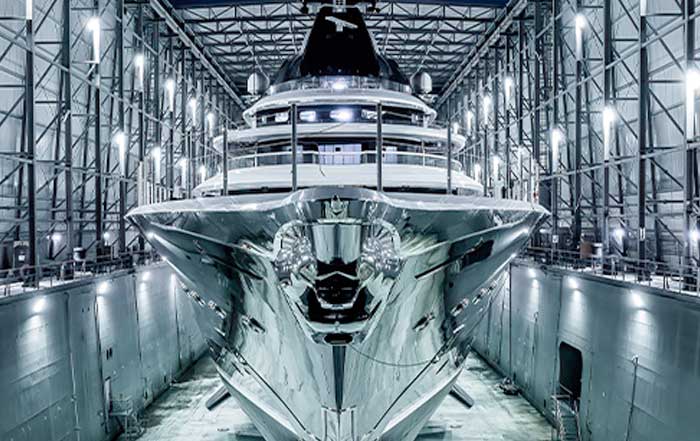
German Precision, Italian Passion: How Two Nations Still Define Luxury Yachting
The dialogue around luxury yachting remains deeply shaped by the enduring influence of Germany and Italy, two nations whose shipyards continue to set global benchmarks in engineering, design, and craftsmanship. From the perspective of Yacht-Review.com, which has followed this evolution for years across its design, technology, and business coverage, the story today is no longer only about size, speed, and opulence. It is increasingly about how heritage-driven builders reconcile their storied identities with the demands of sustainability, digital integration, and a more experience-oriented clientele.
German yards remain synonymous with structural integrity, technical sophistication, and long-range capability, while Italian builders continue to dominate the emotional and aesthetic dimension of yacht ownership, creating vessels that feel like curated lifestyle environments rather than simply means of transport. This duality-German logic and Italian emotion-still defines much of the ultra-luxury market, yet in 2026 it is being reframed by regulatory tightening, geopolitical change, and a younger, more globally distributed base of owners.
From our vantage point at Yacht-Review.com, where readers from North America, Europe, Asia, and beyond come to explore reviews, cruising insights, and global trends, it is clear that Germany and Italy are not merely competing; they are co-authoring the next chapter of superyacht innovation.
German Precision: Engineering as a Strategic Advantage
German yacht building has retained its reputation for uncompromising engineering even as environmental regulations and client expectations have accelerated technological change. Shipyards such as Abeking & Rasmussen, and Nobiskrug continue to anchor the country's position at the apex of the superyacht segment, particularly in the 80-150 meter range where technical complexity, classification requirements, and customization demands are highest.
Over the last two years, German yards have moved decisively from experimental hybrid systems toward fully integrated energy architectures designed around alternative fuels and advanced battery storage. Hydrogen-ready or methanol-capable propulsion, once discussed as future options, are now incorporated into several headline projects under construction, supported by collaborations with technology partners such as Siemens Energy and ABB Marine & Ports. These systems are no longer presented as optional extras but as strategic features that protect long-term asset value in a rapidly decarbonizing regulatory environment. Owners who commission these vessels are not only purchasing prestige; they are hedging against future compliance and access restrictions in sensitive cruising grounds.
The German approach to digitalization has also matured significantly. Instead of isolated smart features, 2026-era German superyachts are conceived as unified data platforms. Integrated bridge systems, energy management tools, and predictive maintenance software feed into a single digital backbone, often built on industrial platforms similar to those used in advanced manufacturing. For technically inclined owners and captains, this provides unprecedented transparency into performance and lifecycle costs. For those interested in how such systems are reshaping the onboard experience, Yacht-Review.com continues to expand its technology analysis with real-world case studies from recent deliveries.
Yet engineering ambition brings its own challenges. Large-scale hydrogen or methanol solutions depend on global bunkering infrastructure that remains unevenly developed. German yards, working closely with classification societies such as DNV and RINA, are therefore designing vessels with flexible fuel strategies, enabling a staged transition from conventional fuels to cleaner alternatives as infrastructure catches up. This kind of forward compatibility has become a hallmark of German precision in 2026: not just building for current performance, but engineering for regulatory and technological uncertainty.
Italian Passion in 2026: Design as Lifestyle, Not Ornament
Italian shipyards have continued to refine a design language that places human experience at the center of every decision. Brands such as Benetti, Sanlorenzo, CRN, Baglietto, Ferretti Group, and Riva have expanded their portfolios with models that blend the intimacy of boutique hospitality with the flexibility of modular architecture. The result is an increasingly blurred line between luxury villa, boutique hotel, and private yacht.
In 2026, the most compelling Italian projects are not necessarily the largest, but those that best translate contemporary lifestyle trends into coherent marine spaces. Beach clubs now extend across multiple levels, often integrating fold-out terraces, sea-level lounges, and wellness areas that rival high-end shore-based spas. Glass has become a structural and emotional tool: floor-to-ceiling panels, transparent bulwarks, and atriums create a visual continuity between interior and seascape that resonates particularly with owners from the United States, the United Kingdom, and Asia-Pacific markets.
Italian builders have also taken a distinctly holistic view of sustainability. While German yards often emphasize propulsion and systems efficiency, Italian shipyards have invested heavily in eco-conscious interiors, low-impact materials, and optimized production processes. Divisions such as Sanlorenzo's Bluegame have become laboratories for bio-based resins, FSC-certified woods, and recyclable metals, aligning with broader European initiatives on circular economy principles. Those interested in how these choices align with global environmental standards can explore broader context on organizations such as the International Maritime Organization and learn more about sustainable business practices through resources like Harvard Business Review.
For Yacht-Review.com, which frequently examines the intersection of aesthetics and responsibility in its sustainability coverage, Italian yachts in 2026 demonstrate that environmental awareness need not dilute sensuality. Instead, it can enhance narrative and authenticity: owners increasingly appreciate being able to tell a story not only about where their yacht can go, but how thoughtfully it was built.
Craftsmanship and Culture: Two Traditions, One Global Audience
The contrast between German and Italian craftsmanship remains one of the most compelling dynamics in the industry. German shipyards, many of which evolved from naval and commercial shipbuilding, treat every structural element as part of a safety-critical system. Tolerances are measured in fractions of a millimeter, and redundancy is ingrained into every major subsystem. This culture of reliability appeals strongly to exploration-focused owners from markets such as North America, Northern Europe, and Australia, who prioritize range, seakeeping, and autonomy.
Italian shipyards, by contrast, draw on a cultural heritage steeped in art, architecture, and fashion. Collaborations with designers such as Patricia Urquiola, Piero Lissoni, and Antonio Citterio have made Italian yacht interiors feel like extensions of high-end residential and hospitality spaces. Materials are chosen as much for tactile and emotional resonance as for durability, and layouts are orchestrated around social rituals-family dining, sunset gatherings, informal workspaces-rather than purely nautical logic. This resonates strongly with owners from Mediterranean countries, the United States, and growing markets in Asia, where the yacht is often perceived first as a social platform.
For readers exploring the historical roots of these approaches, Yacht-Review.com maintains a dedicated history section, where the evolution from wooden runabouts to steel-and-aluminum superyachts is documented with particular attention to German and Italian milestones. In 2026, that history is not a nostalgic footnote; it is a strategic asset. Both nations leverage their heritage in branding and client engagement, reassuring buyers that behind every digital model and AI-assisted process stands a lineage of human expertise.
Technology, AI, and the "Smart Yacht" Era
The phrase "smart yacht" has moved from marketing jargon to tangible reality. In both Germany and Italy, artificial intelligence and advanced analytics now underpin critical aspects of design, construction, and operation. Digital twins are used to simulate structural loads, noise and vibration behavior, and energy flows long before steel is cut. During operation, onboard AI systems monitor machinery health, optimize routing for fuel efficiency, and assist crew with predictive maintenance.
German yards have taken a particularly systematic approach, integrating solutions from industrial leaders such as Siemens Xcelerator and ABB Marine & Ports to create unified control ecosystems. These platforms allow remote diagnostics, over-the-air software updates, and fleet-level analytics for owners with multiple vessels or charter operations. As yachts become more connected, cybersecurity has emerged as a critical concern. German technical culture, with its emphasis on risk management and standards compliance, has positioned the country's builders at the forefront of secure-by-design thinking, an area also shaped by guidance from organizations like the European Union Agency for Cybersecurity.
Italian shipyards, while equally committed to reliability, tend to present technology through the lens of comfort and personalization. App-based cabin controls, adaptive lighting, immersive audio-visual systems, and integrated wellness technologies are framed as enablers of atmosphere rather than as engineering achievements. Virtual and augmented reality tools have become standard in the sales process, allowing clients from the United States, the Middle East, and Asia to experience and customize layouts remotely. Yacht-Review.com has chronicled many of these advances in its technology and design features, observing how digital tools not only accelerate decision-making but deepen emotional engagement with the project.
In 2026, technology is no longer a differentiator in itself; it is the fluency with which builders embed it-subtle, reliable, and human-centric-that distinguishes true leaders. Germany and Italy, each in their own way, have learned to make the digital almost invisible, allowing owners to focus on experience rather than interface.
Sustainability as Core Strategy, Not Marketing
Regulatory developments in Europe, North America, and key cruising regions have made sustainability a non-negotiable element of yacht design and operation. Emission control areas, port access rules, and pressure from global frameworks such as the Paris Agreement are reshaping investment decisions. German and Italian shipyards have responded not with incremental adjustments but with structural shifts in R&D and product strategy.
German builders have invested heavily in alternative propulsion, advanced hull forms, and lifecycle analysis. Projects integrating hydrogen fuel cells, methanol engines, and large-scale battery packs are no longer experimental one-offs but central pillars of their order books. Partnerships with organizations such as the Water Revolution Foundation and the Superyacht Builders Association (SYBAss) support research into emissions reduction and ocean impact, reinforcing the perception of German yards as leaders in technical sustainability.
Italian yards, while also active in propulsion innovation, have distinguished themselves through sustainable design thinking at the level of space planning and material choice. More natural ventilation, optimized shading, and flexible interior configurations reduce energy demand and extend the usable life of interiors by allowing them to evolve with owner needs. The use of recycled and low-impact materials is increasingly verified by third-party certifications, aligning with global ESG expectations from buyers whose wealth often derives from sectors already under intense sustainability scrutiny. Those seeking a broader macro perspective on ESG and luxury can find useful context via platforms such as the World Economic Forum.
For Yacht-Review.com, sustainability is not treated as a separate topic but as a lens through which every review, business analysis, and travel story is interpreted. Our sustainability coverage continues to highlight not only technological breakthroughs but also operational practices-route planning, charter behavior, refit strategies-that determine the real-world impact of these vessels.
Economics, Ownership Trends, and Global Competition
By 2026, the economic landscape of luxury yachting has become more nuanced and geographically diversified. Italy still leads the world in the number of yachts delivered annually, particularly in the 24-50 meter range, while Germany commands a disproportionate share of the ultra-large, highly customized segment. This balance reflects different business models: Italian yards leverage scalable platforms and semi-custom series, whereas German yards continue to focus on low-volume, high-complexity projects.
The client base has also shifted. A growing cohort of younger owners from technology, finance, and emerging markets in Asia and the Middle East is entering the sector, often with different expectations from traditional European or North American buyers. They view yachts as multifunctional assets-combining work, family, hospitality, and exploration-rather than static symbols of status. Connectivity, flexible interiors, and measurable sustainability performance matter at least as much as marble finishes or gold-plated fixtures.
Germany and Italy face increasing competition from the Netherlands, Turkey, the United Arab Emirates, and, to a lesser extent, emerging Asian builders. Dutch yards such as Feadship and Heesen challenge German dominance in engineering and finish quality, while Turkish yards have made significant strides in value-oriented semi-custom builds. Yet German and Italian brands retain a powerful advantage: the reputational capital built over decades of consistent delivery. For investors and buyers alike, perceived risk is lower when commissioning from a shipyard with a long record of technically and commercially successful projects.
On Yacht-Review.com, the business section has increasingly focused on how these macro trends translate into practical decisions: whether to buy new or refit, how to evaluate shipyard stability, and how regional regulations influence flag and cruising choices. As the industry becomes more complex, owners rely more heavily on trusted information sources and established brand reputations to navigate their options.
Cruising, Lifestyle, and the Human Dimension
Ultimately, the success of any yacht is measured not only in performance metrics or resale value, but in the quality of the experiences it enables. Here, the German-Italian contrast is especially vivid. German-built yachts are often chosen for expedition-style itineraries: Arctic and Antarctic voyages, Pacific crossings, and remote archipelago explorations where autonomy, safety, and robust systems are paramount. Italian-built yachts, while increasingly capable of long-range cruising, remain most closely associated with social and leisure-oriented itineraries in the Mediterranean, Caribbean, and popular Asian cruising grounds.
The onboard lifestyle has broadened significantly since the early 2020s. Wellness spaces, family-friendly layouts, and flexible work zones have become standard expectations across both nations' offerings. Yachts now routinely integrate quiet study or office areas, convertible cinema rooms, and multi-generational suites. For families from the United States, Europe, and Asia-Pacific, the yacht has become a movable home and office rather than an occasional holiday asset.
Yacht-Review.com has reflected this evolution by expanding its cruising, travel, and lifestyle coverage, documenting not only the vessels but the experiences they support-from Norwegian fjord expeditions on German explorers to Mediterranean family charters aboard Italian semi-custom yachts. The feedback from our global readership is consistent: while technical and financial considerations matter, the ultimate decision often comes down to which national philosophy better aligns with a given owner's personal narrative.
Looking Ahead: Where Precision Meets Passion
As the year unfolds, the luxury yacht industry stands at a convergence point. Environmental imperatives, digital transformation, and shifting cultural expectations are reshaping what owners ask of their yachts and what shipyards must deliver. Germany and Italy remain central to this story not simply because of their past achievements, but because of their willingness to reinterpret their core strengths.
German builders continue to push the frontier of engineering, systems integration, and safety, ensuring that the largest and most complex vessels remain viable in an era of stricter regulation and heightened scrutiny. Italian shipyards, drawing on a deep well of design culture and lifestyle expertise, ensure that yachts remain spaces of joy, connection, and emotional resonance even as they become more technologically advanced and environmentally responsible.
From the editorial perspective of Yacht-Review.com, which has chronicled this journey across reviews, boats, and industry news, the most compelling projects of 2026 are those where these two philosophies intersect. Hybrid explorer yachts that combine German structural rigor with Italian interior warmth, or Italian-designed vessels built on German-engineered platforms, exemplify a future in which precision and passion are no longer opposites but complementary forces.
As new generations of owners from the United States, Europe, Asia, Africa, and South America enter the market, they will continue to look to Germany and Italy for guidance on what responsible, meaningful luxury at sea can look like. For those seeking to follow this evolution in real time, Yacht-Review.com remains committed to providing critical, experience-driven coverage at yacht-review.com, where the dialogue between engineering excellence and design artistry continues to unfold with every new launch.