

Review 2026: A State-of-the-Art Fishing and Cruising Convertible
A New Benchmark for Dual-Purpose Yachting
In 2026, the expectations placed on a modern fishing and cruising convertible are higher than at any point in the history of yacht building. Owners in North America, Europe, Asia and beyond now demand a vessel that can chase billfish off Florida and Cabo, cruise the Amalfi Coast in comfort, entertain clients in Singapore, and still feel at home in the fjords of Norway or the islands of Thailand. Against this demanding backdrop, the latest state-of-the-art fishing and cruising convertible reviewed by Yacht-Review.com emerges as a compelling benchmark, combining tournament-grade performance with long-range cruising comfort and an increasingly non-negotiable focus on sustainability and technology.
For an audience that follows the evolving market through the dedicated sections of Yacht-Review.com, from detailed reviews of new launches to in-depth coverage of design innovation and cruising trends, this convertible encapsulates many of the themes that have defined the last decade: the merging of hardcore sportfishing DNA with superyacht-style luxury, the integration of digital systems that rival those of commercial shipping, and the gradual but unmistakable shift toward lower-impact propulsion and materials.
Exterior Design: Aggressive Lines with Bluewater Purpose
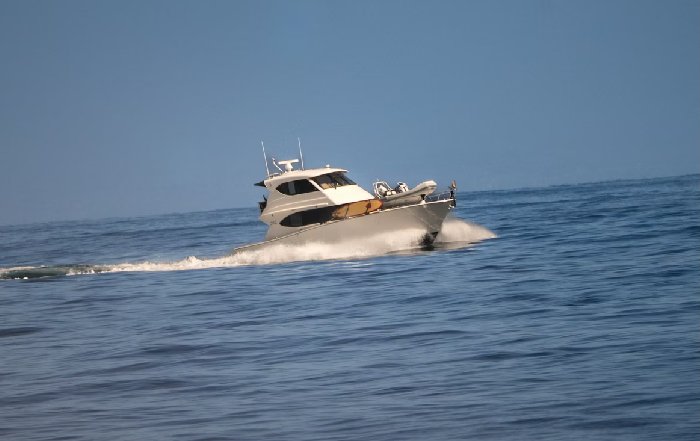
From the dock, the new convertible presents a silhouette that is instantly recognizable to enthusiasts in the United States, Australia, South Africa and Brazil, where sportfishing heritage runs deep, yet it also appears refined enough to turn heads in Monaco, Palma or Portofino. The aggressively raked bow, pronounced flare, and sweeping sheerline communicate offshore intent, while the high freeboard and carefully modeled hull sides suggest both dryness underway and generous interior volume. The vessel sits in the 60-70 foot range, which remains the sweet spot for owner-operators and family programs who want to fish seriously without stepping fully into crew-dependent superyacht territory.
The cockpit has clearly been engineered with input from professional captains and tournament anglers, a hallmark of the most respected builders such as Viking Yachts, Hatteras Yachts, and Riviera. Deep, secure coamings, a beautifully finished mezzanine with integrated refrigeration, and a central fighting chair or rocket-launcher module create a working platform that can transition from big-game hunting in the Canary Islands to family barbecues in the Bahamas without compromise. The transom livewell, in-deck fish boxes, and chilled storage reflect a level of detail that seasoned crews in the United Kingdom, Canada and New Zealand will recognize as essential rather than optional.
Yet the yacht avoids the utilitarian look that can plague some pure sportfishers. Subtle use of coved bulwarks, sculpted window lines, and a carefully proportioned flybridge and hardtop give the profile an elegance that resonates with the European and Asian markets, where aesthetics and marina presence carry significant weight. Readers familiar with the evolving style trends covered in the lifestyle features of Yacht-Review.com will see in this design a patient reconciliation of form and function, where every aggressive line is balanced by a refined surface or a considered detail.
Hull, Performance and Seakeeping: Power with Discipline
Beneath the waterline, the convertible embodies the latest thinking in high-performance hull design. A variable-deadrise deep-V hull, with carefully tuned chines and strakes, aims to deliver both speed and comfort, a balance that is particularly relevant for long offshore runs in the Gulf Stream, the Mediterranean or the South China Sea. Computational fluid dynamics and extensive tank testing, common practice at leading naval architecture firms and documented by organizations such as DLR Institute of Maritime Energy Systems and MARIN, have clearly informed the hull geometry and spray management.
Power comes from a pair of high-output diesel engines from a major manufacturer such as MTU, Caterpillar or MAN, pushing the yacht comfortably into the mid-30-knot range, with top speeds that will satisfy tournament crews in Florida or Cabo San Lucas while still allowing efficient 24-26 knot cruising for longer passages in the Caribbean, Mediterranean or across the North Sea. The integration of joystick docking and optional dynamic positioning reflects a recognition that many owners in Germany, Switzerland and Singapore expect the same fingertip control they enjoy on smaller dayboats, even as the scale and complexity of the yacht increase.
The seakeeping characteristics are where the yacht's dual personality as both fishing machine and family cruiser truly converge. The hull tracks cleanly in a quartering sea, lifts smoothly over Atlantic swells, and remains composed in the confused chop often encountered in the English Channel or the South China Sea. The inclusion of advanced gyrostabilization and optional fin stabilizers, technologies increasingly common in the premium segment and discussed widely in Yacht-Review.com's technology coverage, significantly reduces roll at anchor and underway, which is particularly appreciated by guests new to offshore boating in markets such as China, Thailand and Malaysia.
Flybridge and Helm: A Command Center for the Digital Age
Ascending to the flybridge, one enters a command center that reflects the broader digital transformation of the marine industry. The helm is dominated by large-format multifunction displays from leading electronics providers such as Garmin, Raymarine or Simrad, seamlessly integrating radar, sonar, chartplotting, engine data and onboard systems control. The layout mirrors trends seen in commercial shipping and aviation, where human-machine interface design, redundancy, and data visualization are paramount, and where organizations like the International Maritime Organization and ABS continue to shape best practices.
The helm seating allows the captain and key crew to operate comfortably for long stints, with clear sightlines to the bow, cockpit and quarter waves, an essential factor when backing down hard on a marlin off Costa Rica or threading a narrow marina entrance in Saint-Tropez. The flybridge also serves as a social hub, with a forward or aft seating area that can be enclosed for cooler climates like Norway, Sweden and Finland or opened up for tropical evenings in the Caribbean, Australia or Southeast Asia. This dual character reflects the growing importance of family and guest experience, a theme frequently explored in Yacht-Review.com's family-oriented features.
Digital switching systems allow control of lighting, pumps, air conditioning and entertainment from the helm or via mobile devices, aligning the yacht with the broader Internet of Things movement documented by sources such as McKinsey & Company and MIT Technology Review. For owners accustomed to smart homes in New York, London, Zurich or Tokyo, this level of integration now feels like a baseline expectation rather than a luxury.
Interior Layout: Balancing Sportfishing Roots with Luxury Cruising
Stepping inside, the yacht reveals an interior that has clearly been designed to compete not only with traditional sportfishers but also with high-end motoryachts from builders such as Sunseeker, Princess Yachts and Azimut. The main salon blends warm woods, engineered stone, and contemporary fabrics, creating an ambiance that feels equally appropriate for a casual family evening or a formal business meeting. Large side windows flood the space with natural light, a design choice that owners in markets like France, Italy and Spain increasingly demand, as it connects the interior with the sea and surroundings.
The open-plan arrangement typically places a lounge area aft, a dining or convertible dinette midships, and a fully equipped galley forward or to one side. Modern appliances, ample refrigeration and thoughtful storage make it possible to provision for extended cruising in remote areas, whether exploring the Pacific coast of Canada, the islands of Greece, or the archipelagos of Indonesia. The emphasis on usable, ergonomic galley space reflects a broader industry acknowledgment that many owners and their guests enjoy cooking onboard, aligning with lifestyle trends documented by sources such as Forbes Travel Guide and Condé Nast Traveler.
Below decks, the accommodation layout generally offers three or four cabins, with a full-beam master suite that rivals those found on dedicated cruising yachts in the same size range. En-suite bathrooms, high-quality fixtures, and careful sound insulation contribute to a level of comfort that supports long-term liveaboard use, whether for a family gap year cruising the Mediterranean and Caribbean, or as a mobile base for executives splitting time between North America, Europe and Asia. The ability to combine serious fishing capability with such refined accommodation is a key reason why the convertible category continues to gain traction in markets like the Netherlands, Denmark and Japan, where buyers demand multifunctional assets.
For readers accustomed to exploring evolving interior trends and layout innovations through Yacht-Review.com's design coverage, this model stands out as a mature expression of the "no-compromise" ethos: fishing credentials are not diluted, yet the interior would not be out of place in a boutique hotel in Milan, Paris or Barcelona.
Fishing Systems: Tournament DNA in a Family Package
At its core, this yacht remains a fishing convertible, and the systems dedicated to that mission are both extensive and carefully conceived. The cockpit is pre-rigged for multiple spread configurations, with flush-mounted rod holders, under-gunwale storage, and options for carbon fiber outriggers that meet the expectations of tournament crews from the United States, Mexico and Costa Rica. A high-capacity livewell system, often with variable-speed pumps and redundant plumbing, ensures that bait remains healthy during long runs, a detail appreciated by serious anglers in South Africa, Brazil and Australia.
Advanced sonar and fish-finding technology, including chirp sounders, side-scan and even optional omnidirectional sonar, give captains tools once reserved for commercial fleets, a trend that has accelerated over the past decade and is examined in depth by technical resources such as NOAA Fisheries and Fisheries and Oceans Canada. Integrated controls at both the main helm and a dedicated aft station allow precise maneuvering when fighting large fish, with engine and thruster controls positioned for intuitive use while maintaining a clear view of the spread and cockpit.
Despite this professional-grade equipment, the yacht remains accessible to family programs and owner-operators in Europe and Asia who may be newer to offshore fishing. Thoughtful labeling, user-friendly interfaces and the ability to automate certain functions, such as spreader lighting or pump cycles, reduce the learning curve and support safer operations. This blend of professional capability and user-friendly design aligns closely with the editorial focus on practical, real-world usage that defines the reviews section of Yacht-Review.com.
Cruising Capability: From Weekend Escapes to Ocean Passages
While the fishing systems are impressive, the yacht's cruising credentials are what truly establish it as a state-of-the-art convertible for 2026. Fuel capacity, watermaking systems and storage have been sized to support serious passage-making, whether connecting the Eastern Seaboard of the United States with the Bahamas and Caribbean, transiting between Mediterranean hubs such as Cannes, Ibiza and Sardinia, or exploring the more remote reaches of Southeast Asia and the South Pacific.
The hull's efficiency at moderate cruise speeds, combined with the ability to slow steam for range, allows owners to consider itineraries that were once the preserve of larger expedition yachts. This capability aligns with the growing interest in long-range, experience-driven travel documented by organizations such as the World Travel & Tourism Council and UNWTO, and discussed frequently in the travel and global sections of Yacht-Review.com. For families in Canada, Germany or the United Kingdom considering extended sabbaticals, the yacht offers a platform that can fish competitively in one season and serve as a comfortable floating home in the next.
Onboard comfort during extended cruising is enhanced by robust climate control systems, high-capacity generators or hybrid power modules, and sophisticated noise and vibration mitigation. These features are particularly relevant for owners operating in climatically diverse regions, from the humidity of Singapore and Malaysia to the cooler waters of Scandinavia and the Baltic. The ability to maintain a stable, quiet interior environment while underway or at anchor is no longer a luxury but an expectation in this segment, and this convertible meets that expectation with confidence.
Technology and Connectivity: A Floating Office and Entertainment Hub
In 2026, connectivity and digital infrastructure have become as critical to a yacht's value proposition as hull design or engine selection. This convertible embraces that reality with a comprehensive suite of communication and entertainment systems designed to support both leisure and business use. High-bandwidth satellite connectivity, 5G integration where available, and advanced onboard networking allow owners and guests to conduct video conferences, manage global businesses, and stream high-definition content from virtually anywhere, a requirement echoed in market analyses by Deloitte and PwC.
The integration of cybersecurity measures, both at the network and systems level, reflects a growing awareness of digital risk in the yachting sector, a topic increasingly covered by specialized maritime security firms and by Yacht-Review.com's business and technology reporting. Firewalls, encrypted connections, and segmented networks for crew and guests are no longer the preserve of 100-meter superyachts; they are steadily becoming standard on high-end convertibles that function as mobile offices and family homes.
Entertainment systems mirror the best in residential design, with distributed audio, 4K displays, and intuitive control interfaces. For owners in markets as diverse as Japan, South Korea and the Netherlands, where expectations for digital integration are particularly high, this yacht offers a seamless extension of their onshore digital ecosystems.
Sustainability and Regulatory Readiness: Future-Proofing the Investment
The environmental and regulatory landscape of 2026 is significantly more demanding than it was a decade earlier, and any serious assessment of a new yacht must consider how it addresses sustainability and compliance. This convertible incorporates a range of features that align with the principles promoted by organizations such as the International Maritime Organization, EU MRV, and initiatives tracked by Yacht-Review.com's sustainability coverage. Selective catalytic reduction systems, optimized hull coatings, and energy-efficient hotel loads collectively reduce emissions and fuel consumption, particularly important for operations in emission control areas across North America and Europe.
Optional hybrid propulsion or alternative fuel readiness, such as compatibility with biofuels or future e-methanol blends, positions the yacht for evolving regulations and owner expectations. While the industry is still some distance from widespread hydrogen or fully electric solutions in this size and performance category, incremental improvements in efficiency and emissions are both achievable and increasingly demanded by environmentally conscious owners in countries like Norway, Sweden, Germany and Switzerland.
Waste management and water systems have also been upgraded, with advanced black and grey water treatment, reduced single-use plastics onboard, and integration with shore-side recycling and waste facilities where available. These measures align with broader global efforts to protect marine environments, as documented by organizations such as UNEP and WWF, and they resonate particularly strongly with younger owners and families who view responsible stewardship of the oceans as a core value rather than an optional extra.
Ownership Experience, Service and Resale Value
Beyond the technical specifications and performance metrics, the true measure of any yacht lies in the ownership experience it delivers over time. In this regard, the convertible benefits from being part of a mature ecosystem of dealers, service yards and refit facilities across North America, Europe, Asia and Oceania. Owners in the United States, United Kingdom, Canada and Australia, as well as emerging markets such as China, Thailand and Brazil, can access specialized technicians, parts supply chains and training programs that simplify the transition from smaller vessels or other asset classes.
The yacht's design also reflects an understanding of lifecycle value, a theme regularly explored in the business analysis on Yacht-Review.com. Systems are accessible for maintenance, wiring looms are logically organized and labeled, and there is provision for future upgrades in areas such as electronics, stabilization and energy storage. This attention to maintainability and upgrade paths supports stronger residual values in the secondary market, which is increasingly global in scope, with buyers in Europe, Asia, Africa and South America actively seeking well-specified convertibles from established builders.
Insurance, financing and charter potential further enhance the ownership equation. As institutions and underwriters become more familiar with this category, particularly in markets like Singapore, Hong Kong, Dubai and Monaco, well-documented, technologically advanced convertibles with robust safety and environmental credentials are increasingly favored. For some owners, limited charter activity in prime destinations such as the Bahamas, the Balearics or the Whitsundays can help offset operating costs, though this must be balanced against personal usage patterns and regulatory considerations, topics that are frequently discussed in the global and community sections of Yacht-Review.com.
Positioning in the Global Market and Final Assessment
Viewed against the competitive landscape of 2026, this state-of-the-art fishing and cruising convertible occupies a strategically attractive position. It appeals to traditional sportfishing markets in the United States, Mexico, Costa Rica, South Africa and Australia, where performance, cockpit ergonomics and reliability are paramount, while simultaneously addressing the growing demand in Europe and Asia for yachts that combine offshore capability with refined living spaces and advanced technology. Its design language, interior execution and digital integration are sophisticated enough to compete with European motoryachts, yet it retains the rugged practicality and serviceability that have made the convertible format a staple in North American waters.
For the editorial team and readership of Yacht-Review.com, which has long tracked the evolution of the convertible category through detailed boat coverage, industry news, and historical context, this model represents a significant milestone. It demonstrates that the perceived trade-off between hardcore fishing capability and true cruising comfort is no longer necessary. Owners in the United States, United Kingdom, Germany, Canada, Australia, France, Italy, Spain, the Netherlands, Switzerland, China, Sweden, Norway, Singapore, Denmark, South Korea, Japan, Thailand, Finland, South Africa, Brazil, Malaysia and New Zealand can now consider a single platform that credibly addresses a remarkably broad range of use cases.
Ultimately, the strength of this convertible lies in the coherence of its concept and execution. The hull form, propulsion, stabilization and fishing systems are aligned around serious offshore performance. The interior layout, technology integration and connectivity infrastructure support modern family life and global business demands. The sustainability measures and regulatory readiness demonstrate respect for the evolving expectations of society and regulators. And the service ecosystem and lifecycle planning provide confidence that the yacht will remain relevant and valuable well into the 2030s.
For discerning readers who rely on Yacht-Review.com as a trusted guide to the intersection of performance, design, technology and lifestyle, this state-of-the-art fishing and cruising convertible stands as one of the most compelling choices in its class, embodying the experience, expertise, authoritativeness and trustworthiness that define the very best of contemporary yacht building.