

Best Cockpit Designs for Entertaining at Sea
The cockpit as the social heart of the modern yacht
Among owners who view their yachts as platforms for shared experiences rather than purely as means of transport, the cockpit has become the decisive arena. While naval architecture, propulsion and range remain essential, the way a yacht's cockpit invites people to gather, dine, relax and celebrate is increasingly central to purchasing decisions. Across the fleet, from compact production cruisers to large custom superyachts, designers and builders are rethinking this space as a flexible, open-air living room that must perform as comfortably at anchor in the Mediterranean as it does during a brisk weekend passage along the US East Coast or a family cruise in Scandinavia.
On Yacht Review, this shift is visible in how owners and captains describe their most memorable moments on board: they rarely talk first about the owner's suite or the wheelhouse, but almost always about a sunset dinner in the cockpit, a long afternoon with children jumping from a fold-down terrace, or a quiet morning coffee sheltered from the breeze. In this context, "best cockpit design" is not a single formula but a convergence of layout, ergonomics, safety, materials, technology and hospitality thinking that together create an environment where guests feel both indulged and at ease.
Evolving concepts: from working cockpit to outdoor salon
Historically, on sailing yachts in particular, the cockpit was a compact, utilitarian working area dominated by winches, lines and the helm, with guests relegated either to narrow benches or to the safety of the saloon. On traditional bluewater cruisers, this priority was understandable, and many offshore sailors still value deep, secure cockpits that offer maximum protection. However, as coastal cruising and day-boating have grown, and as yacht ownership has expanded among clients who spend more time at anchor than on long ocean passages, the balance has shifted decisively toward leisure.
Leading builders such as Beneteau, Jeanneau, Princess Yachts and Azimut have responded with cockpits that merge seamlessly with the saloon and galley, often on a single level, so that interior and exterior become one continuous social zone. This "inside-outside" philosophy, visible across many contemporary models covered in the boat overviews, allows guests to move naturally between shade and sun, bar and lounge, water and table, without negotiating steps or narrow thresholds. On large superyachts, the same principle is taken further, with multi-deck aft terraces, beach clubs and cascading lounging areas that together form a vertical social spine.
In parallel, the rise of large, stable power catamarans in markets such as the Caribbean and South Pacific has introduced expansive aft cockpits that can rival small apartments in usable square footage. Builders like Lagoon and Sunreef Yachts emphasize open-plan layouts, wide beam and generous freeboard to create platforms where 20 or more guests can circulate comfortably, which has had a strong influence even on monohull design language.
Layout fundamentals: flow, zones and sightlines
The most successful cockpit designs for entertaining share a common starting point: they are planned as hospitality spaces first, with sailing or navigation functions integrated in ways that do not compromise guest comfort. When naval architects discuss the "flow" of a yacht, they increasingly refer not only to hydrodynamic flow but to human movement patterns, which can be observed and measured much like circulation in a hotel or restaurant.
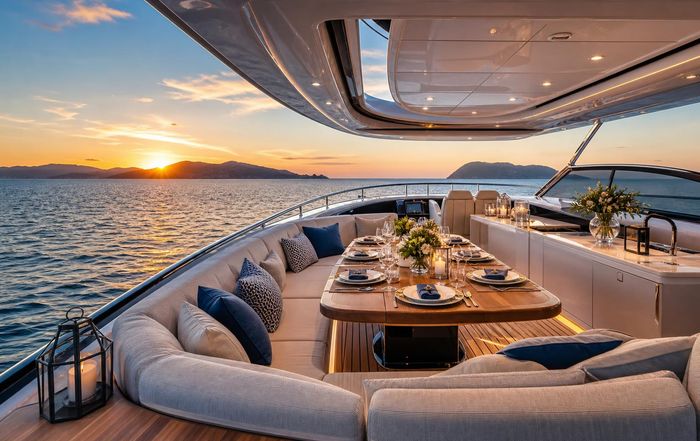
An effective entertaining cockpit usually offers distinct but interconnected zones. There is typically a primary lounging area, often U- or L-shaped seating around a convertible table, that can shift from coffee table height to dining surface and sometimes to a sunpad. Adjacent to this, designers often position a wet bar or compact galley module, enabling service of drinks and light food without crew constantly crossing guest circulation paths. On larger yachts, a secondary, more intimate seating nook or chaise-style sunpad may be placed aft or to one side, allowing smaller groups to break away while remaining within the social envelope.
Sightlines are central to the experience. Guests tend to gravitate to spaces where they can see both the water and the social core. This has led to the widespread adoption of aft-facing lounge seating, fold-down bulwarks that become terraces and low-profile railings or glass panels that preserve views while maintaining safety. Builders have also paid close attention to helm placement. On many modern sailing yachts and flybridge cruisers, twin helms are pushed aft and outboard, freeing the center of the cockpit for seating and dining, while still giving the skipper direct visual contact with guests.
For readers of yacht-review.com who are comparing models, the most telling cockpit layouts are those that minimize bottlenecks between saloon, galley, cockpit and swim platform. Designs that require guests to squeeze past helm stations or climb steep companionways tend to feel smaller and less comfortable in practice, even if the square footage appears generous on paper.
Convertible geometry: terraces, transformers and smart furniture
One of the most visible trends in cockpit design over the past decade has been the adoption of transforming structures that can change the character of the space throughout the day. This approach, which reflects broader innovation in residential and hospitality design, is especially valuable on yachts where every square meter must serve multiple functions.
Fold-down bulwarks, popularized on many European motor yachts and now seen from builders ranging from Sanlorenzo to Galeon, create instant terraces at sea level, dramatically increasing usable beam at anchor and providing guests with a feeling of direct connection to the water. Some models integrate built-in lounge pads or bars into these fold-down sections, while others leave them as flexible platforms for loose furniture. The design challenge, which reputable builders address through extensive engineering and classification-society approval, is to ensure watertight integrity, structural strength and safe operation in varying sea states.
Transforming aft platforms, sometimes referred to as "beach club transformers," extend this thinking. Hydraulic platforms can lower into the water as swim steps, rise to meet the cockpit sole for level entertaining space, or act as tender lifts. On large superyachts, beach clubs have evolved into full-scale wellness and social areas with bars, gyms and lounges, but even on sub-24-meter vessels, a well-designed platform can turn the cockpit into a seamless extension of the sea. Interested readers can explore additional examples of such innovations in our technology features.
Convertible furniture plays a quieter but equally important role. Tables that fold, slide or telescope, backrests that reverse to face either the table or the water, and sunpads that emerge from under seating all contribute to a cockpit that can move from breakfast to sunbathing to cocktail hour with minimal effort. The best implementations conceal mechanisms and hardware when not in use, preserving clean lines and minimizing trip hazards.
Materials and craftsmanship: comfort, durability and sensory appeal
For yachts intended as entertainment platforms, material choices in the cockpit are about more than aesthetics; they shape tactile experience, maintenance requirements and long-term durability in harsh marine environments. Designers must balance visual luxury with practicality, particularly for owners who cruise in regions with strong UV exposure, salt spray and significant temperature variations.
High-quality marine upholstery, often in neutral tones with subtle textures, has become a defining feature of contemporary cockpits. Leading textile manufacturers, including companies highlighted by organizations such as the American Boat & Yacht Council and Icomia, have developed fabrics that resist fading, mildew and staining while retaining a soft, residential feel. Many builders now offer advanced foam constructions that improve drainage and comfort, ensuring that cushions dry quickly after rain or spray and remain supportive during long social gatherings.
Teak decking remains prevalent in premium segments for its grip, warmth and timeless appearance, although concerns about sustainability and sourcing have encouraged some builders to adopt synthetic alternatives or responsibly sourced hardwoods. Owners interested in the environmental dimension of material choices may wish to review broader perspectives on sustainable forestry and marine materials from resources such as the Forest Stewardship Council and the World Wildlife Fund, and can also find curated commentary on eco-conscious yachting in the Yacht Review sustainability section.
Metals and hardware, from hinges and latches to railings and cupholders, are increasingly specified in high-grade stainless steel or coated aluminum to withstand corrosion and repeated use. In the luxury segment, subtle detailing such as stitched leather grabrails, solid wood inlays and custom-cast cleats can elevate the perceived quality of the cockpit, reinforcing the sense that guests are in a carefully crafted environment rather than a purely utilitarian one.
Shading, climate control and acoustic comfort
Entertaining at sea is fundamentally an outdoor activity, but the best cockpit designs acknowledge that guests expect the ability to modulate sun, wind, temperature and noise levels almost as easily as they might in a high-end urban terrace. Shading solutions are therefore central to contemporary layouts.
Retractable hardtops, sliding roofs and integrated bimini systems enable owners to adjust exposure throughout the day. On many motor yachts, electric sunroofs and louvered pergola-style structures allow fine control of light and ventilation. Some builders integrate solar panels into hardtop surfaces, supporting hotel loads while shading the cockpit, a concept that aligns with the broader trend toward greener onboard energy systems discussed in industry analyses from groups such as the International Maritime Organization and Boat International's sustainability reports.
For yachts operating in hotter climates, misting systems, strategically placed fans and even discreet air-conditioning vents are being incorporated into cockpit architecture, particularly on larger yachts where guests may spend the majority of their time outdoors. At the other end of the spectrum, owners cruising in cooler regions benefit from wind-deflecting glass panels, removable enclosure systems and heated seating, all of which extend the entertaining season.
Acoustic comfort is another emerging focus. As propulsion systems evolve and hybrid or fully electric drivetrains become more common, ambient noise levels on deck are dropping, which makes conversations and music more pleasant. Designers are paying closer attention to how sound travels in the cockpit, specifying softer materials, under-deck insulation and carefully tuned audio systems that provide even coverage without overwhelming guests. For readers interested in the technological underpinnings of these advances, further insights can be found in our unaffiliated news and innovation coverage and in technical resources from organizations such as DNV and Lloyd's Register.
Safety, accessibility and inclusive entertaining
No cockpit design can be considered truly successful for entertaining unless it also meets high standards of safety and accessibility. The best layouts are those that allow guests of different ages and mobility levels to move confidently, even when the yacht is in motion or conditions are less than ideal.
Non-slip surfaces, secure handholds and logical, well-lit steps are fundamental. Many builders have refined the geometry of stairways between cockpit, swim platform and interior to minimize steep angles and awkward transitions. On sailing yachts, the trend toward "clean decks," where lines are led under coamings or beneath the deck surface, has reduced clutter in the guest area and lowered the risk of tripping, while still keeping controls accessible to the crew.
Accessibility considerations have gained prominence, particularly in markets where owners may welcome older family members or guests with reduced mobility. Wider passageways, fewer level changes and, on larger yachts, discreet lifts or ramps can make the cockpit and surrounding decks more inclusive. Industry groups and classification societies have issued guidance on inclusive design, and many custom and semi-custom yards now work closely with owners to adapt layouts to specific needs, reflecting broader social expectations around universal design. Followers who value family-friendly and multi-generational cruising will find additional perspectives in our family-oriented features.
From a regulatory standpoint, reputable builders align with standards from bodies such as the International Organization for Standardization (ISO) for small craft and with flag-state requirements in key markets. While specific regulations vary, the underlying principle is consistent: guardrails, lifelines, opening sections and access to the water must be engineered to support safe enjoyment of the cockpit's social potential.
Integrating galley, bar and service flows
Entertaining at sea depends as much on the ease of service as on seating and views. Consequently, the relationship between cockpit and galley has become a major design focus, particularly on yachts in the 12 to 30-meter range where the owner may frequently host without a large professional crew.
The most user-friendly layouts position the galley either aft in the saloon or directly adjacent to the cockpit, often with a large opening window or sliding door that allows the countertop to serve as an indoor-outdoor bar. This arrangement, widely adopted by builders such as Fairline, Prestige and Sea Ray, reduces the distance between food preparation and serving areas, and enables the host or chef to remain visually connected with guests. On some models, outdoor galley modules with grills, sinks, refrigerators and ice-makers are integrated into the transom or cockpit side, allowing cooking to take place entirely outside while the main galley remains a backup or support area.
Storage is another crucial element. Well-designed cockpits include dedicated spaces for tableware, glassware, cushions, covers and water-sports equipment, ensuring that the area can be quickly transformed between uses without clutter. Designers who understand hospitality workflows pay particular attention to where crew will pass, where trays can be set down and how waste is handled discreetly, drawing on best practices from luxury hotels and restaurants. Those seeking to deepen their understanding of such operational thinking can find useful parallels in hospitality design resources from organizations like Hospitality Design and Forbes Travel Guide, which, while not marine-specific, often inform the expectations of yacht-owning clientele.
Lifestyle and regional variations in cockpit use
Cockpit design is also shaped by cultural and regional preferences. Owners in the Mediterranean, where long al fresco lunches and late-evening gatherings are central to yachting culture, tend to prioritize large dining tables, adjustable shading and generous seating for extended meals. In contrast, many North American owners of day-boats and express cruisers place greater emphasis on flexible seating, integrated grills and entertainment systems that support shorter, more dynamic outings with water-sports, swimming and casual snacks.
In Northern Europe and Scandinavia, where weather can be changeable even in summer, enclosed or semi-enclosed cockpits with robust heating and insulation are common, allowing owners to enjoy the water in shoulder seasons. Builders in these regions often favor pilothouse or hardtop designs with large, opening windows that can transform a sheltered wheelhouse into an open cockpit when conditions permit. Fans interested in how these regional nuances intersect with broader cruising habits can explore additional context in our well researched cruising insights and global perspectives.
In Asia-Pacific markets such as Australia, New Zealand and parts of Southeast Asia, cockpits often function as all-day living spaces, with strong demand for shade, airflow and easy access to the water for swimming, diving and fishing. Here, robust, low-maintenance materials and straightforward, open layouts are especially valued, reflecting an outdoor-oriented lifestyle and often a more informal approach to entertaining.
Sustainability and the future of entertaining cockpits
As the yachting industry grapples with environmental responsibility, cockpit design is emerging as an area where sustainability and guest experience can reinforce rather than oppose one another. Efficient shading and natural ventilation reduce reliance on air-conditioning, which in turn lowers fuel consumption and emissions. Thoughtful integration of solar panels into hardtops and awnings can provide clean energy for lighting, refrigeration and audio systems that support entertaining, aligning with guidance from environmental organizations and the evolving expectations of regulators and clients alike. Those wishing to explore broader frameworks for responsible boating can consult resources from The Ocean Cleanup, Surfrider Foundation and other marine-focused NGOs that advocate for lower-impact marine recreation.
Material choices also carry environmental implications. Builders that prioritize certified woods, recyclable synthetic decking and long-lasting hardware help reduce the lifecycle footprint of the cockpit. At the same time, durable, easily cleaned finishes reduce the need for harsh chemicals and frequent replacement, supporting both sustainability and operational efficiency. On yacht-review.com, sustainability is increasingly discussed not as a constraint but as an opportunity to innovate, and readers can follow these developments in greater depth in our independent sustainability coverage and business analysis of changing owner expectations.
Looking ahead, it is likely that entertaining cockpits will become even more technologically integrated, with smart lighting, adaptive shading, energy management and entertainment systems controlled from central interfaces or personal devices. However, the fundamental qualities that make a cockpit successful for social use-comfort, connection to the sea, safety and a sense of welcome-are timeless. The best designs will continue to be those that use technology discreetly, in service of human interaction rather than as a distraction from it.
Choosing the right cockpit for an owner's entertaining style
For prospective owners and charterers reading yacht-review.com, the most practical way to evaluate cockpit designs is to consider how they align with specific entertaining patterns. Those who enjoy large, formal dinners may prioritize ample table space, direct galley access and stable seating. Owners who prefer relaxed, activity-filled days with children may focus on safe access to the water, robust shade and generous storage for toys and equipment. Frequent cruisers in variable climates may look for flexible enclosure systems and heating, while those in reliably warm regions might value open, breezy layouts with integrated bars and sunpads.
Whenever possible, experiencing a yacht in person, ideally both underway and at anchor, remains invaluable. Observing how guests naturally gravitate to certain areas, how easily food and drinks circulate, and how the space feels at different times of day can reveal strengths and weaknesses that are not always apparent in plans or photographs. For people seeking structured evaluations, the updated reviews archive and design features offer in-depth assessments of specific models and concepts, while our lifestyle coverage and travel features illustrate how well-designed cockpits enhance real-world cruising experiences around the globe.
Ultimately, the best cockpit designs for entertaining at sea are those that reflect a clear understanding of how people actually live on board. They invite guests to linger, to converse, to share meals and to appreciate the ever-changing theatre of the sea, all while feeling subtly but consistently supported by thoughtful design. As owners, designers and builders continue to collaborate and innovate, the cockpit will remain not only the social heart of the yacht, but also a powerful expression of the industry's commitment to combining comfort, craftsmanship and responsible enjoyment of the world's waters.