

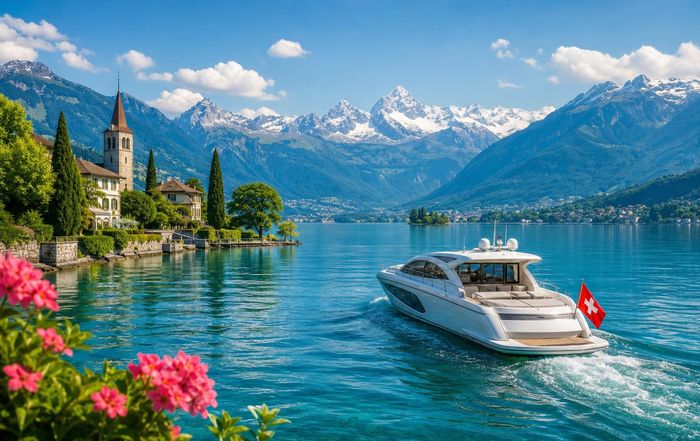
Best Lake Cruising Destinations in Switzerland
Switzerland's lakes have long been associated with postcard views and grand hotels, yet for the cruising enthusiast they represent something more specific and compelling: a network of navigable, well-managed waters framed by sophisticated shoreside infrastructure, discreet luxury and a strong culture of safety and environmental stewardship. For boat captains coming, here who increasingly look beyond traditional coastal yachting hubs, Swiss lakes now stand out as a distinctive cruising arena where compact scale, excellent transport links and high service standards combine to create experiences that are both practical and profoundly memorable.
This article examines the most attractive lake cruising destinations in Switzerland from a businesslike, experience-driven perspective, focusing on the quality of the cruising grounds, the maturity of the local marine ecosystem and the broader lifestyle context that makes these waters so appealing to owners, charterers and the professionals who serve them.
Why Swiss Lakes Matter to the Cruising Community
The Swiss Confederation has no coastline, yet it offers one of Europe's most refined inland cruising environments. The country's major lakes are bordered by well-developed marinas, public and private piers, and a dense network of scheduled passenger services operated by regional navigation companies such as CGN - Compagnie Générale de Navigation sur le Lac Léman, Schifffahrtsgesellschaft des Vierwaldstättersees (SGV) on Lake Lucerne, and Zürichsee-Schifffahrtsgesellschaft (ZSG) on Lake Zurich. These operators, whose timetables and fleets are publicly documented on their respective websites, illustrate the depth of maritime culture that has evolved around Swiss inland waters.
For yacht owners and charter guests, this translates into reliable access to fuel, maintenance, winter storage, and qualified skippers, as well as a regulatory environment that is predictable and safety-oriented. The Swiss Federal Office of Transport sets the framework for inland navigation, and cantonal authorities enforce local rules regarding speed zones, environmental protection and cross-border procedures on lakes shared with neighboring countries. International regulations, such as those coordinated under the Central Commission for the Navigation of the Rhine and bilateral agreements with France, Italy, Germany and Austria, further structure operations on transboundary lakes like Geneva, Constance and Maggiore.
From an environmental perspective, Switzerland's lakes are often cited in European water quality reports, with agencies such as the European Environment Agency and national scientific institutions tracking long-term improvements in clarity and biodiversity following decades of investment in wastewater treatment and pollution control. For owners and operators seeking to align their cruising lifestyle with responsible resource use, this focus on clean water and protected shorelines is increasingly relevant, and it is a theme that yacht-review.com explores regularly in its coverage of sustainable boating and marina practices.
Against this backdrop, several destinations emerge as particularly attractive for cruising, each offering a distinctive combination of scenery, cultural interest and yachting infrastructure.
Lake Geneva (Lac Léman): Grand Cruising in the Shadow of the Alps
Lake Geneva, or Lac Léman, is Switzerland's largest lake and one of Europe's most iconic inland cruising areas. Shared between Switzerland and France, it stretches approximately 73 kilometers from the Rhône estuary near Villeneuve to the western extremity near Geneva, with a maximum width of about 14 kilometers. Its size, climatic diversity and cosmopolitan shoreline make it especially attractive for longer itineraries and for owners who appreciate an international flavor in their cruising.
The northern Swiss shore is dotted with marinas and yacht clubs in towns such as Lausanne, Morges, Nyon and Vevey, many of which maintain active regatta calendars and training programs. The Société Nautique de Genève, whose role in the America's Cup history is well documented on the official event website and in sailing media, exemplifies the lake's high-performance sailing culture, yet the broader infrastructure caters equally to family cruising and luxury charter. Well-equipped marinas offer secure berths, technical services and winter storage, while local shipyards handle everything from wooden classic restorations to modern composite refits.
For visitors, the combination of historic lakeside towns, vineyards, and mountain backdrops is a major attraction. The terraced Lavaux vineyards, a UNESCO World Heritage site, rise directly above the water and are easily accessible from lakeside pontoons and small harbors. Cruisers can combine day passages with wine tastings, cultural visits and fine dining, taking advantage of Switzerland's efficient rail network to move guests and crew between ports when necessary; the Swiss Federal Railways website provides clear connections between most major Léman harbors and national and international rail hubs.
Commercial passenger services run by CGN operate year-round, with historic paddle steamers and modern vessels linking Swiss and French ports. Their published schedules and fleet descriptions provide a useful reference for private skippers planning routes and estimating passage times, and they demonstrate how well-organized the lake's maritime ecosystem has become. For owners considering charter or shared-ownership models on Lake Geneva, the presence of this established infrastructure and the proximity to Geneva's international airport create strong practical advantages.
From a lifestyle standpoint, Lake Geneva's mix of luxury hotels, conference facilities and discreet private residences has made it a favored base for international organizations and high-net-worth individuals. This environment supports a sophisticated service industry, ranging from concierge agencies to specialist yacht management firms, that can handle everything from bespoke onboard events to regulatory compliance. Smart people interested in how these service layers intersect with yacht ownership will find complementary insights in the yacht-review.com coverage of boating and business trends.
Lake Lucerne (Vierwaldstättersee): Historic Waters with Modern Appeal
Lake Lucerne, known in German as Vierwaldstättersee, offers one of the most dramatic cruising backdrops in inland Europe, with steep mountain slopes, deeply indented bays and a distinctive footprint that has shaped Swiss national identity. The lake's historical significance is linked to early Swiss Confederation sites such as the Rütli meadow and the Tellskapelle, and these landmarks remain focal points for both domestic and international visitors.
From a cruising perspective, Lake Lucerne is notable for its varied geography. The northern basin near the city of Lucerne is relatively open and well served by marinas and urban amenities, while the southern arms, including the Uri and Gersau basins, are narrower, more secluded and often surrounded by towering peaks. This diversity allows skippers to design itineraries that alternate between lively cityfront promenades and quiet anchorages, always within a relatively compact area.
The SGV operates a fleet of paddle steamers and motor vessels that crisscross the lake, and its published route network effectively maps the main navigational corridors. Private yachts share these waters under clearly defined right-of-way and speed regulations, with local harbor authorities providing guidance on mooring, environmental rules and seasonal constraints. The lake's water quality and bathing areas are monitored by cantonal health departments, and recent reports accessible via official Lucerne tourism and government channels emphasize the high standards that are maintained.
For yacht owners, Lucerne's position as a tourism hub and gateway to central Switzerland offers several advantages. The city hosts leading hospitality brands, cultural institutions such as the Kultur- und Kongresszentrum Luzern (KKL), and a range of high-end retailers and service providers. Combined with strong road and rail links, this makes Lake Lucerne an attractive base for those who wish to integrate cruising with broader Alpine travel or corporate hosting. The evolving intersection of yachting and experiential tourism, which yacht-review.com regularly explores in its cruising features, is clearly visible here, as operators increasingly design packages that combine lake cruises with mountain excursions, spa stays and culinary experiences.
Environmental considerations are also central to Lake Lucerne's appeal. Regional authorities and research institutions monitor biodiversity, water temperature trends and the impact of tourism, publishing their findings through official portals and scientific outlets. While some studies note the influence of climate change on water levels and seasonal patterns, the consensus among public agencies is that the lake remains in good ecological condition, with ongoing efforts to balance visitor numbers, transport emissions and shoreline development.
Lake Zurich: Urban Sophistication and Everyday Cruising
Lake Zurich, with the city of Zurich at its northwestern end, presents a different but equally compelling cruising proposition. Here, urban life and lake culture are deeply intertwined, with commuter ferries, private boats and charter vessels sharing the water against a backdrop of financial institutions, tech companies and historic neighborhoods.
The Zürichsee-Schifffahrtsgesellschaft operates scheduled services that connect Zurich with lakeside communities such as Küsnacht, Meilen, Rapperswil and Pfäffikon, and its fleet information and timetables provide a detailed portrait of how heavily the lake is used for both commuting and leisure. For the private cruiser, this density of traffic is balanced by clear navigation rules, well-marked channels and designated speed zones, which are published and enforced by cantonal authorities.
Marinas and yacht clubs are distributed along both shores, with a concentration of facilities in Zurich, Thalwil, Horgen and Rapperswil. These offer moorings, lifting equipment, maintenance workshops and winter storage, and many have waiting lists, reflecting high local demand. For visiting yachts, guest berths are available in several locations, although advance planning is advisable during peak periods. Owners who base their vessels on Lake Zurich benefit from immediate access to a major international business center, with its extensive network of professional services, transport connections and cultural offerings.
The lake's role in Zurich's identity is evident in city planning and public life. Lakeside promenades, bathing areas and parks are integrated into residential and commercial districts, and seasonal events often feature waterborne elements. For business travelers, the ability to host meetings, client entertainment or team events aboard a yacht just minutes from the central business district is a tangible asset. This alignment of waterfront lifestyle and corporate activity is increasingly relevant to readers considering how to integrate boating into their professional lives, a theme that resonates with the broader lifestyle coverage on yacht-review.com.
Water quality in Lake Zurich is generally reported as high, with the city's water utility and cantonal agencies publishing regular analyses. Long-term improvements since the mid-20th century are well documented by Swiss research institutions, which attribute progress to advanced wastewater treatment and strict pollution controls. At the same time, studies highlight ongoing challenges such as microplastics and the ecological impact of shoreline construction, underlining the importance of continued vigilance and innovation in sustainable marina and vessel design. Interested fans can learn more about sustainable business practices in the broader context of waterborne tourism and leisure.
Lake Constance (Bodensee): Trinational Cruising at Scale
Lake Constance, or Bodensee, is one of Europe's largest lakes and a major center of inland cruising, shared by Switzerland, Germany and Austria. Its scale, with an area of roughly 536 square kilometers, and its varied basins-the Obersee, Untersee and the connecting Seerhein-create a cruising environment that feels closer to coastal yachting than most inland waters.
On the Swiss shore, towns such as Kreuzlingen, Romanshorn, Arbon and Rorschach host marinas, shipyards and yacht clubs that support both sailing and motor cruising. The presence of multiple national jurisdictions introduces additional regulatory complexity, particularly regarding registration, safety equipment and cross-border procedures, but these are well documented by national transport ministries and boating associations. The International Bodensee Conference, an intergovernmental body, coordinates environmental and planning issues around the lake, and its publicly available reports provide insight into long-term strategies for water quality, shoreline protection and sustainable tourism.
For cruising enthusiasts, Lake Constance offers the opportunity to visit harbors in three countries within a relatively short passage, combining Swiss efficiency with German and Austrian hospitality and cultural heritage. Historic islands such as Mainau and Reichenau, which are covered extensively by regional tourism organizations, provide botanical, architectural and culinary attractions, while larger towns such as Konstanz, Friedrichshafen and Bregenz offer marinas, shipyards and events that attract an international audience.
The lake is also a focal point for maritime innovation and heritage. The Zeppelin Museum in Friedrichshafen documents the history of airship development linked to the region, while local shipyards and technology firms work on advanced propulsion systems, including electric and hybrid boats designed for inland navigation. For yacht-review.com readers interested in the future of propulsion and onboard systems, the developments on Lake Constance complement the global trends explored in our technology coverage, illustrating how inland waters can serve as testbeds for sustainable maritime solutions.
Environmental monitoring on Lake Constance is extensive, with cross-border scientific programs tracking nutrient levels, biodiversity, invasive species and climate-related changes. Publicly available data from research institutes and environmental agencies indicate that significant progress has been made in reducing eutrophication since the 1980s, though challenges remain in managing tourism pressure and protecting sensitive shoreline habitats. For the responsible cruiser, these findings reinforce the importance of careful route planning, adherence to no-wake and protected area regulations, and support for marinas and service providers that invest in low-impact infrastructure.
Lake Maggiore and Lake Lugano: Mediterranean Flair in the Swiss South
In the canton of Ticino, Lake Maggiore and Lake Lugano offer a very different cruising atmosphere, shaped by a warmer climate, Italian-influenced culture and subtropical vegetation. Both lakes are shared with Italy, and their shorelines are lined with palm-fringed promenades, Belle Époque hotels and hillside villages that contrast strongly with the more austere Alpine landscapes farther north.
On Lake Maggiore, the Swiss towns of Locarno, Ascona and Brissago serve as key hubs, with marinas, mooring fields and boatyards that cater to both local owners and visiting yachts. Passenger services operated by companies such as Navigazione Lago Maggiore connect Swiss and Italian ports, and their published routes and schedules provide a framework for private cruising itineraries. The Brissago Islands, with their botanical garden managed by the canton of Ticino, are a notable attraction, combining natural beauty with carefully curated landscapes that are accessible by boat.
Lake Lugano, with the city of Lugano as its main urban center, offers a similarly rich combination of cruising and culture. The lake's irregular shape, with multiple arms and cross-border sections, creates a sense of exploration, while the surrounding hills and mountains provide viewpoints and hiking opportunities that integrate naturally with boating activities. Marinas and yacht clubs on both the Swiss and Italian sides support a lively boating community, and local authorities provide clear guidance on registration, safety and environmental rules.
For many visitors, the appeal of Ticino's lakes lies in their Mediterranean ambiance coupled with Swiss standards of infrastructure and governance. This combination is particularly attractive to owners and charter guests seeking a relaxed, resort-style cruising experience within a politically and economically stable environment. The region's integration into European transport networks, including efficient rail links documented by Trenitalia and Swiss Federal Railways, facilitates multi-destination itineraries that combine lakes, cities and Alpine resorts.
From an environmental standpoint, Lake Maggiore and Lake Lugano have been the subject of extensive scientific study, particularly regarding nutrient levels, invasive species and the impact of urbanization. Public reports from Swiss and Italian research institutions note both improvements and ongoing challenges, emphasizing the need for cross-border cooperation in water management and shoreline planning. For the cruising community, this reinforces the importance of working with local marinas and service providers that prioritize sustainable operations, an approach that aligns closely with the principles highlighted in yacht-review.com's coverage of responsible cruising.
Emerging Trends: Electric Propulsion, Marina Design and Experiential Charter
Across Switzerland's major lakes, several trends are reshaping the cruising experience in ways that are directly relevant to owners, charterers and industry professionals. One of the most visible developments is the gradual shift toward electric and hybrid propulsion for both commercial and private vessels. Passenger operators on lakes such as Lucerne, Zurich and Constance have begun introducing low-emission or fully electric boats, as documented in their public communications and in specialized maritime and energy media, and this momentum is influencing expectations among private owners.
Marinas and boatyards are responding by installing charging infrastructure, adapting haul-out and maintenance procedures for heavier battery-equipped hulls, and investing in staff training. International organizations such as the International Council of Marine Industry Associations (ICOMIA) and the Global Sustainable Tourism Council provide frameworks and case studies that support these transitions, while national and cantonal authorities in Switzerland offer guidance and, in some cases, financial incentives for low-emission technologies. Readers interested in the broader business implications of these shifts will find additional context in yacht-review.com's industry news and analysis.
At the same time, marina design is evolving to reflect both environmental priorities and changing customer expectations. Floating breakwaters, green roofs, integrated public spaces and improved waste-management systems are increasingly common in new or renovated facilities, as documented by architectural and engineering firms active in waterfront projects. These investments not only reduce environmental impact but also enhance the aesthetic and experiential quality of the cruising environment, supporting higher-value tourism and more diverse revenue streams for marina operators.
Experiential charter is another growth area, particularly on lakes with strong cultural and gastronomic identities. Operators on Lake Geneva, Lake Lucerne and in Ticino are developing curated itineraries that combine cruising with vineyard visits, music festivals, fine dining, wellness retreats and outdoor sports. This shift from simple point-to-point transport to integrated experiences aligns with broader trends in luxury travel, and it opens opportunities for yacht owners to position their vessels as platforms for bespoke, high-margin services. The World Tourism Organization (UNWTO) and leading hospitality groups provide macro-level insight into these trends, which are increasingly visible in the Swiss lake context and often mirrored in the global perspectives covered by yacht-review.com.
Integrating Swiss Lakes into a Broader Cruising Strategy
For many readers of yacht-review.com, Switzerland's lakes will complement rather than replace traditional coastal cruising grounds. Their compact scale, reliable infrastructure and strong regulatory frameworks make them particularly suitable for owners based in Europe who wish to maximize time on board while minimizing complex logistics. The proximity of major airports in Geneva, Zurich, Basel and Milan, combined with Switzerland's rail network, allows for efficient weekend or short-stay cruising, even for those with demanding professional schedules.
From a portfolio perspective, some owners choose to base smaller, highly maneuverable vessels-such as day cruisers, weekender yachts or high-performance sailing boats-on Swiss lakes, while maintaining larger yachts in Mediterranean or other coastal locations. This strategy enables regular use of the lake-based vessel for family outings, corporate hospitality or personal relaxation, while reserving extended vacations for blue-water cruising. The detailed boat and yacht reviews published by yacht-review.com can support decision-making around vessel types that are particularly well suited to inland waters, including models optimized for low-wake operation, shallow drafts and electric propulsion.
For charter clients and corporate groups, Swiss lakes offer a controlled environment where variables such as tides, ocean swell and long-distance weather systems play a reduced role. This can simplify planning and risk management for events, incentive trips or product launches hosted afloat. Local regulations and safety standards, which are generally stringent and well enforced, further contribute to a sense of security and predictability that is valued by both organizers and participants.
Finally, for those interested in the cultural and historical dimensions of boating, Switzerland's lakes provide a rich context. Historic paddle steamers, traditional sailing regattas, and lakeside museums document the evolution of inland navigation, industrialization and tourism in the region. Institutions such as the Swiss Museum of Transport in Lucerne, which maintains detailed exhibits on shipping and mobility, offer additional depth for visitors who wish to understand how today's cruising landscape has been shaped over time. This historical awareness complements the forward-looking perspective that yacht-review.com brings to its design and innovation features, reminding followers that the most successful cruising destinations are those that honor their heritage while embracing change.
Conclusion: Switzerland's Lakes as a Model for Refined Inland Cruising
Switzerland's major lakes-Geneva, Lucerne, Zurich, Constance, Maggiore and Lugano-demonstrate how inland waters can support a mature, high-quality cruising ecosystem that appeals to discerning owners, charter clients and industry professionals. Their strengths lie not only in their natural beauty but also in the reliability of their infrastructure, the clarity of their regulatory frameworks and the seriousness with which environmental stewardship is approached.
For the boating audience online today, these lakes offer both inspiration and practical opportunity. They show how cruising can be integrated into everyday life in and around major business centers, how cross-border cooperation can enhance the value of shared waterways, and how innovation in propulsion, marina design and experiential travel can elevate the boating experience without compromising environmental integrity.
As the yachting community continues to diversify its cruising grounds and seek destinations that combine lifestyle appeal with operational excellence, Switzerland's lakes stand out as a compelling benchmark. Whether as primary home waters or as part of a wider network of cruising destinations, they exemplify a model of refined, responsible and rewarding inland boating that is likely to grow in relevance in the years ahead. Readers who wish to explore these possibilities further will find ongoing coverage, destination insights and vessel evaluations throughout yacht-review.com, including our dedicated sections on reviews, cruising and community perspectives, all aimed at helping them unlock the full potential of Switzerland's remarkable lakes.