

Modern Yacht Design Trends Worth Watching
Modern yacht design is undergoing one of the most dynamic periods of change in its history, shaped by rapid advances in technology, evolving owner expectations, and a heightened emphasis on sustainability. From Northern Europe's custom superyacht shipyards to production builders in the United States and Asia, a new generation of vessels is demonstrating how performance, comfort, and environmental responsibility can be integrated rather than traded off. For yacht design, lovers, these developments are not abstract concepts but emerging realities that will define the next decade of boating, cruising, and ownership.
The New Aesthetics: From Sharp Lines to Sculpted Volume
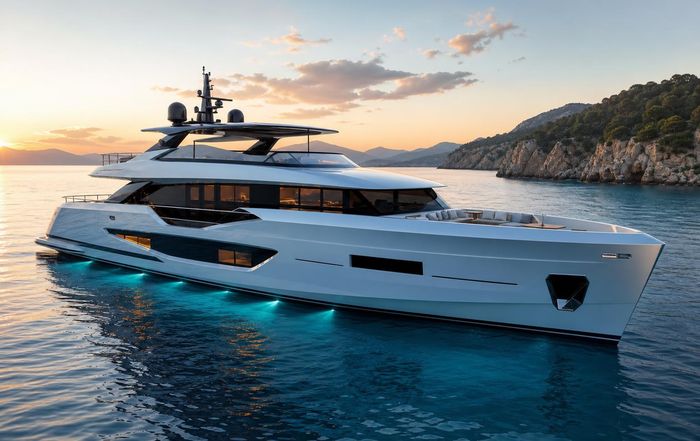
Contemporary yacht styling has moved decisively beyond the traditional low-profile, rounded forms that dominated much of the late twentieth century. Designers across leading studios such as Espen Øino International, Winch Design, and Nuvolari Lenard are increasingly favouring sculpted superstructures, vertical or near-vertical bows, and expansive glazing, creating yachts that are visually striking while also functionally efficient.
Vertical and axe bows, once associated primarily with commercial and exploration vessels, have become a hallmark of modern superyacht design. Builders such as Feadship and Damen Yachting have demonstrated through multiple deliveries that these bow forms can reduce pitching, improve seakeeping, and increase interior volume forward, while at the same time creating a more assertive profile. Readers who follow our in-depth yacht design coverage will recognize how this shift is also influencing smaller semi-custom and production models, as brands seek to differentiate their fleets with recognisable silhouettes.
At the same time, the integration of large glass surfaces has become almost universal, with floor-to-ceiling windows in main saloons, owner's suites, and even guest cabins. According to reporting from Boat International, shipyards such as Benetti, Heesen Yachts, and Sanlorenzo have invested heavily in structural engineering and glass technology to support these panoramic openings without compromising hull integrity or classification requirements. The result is a more seamless visual relationship between interior spaces and the surrounding seascape, which aligns closely with owner demand for a more immersive connection to the cruising environment.
This aesthetic evolution is not purely about styling; it is also enabling new interior layouts and spatial experiences. High freeboards and carefully modelled superstructures allow for generous headroom and multi-level arrangements, while still maintaining sleek proportions. For owners and charter guests, the practical outcome is a yacht that feels significantly larger than its length overall might suggest, a theme that is increasingly central to the latest boat reviews and analyses on this site.
Interior Architecture: Residential Luxury at Sea
Inside modern yachts, the influence of high-end residential architecture and hospitality design is now unmistakable. Rather than the ornate, heavily themed interiors that once characterised many large yachts, leading projects today favour clean lines, natural materials, and a calm, contemporary aesthetic that would not look out of place in a luxury home in London, New York, or Singapore.
Design studios, including Bannenberg & Rowell, Reymond Langton Design, and Zuccon International Project, frequently collaborate with residential architects and interior brands to deliver bespoke spaces that reflect the owner's lifestyle on land. According to Architectural Digest, superyacht interiors increasingly feature custom furniture, curated art collections, and advanced lighting schemes that can transform mood and ambience at the touch of a control panel. This trend is particularly evident on larger yachts in the 60-metre-plus segment, but its influence is filtering down to premium production yachts and explorer vessels as well.
The traditional separation between formal and informal areas is also being reconsidered. Open-plan main decks with fluid transitions between lounge, dining, and bar spaces are now common, and many owners are prioritising flexible layouts that can accommodate both private family use and occasional charter. For readers interested in how these evolving interiors support long-range cruising lifestyles, our dedicated cruising insights explore the practical implications of these design choices, from storage and crew circulation to guest privacy.
Materials and finishes reflect a similar shift toward understated sophistication. Light woods, stone, and textured fabrics are replacing high-gloss veneers and heavy marbles, while sustainable and low-emission materials are increasingly requested by environmentally conscious owners. The move toward healthier onboard environments is also leading to more attention on air quality, acoustic insulation, and natural light, linking interior design directly with wellbeing.
Indoor-Outdoor Living: Blurring the Boundaries
Perhaps the most visible trend in modern yacht design is the deliberate erasure of boundaries between interior and exterior spaces. Beach clubs, once a rare feature reserved for the largest custom yachts, are now a defining element of new builds across multiple size categories. These waterside lounges, typically located at the stern and connected to the sea via large transom platforms, have evolved into multi-functional spaces with lounges, bars, gyms, and even wellness areas.
Shipyards such as Lürssen, Oceanco, and CRN have been at the forefront of this development, and their latest projects demonstrate how beach clubs can serve as the social heart of the yacht, particularly in warmer cruising regions such as the Mediterranean, Caribbean, and Southeast Asia. The popularity of fold-down terraces and balconies, which expand usable deck space at anchor, further underscores the desire for direct engagement with the sea. Interested readers can see how these concepts translate into real-world itineraries in our yacht travel features, which highlight destinations where such amenities truly come into their own.
On upper decks, aft areas are being reimagined as "sea-view living rooms," often with pools, sunpads, and alfresco dining areas in close proximity to indoor lounges separated only by sliding or fully retractable glass doors. This arrangement allows guests to move effortlessly between climate-controlled interiors and open-air spaces, which is especially valuable in regions where temperatures and weather can fluctuate throughout the day.
Forward deck spaces are also being repurposed. What was once predominantly reserved for ground tackle and crew operations now frequently incorporates guest seating, sunbathing areas, or even private spa pools for the owner's suite. Combined with observation lounges and crow's nest platforms, these vantage points provide unmatched panoramas for wildlife watching, coastal cruising, or simply enjoying a quiet sunrise at sea.
The Rise of Explorer and Expedition Yachts
One of the most significant shifts in owner preferences over the past decade has been the growing interest in explorer and expedition yachts, designed for long-range cruising in remote regions such as Antarctica, the Arctic, and the Pacific islands. These vessels, often inspired by commercial or research ship aesthetics, prioritise autonomy, robust seakeeping, and practical deck layouts capable of handling tenders, submarines, helicopters, and other specialist equipment.
Companies like Damen Yachting with its SeaXplorer range, Cantiere delle Marche, and Sanlorenzo with its X-Space and explorer-influenced models have helped to make the explorer concept both aspirational and accessible. Reporting from SuperYacht Times and Yachting World highlights how owners are increasingly drawn to the idea of adventure and discovery, seeking experiences beyond traditional cruising grounds. For those following the global evolution of yachting, our international perspective on the yacht market tracks how this explorer trend is resonating from Europe to North America and Asia-Pacific.
From a design standpoint, explorer yachts are challenging traditional assumptions about what a luxury yacht should look like. Their higher bows, utilitarian lines, and expansive working decks contrast with the sleek, streamlined silhouettes of classic Mediterranean cruisers, yet they still offer interiors of comparable comfort and sophistication. This duality-rugged capability combined with refined living-is a key reason why explorer yachts are increasingly seen as future-proof investments, particularly in an era of uncertain travel patterns and growing interest in off-the-beaten-track destinations.
At the regulatory level, polar-capable yachts must comply with standards such as the International Maritime Organization's Polar Code when operating in high-latitude waters, which has design implications for hull reinforcement, safety systems, and environmental protection measures. Owners contemplating such projects are therefore engaging with naval architects and classification societies at an early stage to ensure that aesthetic ambitions align with operational realities.
Sustainability and Alternative Propulsion
Environmental responsibility has moved from a peripheral concern to a central driver of yacht design innovation. While the yachting sector's overall contribution to global emissions remains relatively modest compared with commercial shipping, owners, builders, and designers are increasingly aware of their role in setting positive examples for high-end travel and leisure. For smart people coming here, sustainability is no longer a niche topic; it is a core theme explored in depth in our dedicated sustainability section.
Hybrid propulsion systems, which combine traditional diesel engines with electric motors and battery storage, have become one of the most widely adopted solutions for reducing fuel consumption and emissions, particularly at low speeds and in sensitive marine environments. Builders such as Feadship, Benetti, and Sunreef Yachts have delivered multiple hybrid-powered yachts, and industry coverage from sources including TradeWinds and The Maritime Executive underscores how these systems can cut fuel use, reduce noise and vibration, and enable limited periods of zero-emission operation in harbours or marine protected areas.
Parallel to hybridisation, there is growing interest in alternative fuels such as methanol, biofuels, and, in the longer term, green hydrogen. Lürssen and Feadship have both announced research and development programmes focused on fuel-cell technology, with the aim of supporting hotel loads and, eventually, propulsion with significantly lower emissions. Publicly available information from DNV and Lloyd's Register provides further insight into how classification societies are developing frameworks for the safe use of these emerging energy carriers on yachts and other vessels. Learn more about the broader context of maritime decarbonisation through resources from the International Maritime Organization, which is shaping regulations that will influence yacht design indirectly via fuel availability and port infrastructure.
Sustainability in yacht design is not limited to propulsion. Hull optimisation using advanced computational fluid dynamics, lightweight construction materials, waste heat recovery, and improved HVAC efficiency all contribute to lower energy demand. On-deck solar arrays, particularly on multihull yachts and support vessels, are becoming more common, providing auxiliary power for hotel loads and battery charging. Shipyards are also paying closer attention to lifecycle impacts, including the sourcing of timber, the recyclability of composites, and the reduction of volatile organic compounds in paints and resins.
For owners and charterers, there is an increasing recognition that environmentally responsible yachts can also deliver tangible lifestyle benefits, including quieter operation, reduced fuel stops, and access to more sensitive cruising grounds that may impose stricter emission or noise limits in the future. This alignment of ethical and experiential advantages is one of the reasons sustainability is now a central topic in yacht ownership discussions.
Smart Technology, Automation, and Connectivity
Modern yacht design is inseparable from advances in onboard technology, which are transforming everything from navigation and safety to entertainment and comfort. Integrated bridge systems, dynamic positioning, and advanced autopilots have become standard on larger yachts and are increasingly common on smaller vessels as well, leveraging technologies that have matured in the commercial and offshore sectors.
According to analysis published by Lloyd's List and Marine Electronics Journal, digitalisation is enabling more efficient voyage planning, real-time monitoring of machinery, and predictive maintenance, all of which contribute to improved safety and reduced operating costs. For owners, the most visible aspect of this technological shift is often the integration of smart-boat systems, which allow lighting, climate, audio-visual equipment, blinds, and even security systems to be controlled via touchscreens or mobile devices. For fans who follow our coverage of marine technology, these developments demonstrate how the yacht is becoming an extension of the connected home.
Connectivity at sea has improved dramatically with the expansion of high-throughput satellite networks and the rollout of new services by providers such as Starlink, Inmarsat, and KVH Industries. While coverage, bandwidth, and regulatory considerations vary by region, many yachts can now support streaming, video conferencing, and cloud-based work from remote anchorages, enabling owners and guests to blend leisure cruising with flexible working arrangements. This capability has been particularly important in encouraging longer stays on board and more ambitious itineraries, as documented by multiple brokerage houses and charter agencies.
Behind the scenes, increased automation and digital integration are reshaping the crew experience as well. Engine-room systems can be monitored from tablets, safety drills can be enhanced with digital tools, and onboard networks can integrate with shoreside support teams for remote troubleshooting. These changes are not without challenges, particularly regarding cybersecurity and the need for ongoing crew training, but they are fundamentally altering how yachts are designed, built, and operated.
Space Optimisation and New Layout Concepts
As owner expectations evolve, yacht designers are continually rethinking how to extract maximum value from every square metre on board. One of the most notable trends is the relocation of the owner's suite to new positions, particularly forward on the upper deck or even on its own private deck, offering enhanced privacy and panoramic views while freeing up space on the main deck for communal areas.
Convertible and multi-use spaces are also becoming more common. Gyms that transform into massage rooms, cinemas that double as lounges, and offices that can be reconfigured as additional guest cabins illustrate how flexibility is now a key design criterion, especially on yachts that alternate between private and charter use. For those considering how such innovations influence the ownership experience, our business-focused articles examine the implications for resale value, charter appeal, and operational efficiency.
Tender garages and toy storage are another area of innovation. Instead of dedicating large portions of the stern or lower deck solely to tender bays, some designers are integrating side-launch systems or combining garages with beach club areas, allowing the same volume to serve multiple purposes depending on the time of day or operational needs. On smaller yachts, designers are increasingly creative in how they accommodate personal watercraft, diving equipment, and other gear without compromising guest areas.
Crew areas, historically an afterthought in some designs, are receiving more attention as well. Improved crew cabins, dedicated lounges, and efficient service corridors not only comply with regulatory standards but also support crew retention and service quality. This recognition that crew wellbeing is directly linked to guest experience is influencing the layout of galleys, pantries, laundry spaces, and storage, particularly on yachts intended for extended cruising or global itineraries.
Regional Influences and Globalisation of Design
While yacht design is an inherently global industry, regional preferences still play a significant role in shaping trends. Mediterranean-focused yachts often prioritise expansive outdoor decks, shallow draughts, and large windows to suit warm-weather cruising and marina life, whereas Northern European owners may place more emphasis on enclosed lounges, winter gardens, and robust hulls for North Atlantic or Baltic conditions. North American buyers frequently value larger tenders, fishing capabilities, and strong air-conditioning systems for use in Florida, the Bahamas, and beyond, while Asian markets such as Singapore, Hong Kong, and Japan present unique requirements rooted in local climate, berthing, and cultural preferences.
Shipyards in Italy, the Netherlands, Germany, the United Kingdom, and Turkey remain central to the superyacht sector, yet builders in countries such as the United States, Taiwan, and Poland are increasingly influential in the production and semi-custom segments. This globalisation of supply and demand is fostering cross-pollination of ideas, as designers and naval architects work with clients from diverse backgrounds. For a broader historical context on how these regional influences have evolved, readers may explore our curated history of yacht design and innovation.
International boat shows and industry events, from Monaco and Cannes to Fort Lauderdale, Düsseldorf, and Singapore, continue to serve as key platforms where new trends are unveiled and tested against market response. Coverage from sources such as Boat International, Yachting Magazine, and The Superyacht Group often highlights how concepts introduced at these events can shape design directions for years to come, particularly when they successfully address emerging owner priorities such as sustainability, wellness, and adventure.
Lifestyle, Wellness, and the Human-Centred Yacht
Ultimately, the most important trend in modern yacht design is a renewed focus on the human experience at sea. Yachts are increasingly conceived not only as objects of engineering excellence or status, but as platforms for family life, wellness, and meaningful travel. This perspective aligns closely with the editorial approach of yacht-review.com, where lifestyle-oriented coverage explores how design decisions translate into day-to-day enjoyment on board.
Wellness spaces, including dedicated gyms, spas, treatment rooms, and yoga decks, are now common even on mid-size yachts. Natural light, fresh air circulation, and quiet zones are integrated into interior layouts, reflecting a broader societal emphasis on mental and physical health. Some owners request specialised features such as cold plunges, infrared saunas, or medical rooms, particularly on expedition yachts that may operate far from shore-based facilities.
Family-friendly design is another area of focus. Safe deck layouts, child-secure railings, thoughtful cabin arrangements, and flexible social spaces allow multi-generational groups to enjoy time together without compromising safety or privacy. Owners are also increasingly interested in educational and experiential opportunities for younger guests, whether through onboard laboratories on explorer yachts, water-sports instruction, or culturally rich itineraries. For those exploring how yachts can serve as a setting for shared experiences, our family-oriented content provides additional perspectives.
The charter market, which often serves as an entry point to yacht ownership, also exerts a strong influence on design. Yachts that can host events, corporate retreats, or wellness-focused charters need layouts and facilities that support these diverse uses. This versatility is reflected in the growing popularity of modular furniture, adaptable lighting schemes, and audio-visual systems capable of hosting anything from a film night to a business presentation.
Innovation with Responsibility!
Modern yacht design trends reveal an industry that is both ambitious and increasingly self-aware. Owners and builders are pushing the boundaries of aesthetics, comfort, and technology, while also acknowledging the environmental and social responsibilities that come with operating large private vessels. Regulatory frameworks, technological innovation, and shifting cultural expectations will continue to shape how yachts are conceived and built, and the leading players are already investing in research, partnerships, and pilot projects to stay ahead of these developments.
For the business-minded boat design community, these trends also represent strategic considerations. Choices made at the design and build stage-regarding propulsion, layout, materials, and technology-can significantly influence future operating costs, regulatory compliance, charter potential, and resale value. Our original ongoing news and analysis will continue to track how shipyards, designers, and owners navigate this evolving landscape, while our broader boats and yacht overviews provide concrete examples of these trends in practice.
As yacht design moves into its next chapter, the most successful projects will likely be those that combine visionary creativity with technical rigour, environmental consciousness, and a deep understanding of how people actually live, work, and relax at sea. In this balance between innovation and responsibility lies the future of modern yachting-and it is a future well worth watching.