

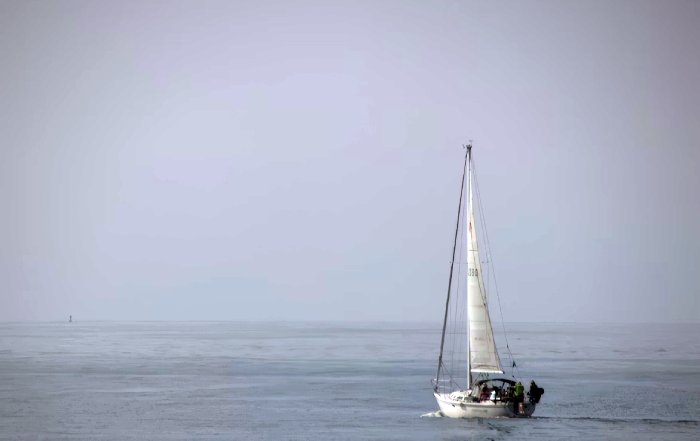
The Allure of Solo Circumnavigations
A New Golden Age of Sailing Alone Around the World - Yes It Is Possible!
Solo circumnavigation has re-emerged as one of the most compelling frontiers in yachting, combining the romance of traditional seamanship with the precision of modern technology and the strategic sophistication of elite sport. For the global audience that follows Yacht-Review.com, from seasoned owners in the United States, United Kingdom, and Germany to aspiring bluewater sailors in Australia, France, Italy, Spain, Singapore, and beyond, the idea of one person alone on a yacht, navigating the world's oceans without outside assistance, continues to capture imagination in a way few other maritime endeavors can match.
The allure lies in the unique fusion of personal challenge, technical mastery, and narrative drama that solo circumnavigations generate. Each voyage is a test of human resilience and judgment, a live demonstration of yacht design and systems engineering under maximum stress, and a story that unfolds in real time across oceans and digital platforms. As Yacht-Review.com has observed repeatedly in its cruising features and global coverage, these voyages sit at the intersection of adventure, innovation, and business, influencing how yachts are conceived, built, marketed, and used across the world.
A Brief History of Sailing Alone Around the World
Solo circumnavigation is not a new phenomenon, yet its modern form is relatively recent. The first recorded solo circumnavigation is widely attributed to Joshua Slocum, who completed his voyage in 1898 aboard the sloop Spray, setting a template for self-reliant seamanship that still resonates with contemporary sailors. His journey, chronicled in "Sailing Alone Around the World," remains a touchstone for those who see the ocean as a proving ground for individual skill and character, and it continues to influence how Yacht-Review.com approaches historical perspectives on yachting.
The 20th century saw the transition from pioneering exploration to organized competition. Events such as the Golden Globe Race in 1968 and the subsequent achievements of sailors like Sir Robin Knox-Johnston, Bernard Moitessier, and later Dame Ellen MacArthur helped transform solo circumnavigation from a rare feat into a recognized discipline that combined oceanic endurance with public spectacle. In the 21st century, races like the Vendée Globe and the Route du Rhum have further professionalized the field, with sophisticated sponsorship structures, rigorous qualification requirements, and extensive media coverage, all of which have elevated the commercial and technological stakes for yacht builders and equipment manufacturers.
For a deeper understanding of how these milestones fit into the broader maritime narrative, readers may wish to explore historical overviews from organizations such as the National Maritime Museum in Greenwich and the Royal Yachting Association, both of which have documented the evolution of solo ocean racing and cruising as a distinct branch of yachting culture.
The Psychological Appeal: Solitude, Mastery, and Identity
From the perspective of Yacht-Review.com's global readership, the psychological dimension of solo circumnavigation is often as compelling as the technical or sporting aspects. The decision to sail alone around the world is rarely a purely logistical or professional choice; it is usually deeply personal, shaped by an individual's desire for autonomy, self-discovery, and a form of mastery that cannot be replicated in more conventional professional or recreational settings.
Solo sailors repeatedly describe the experience as an intense confrontation with both the sea and themselves. Without crew, every decision-from reefing a mainsail in rising winds to choosing a conservative or aggressive routing strategy through the Southern Ocean-rests solely on the skipper's judgment. This total responsibility fosters a level of focus and self-awareness that appeals to individuals who seek a clear, unambiguous test of competence and resilience.
Psychologists who study extreme environments, including researchers cited by institutions such as the American Psychological Association, have drawn parallels between solo sailing, polar exploration, and long-duration spaceflight. Each involves isolation, sensory monotony, high-stakes decision-making, and the need for emotional self-regulation over extended periods. For solo circumnavigators, the ocean becomes both a workplace and a mirror, reflecting their strengths, fears, and capacity for adaptation in a way few other experiences can match.
For many in North America, Europe, and Asia who follow Yacht-Review.com's lifestyle coverage, this psychological dimension is part of the broader appeal of yachting as a vehicle for personal reinvention. In an era defined by hyperconnectivity and constant digital noise, the idea of disconnecting from shore-based obligations and navigating by one's own skills and decisions carries a powerful symbolic weight, particularly for entrepreneurs, executives, and professionals who view solo sailing as a counterbalance to the structured pressures of modern business life.
Design and Technology: Yachts Built for One
The demands of solo circumnavigation have had a profound influence on yacht design and onboard technology, and this is an area where Yacht-Review.com's long-standing focus on design innovation and technology aligns directly with the interests of builders, naval architects, and owners across North America, Europe, and Asia-Pacific. When a yacht must be handled safely and efficiently by a single person in all conditions, every aspect of design, from hull form to deck layout to systems integration, is scrutinized through a different lens.
Modern solo racing yachts, particularly the IMOCA 60 class used in events like the Vendée Globe, exemplify a design philosophy that balances speed with manageability. Features such as canting keels, foils, and sophisticated autopilot systems enable sustained high speeds while allowing the skipper to rest and manage sail configurations with minimal physical effort. At the same time, the boats must be structurally robust enough to withstand weeks of high-load sailing in the Southern Ocean, where wave patterns and wind strengths can expose any design weakness with brutal clarity.
Even in the cruising segment, where the objective is not to set records but to complete a safe and rewarding voyage, the influence of solo and shorthanded sailing is unmistakable. Many production and semi-custom builders in France, Italy, Germany, and Scandinavia now emphasize features such as self-tacking jibs, in-mast or in-boom furling, electric winches, and centralized sail controls led aft to the cockpit, all of which reduce workload and enable a single watchkeeper to manage the yacht confidently. These developments are regularly examined in Yacht-Review.com's boat reviews and technical evaluations, where the editorial focus includes not only performance metrics but also ergonomics, redundancy, and ease of maintenance.
Advances in navigation and communication technology have also reshaped what is possible. High-resolution weather routing, satellite communications, AIS integration, and increasingly sophisticated onboard monitoring systems allow solo sailors to make more informed decisions and manage risk more proactively than ever before. Organizations such as the World Meteorological Organization and services like NOAA's marine forecasts have contributed to a global infrastructure of data and prediction that underpins modern long-distance sailing, while private-sector innovators continue to refine hardware and software tailored for the specific needs of solo and shorthanded sailors.
Risk, Safety, and the Ethics of Pushing Limits
For all its romance, solo circumnavigation carries significant risks, and the yachting community's fascination with these voyages is accompanied by a sober recognition of their potential costs. Capsizes, dismastings, collisions with floating debris, medical emergencies, and psychological strain are all part of the risk profile that sailors, sponsors, insurers, and race organizers must manage. From a business and regulatory standpoint, which Yacht-Review.com regularly explores in its industry coverage, the safety dimension is central to the long-term viability and public perception of solo sailing events.
Regulatory frameworks and best practices have evolved in response to past incidents and near-misses. Race organizers and classification societies now impose stringent requirements for structural integrity, watertight compartmentalization, emergency steering, and communication equipment, while sailors are trained in sea survival, medical response, and damage control. Institutions such as the International Maritime Organization and national safety agencies in countries like Canada, Australia, and New Zealand contribute to a broader culture of maritime safety that influences how solo voyages are planned and executed, even when they fall outside the scope of commercial regulations.
The ethical dimension arises when the drive for records, sponsorship exposure, or personal achievement intersects with the realities of search-and-rescue resources and environmental conditions. While solo sailors accept personal risk, their presence at sea can, in extreme situations, require intervention from naval or coast guard assets funded by taxpayers in regions such as Europe, North America, and Asia. This has prompted ongoing debate about acceptable levels of risk, mandatory equipment, and the responsibility of organizers and sponsors to ensure that high-profile solo attempts do not unduly burden public rescue services or encourage underprepared individuals to attempt similar feats.
Within this context, Yacht-Review.com has consistently emphasized the importance of rigorous preparation, realistic self-assessment, and adherence to established safety standards in its community-focused content, highlighting that the true allure of solo circumnavigation lies not in reckless risk-taking but in measured, well-planned exposure to challenge, where seamanship and judgment are as celebrated as raw courage.
Business, Sponsorship, and the Global Yachting Economy
Solo circumnavigation, particularly in its competitive form, is now deeply embedded in the business ecosystem of global yachting. Major races and record attempts attract sponsors from sectors as diverse as finance, technology, energy, and consumer goods, with brands recognizing the storytelling power of a single sailor confronting the world's oceans. For companies based in the United States, United Kingdom, France, Germany, Japan, and South Korea, association with a high-profile solo campaign can deliver international visibility and a narrative of resilience, innovation, and sustainability that aligns with contemporary corporate values.
The economic impact extends beyond sponsorship logos on sails and hulls. Yacht builders, sailmakers, electronics manufacturers, and service providers across Europe, Asia, and North America benefit from the R&D investment and media exposure that solo campaigns generate. Technologies proven in the crucible of solo racing-whether advanced autopilots, energy management systems, or lightweight composite structures-often filter down into the cruising market, influencing the expectations and purchasing decisions of owners who may never contemplate a solo circumnavigation themselves but who value reliability, performance, and safety.
For a business-oriented audience, resources such as the International Chamber of Commerce and global market reports from organizations like the OECD provide useful macroeconomic context for understanding how sponsorship, media rights, and technology transfer support the broader marine industry. Within this landscape, Yacht-Review.com's business section has become a platform where the financial and strategic dimensions of solo sailing campaigns are analyzed alongside their human and technical narratives, helping decision-makers in marinas, shipyards, and investment firms evaluate where and how to engage.
Sustainability and the Ethics of Ocean Stewardship
In 2026, no serious discussion of global yachting can ignore sustainability, and solo circumnavigation sits at a particularly visible junction between human ambition and environmental responsibility. The same oceans that provide the arena for these voyages are under pressure from climate change, plastic pollution, overfishing, and biodiversity loss, issues documented extensively by organizations such as the Intergovernmental Panel on Climate Change and the United Nations Environment Programme. Solo sailors, who spend weeks or months at sea with an intimate, unmediated view of ocean conditions, often become powerful witnesses and advocates for marine conservation.
Many contemporary solo campaigns now integrate environmental objectives alongside sporting goals. These can include minimizing the yacht's carbon footprint through renewable energy systems, participating in citizen science projects such as microplastic sampling or ocean temperature measurements, and using the media attention surrounding the voyage to highlight specific conservation messages. For readers of Yacht-Review.com, particularly those who follow its dedicated sustainability coverage, these initiatives reflect a broader shift in yachting culture, where responsible ocean use is increasingly seen as integral to the legitimacy and long-term future of the sport.
On a practical level, the constraints of solo sailing-limited onboard space, strict weight budgets, and the need for energy autonomy-have accelerated the adoption of technologies such as high-efficiency solar panels, hydro-generators, and advanced battery systems. These innovations align closely with trends in the wider maritime sector, where decarbonization and resource efficiency are becoming competitive advantages rather than optional extras. For yacht owners and designers in markets from Scandinavia and the Netherlands to Singapore and New Zealand, the lessons learned from solo circumnavigations provide a valuable reference point for sustainable design and operations, encouraging them to learn more about sustainable business practices that can be applied both at sea and ashore.
Family, Lifestyle, and the Human Stories Behind the Records
While high-profile solo races often emphasize speed, records, and technological edge, the broader culture of solo circumnavigation is rich with diverse human stories that resonate deeply with Yacht-Review.com's family and lifestyle readership. Many solo sailors are not full-time professionals but individuals who have stepped away temporarily from careers, family responsibilities, or conventional life paths to pursue a long-held dream of sailing around the world alone.
For families in Canada, Switzerland, South Africa, Brazil, Malaysia, and elsewhere who follow these journeys online, the narrative often includes the emotional complexity of separation and reunion, the logistics of maintaining relationships across oceans and time zones, and the impact of such an undertaking on children, partners, and extended networks. Solo sailors frequently speak about the dual motivation of personal fulfillment and the desire to set an example of courage and perseverance for their families, turning their voyage into a shared story even when they are physically alone.
The lifestyle implications extend beyond the duration of the voyage itself. Many solo circumnavigators report a lasting shift in their priorities and perceptions upon returning to shore, with a renewed appreciation for simplicity, time, and direct experience over material accumulation. For Yacht-Review.com, these post-voyage reflections are as important as the tactical and technical aspects of the journey, offering readers insight into how extreme maritime experiences can reshape attitudes toward work, consumption, and community engagement across regions as varied as Asia, Europe, Africa, and South America.
Events, Community, and the Role of Media
Solo circumnavigation may be an individual act on the water, but it is deeply embedded in a network of events, institutions, and communities that provide structure, support, and recognition. From formal races like the Vendée Globe and the Golden Globe Race to record attempts sanctioned by bodies such as the World Sailing Speed Record Council, the solo sailing calendar is now a significant component of the global yachting events landscape. These events draw spectators, sponsors, and media from around the world, reinforcing the status of ports in France, the UK, Spain, Portugal, and South Africa as hubs of ocean racing culture.
Media, both traditional and digital, play a central role in shaping how these voyages are perceived and valued. Real-time tracking, onboard video, social media updates, and post-race documentaries allow audiences from North America to Asia-Pacific to follow the progress, setbacks, and emotional highs and lows of solo sailors with unprecedented intimacy. This has transformed solo circumnavigation from a largely private ordeal into a shared narrative, where the sailor's solitude at sea coexists with a continuous, if virtual, connection to a global audience.
For Yacht-Review.com, which has been covering yachting news and developments for a worldwide readership through its news and events sections, this media-rich environment offers both opportunities and responsibilities. On one hand, it enables deeper, more nuanced storytelling that can integrate technical analysis, personal interviews, and contextual insight. On the other, it requires editorial discipline to distinguish between hype and substance, ensuring that coverage emphasizes seamanship, preparation, and responsible risk management rather than sensationalism.
Why the Allure Endures Even More Today
The allure of solo circumnavigations remains undiminished, even as technology evolves and societal attitudes toward risk and sustainability continue to shift. For the international community that turns to Yacht-Review.com for insight into cruising, travel, technology, and business, the enduring fascination can be traced to several converging factors.
First, solo circumnavigation represents a rare arena where individual skill, judgment, and resilience remain paramount, even in an age of automation and artificial intelligence. The sailor may rely on sophisticated tools, but ultimately it is human decision-making that determines success or failure, a reality that resonates strongly with leaders and innovators across sectors and regions.
Second, these voyages continue to drive tangible advances in yacht design, materials science, energy management, and safety systems, with benefits that extend to cruising families, charter fleets, and commercial operators worldwide. The lessons learned from the most demanding solo campaigns inform the everyday experiences of owners and crews from the United States and Canada to Japan, Thailand, and New Zealand, enhancing the reliability and enjoyment of time spent at sea.
Third, solo circumnavigations offer a powerful narrative framework for exploring themes that matter deeply in the 21st century: the relationship between humans and the natural world, the balance between ambition and responsibility, and the search for meaning and identity in a complex, interconnected global society. For many readers, following these voyages through the lens of Yacht-Review.com is a way to engage with these questions in a concrete, emotionally resonant form.
Finally, the ocean itself remains an inexhaustible source of mystery and challenge. Even with advanced forecasting, satellite imagery, and global communication networks, the experience of being alone on a yacht in the middle of the ocean retains a timeless, elemental quality. It is this combination of modern sophistication and ancient uncertainty that ensures solo circumnavigation will continue to occupy a special place in the imagination of sailors, designers, investors, and enthusiasts around the world.
As Yacht-Review.com continues to document and analyze this evolving field-from the latest high-performance racing yachts to the personal accounts of independent cruisers-it does so with a recognition that the true allure of solo circumnavigations lies not only in records and headlines, but in the enduring human desire to test oneself against the sea, to navigate by one's own lights, and to return with stories that enrich the global yachting community for years to come.