

Exploring Malaysian Islands by Catamaran: A 2026 Strategic Guide for Discerning Yacht Owners
Malaysia's Island Frontier in the 2026 Yachting Landscape
By 2026, Malaysia has consolidated its position as one of the most strategically significant island-cruising regions for yacht owners and charter investors who evaluate destinations through the combined lenses of vessel performance, lifestyle experience, regulatory clarity, and long-term asset value. For the global audience of yacht-review.com, which increasingly approaches cruising grounds as components of a diversified yachting portfolio rather than isolated holiday choices, Malaysian waters now stand alongside the Mediterranean and Caribbean as a serious, year-round consideration rather than a niche, once-in-a-lifetime detour. This shift reflects both the maturation of Malaysia's maritime infrastructure and the growing sophistication of owners from North America, Europe, and Asia-Pacific who are seeking new, less congested circuits that still offer reliable service, connectivity, and safety.
Within this evolving context, the catamaran has become the defining platform for exploring Malaysia's island chains, not only as a lifestyle statement but as a logical response to the region's geography, climate, and cruising patterns. The dual-hull configuration, shallow draft, and expansive living spaces of modern catamarans have proved particularly suited to the coral-fringed bays, monsoon-influenced sea states, and multi-generational usage patterns that characterize Malaysian cruising. As yacht-review.com has documented in its coverage of regional cruising trends, owners who previously concentrated their time between the French Riviera, the Balearics, the Bahamas, and the British Virgin Islands are increasingly allocating full seasons to Southeast Asia, with Malaysia functioning as both a destination in its own right and a strategic hub linking Thailand, Indonesia, Singapore, and, for more ambitious programs, the Indian Ocean and Western Pacific.
The Malaysian island proposition, therefore, is no longer defined solely by postcard imagery of white-sand beaches and turquoise water, although those remain abundant; rather, it is now viewed as a complex, opportunity-rich environment where tax regimes, marina infrastructure, regulatory developments, cultural depth, and environmental considerations intersect. For discerning yacht owners and industry professionals who rely on the analytical perspective of yacht-review.com, Malaysia offers a compelling combination of operational practicality and experiential richness that aligns with the increasingly global, data-driven approach to yacht deployment and ownership strategy.
Why Catamarans Define the Malaysian Island Experience
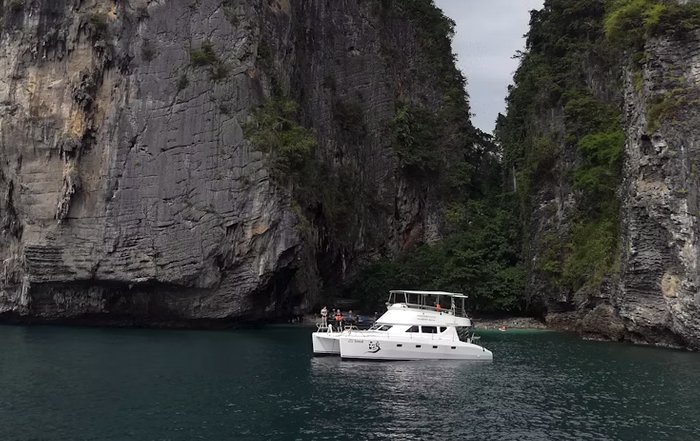
The dominance of catamarans in Malaysian island cruising is best understood as a structural response to the region's physical and operational realities rather than a transient fashion trend. The coral shelves, sandbanks, and shallow approaches that characterize the Langkawi archipelago, the Perhentian Islands, parts of Sabah, and numerous lesser-known islets reward vessels that can anchor close to shore without compromising safety. Catamarans from builders such as Lagoon, Fountaine Pajot, Leopard Catamarans, and newer European and Asian yards combine shallow draft with wide beams, enabling owners and guests to transition almost seamlessly from yacht to beach or reef, effectively turning the vessel into a floating boutique resort that is always positioned at the heart of the experience.
Operationally, the twin-hull format offers redundancy that is especially valuable in a region where, despite major improvements, service infrastructure remains more dispersed than in traditional yachting heartlands. Dual engines, separated fuel systems, and duplicated critical systems provide an additional margin of safety for long passages between Peninsular Malaysia and Borneo, or for exploratory itineraries along less-developed stretches of coastline. Readers who regularly consult the detailed boat and yacht reviews on yacht-review.com increasingly factor such redundancy into their decision-making, weighing it alongside interior layout, design language, and brand reputation when selecting platforms for Southeast Asian deployment.
Equally important is the comfort profile that catamarans deliver in Malaysia's equatorial climate and in monsoon-influenced seas. The reduced roll, ample exterior lounge areas, and panoramic saloons make extended passages more pleasant for guests with limited sea experience, while the separation of accommodation into two hulls supports privacy and flexibility for families, corporate groups, and charter parties. As the global yachting demographic skews younger and more family-oriented, and as owners from the United States, United Kingdom, Germany, Canada, Australia, Singapore, and beyond seek to bring multiple generations and business associates onboard, the social architecture of catamarans has become a decisive advantage in the Malaysian context, where much of the value lies in extended, slow-paced exploration rather than short, high-speed hops.
Strategic Gateways: Langkawi, Penang, and the East Coast Network
Understanding Malaysia as a catamaran destination begins with its principal gateways, which structure both logistics and guest experience. Langkawi, with its duty-free status and established marina network, remains the primary hub for international yachts entering Malaysian waters. Over the past several years, marina facilities, haul-out capabilities, and technical services have continued to improve, while local authorities have refined procedures for foreign-flagged vessels, making Langkawi an efficient base for both private programs and charter fleets. Its proximity to the Thai Andaman Sea, including Phuket and the Phi Phi islands, allows owners and captains to design dual-country itineraries that optimize seasonal conditions and diversify guest experiences over a single multi-week voyage.
Further south, Penang offers a complementary value proposition that blends culture, gastronomy, and urban sophistication with accessible cruising in the Malacca Strait. While Penang is less exclusively yachting-focused than Langkawi, it plays a vital role in itineraries that emphasize cultural immersion, dining, and business engagement. Owners who view their yachts as platforms for networking, deal-making, or discreet corporate hospitality often incorporate Penang into their schedules, aligning their maritime plans with regional business interests and the broader economic dynamics of Southeast Asia. This intersection between lifestyle and commerce is a recurring theme in yacht-review.com's business and market analysis, reflecting how high-net-worth individuals increasingly integrate yachting into broader personal and professional strategies.
On the east coast of Peninsular Malaysia, the Perhentian Islands, Redang, and Tioman form a more seasonal but highly rewarding network of destinations characterized by clear water, vibrant reefs, and a distinctly relaxed, nature-oriented ambiance. The northeast monsoon still dictates operational windows, but improvements in small marina facilities, fuel availability, and local support services have made it easier for catamarans to base themselves temporarily in this region during favorable months. Performance-oriented catamarans with efficient sail plans and robust anchoring systems are particularly well suited to this environment, where passages can involve more open-water exposure and where reliable onboard systems become essential. Owners and captains planning such itineraries often supplement local knowledge with insights from technology and navigation features on yacht-review.com and external resources such as the World Meteorological Organization, integrating meteorological data into long-range route planning.
Borneo: Sabah, Sarawak, and the Frontier Dimension
Beyond Peninsular Malaysia, the states of Sabah and Sarawak on Borneo offer a frontier-style cruising experience that appeals to owners seeking something more adventurous and less commercialized than the established circuits of Europe and North America. The Tunku Abdul Rahman Marine Park near Kota Kinabalu, the islands off Sandakan and Semporna, and the more remote stretches of coastline toward the Indonesian and Philippine borders provide a tapestry of diving, snorkeling, wildlife encounters, and cultural experiences that remain relatively untouched by mass-market tourism.
For catamaran owners, Borneo embodies both the promise and the demands of frontier cruising. The promise lies in the ability to access anchorages that are still pristine, to interact with local communities whose livelihoods are closely tied to the sea, and to participate in conservation-oriented tourism that aligns with the increasingly prominent sustainability values of the global yachting community. The demands stem from the more limited availability of marinas, repair facilities, and provisioning centers, making self-sufficiency and technical reliability essential. Watermakers, solar arrays, energy management systems, and advanced navigation electronics are no longer optional enhancements but core elements of risk management and comfort.
This is also the region where environmental responsibility becomes highly visible. Sensitive coral ecosystems, marine protected areas, and vulnerable coastal communities require visiting yachts to adhere to strict standards of behavior and technology. Owners who invest in hybrid propulsion, efficient hull forms, and waste-management systems position themselves not only as responsible actors but also as leaders in the evolving field of sustainable yachting, a theme that yacht-review.com explores in depth through sustainability-focused content and through engagement with broader frameworks such as those promoted by the United Nations Environment Programme.
Seasonal Patterns, Weather Strategy, and Risk Governance
Successful catamaran cruising in Malaysia depends on a sophisticated understanding of seasonal weather patterns, particularly the interplay between the southwest and northeast monsoons. The southwest monsoon, generally prevailing from May to September, tends to favor the west coast of Peninsular Malaysia, including Langkawi and Penang, with more settled conditions and relatively predictable wind patterns. Conversely, the northeast monsoon, from roughly November to March, brings heavier seas and rainfall to the east coast and parts of Borneo, making those areas more seasonal and demanding more conservative passage planning and contingency strategies.
By 2026, professional captains and experienced owners are using a combination of onboard routing software, satellite communications, and shore-based analytics to refine their risk governance, drawing on data from institutions such as the World Meteorological Organization and integrating it with local insights from marinas, agents, and established charter operators. The inherent stability and reduced roll of catamarans offer a tangible advantage during transition periods between monsoons, when squalls and variable winds can create uncomfortable or even hazardous conditions for less stable platforms. In this environment, redundancy in propulsion, robust ground tackle, and well-practiced emergency procedures are not merely technical details but central components of a comprehensive risk-management framework expected by insurers, financiers, and informed charter clients.
For family-focused programs, weather strategy is also a lifestyle decision. School holidays in North America, Europe, and Asia do not always align perfectly with optimal local conditions, so owners must decide whether to prioritize absolute calm or accept a degree of variability in exchange for more flexible scheduling. This balancing act is a recurring topic in yacht-review.com's family-oriented cruising coverage, where the emphasis is on aligning safety and comfort with the experiential goals of multi-generational groups, from young children discovering snorkeling to older guests who may be more sensitive to motion and heat.
Design, Comfort, and Tropical-Specific Yacht Architecture
Malaysia's equatorial climate exerts a powerful influence on yacht design and onboard experience, and catamarans have proved especially adaptable to these demands. High temperatures, intense UV exposure, and humidity require careful attention to shading, ventilation, and climate control. Contemporary catamarans increasingly feature integrated hardtops, extended biminis, and flexible shading systems that protect key social areas such as aft cockpits, flybridges, and forward lounging zones. Sliding doors and opening windows are designed to promote cross-ventilation when conditions allow, reducing reliance on air conditioning and enhancing comfort during evenings at anchor.
Interior layouts and material choices are equally shaped by the tropical context. Designers and naval architects, whose work is frequently profiled in yacht-review.com's design and innovation section, are selecting fabrics, woods, and finishes that combine luxury aesthetics with resistance to UV, salt, and moisture. Engineered woods, advanced composites, and marine-grade textiles help preserve appearance and structural integrity over repeated seasons in Southeast Asia, supporting both enjoyment and long-term resale value. Air-conditioning and dehumidification systems are now specified with higher capacities and zoning flexibility, enabling owners to manage energy consumption while maintaining comfort in cabins, saloons, and crew areas.
From a technical standpoint, the tropical environment also drives decisions about insulation, glazing, and energy systems. High-performance glazing reduces heat gain without compromising the panoramic views that are central to the catamaran experience, while solar arrays and lithium-based energy storage systems allow for quieter, more efficient operation at anchor. Owners and prospective buyers seeking to understand the implications of these choices for operational costs and asset longevity increasingly turn to resources such as yacht-review.com's technology features and external standards from bodies like the American Boat and Yacht Council, which provide frameworks for assessing safety and build quality in demanding climates.
Charter Economics, Ownership Models, and Market Maturity
The Malaysian catamaran scene is not only a story of cruising but also one of evolving business models and market structures. By 2026, a growing number of owners from the United States, United Kingdom, Germany, France, Italy, Australia, Singapore, and Hong Kong are placing their catamarans into professionally managed charter programs based in Langkawi or operating across Malaysia and Thailand. The combination of relatively attractive operating costs, favorable tax conditions in certain jurisdictions, and rising regional demand has created an environment where well-managed catamarans can generate meaningful charter income while still offering generous owner-usage windows.
Catamarans are particularly effective in this role because their cabin configurations, social spaces, and operational efficiencies align with the expectations of charter clients from Europe, North America, China, South Korea, Japan, and the broader Asia-Pacific region. High-density yet comfortable accommodation allows for multiple couples, families, or corporate groups, while fuel-efficient operation and robust systems support reliable itineraries in areas where distances between key destinations can be significant. The economics of this model are influenced by fuel prices, marina fees, crew salaries, insurance, and regulatory compliance, all of which differ from those in more mature markets like the Mediterranean. Owners and investors who follow yacht-review.com's business and market insights often benchmark these factors against macroeconomic indicators from organizations such as the World Bank, which track tourism growth, infrastructure investment, and regional stability.
Regulatory compliance and professional standards are central to maintaining both profitability and reputational capital. Charter operators in Malaysia increasingly align their practices with international guidelines from bodies such as the International Maritime Organization and the International Chamber of Shipping, as well as with local maritime authorities, to ensure that safety management systems, crew training, and environmental policies meet the expectations of a discerning global clientele. For owners who view their catamarans as both lifestyle assets and business ventures, the Malaysian market now offers a sophisticated, if still evolving, platform for long-term participation.
Cultural Immersion, Local Partnerships, and Community Relations
One of Malaysia's defining advantages as a catamaran destination is the depth and diversity of its cultural landscape, which allows yacht-based travel to extend far beyond conventional notions of sun-and-sea tourism. Malay, Chinese, Indian, and indigenous communities coexist across the peninsula and Borneo, each contributing distinct traditions, cuisines, and maritime practices that can be accessed directly from the water. Owners who approach the region with curiosity and respect can integrate visits to traditional fishing villages, local markets, heritage towns, and religious sites into their itineraries, creating voyages that are as much about human connection as about natural beauty.
Building relationships with local guides, dive operators, and hospitality providers not only enhances the authenticity of the guest experience but also directs economic benefits into coastal and island communities. This is increasingly important to a global yachting audience that values social impact and responsible engagement, a theme reflected in yacht-review.com's lifestyle features and community-focused coverage. Owners who cultivate long-term partnerships with local stakeholders often find that they gain privileged access to lesser-known anchorages, cultural events, and conservation initiatives, deepening their connection to the region over multiple seasons.
Cultural immersion, however, requires sensitivity and preparation. Malaysia's religious diversity, including significant Muslim, Buddhist, Hindu, and Christian communities, means that norms around dress, behavior, and public conduct can vary by location. Understanding local expectations regarding modest clothing, alcohol consumption, and appropriate behavior near religious sites is part of being a responsible visitor. Resources such as the Malaysia Tourism Promotion Board provide useful overviews, while local yacht agents and marina managers can offer more nuanced, destination-specific guidance that helps owners and guests navigate these cultural dimensions with confidence and respect.
Sustainability, Conservation, and the Future of Malaysian Island Cruising
As global attention to marine conservation intensifies, sustainability has become a central axis around which future access to Malaysia's most desirable anchorages will turn. Coral bleaching, plastic pollution, and habitat degradation are no longer abstract concerns but visible realities in parts of Southeast Asia, and Malaysian authorities have responded with a combination of marine park designations, mooring-buoy programs, and regulations aimed at reducing environmental impact. Catamaran owners and operators who wish to retain long-term access to these areas must increasingly demonstrate not only compliance but proactive stewardship.
The catamaran platform lends itself naturally to sustainable innovation. Large deck and roof areas can host substantial solar arrays, while generous interior volumes accommodate advanced battery systems, hybrid propulsion, and water-treatment technologies. Hull forms optimized for efficient, low-speed cruising further reduce fuel consumption and emissions. Owners who adopt these solutions position their vessels at the forefront of a broader shift toward responsible yachting, aligning their practices with principles promoted by organizations such as the United Nations Environment Programme and with the expectations of a new generation of charter clients and family members who view environmental responsibility as a non-negotiable value. For readers seeking to deepen their understanding of these developments, yacht-review.com's dedicated sustainability section provides ongoing analysis of technologies, regulations, and best practices shaping the sector.
Waste management, anchoring techniques, and interaction with marine life are also under scrutiny. Using holding tanks and pump-out facilities where available, minimizing single-use plastics onboard, deploying appropriate anchor gear to avoid coral damage, and adhering to guidelines for encounters with marine mammals and reef ecosystems are increasingly seen as baseline behaviors rather than aspirational goals. Owners who embed these practices into their standard operating procedures contribute not only to environmental protection but also to the long-term reputational strength of the yachting community in Malaysia and the wider Indo-Pacific.
Positioning Malaysian Catamaran Cruising within a Global Portfolio
For globally active yacht owners and industry professionals, the strategic question is not whether Malaysia is attractive in isolation, but how it fits within a broader portfolio of cruising regions and asset deployment strategies. Malaysia offers a combination of year-round potential, provided seasonal patterns are respected, and geographic connectivity that is difficult to replicate elsewhere. From Langkawi or Singapore, it is feasible to reposition catamarans to Phuket, the Mergui Archipelago, Bali, Raja Ampat, the Maldives, or Western Australia, enabling owners and charter operators to design multi-region programs that follow favorable weather and demand curves.
This flexibility allows Malaysian-based catamarans to complement, rather than replace, established circuits in the Mediterranean, Caribbean, and South Pacific. Owners may choose to allocate certain years or seasons to Southeast Asia, integrating Malaysian itineraries with broader global cruising and travel planning and monitoring international yachting developments to adjust their strategies in response to geopolitical shifts, regulatory changes, or climate-related disruptions in other regions. In this sense, Malaysia functions as both a destination and a strategic hedge, diversifying experiential and operational exposure across continents and oceans.
For yacht-review.com, the evolution of Malaysian island cruising by catamaran is emblematic of a wider transformation in the yachting world, where technology, sustainability, cultural engagement, and business strategy increasingly converge. As Malaysia continues to enhance its maritime infrastructure, refine its regulatory environment, and deepen its participation in international yachting networks, the country is poised to move from an emerging alternative to a central pillar in the global cruising strategies of sophisticated owners. The catamaran, with its unique combination of stability, efficiency, and lifestyle appeal, will remain at the heart of this story, shaping how discerning yacht owners from North America, Europe, Asia, and beyond experience, evaluate, and invest in the Malaysian archipelago throughout the remainder of this decade and into the next.
Readers who wish to align their own plans with these developments will find that the broader ecosystem of yacht-review.com-from in-depth reviews and breaking industry news to historical perspectives and ongoing coverage of events and gatherings-provides a continuously updated framework for making informed, forward-looking decisions about how Malaysian catamaran cruising can enhance both their personal enjoyment and their long-term yachting strategy.