

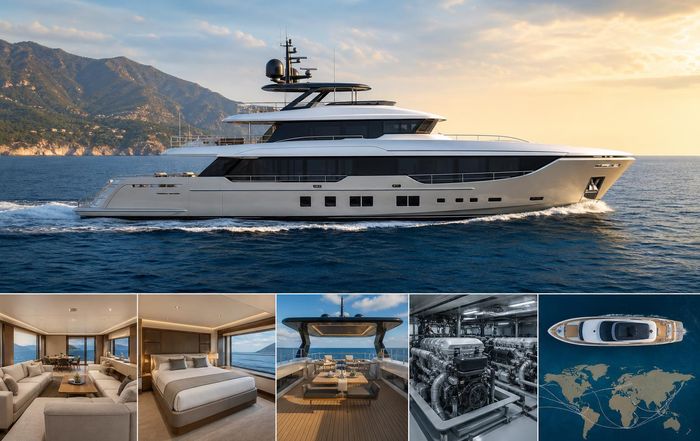
What Makes a Great Long-Range Motor Yacht
Long-range motor yachts occupy a distinctive place in the yachting world, sitting at the intersection of ocean-going capability, residential comfort and technological sophistication. For owners and captains who routinely plan passages measured in thousands rather than hundreds of nautical miles, the question is no longer simply whether a yacht is luxurious or fast, but whether it is genuinely capable of crossing oceans safely, efficiently and enjoyably. From our vantage point, which has followed the evolution of passagemaking designs, engineering solutions and owner expectations over several decades, it is clear that a truly great long-range motor yacht is the product of carefully balanced compromises, deeply informed design and a culture of reliability.
Defining the Long-Range Motor Yacht
Although there is no single universal standard, most naval architects and builders describe a long-range motor yacht as a vessel designed to travel several thousand nautical miles at displacement or semi-displacement speeds, carrying sufficient fuel, water and provisions to remain self-sufficient for weeks. While some smaller vessels can complete notable passages with careful weather routing and fuel management, the yachts that consistently undertake transoceanic voyages tend to share recognisable characteristics: efficient hull forms, conservative engineering, robust seakeeping and systems designed for redundancy and ease of maintenance.
Organizations such as the Royal Institution of Naval Architects and classification societies including Lloyd's Register and DNV have documented how modern yacht design has evolved to meet these challenges, with contemporary long-range yachts often drawing on commercial and expedition vessel practice. Readers interested in the broader context of yacht evolution can explore more historical perspectives through the background resources available at yacht-review.com/history.html.
A useful benchmark is provided by builders whose reputations are closely associated with passagemaking, including Nordhavn (Pacific Asian Enterprises), Fleming Yachts, Selene Yachts, Kadey-Krogen Yachts and the expedition-style ranges from European yards such as Sanlorenzo, Benetti, Feadship and Damen Yachting. Their published specifications and documented voyages, regularly covered by specialist media like PassageMaker Magazine and Boat International, illustrate that range figures of 3,000 to more than 6,000 nautical miles at economical speeds have become realistic for well-designed yachts between roughly 60 and 150 feet.
Hull Design and Seakeeping: The Foundation of Range
The starting point for any serious long-range yacht is the hull. At ocean-crossing speeds, resistance and fuel consumption are dominated by hull form rather than engine power, which is why many of the most respected passagemakers adopt full-displacement or moderately slender semi-displacement hulls with fine entries, deep forefoots and generous volume forward. Naval architects such as Donald L. Blount, Vripack and Bill Dixon have written extensively about how these shapes reduce pitching and improve comfort in head seas, a factor that can be more important to real-world range than theoretical fuel curves, because crews are more likely to slow down in uncomfortable conditions.
For long-range cruising, a well-designed hull also manages roll motion effectively, either through inherent form stability, bilge keels or active stabilisation systems. Many contemporary designs integrate fins or gyroscopic stabilisers that operate underway and, increasingly, at anchor. Technical information from manufacturers such as Quantum Marine Stabilizers and Seakeeper shows how these systems have matured, with more yachts now expecting quiet, low-vibration stabilisation as standard. However, a truly capable long-range yacht still relies first on sound naval architecture; stabilisation should complement, not compensate for, the underlying hull form.
The importance of seakeeping is underscored in the real-world voyages documented by long-range owners and delivery captains. Accounts of Pacific and Atlantic crossings, many of which are reported by Cruising World and Yachting Magazine, repeatedly highlight that a yacht's ability to maintain a steady, predictable motion in varying sea states directly influences fatigue, safety and the willingness of crew to maintain optimal speeds. For readers who want to compare how different hulls translate into lived experience, the sea-going narratives and evaluations at yacht-review.com/cruising.html provide valuable qualitative context.
Range, Fuel Efficiency and Powertrain Choices
A defining feature of a great long-range motor yacht is the relationship between fuel capacity, consumption and cruising speed. Rather than chasing maximum top speed, these yachts are optimised for an economical band, often between 8 and 12 knots, where engines operate at efficient load and hull resistance is manageable. Reputable builders provide range estimates based on conservative fuel reserves and real-world sea conditions, and experienced owners often plan passages using even more cautious assumptions.
Traditional powertrains based on robust marine diesels from manufacturers such as Caterpillar, MAN, MTU and John Deere remain the norm in this segment, primarily because of their proven reliability, global service networks and predictable performance. However, in recent years there has been notable progress in hybrid and alternative propulsion concepts. Yards including Feadship, Sanlorenzo and Benetti have launched or announced yachts with diesel-electric or hybrid systems that allow for low-speed electric operation, optimised generator loading and reduced emissions. The International Maritime Organization has continued to tighten regulations on NOx and SOx emissions, and many designers are looking ahead to potential future fuels such as methanol and hydrogen, as discussed in technical papers published by ABS and Bureau Veritas.
For long-range cruising yachts below the superyacht threshold, hybrid adoption is still selective rather than ubiquitous, but the trend is clear: owners increasingly request quieter, cleaner and more flexible power solutions. Those interested in how these technologies are being integrated into yacht platforms can follow developments in marine propulsion and onboard systems through resources such as MARIN (Maritime Research Institute Netherlands) and the technology-oriented coverage at yacht-review.com/technology.html.
Ultimately, what distinguishes a great long-range yacht is not simply having the latest powertrain, but ensuring that the propulsion package is matched to the hull, the intended operational profile and the owner's risk tolerance. Oversized engines running lightly loaded may be less efficient and less reliable over time than smaller units correctly matched to displacement speeds, and the best builders work closely with naval architects and engine suppliers to fine-tune these choices.
Structural Integrity and Classification
A true long-range motor yacht is expected to face a broader range of conditions than a coastal cruiser, which is why structural design and certification play such a central role. Reputable yards typically build to or in accordance with standards set by classification societies like Lloyd's Register, DNV, RINA or ABS, and many ocean-going yachts seek compliance with commercial codes such as the MCA LY3 or Passenger Yacht Code when charter or commercial operation is contemplated.
The use of steel hulls with aluminium superstructures is common in expedition and larger long-range yachts, especially above 30 metres, due to steel's durability and damage tolerance. For smaller yachts, high-quality fibreglass, often with cored laminates and carefully engineered scantlings, can offer an excellent balance of strength, weight and maintenance. Advanced composites, including carbon fibre in high-load areas, are increasingly employed to reduce weight aloft and improve stability.
Classification societies and research organisations have documented how modern finite-element analysis and computational fluid dynamics have transformed structural and hydrodynamic design. Readers who wish to delve deeper into these technical aspects can consult publicly available guidance from Lloyd's Register and DNV, which explain how structural safety margins and fatigue life are assessed. From a practical perspective, owners and captains often value the reassurance that comes from class certification, as it not only underpins safety but can also support insurance and resale value.
From the editorial perspective at yacht-review.com, the most impressive long-range yachts are those in which structural robustness is evident not only in calculations and certificates but also in details such as watertight compartmentalisation, damage-tolerant hull appendages, well-protected rudders and propellers, and carefully engineered ground tackle. These features are frequently highlighted in our in-depth boat reviews, where real-world usage and inspection often reveal how well a yacht has been prepared for extended service.
Systems Redundancy and Maintainability
A yacht that may spend weeks away from shore support must be designed with the expectation that equipment will occasionally fail and that repairs will need to be carried out at sea. Consequently, redundancy and maintainability are central to long-range capability. This philosophy extends far beyond simply installing twin engines; it encompasses duplicated or backed-up systems for power generation, navigation, communications, steering, bilge management, fresh-water production and fuel transfer.
In practice, this often means multiple generators with cross-connected switchboards, battery banks sized for critical loads, independent autopilots, separate GPS and chart systems, parallel fuel filters with changeover valves, and spare pumps and essential components stored onboard. The best engine rooms are not only well equipped but also laid out with generous access, clear labelling and thoughtful routing of piping and cabling, allowing engineers and crew to work safely in rough conditions.
Professional organisations such as the International Superyacht Society and training providers accredited by the Maritime and Coastguard Agency emphasise in their courses and guidelines that good engineering design must be matched by good documentation and crew training. For long-range yachts, this includes comprehensive manuals, up-to-date wiring and piping diagrams, and digital maintenance logs. Many modern yachts now integrate condition-based monitoring and remote diagnostics, allowing shore-side technical teams to assist crews in troubleshooting.
From a business and asset-management standpoint, owners who view their yachts as long-term investments recognise that robust systems and maintainable layouts reduce lifecycle costs and downtime. Those interested in the economic and management aspects of yacht ownership can explore related commentary at yacht-review.com/business.html, where long-range reliability is often discussed in the context of operating budgets and resale considerations.
Interior Design for Long Stays Aboard
While technical capability is fundamental, what ultimately makes a long-range yacht successful for its owners and guests is the onboard experience during extended time at sea. Unlike a weekend cruiser, a passagemaker must function as a comfortable, efficient and psychologically pleasant home for weeks or even months, often in remote regions where shore excursions are limited.
Interior designers and naval architects collaborate to create layouts that balance private and communal spaces, provide generous storage for provisions and personal belongings, and ensure that crew areas are not compromised. Long-range owners frequently request dedicated pantries, cold rooms, workshop spaces and laundry facilities, recognising that self-sufficiency depends on more than fuel and water. Natural light, ventilation and sound insulation become especially important when occupants spend many consecutive days onboard.
Leading design studios such as Bannenberg & Rowell, Winch Design, Espen Øino International and H2 Yacht Design have demonstrated how expedition-style yachts can combine rugged exteriors with refined, residential-grade interiors. Coverage in publications like Boat International and SuperYacht Times shows that contemporary long-range yachts often feature flexible guest cabins that convert for different group sizes, crew quarters designed to support professional service standards on long itineraries, and multipurpose lounges that can serve as offices, cinemas or observation rooms.
From our perspective at yacht-review.com, where design is a recurring theme in many of our features, the most successful long-range interiors are those that anticipate the rhythms of life at sea: spaces to work, exercise, relax, dine and socialise, with careful attention to traffic flow and privacy. Owners who plan to cruise with family or multi-generational groups often place particular value on adaptable layouts and child-friendly spaces, themes we explore further in our lifestyle-oriented coverage at yacht-review.com/family.html.
Safety, Navigation and Communications
Ocean-going yachts must be equipped with comprehensive safety, navigation and communication systems that go beyond minimum regulatory requirements. A great long-range motor yacht integrates these elements into a coherent bridge environment that supports good decision-making, situational awareness and effective watch-keeping.
Modern integrated bridge systems from providers such as Furuno, Raymarine, Simrad and Garmin combine radar, electronic chart systems, AIS, depth sounders and autopilot control into unified displays, often with redundancy in the form of separate workstations and independent power supplies. For ocean passages, long-range yachts typically carry multiple long-distance communication options, including satellite voice and data services through providers such as Inmarsat, Iridium or Starlink, in addition to traditional VHF and MF/HF radios.
Safety equipment encompasses not only life rafts, EPIRBs and personal locator beacons, but also fire-suppression systems, damage-control gear and medical supplies. Guidelines from organisations such as the Royal Yachting Association and United States Coast Guard provide a framework, but the best long-range yachts often exceed these recommendations, informed by experience from captains and delivery skippers who have encountered real-world emergencies.
For those planning ambitious cruising itineraries, the travel-oriented resources and destination insights at yacht-review.com/travel.html highlight how safety planning, regulatory compliance and local knowledge intertwine when visiting remote or politically sensitive regions. The ability to maintain reliable communications and navigate accurately in such waters is a key differentiator between a competent long-range yacht and a merely capable coastal cruiser.
Lifestyle Afloat: Comfort, Wellness and Connection
Long-range cruising is as much a lifestyle choice as it is a technical undertaking. Owners who choose to spend extended periods aboard often seek a balance between adventure and comfort, privacy and connectivity, seclusion and engagement with local cultures. A great long-range yacht therefore supports not only basic needs but also wellness, recreation and social connection.
This can manifest in numerous ways: well-equipped gyms or exercise spaces, spa facilities, shaded outdoor lounges, reliable high-speed internet for work and entertainment, and thoughtful integration of tenders and toys for exploration once the yacht reaches its destination. The trend toward "off-grid luxury" is particularly evident in expedition-style yachts that combine robust hulls and large fuel tanks with generous beach clubs, observation lounges and wellness areas. Media coverage from outlets such as Robb Report and Forbes has documented how many new builds now position long-range capability as part of a broader narrative of experiential luxury.
From the editorial stance at yacht-review.com, which frequently explores how owners actually live aboard in our lifestyle features, the most inspiring long-range yachts are those that encourage owners and guests to engage deeply with the places they visit, while providing a consistent sense of home. This might mean designing spaces that function equally well for a quiet family passage across the Atlantic and for hosting guests in a Mediterranean harbour, or ensuring that crew facilities support high morale and professional service on long rotations.
Sustainability and Environmental Responsibility
As environmental awareness has grown across the maritime sector, long-range motor yachts have come under increased scrutiny for their fuel consumption and ecological footprint. At the same time, many owners who are drawn to remote cruising are acutely aware of the fragility of the ecosystems they visit and are actively seeking ways to reduce their impact.
Sustainability in long-range yachts is expressed in several dimensions. Efficient hull design and careful power management reduce fuel burn per mile. Advanced waste-water treatment systems, compliant with MARPOL regulations and often exceeding them, minimise discharges. Waste management plans, including recycling and careful handling of hazardous materials, are increasingly standard. Some builders now incorporate sustainably sourced materials, low-VOC finishes and energy-efficient lighting and HVAC systems as part of their design ethos.
Research and policy work by organisations such as the World Wildlife Fund, Ocean Conservancy and the Water Revolution Foundation has highlighted the importance of responsible superyacht operation, including route planning that avoids sensitive habitats, anchoring practices that protect seabeds and support for local conservation initiatives. Owners who are serious about sustainable cruising often work with their captains and management companies to develop environmental management plans and to train crew in best practices. Those seeking to deepen their understanding of sustainable yachting can explore further resources and commentary at yacht-review.com/sustainability.html, where the intersection of technology, regulation and owner expectations is a regular theme.
Although alternative fuels such as hydrogen and methanol are still in early stages of adoption in the yacht sector, pilot projects and concept studies from major yards and classification societies indicate that long-range yachts of the future may rely on a more diverse energy mix. Until then, the combination of efficient design, conscientious operation and support for conservation initiatives remains the most practical path for environmentally responsible long-range cruising.
The Human Element: Crew, Training and Culture!
No discussion of what makes a great long-range motor yacht is complete without acknowledging the central role of people. A capable, well-trained and motivated crew is arguably the single most important determinant of safety, reliability and enjoyment on long passages. Professional organisations such as the PYA (Professional Yachting Association) and training academies accredited under the STCW framework emphasise that passage planning, watch-keeping, emergency drills and technical skills must all be rigorously maintained.
Owners who plan extensive cruising often invest in stable, long-term crew teams and support them with ongoing training, shore-based courses and opportunities for input into operational decisions. A culture of open communication, continuous learning and mutual respect between owner, captain and crew fosters better decision-making, especially when difficult weather or routing choices arise. Reports and case studies published by safety-focused bodies like the MAIB (Marine Accident Investigation Branch) repeatedly underscore that human factors, including fatigue, communication breakdowns and overconfidence, are often at the root of maritime incidents.
So where community and shared knowledge are recurring themes in our reporting at yacht-review.com/community.html, the most successful long-range yachts are those whose owners and crews embrace a professional yet collaborative ethos. They treat each passage as a project to be planned, executed and reviewed, learning from experience and continuously refining procedures and checklists.
Choosing and Evaluating a Long-Range Motor Yacht
For prospective owners, the process of selecting a long-range motor yacht involves much more than comparing specifications. While range figures, fuel capacities and engine models are important, they are only part of a broader evaluation that should encompass build quality, design philosophy, yard reputation, after-sales support and documented real-world performance.
Independent surveys, sea trials and reference checks with existing owners and captains are invaluable. Specialist brokers and consultants with passagemaking experience can help interpret technical data, assess build quality and evaluate whether a given yacht's design is aligned with the client's intended cruising plans. Industry media, including the detailed reviews and news coverage at yacht-review.com, provide additional context by highlighting how yachts perform over time and how owners actually use them.
Prospective buyers are well served by considering not only their immediate plans but also potential future needs. A yacht that is perfectly suited for extended coastal cruising in the Mediterranean may require different features if the owner later wishes to explore higher latitudes or more remote archipelagos. Flexibility in layout, generous storage, robust systems and a strong, supportive relationship with the builder or refit yard can make it easier to adapt the yacht as ambitions evolve.
Innovation and Opportunity in Long-Range Cruising
Long-range motor yachts sit at an interesting crossroads of tradition and innovation. On one hand, the core principles that define a great passagemaker-efficient hull design, structural robustness, reliable systems and thoughtful interiors-are rooted in decades of maritime experience. On the other hand, rapid advances in digital technology, propulsion, materials and sustainability are opening new possibilities for safer, cleaner and more connected cruising.
Autonomous navigation aids, advanced weather-routing software, real-time performance monitoring and remote diagnostics are already changing how captains plan and execute long passages. Alternative energy solutions, from solar-assisted hotel loads to hybrid drivetrains, are gradually reshaping the onboard energy landscape. At the same time, global interest in exploration, wellness and experiential travel is drawing new owners toward yachts that can venture further, stay out longer and operate more responsibly.
From the editorial perspective, which regularly follows these developments across global yachting and industry business trends, the most encouraging aspect of this evolution is that it reinforces, rather than replaces, the fundamental values that have always defined great long-range yachts: respect for the sea, commitment to safety, appreciation for craftsmanship and a desire to explore the world thoughtfully.
For owners, captains and enthusiasts who are drawn to the idea of crossing oceans in comfort and confidence, understanding what truly makes a long-range motor yacht great is both an educational journey and an invitation. It is an opportunity to align technical excellence with personal aspirations, to embrace innovation without losing sight of proven practice, and to participate in a global community of mariners who see the world not as a series of distant ports, but as a continuous, navigable horizon.