

Best African Coastlines for Yacht Exploration
Africa's shorelines offer some of the most varied and rewarding cruising grounds on the planet, yet they remain comparatively underexplored when set against the Caribbean, Mediterranean, or South Pacific. For the owners, charter guests, captains, and brokers who follow Yacht-Review.com, the continent's coasts present a rare combination of frontier appeal and steadily improving superyacht infrastructure, framed by distinctive cultures, marine biodiversity, and year-round cruising opportunities across multiple climate zones.
This article surveys several of the most compelling African coastlines for yacht exploration, focusing on regions where experienced captains are increasingly comfortable routing vessels and where owners can realistically expect a balance of adventure, safety, and service quality. It also considers regulatory, environmental, and business dynamics that are shaping the next decade of African yachting, drawing on recent developments verified through multiple authoritative sources.
For readers planning their next itinerary or assessing long-term deployment strategies for private or charter vessels, this overview is intended as a practical, experience-driven complement to the detailed yacht and destination coverage already available across the Yacht-Review.com ecosystem, including our dedicated sections on cruising, boats, and travel.
North Africa: Mediterranean Gateways with Distinctive Character
Morocco's Atlantic and Mediterranean Shores
Morocco has emerged as the most consistent North African entry point for superyachts, combining proximity to Europe with a growing marina network and a reputation for relative stability. The port city of Tangier, overlooking the Strait of Gibraltar, has become a focal point. Tanja Marina Bay International, inaugurated in stages from the mid-2010s, offers hundreds of berths, customs clearance, and access to a revitalised waterfront, and is frequently cited in regional yachting guides as the country's flagship facility.
From Tangier, yachts can follow the Mediterranean coastline eastwards towards Al Hoceima and Saïdia, or swing west and south along the Atlantic towards Rabat, Casablanca, and Agadir. Each segment offers a different blend of urban and natural experiences. Agadir serves as a useful staging point for longer passages down the Atlantic coast towards the Canary Islands or West Africa, while the hinterland opens access to the Atlas Mountains and desert experiences that appeal to owners seeking more immersive itineraries.
Morocco's tourism authorities have repeatedly highlighted nautical tourism as a growth priority, and the country features in regional investment analyses by organizations such as the World Bank and OECD as a relative success story in port and coastal infrastructure. Those considering a first African itinerary often use Morocco as a low-friction introduction to the continent, before committing to more remote cruising grounds.
For broader context on design trends visible in new Moroccan marinas and waterfronts, readers may wish to explore our perspective on contemporary yacht design and shore integration.
Tunisia's Quiet Harbours and Historical Layers
Tunisia's coastline, stretching from the Algerian to the Libyan borders, wraps around the Gulf of Tunis and the Gulf of Gabès and offers a mixture of sandy beaches, fishing ports, and archaeological sites. Marinas such as Port Yasmine Hammamet, Port El Kantaoui, and the harbour at Bizerte have long hosted visiting yachts, particularly from France and Italy, and remain points of interest for owners seeking a quieter alternative to the more crowded Western Mediterranean.
The country's political and economic challenges over the past decade have influenced tourism flows, but reports from regional yacht agents and Mediterranean cruising guides indicate that core infrastructure remains functional and that visiting yachts continue to call, often combining Tunisia with itineraries that include Sicily, Malta, or Sardinia. The presence of UNESCO-listed sites such as Carthage and El Jem adds historical depth to coastal cruising, offering on-shore excursions that appeal to culturally engaged owners and charter guests.
Travel advisories from governments such as the UK Foreign, Commonwealth & Development Office and the US Department of State should be reviewed carefully when planning itineraries, as regional security conditions can change. Nonetheless, for experienced captains operating within current guidance, Tunisia remains one of North Africa's more accessible and historically rich coastlines.
Egypt and the Red Sea: Between Coral Reefs and Cultural Heritage
Northern Red Sea and the Sinai Peninsula
The Egyptian Red Sea coast has long been a magnet for divers, and in recent years it has attracted renewed interest from the yacht sector, particularly around Hurghada, El Gouna, and Sharm El-Sheikh. These hubs host marinas capable of accommodating larger yachts, and are supported by an extensive network of dive operators and resort infrastructure.
The Red Sea's reputation for exceptional visibility and biodiversity is well documented by marine science institutions such as KAUST and conservation organizations including the World Wildlife Fund, which highlight its coral resilience and unique species composition. Yachts operating in this region can access world-class diving and snorkelling, including around sites such as the Brothers Islands, Daedalus Reef, and Ras Mohammed National Park, though many of the most sensitive or remote sites are more commonly reached by specialist liveaboard vessels.
The Egyptian government has been promoting investment in marinas and coastal tourism zones as part of broader economic development plans, and several Red Sea projects are referenced in investment reports by entities such as the European Bank for Reconstruction and Development. For yacht owners, the key considerations remain local regulations, environmental protections, and coordination with reputable agents who understand both the formal requirements and the practical realities of operating in the area.
Suez Gateway and Eastern Mediterranean Access
For vessels transiting between the Mediterranean and the Indian Ocean, Egypt's coastline is strategically unavoidable. The Suez Canal remains one of the world's busiest maritime corridors, and while most superyachts use it primarily for passage rather than extended cruising, its role in global routing patterns is decisive. Events such as the temporary blockage of the canal by the container ship Ever Given in March 2021 underscored the vulnerability of global supply chains and the importance of alternative routes, but for yachting the canal remains the most efficient link between European and Asian cruising grounds.
The Egyptian Mediterranean coast, including Alexandria and Port Said, is less developed as a leisure cruising destination than other parts of the country, yet it can serve as a convenient staging area for vessels that wish to combine Eastern Mediterranean itineraries with Red Sea exploration. Captains planning such routes typically draw on specialised transit agents and align their schedules with canal convoy timings, an operational consideration that influences deployment decisions for both private and charter yachts.
Readers interested in the broader historical role of Egyptian waterways in maritime development may find additional context in our history insights.
East Africa and the Indian Ocean: Tropical Archipelagos and Emerging Hubs
Tanzania and Zanzibar: Cultural Crossroads in the Indian Ocean
The Tanzanian coastline, including the renowned Zanzibar Archipelago, has become one of East Africa's most talked-about yacht destinations. Zanzibar's main island, Unguja, together with Pemba and smaller surrounding islands, offers white-sand beaches, coral reefs, and a cultural heritage shaped by centuries of Indian Ocean trade. The historic centre of Stone Town, a UNESCO World Heritage Site, provides a compelling counterpoint to the marine environment, with its Swahili, Arab, Persian, and European influences.
While Tanzania does not yet match the marina infrastructure of more established Mediterranean or Caribbean destinations, it has seen gradual improvements in facilities and services. Reports from regional yacht agents and charter operators suggest that visiting yachts typically anchor off key islands and rely on tenders for shore access, combining beach landings with visits to boutique hotels and conservation areas. The government has articulated ambitions to expand marine tourism, and international organisations such as the World Bank have noted tourism's importance to Tanzania's economy, including coastal and marine segments.
For yacht owners who prioritise authentic cultural experiences alongside diving and fishing, Zanzibar and the adjacent mainland coast offer a compelling blend. However, local regulations, clearance procedures, and conservation rules require careful planning, and captains often coordinate closely with agents who specialise in East African cruising.
Mozambique: Long Coastlines and Frontier Cruising
Mozambique's coastline stretches for approximately 2,500 kilometres along the Indian Ocean, encompassing a mix of mangroves, sandbanks, and offshore archipelagos. The Quirimbas Archipelago in the north and the Bazaruto Archipelago in the south are particular highlights, with clear waters, dune-backed islands, and a sense of remoteness that appeals to experienced owners seeking less commercialised destinations.
The Bazaruto Archipelago National Park, established in the 1970s, is recognised for its marine biodiversity, including populations of dugongs and sea turtles, and is referenced in conservation literature from organisations such as the International Union for Conservation of Nature (IUCN). Yachts visiting the area are expected to respect park regulations, including anchoring restrictions designed to protect seagrass beds and coral structures.
Mozambique has faced significant challenges, including tropical cyclones and security concerns in parts of the north, and travel advisories from governments such as Australia and the United Kingdom highlight areas where caution is warranted. Nevertheless, the southern and central coastal regions remain on the radar of adventure-minded yacht owners and charterers, particularly those who work with operators experienced in the region. As infrastructure gradually develops, Mozambique is likely to feature more prominently in discussions about long-range Indian Ocean cruising.
For those assessing long-distance routes that link East Africa with the Seychelles, Madagascar, or further across the Indian Ocean, our coverage of global cruising strategies provides additional strategic context.
Kenya's Coast: Boutique Experiences and Marine Parks
Kenya's coastline, though shorter than that of some neighbours, offers distinctive attractions around Lamu, Malindi, and Diani Beach. The Lamu Archipelago, with its Swahili heritage and traditional dhow culture, has been a niche favourite among culturally inclined travellers for decades. The town of Lamu itself is a UNESCO World Heritage Site, celebrated for its architecture and living traditions.
Kenya's network of marine parks and reserves, administered by the Kenya Wildlife Service, includes areas such as the Kisite-Mpunguti Marine National Park and Watamu Marine National Park, which are known for coral reefs and dolphin encounters. Yachts operating in these waters must comply with park regulations, including fees and anchoring rules, but in return gain access to some of the region's most carefully protected marine environments.
Security considerations have at times affected perceptions of Kenya's northern coast, and captains typically consult up-to-date guidance from flag states and insurance providers. Nevertheless, for owners who value a boutique, culturally rich coastal experience, Kenya offers a combination of marine and on-shore attractions that can be integrated into wider East African itineraries.
Southern Africa: From Cape Drama to Subtropical Calm
South Africa's Western Cape: Ocean Drama and Urban Sophistication
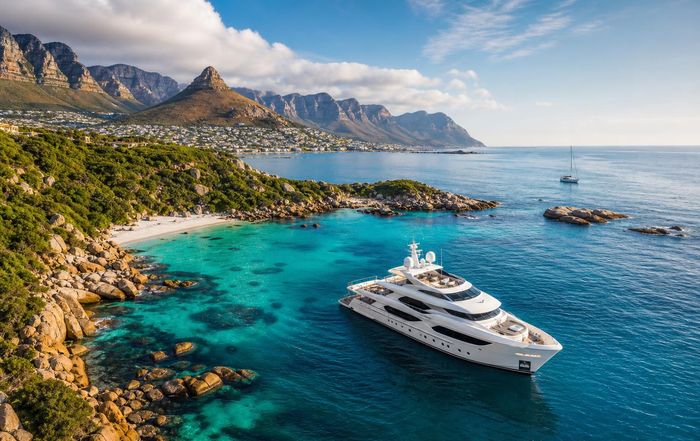
South Africa's Western Cape coastline, centred on Cape Town, is one of the most visually dramatic stretches of urban-adjacent coastline anywhere in the world. Cape Town's V&A Waterfront hosts a well-known marina that accommodates visiting superyachts, supported by a sophisticated ecosystem of shipyards, chandlers, and service providers. The city's position at the meeting point of the Atlantic and Indian Oceans makes it a strategic stopover for vessels undertaking global circumnavigations or seasonal relocations between the Mediterranean, Caribbean, and Pacific.
The passage around the Cape of Good Hope is renowned for its challenging sea states, shaped by the confluence of the Benguela and Agulhas currents and frequent strong winds. For experienced captains and crews, this is part of the appeal, offering a sense of maritime accomplishment alongside the opportunity to explore coastal wine regions, nature reserves, and a cosmopolitan city with strong marine engineering capabilities. Industry publications and brokerage reports often highlight South Africa's value proposition in refit and maintenance, with cost-competitiveness and technical skill cited as key advantages.
From Cape Town, yachts can explore the Garden Route, calling at ports such as Mossel Bay, Knysna, and Plettenberg Bay, each offering a different balance of natural beauty and local hospitality. South Africa's broader tourism infrastructure, including high-end lodges and safari experiences, allows owners to combine coastal cruising with inland adventures, creating multi-dimensional itineraries that appeal to families and corporate groups alike.
For a deeper dive into how owners integrate such multi-stop experiences into their overall lifestyle, readers can explore our lifestyle features.
South Africa's KwaZulu-Natal: Warm Waters and Subtropical Shores
Further north along the South African coast, the province of KwaZulu-Natal offers warmer waters and a subtropical climate, with key hubs around Durban and Richards Bay. The iSimangaliso Wetland Park, a UNESCO World Heritage Site, includes coastal and marine environments that attract nature-focused travellers, though access for larger yachts is typically indirect, via nearby ports and overland excursions.
Durban's harbour is one of the busiest in Africa and includes facilities that can handle substantial yachts, though the primary focus remains commercial shipping. Richards Bay is often used as a gateway for yachts heading north towards Mozambique or for those exploring South Africa's eastern coastline in more detail. The region's combination of beaches, diving, and access to game reserves makes it attractive for owners who wish to experience a different side of South Africa than that offered by the Western Cape.
Atlantic Islands and West African Gateways
Cape Verde: Mid-Atlantic Staging Point with Growing Appeal
The Cape Verde archipelago, located off the West African coast, has become an increasingly important waypoint for transatlantic yacht passages. While geographically separate from the mainland, it is often considered in discussions of African cruising due to its political and cultural ties and its strategic location. Islands such as Mindelo on São Vicente offer marinas and repair facilities that are widely referenced in bluewater cruising guides as reliable stops for fuel, provisioning, and weather windows.
Cape Verde's dry climate, volcanic landscapes, and music culture, particularly on islands like Santiago and São Vicente, provide a distinctive atmosphere for owners who choose to linger rather than treat the country purely as a refuelling stop. The government has signalled interest in expanding nautical tourism, and international development organisations have highlighted the sector's potential contribution to the national economy.
For yacht owners considering Atlantic circuits that link the Mediterranean, West Africa, and the Caribbean, Cape Verde can serve as both a logistical asset and an under-the-radar destination in its own right. Strategic routing discussions of this kind are regularly explored in our business-focused coverage, which examines how owners and managers allocate vessels across seasons and basins.
Namibia and Angola: Niche Frontiers for Expedition-Oriented Yachts
The coastlines of Namibia and Angola are less frequented by leisure yachts but are beginning to attract attention from the expedition segment. Namibia's Skeleton Coast, with its stark desert meeting the Atlantic surf and its famous shipwrecks, is visually compelling but operationally demanding, with limited yachting infrastructure and challenging sea conditions. Most visitors experience the area via overland trips and fly-in lodges, and yachts that do venture close typically do so as part of highly specialised expeditions.
Angola, with its long Atlantic coastline, has seen gradual economic opening and infrastructure development, particularly around Luanda and offshore energy projects. However, the country is still at an early stage in developing leisure yachting, and visiting vessels are relatively rare. Where they do appear, it is usually under the guidance of experienced expedition planners who have built relationships with local authorities and service providers.
While these coastlines are unlikely to become mainstream superyacht destinations in the near term, they illustrate the broader trend of exploration-class yachts pushing into less developed regions, a trend that is reshaping expectations about what constitutes a viable cruising ground. Readers interested in the technological and operational aspects of this shift can consult our coverage of emerging yacht technologies and capabilities.
Sustainability, Community, and Responsible Cruising
As African coastlines attract more yacht traffic, questions of sustainability and community impact move to the foreground. Many of the regions highlighted in this article host fragile ecosystems and communities that are simultaneously eager for tourism revenue and vulnerable to environmental and social disruption.
International frameworks such as the UN Environment Programme's guidelines on sustainable coastal tourism and initiatives led by organisations like the Global Sustainable Tourism Council provide reference points for best practice. Yachts have an opportunity to set positive examples by minimising waste, avoiding sensitive anchoring zones, supporting local conservation efforts, and engaging with communities in ways that respect local culture and economic structures.
In East Africa and the Indian Ocean, marine protected areas such as those in Tanzania, Kenya, Mozambique, and South Africa impose specific regulations on fishing, anchoring, and diving, and compliance is not only a legal obligation but a contribution to the long-term health of the very environments that attract yacht owners in the first place. Similarly, in North African and Red Sea contexts, environmental regulations around coral reefs, seagrass beds, and marine species are increasingly enforced, with local NGOs and research institutions documenting both threats and recovery efforts.
Owners, captains, and charter operators who wish to deepen their understanding of these issues can explore broader perspectives on sustainable yachting and coastal stewardship, where we regularly highlight case studies and practical measures that align luxury cruising with responsible environmental and social outcomes. External resources, including reports from the International Maritime Organization and research from institutions such as UNESCO's Intergovernmental Oceanographic Commission, offer further guidance for those who wish to align their operations with evolving global standards.
Practical Considerations for African Yacht Itineraries
Planning yacht exploration along African coastlines requires a higher degree of preparation than many conventional Mediterranean or Caribbean itineraries. Regulatory frameworks, customs procedures, and security conditions vary significantly between countries and can change over time, making up-to-date local knowledge essential.
Experienced captains typically work with regional yacht agents who can coordinate clearances, fuel, provisioning, and local permissions. Insurance requirements and flag-state guidance must be reviewed carefully, particularly in regions where piracy, civil unrest, or maritime crime have been of concern in past years. While the overall risk profile has improved in several areas, authoritative sources such as the International Maritime Bureau and national maritime security advisories remain important references.
Weather and oceanographic conditions also require attention. The seasonal patterns of the South-West Indian Ocean, including cyclone seasons that affect Madagascar, Mozambique, and neighbouring countries, influence routing decisions. Similarly, the strong currents and frontal systems around the Cape of Good Hope demand respect and careful timing. Reliable meteorological services and modern onboard routing tools help mitigate these risks, but they do not replace the need for conservative seamanship.
For readers seeking comparative perspectives on how different hull forms and propulsion systems perform in these varied conditions, our in-depth yacht reviews and broader boats coverage provide technical context that can inform both vessel selection and refit decisions.
Africa's Coastal Future: Opportunity, Responsibility, and Inspiration
From the Atlantic surf of Morocco and Namibia to the coral gardens of the Red Sea and the Indian Ocean, Africa's coastlines offer a spectrum of experiences that few other regions can match. For yacht owners and charter guests, the appeal lies not only in natural beauty but in the sense of discovery and authenticity that still characterises many of these destinations.
At the same time, the very qualities that make these coastlines attractive-relatively low levels of development, rich biodiversity, and distinctive local cultures-also demand a more thoughtful approach to cruising. The growth of yachting in Africa will be sustainable only if it is accompanied by investment in local capacity, respect for environmental limits, and genuine partnerships with coastal communities.
For Yacht-Review.com, African coastlines represent both an exciting frontier for our readers and a test case for the industry's ability to balance luxury with responsibility. As more vessels venture to Morocco, Tunisia, Egypt, Tanzania, Mozambique, Kenya, South Africa, Cape Verde, and beyond, we will continue to track developments, share on-the-water insights, and highlight examples of best practice that show what is possible when world-class yachts engage respectfully with some of the planet's most remarkable shores.
Those planning to incorporate Africa into their personal or fleet itineraries can stay abreast of evolving infrastructure, regulatory changes, and standout new destinations through our regularly updated news coverage and curated events insights, ensuring that each voyage along these coasts is not only memorable, but also informed, safe, and positively impactful.