

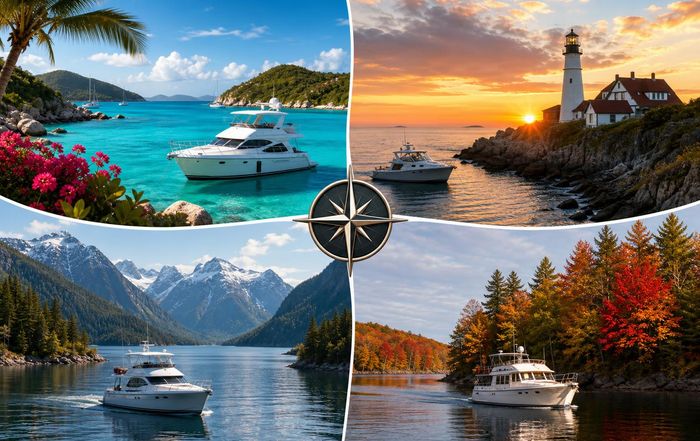
Best North American Cruising Grounds by Season
North America offers cruising grounds that change character as distinctly as its seasons, and for yacht owners and charter guests who plan carefully, this seasonal rhythm can turn a year into an elegant progression from one world-class destination to the next. From high-latitude summer passages among icebergs to winter weeks anchored off palm-fringed cays, the continent's coasts and inland waters provide a continuous circuit that increasingly rewards not only seamanship and taste, but also environmental awareness and technological sophistication.
For the business-minded yacht owner, captain, or charter professional who follows Yacht-Review.com, understanding where to position a yacht at each time of year is no longer simply a matter of chasing good weather; it has become a strategic decision that blends client expectations, regulatory frameworks, marina and refit infrastructure, and the growing importance of sustainable operations. The following overview, organized by season rather than by geography, reflects recent developments in cruising infrastructure, environmental regulation, and luxury-yachting lifestyle trends across North America's most compelling waters.
Spring: Shoulder-Season Sophistication from the Bahamas to the Pacific Northwest
As winter loosens its grip on the continent, spring emerges as a season of choice for owners and charterers who prefer quieter anchorages, lower marina congestion, and cooler but pleasant temperatures. The pattern that has emerged in recent years sees many yachts concluding their Caribbean or Bahamas seasons and beginning a measured migration north, while others head west for early-season exploration in the Pacific Northwest.
Bahamas and South Florida: The Elegant Transition
By March and April, the cold fronts that sweep across the Bahamas during mid-winter become less frequent, and the trade winds tend to moderate, creating reliable conditions for both sailing yachts and motoryachts. Areas such as the Exumas, Abaco, and Eleuthera remain among the most attractive early-spring cruising grounds in North America, supported by a mature infrastructure of marinas and yacht-friendly resorts. Resources such as NOAA's National Hurricane Center and the National Weather Service provide detailed forecasts and sea-state analysis, which captains increasingly integrate with onboard routing software to optimize passages between Florida and Bahamian ports.
South Florida, and particularly the corridor from Miami to Palm Beach, has solidified its role as a spring staging ground. The concentration of refit yards, technical suppliers, and provisioning services has made this region a logistical hub for yachts repositioning either to the U.S. East Coast or to the Mediterranean. Learn more about yachting market trends and refit activity through platforms such as Superyacht Times and Boat International, which regularly track fleet movements and infrastructure investments.
For Yacht-Review.com readers focused on itinerary planning, spring in this region is an opportunity to blend short-hop island cruising with world-class shoreside experiences, while also scheduling annual maintenance before the more demanding summer seasons. Owners and captains evaluating new builds or refits can explore design and layout considerations in our own coverage of yacht design innovation, which frequently highlights how modern layouts support extended seasonal cruising.
U.S. East Coast: From Charleston to the Mid-Atlantic
By late April and May, the U.S. East Coast begins to open fully. Charleston, Savannah, and the Sea Islands offer mild temperatures, flowering landscapes, and a refined blend of Southern culture and maritime heritage. Further north, the Intracoastal Waterway becomes an appealing sheltered route for yachts heading toward the Mid-Atlantic and New England, particularly for vessels whose draft or air-draft makes offshore passages less attractive in shoulder-season conditions.
The expansion of quality marinas in cities such as Charleston and Norfolk, as well as in smaller destinations along the ICW, has increased the appeal of a staged northbound cruise. Cruising guides from organizations like the American Great Loop Cruisers' Association and regional pilot books provide detailed local knowledge, while digital charting platforms supplement official data from NOAA's Office of Coast Survey.
For those interested in a structured evaluation of destinations and yacht performance in these waters, our dedicated boat and yacht reviews section regularly examines how different vessel types handle the varied conditions of coastal passages, tidal inlets, and river approaches.
Pacific Northwest: Early-Season Exploration
On the Pacific side, the Pacific Northwest begins to reveal its potential in late spring. British Columbia's Gulf Islands and the San Juan Islands in Washington State offer sheltered cruising, dramatic scenery, and a growing network of marinas and eco-sensitive anchorages. While the peak season runs through summer, May and early June often provide relatively uncrowded harbors and good wildlife viewing, with orca, humpback whales, and sea lions frequently sighted.
Authorities such as Fisheries and Oceans Canada and NOAA Fisheries publish guidelines on marine mammal approach distances and speed limits in sensitive areas, which have become essential reading for responsible captains. Learn more about marine conservation and sustainable boating practices through organizations such as Oceana and The Ocean Cleanup, whose research and projects increasingly influence public expectations of how yachts should operate in fragile environments.
Owners considering a seasonal migration to these waters can refer to our cruising insights, where real-world itineraries and port profiles help frame the Pacific Northwest as a sophisticated alternative to more traditional East Coast spring routes.
Summer: A Continental Tapestry from New England to Alaska
Summer remains the high season for North American cruising, and the range of options is extraordinary, extending from the warm waters of New England and Atlantic Canada to the glacial fjords of Alaska and the long, sunny days of the Great Lakes. For many yachts, this is the period when the year's most ambitious itineraries are executed, charters command premium rates, and owners seek destinations that combine natural beauty with strong shore-side infrastructure.
New England and Atlantic Canada: Classic Yachting Culture
From June through early September, New England stands as one of the world's classic yachting regions. Newport, Martha's Vineyard, Nantucket, and Cape Cod continue to attract both private yachts and charter vessels, supported by historic yacht clubs, high-end marinas, and a maritime culture that values craftsmanship and tradition. The region's regatta calendar, which includes long-established events and newer superyacht races, underscores its enduring appeal.
North of New England, Atlantic Canada has gained increased attention among adventurous yacht owners. Nova Scotia, New Brunswick, Prince Edward Island, and Newfoundland and Labrador offer cool summer temperatures, rugged coastlines, and relatively uncrowded anchorages. Destinations such as Lunenburg and St. John's combine working-waterfront authenticity with a growing capacity to host larger yachts. Tourism authorities and regional cruising guides provide updated information on marina facilities, customs formalities, and local services, while Parks Canada offers detailed overviews of national parks and historic sites accessible by water.
For readers looking to understand how these destinations fit into a broader seasonal strategy, the global cruising perspective on Yacht-Review.com often highlights how New England and Atlantic Canada can be integrated into transatlantic or Arctic-adjacent itineraries, particularly as interest grows in high-latitude exploration.
Alaska and the Pacific Northwest: High-Latitude Grandeur
Summer in Alaska offers one of the most dramatic yachting experiences in North America. The Inside Passage, extending from Washington State through British Columbia to Southeast Alaska, presents a nearly continuous chain of fjords, islands, and protected channels. Towns such as Ketchikan, Juneau, Sitka, and Skagway provide essential services and cultural depth, while the surrounding wilderness offers glacier viewing, fishing, and wildlife encounters that rival any destination worldwide.
The growth of expedition-style superyachts and advanced explorer vessels has made Alaska more accessible, accompanied by a parallel emphasis on environmental responsibility. Authorities including the U.S. National Park Service and Alaska Department of Environmental Conservation regulate vessel traffic in sensitive areas such as Glacier Bay, with permit systems and operational guidelines designed to limit impact. Captains and owners can deepen their understanding of best practices through resources such as The International Maritime Organization, which develops global standards related to emissions, ballast water, and polar operations.
Southward, the Pacific Northwest reaches its peak in July and August, when stable weather patterns, long daylight hours, and comfortable temperatures make extended cruising from Seattle and Vancouver up through Desolation Sound and the Broughton Archipelago particularly appealing. The region's combination of cosmopolitan cities, remote anchorages, and well-developed marinas has led many owners to regard it as a long-term seasonal base rather than a one-off destination.
Great Lakes: Freshwater Horizons
The Great Lakes represent a distinct and increasingly appreciated summer cruising ground. Lakes Superior, Michigan, Huron, Erie, and Ontario offer thousands of miles of shoreline, historic port cities such as Chicago, Toronto, and Cleveland, and a network of marinas that support both local and visiting yachts. The freshwater environment reduces some maintenance concerns associated with saltwater cruising, while the region's summer climate can be pleasantly temperate compared with coastal heat.
Navigation in the Great Lakes requires attention to weather systems, water levels, and lock operations, particularly for yachts transiting the St. Lawrence Seaway or Welland Canal. Official information from The St. Lawrence Seaway Management Corporation and national hydrographic offices in the United States and Canada is indispensable for planning. Owners and captains who want to understand how different yacht designs perform in these conditions may find our boats and models overview a useful complement to technical data and builder specifications.
Autumn: Refined Shoulder Seasons and Strategic Repositioning
Autumn has become a sophisticated season for North American cruising, favored by owners who appreciate quieter harbors, rich coastal colors, and the opportunity to align yacht movements with major boat shows and refit schedules. It is also the period when many yachts begin their migration back toward winter cruising grounds.
New England and the Canadian Maritimes: Extended Seasonal Appeal
In September and early October, New England transitions into a quieter, more contemplative cruising ground. The peak crowds have diminished, yet sea temperatures remain workable and the weather often stays settled, particularly in the early part of the season. Fall foliage along the coasts of Maine, New Hampshire, and Massachusetts adds visual drama to coastal passages, and many marinas maintain full services until mid-October or later.
Further north, Atlantic Canada can offer excellent conditions into early autumn, especially for yachts equipped for cooler temperatures. The combination of cultural events, harvest-season cuisine, and lingering daylight makes this a rewarding period for guests who value authenticity and local engagement as much as climate. For an understanding of the historical context that shapes these maritime communities, readers can explore our yachting history features, which often trace the evolution of working harbors into modern yachting hubs.
U.S. East Coast Southbound: Chesapeake Bay to Florida
As the season progresses, many yachts begin a measured southbound passage. Chesapeake Bay stands out as an autumn favorite, with Annapolis and its surroundings offering a concentration of marinas, service yards, and sailing culture. The United States Sailboat Show and United States Powerboat Show, typically held in Annapolis in October, attract industry professionals, owners, and enthusiasts, and often serve as informal markers of the seasonal transition. Current dates and details can be confirmed through the official Annapolis Boat Shows website.
South of the Chesapeake, the Carolinas and Georgia offer a mix of offshore legs and Intracoastal Waterway segments, allowing captains to tailor routes based on weather and vessel capabilities. By late autumn, many yachts have reached Florida, where they may pause for maintenance, participate in events such as the Fort Lauderdale International Boat Show, or continue on toward the Bahamas and Caribbean. Readers interested in the broader business implications of these seasonal movements, including charter demand and marina development, can consult our yachting business analysis, which frequently examines how regional economies adapt to the annual migration of yachts.
Pacific Coast: From Indian Summer to Southbound Voyages
On the Pacific side, early autumn often brings stable, pleasant conditions to the coasts of California, Oregon, and Washington. The phenomenon of "Indian summer" in Northern California, with warm, clear days extending into October, has encouraged more yachts to explore destinations such as San Francisco Bay, Monterey, and the Channel Islands as part of a broader north-south itinerary.
Some yachts based in the Pacific Northwest or Alaska choose to reposition south toward Mexico for the winter season, often timing their passages to coincide with favorable weather windows and events such as the Baja Ha-Ha rally, which historically departs from San Diego in late October or early November. Detailed route planning, including coastal weather patterns and port facilities, is supported by official information from agencies such as NOAA's National Data Buoy Center and national hydrographic services.
Winter: Warm-Water Luxury and Emerging Sustainable Practices
Winter in North America naturally directs attention toward warm-water cruising grounds, yet even within this broad category there is substantial diversity, from the shallow banks of the Bahamas to the deep fjords of Mexico's Pacific coast. At the same time, winter has become a focal point for discussions about sustainability, as high-season activity concentrates in relatively small geographic areas.
Florida, Bahamas, and the Wider Caribbean Gateway
For many North American and European owners, South Florida and the Bahamas form the core of the winter season. Miami, Fort Lauderdale, and Palm Beach host a dense network of marinas capable of accommodating large yachts, along with shipyards that support complex refit and maintenance projects. The Bahamas, with regions such as the Exumas, Abaco, and the Berry Islands, offer clear waters, sheltered anchorages, and a balance between remote cays and high-end resort marinas.
Authorities in the Bahamas have continued to refine cruising permit procedures and environmental regulations, including measures aimed at protecting coral reefs and limiting the impact of anchoring in sensitive areas. Up-to-date information is typically available from official government portals and from organizations such as The Bahamas Ministry of Tourism, Investments & Aviation. Captains increasingly integrate these requirements into standard operating procedures, reflecting a shift in the industry toward more formalized environmental compliance.
For Yacht-Review.com, this region is also a focal point for lifestyle and onboard experience coverage, as winter charters often showcase the latest in yacht design, water toys, and hospitality concepts. Readers can explore related themes in our lifestyle and onboard experience features, which examine how yachts are evolving to meet the expectations of multi-generational families and corporate guests.
Mexico and the Pacific: From Baja to Riviera Nayarit
On the Pacific side, Mexico has consolidated its position as a premier winter cruising destination for yachts operating along the western seaboard of North America. The Sea of Cortez, also known as the Gulf of California, offers sheltered waters, rich marine biodiversity, and a growing network of marinas in locations such as La Paz, Cabo San Lucas, and Puerto Escondido. Further south, the coasts of Riviera Nayarit and Jalisco, including Puerto Vallarta and Bahía de Banderas, provide a blend of resort infrastructure and traditional coastal towns.
Environmental organizations and marine scientists have highlighted the ecological significance of the Sea of Cortez, sometimes referred to as a "living aquarium" due to its high levels of endemism and species diversity. Learn more about marine biodiversity in this region through resources provided by UNESCO and international marine research institutions. This scientific attention has coincided with growing expectations that yachts adopt low-impact practices, including careful waste management, minimized anchoring in sensitive habitats, and responsible wildlife viewing.
Sustainability, Technology, and the Future of Seasonal Cruising
Across all winter cruising grounds, the interplay between luxury and environmental responsibility has become increasingly central. Advances in yacht technology, from hybrid propulsion systems to advanced wastewater treatment and energy-efficient hotel loads, are beginning to influence how owners and charterers think about seasonal deployment. Regulatory frameworks, such as emission control areas along parts of the North American coastline and evolving port-state requirements, further drive this shift.
For industry professionals and yacht owners seeking to stay ahead of these trends, our dedicated sustainability coverage and technology insights provide ongoing analysis of how new regulations, innovations, and best practices are reshaping the way yachts are designed, operated, and maintained. External resources from organizations such as The International Council on Clean Transportation and DNV can offer additional technical depth on emissions, fuel alternatives, and classification standards.
Integrating Seasons into a Coherent Cruising Strategy
For the readers of Yacht-Review.com, the concept of "best cruising grounds" is increasingly less about isolated destinations and more about constructing a coherent annual strategy that aligns with personal preferences, charter demand, maintenance cycles, and regulatory developments. A yacht might spend winter in the Bahamas and Caribbean, spring in the U.S. East Coast or Pacific Northwest, summer in New England, Atlantic Canada, Alaska, or the Great Lakes, and autumn transitioning gracefully between these zones while participating in key events and refits.
This strategic approach encourages owners and captains to think of North America not as a set of disconnected regions but as a connected maritime canvas. It also underscores the importance of reliable information, professional planning, and continuous learning. Industry news outlets, classification societies, and official maritime authorities provide essential data points, while curated platforms such as our own news and analysis section synthesize developments in a way that is directly relevant to yacht owners, charter clients, and maritime professionals.
For those considering new builds or refits specifically optimized for seasonal cruising in North America, it is worth engaging early with designers, naval architects, and shipyards who understand the demands of these varied environments. Factors such as range, draft, ice-class considerations for high-latitude operations, tender and toy selection, and crew accommodation all influence how effectively a yacht can move between regions throughout the year. Our broader coverage of yacht travel and destination planning and cruising lifestyles aims to provide a framework for these long-term decisions.
A Year-Round Canvas for Ambitious Yachts
North America's best cruising grounds, considered season by season, form a remarkably rich and varied tapestry. Spring offers shoulder-season elegance from the Bahamas to the Pacific Northwest; summer delivers classic yachting in New England, frontier-style exploration in Alaska, and freshwater horizons on the Great Lakes; autumn provides refined transitions and strategic repositioning; and winter concentrates the fleet in warm-water hubs where luxury, culture, and increasingly sophisticated sustainability expectations intersect.
For yacht owners, captains, and charter professionals, the opportunity lies in orchestrating these seasonal options into a coherent, rewarding, and responsible annual program. With careful planning, informed by reliable data, evolving technology, and a commitment to environmental stewardship, North America can serve not merely as a backdrop for isolated voyages, but as a year-round cruising canvas that continues to inspire ambition, investment, and innovation across the global yachting community.
Readers who wish to deepen their exploration of specific regions, vessels, and onboard experiences can continue their journey through the broader content of Yacht-Review.com, where regional insights, design trends, and community perspectives converge to support more informed and inspired cruising decisions.