

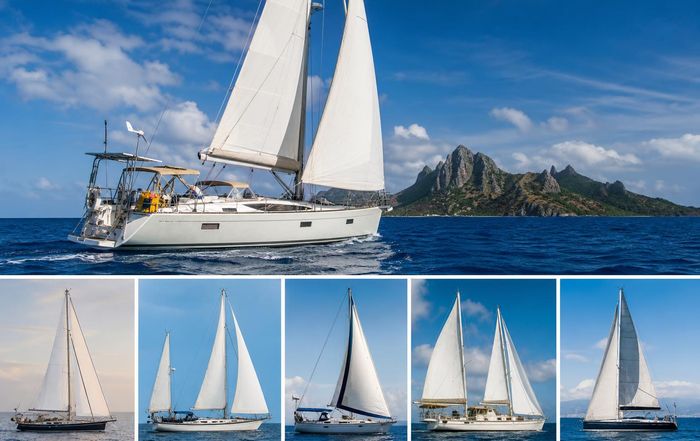
Best Sailboat Rig Types for Bluewater Cruising
Bluewater cruising places demands on a sailboat that go far beyond those of coastal sailing, and nowhere is this more evident than in the choice of rig. For owners planning to cross oceans, the rig is not merely a matter of aesthetics or performance; it is a central pillar of safety, reliability, crew endurance and long-term maintainability. As the team here continues to see in recent new-builds and refits, the debate about the "best" bluewater rig is increasingly nuanced, shaped by advances in materials, sail-handling systems and the changing demographics of long-range cruisers.
This article examines the principal rig types used for bluewater cruising, with a focus on how they perform in real-world conditions, what they demand of their crews and how they align with modern expectations of comfort, sustainability and global voyaging. It draws on current design practice, owner experiences reported in recognized yachting media and the evolving thinking of naval architects and rigging specialists.
For water loving readers exploring specific models that embody these rig concepts, the curated overviews in the boats section of yacht-review.com provide a useful complement to this strategic perspective.
What Bluewater Cruisers Really Need from a Rig
Before comparing masthead sloops, cutters, ketches and modern variants, it is important to define what "best" means in the context of offshore passagemaking. Bluewater cruisers typically require a rig that balances several priorities rather than optimizing for a single performance metric.
First, reliability and structural integrity are paramount. Offshore rigs must survive extended periods of high loads, chafe and fatigue without frequent professional intervention. Classification societies and insurers pay close attention to mast section design, chainplate engineering and standing rigging choices, and experienced cruisers increasingly insist on conservative safety margins, over-specification of critical components and clear inspection access. Guidance from organizations such as World Sailing and the safety standards used in major ocean races provide valuable benchmarks, even for non-racing yachts.
Second, ease of handling in heavy weather is central, especially given that many bluewater crews are couples or families rather than full professional teams. The ideal rig allows for straightforward reefing, controlled downwind sailing and predictable behavior during squalls or unexpected weather changes. This is one reason why modern cruising designs lean toward simplified sail plans coupled with powerful but reliable sail-handling hardware, rather than ever more complex rigs.
Third, adaptability to a wide range of wind angles and strengths is essential. A yacht that tracks beautifully upwind but becomes unmanageable on long downwind tradewind legs is not a good bluewater partner. The capacity to shift efficiently between upwind, reaching and deep-downwind configurations, while maintaining control and comfort, is a key differentiator between rig types.
Finally, maintainability and global serviceability matter more than ever. Long-range cruisers increasingly expect to obtain replacement parts, rigging wire and technical support in a broad range of ports. Designs that rely on highly specialized components or rare expertise can become problematic when voyaging far from major yachting centers. Owners planning world voyages often consult resources such as Noonsite to understand where rigging services are available along their route, and this practical reality should inform rig selection at the design or purchase stage.
With these criteria in mind, the main contenders for bluewater rigs can be examined more clearly.
The Masthead Sloop: Simplicity with Caveats
The masthead sloop remains the most common rig configuration on production cruising yachts, especially in the 30 to 50-foot range. Characterized by a single mast with the forestay attached at the masthead, it typically carries a mainsail and a large overlapping genoa, with additional downwind sails such as asymmetric spinnakers or code sails as optional extras.
From a bluewater perspective, the masthead sloop's greatest strengths are simplicity and familiarity. For many sailors, it is the rig they learned on, and sail handling conventions are widely understood. Boatbuilders from Beneteau to Bavaria and Jeanneau have refined masthead sloop layouts over decades, and the majority of cruising-oriented design improvements-such as in-mast or in-boom furling, self-tacking jibs and reliable roller furlers-have been developed and tested on boats with this rig.
For passagemakers, the advantages include a straightforward deck layout, relatively low spar and rigging costs and ease of finding replacement parts almost anywhere in the world. The single-mast configuration also simplifies structural engineering and weight distribution, which can translate into predictable handling and good resale value. Readers evaluating specific models can find numerous masthead sloops in the reviews section of yacht-review.com, where these practical considerations often feature prominently.
However, the traditional masthead sloop's reliance on a large headsail can become a liability offshore, particularly for shorthanded crews. In heavy weather, wrestling a big genoa down to change to a smaller storm jib, or relying solely on extreme furling, can be tiring and potentially hazardous. Moreover, deeply furled genoas tend to have compromised shape and reduced efficiency, which can make a yacht sluggish and harder to control when conditions deteriorate.
Downwind, masthead sloops can also be challenging over long distances. While modern asymmetric sails and code sails offer powerful options, they require careful handling and can be demanding for small crews, especially at night or in squally tradewind conditions. For these reasons, many bluewater sailors who start with a masthead sloop later retrofit inner forestays, removable stays or dedicated storm sail arrangements to broaden the rig's capabilities.
The Modern Fractional Sloop: Control and Efficiency
Fractional rigs, where the forestay attaches below the masthead, have long been favored in performance and racing circles. Over the past two decades, they have become increasingly common on cruising yachts as designers and builders have sought better mainsail control, reduced headsail size and more versatile sail plans. Builders such as X-Yachts, Hallberg-Rassy (on some models) and J/Boats have helped normalize the fractional approach even among serious cruisers.
For bluewater use, the fractional sloop offers several compelling advantages. The smaller foretriangle means headsails are more manageable in size, which is attractive for older or shorthanded crews. The more powerful mainsail, supported by swept-back spreaders and efficient vang systems, allows for nuanced de-powering and reefing as wind strength increases, often without the need to change headsails. This can translate into better control in gusty conditions and less physical strain during long passages.
The ability to fly a variety of offwind sails from bowsprits or furling systems, including code zeros and reaching gennakers, gives fractional rigs excellent versatility across a broad range of wind angles. This is particularly valuable on ocean passages where wind direction and strength can vary significantly over days and weeks. Many of the hull and deck design ideas discussed in the design pages, such as wider sterns and twin rudders, pair naturally with these modern fractional rigs to create stable, fast and controllable bluewater platforms.
Critics of fractional rigs sometimes point to higher rig loads, increased dependence on proper tuning and potentially more complex standing rigging arrangements. It is true that fractional rigs rely heavily on rig tension and mast bend to deliver their performance benefits, and poorly tuned examples can suffer from pumping or inconsistent sail shape. However, improvements in mast and rigging engineering, along with accessible tuning guidance from manufacturers and resources such as Practical Sailor, have made these concerns more manageable for committed owners.
For ocean voyagers, the key is to pair a fractional rig with conservative engineering margins, robust chainplates and reliable reefing and furling systems. When executed in this way, the modern fractional sloop arguably represents one of the most balanced options available for contemporary bluewater cruising.
The True Cutter: Versatility in Heavy Weather
The cutter rig, featuring a single mast with two permanent forestays and typically a staysail and outer headsail, has long been regarded as a bluewater classic. Many of the yachts that appear repeatedly in circumnavigation records and long-distance cruising narratives, including designs by Bob Perry and Chuck Paine, are cutters or cutter-like variants. The logic behind this preference remains compelling.
In heavy weather, the ability to set a small, heavily built staysail close to the mast, combined with a deeply reefed mainsail, creates a powerful yet easily managed storm configuration. The inner sail's low center of effort and secure sheeting positions contribute to a balanced helm and reduced strain on rigging and crew. When conditions moderate, cruisers can add the outer genoa or yankee, creating a flexible two-headsail arrangement that works well for reaching and offshore trade-wind sailing.
For long-distance voyagers, this built-in redundancy in headsails is particularly attractive. If a furling drum fails or a sail is damaged, the second forestay and sail provide an immediate backup. Many experienced cruisers interviewed in publications such as Cruising World and Yachting World highlight this redundancy as a key reason for choosing or converting to a cutter configuration.
From a design standpoint, true cutters often feature slightly more conservative sail area distributions, robust deck structures to support the additional stay and chainplates, and deck layouts optimized for safe movement between the mast and foredeck. On yacht-review.com, long-range cruising narratives in the cruising section frequently reference the comfort and security that a well-executed cutter rig can provide during multi-week ocean passages.
There are, however, trade-offs. The additional forestay and associated hardware add cost, weight and some complexity to the rig. Tacking the outer headsail around the inner stay can be more laborious, particularly with large overlapping genoas, which is why many modern cutters favor high-cut yankees and non-overlapping headsails. Sail inventories can also become more extensive, and storage for multiple heavy-cloth headsails must be planned carefully on board.
Despite these considerations, for sailors who prioritize heavy-weather capability and all-round offshore versatility, the cutter rig remains one of the most respected configurations in bluewater cruising.
Ketch and Yawl Rigs: Dividing the Power
Ketches and yawls, with their additional mizzen masts, occupy a special place in bluewater lore. Many classic ocean-going designs from Amel, Hallberg-Rassy and custom yards in Europe and North America relied on ketch rigs to divide sail area into more manageable units, particularly on larger yachts. Although modern production trends have shifted toward single-mast rigs, the ketch remains relevant for certain bluewater profiles.
The primary advantage of the ketch rig offshore is the distribution of sail area between main and mizzen, which can make individual sails smaller and easier to handle. This is particularly beneficial for older crews, long-distance liveaboards and those who prefer conservative sail sizes. The mizzen offers additional trimming options for balancing the helm and can be used in various combinations-such as mizzen and staysail only in heavy weather-to keep the yacht moving safely when conditions are uncomfortable.
Downwind, ketches can set creative combinations such as twin headsails with a mizzen, or main, mizzen and a poled-out headsail, providing flexibility for long tradewind passages. The ability to fine-tune balance by adjusting or even dropping the mizzen is appreciated by many ocean sailors, and some report that ketch rigs can make self-steering systems and windvanes more effective over long distances.
However, the additional mast, rigging and sail inventory inevitably introduce complexity and cost. The mizzen mast also occupies valuable cockpit or aft-deck space, which can impact modern layout preferences that favor large open cockpits and transom access. As hull forms have evolved toward wider sterns and twin rudders, integrating a mizzen mast structurally and ergonomically has become more challenging, contributing to the decline of new ketch rigs in mainstream production.
Yawls, with their smaller mizzen masts set aft of the rudder post, are less common in contemporary bluewater designs but remain appreciated in some classic yachts. Their mizzen sails are typically smaller and used more for trim and balance than for primary driving power. For owners of existing yawls considering bluewater voyages, careful attention to rig condition and conservative sail plans can still deliver safe and comfortable passages.
Folks with an interest in the heritage of these rigs and their evolution can explore the history section, where classic designs and their modern interpretations are examined in greater depth.
Twin-Headsail and Solent Rigs: A Modern Bluewater Hybrid
In recent years, a growing number of bluewater sailors and designers have embraced variations on the twin-headsail or Solent rig concept. While definitions vary, these configurations generally involve two forestays mounted close together near the bow, often with both attached near the masthead, and each carrying its own furling headsail. This differs from a traditional cutter, where the inner stay is set further aft and lower, with a distinct staysail plan.
The attraction of the Solent or twin-headsail rig for bluewater use lies in its operational simplicity combined with offshore versatility. A yacht can carry a larger genoa on one stay for light airs and coastal work, and a smaller, heavier-cloth jib or working headsail on the second stay for heavy weather and upwind work. Sail changes become as simple as furling one sail and unfurling the other, avoiding the need to wrestle sails on deck or change to storm jibs in exposed conditions.
Downwind, the twin furling headsails can be poled out to opposite sides, creating a stable, easily reefed configuration for long tradewind passages. This approach has become increasingly popular among circumnavigators and ARC participants, as documented by World Cruising Club, because it offers a powerful yet conservative alternative to symmetric spinnakers or complex downwind sails.
From a structural standpoint, the closely spaced stays of a Solent rig impose different loads than a traditional cutter, and careful engineering of the bow structure, chainplates and deck layout is essential. However, because both stays are typically attached near the masthead, mast compression and tuning can be more straightforward than with a lower-attached inner stay.
On yacht-review.com, many of the yachts featured in the global cruising and travel content use some variant of this twin-headsail approach, often combined with modern furling technology and robust pole systems. For owners upgrading existing masthead sloops for serious bluewater work, adding a Solent stay is frequently seen as a practical and effective modification.
Rig Technology, Materials and Sustainability
Any discussion of the best rig types for bluewater cruising must now consider the role of modern materials, hardware and sustainability expectations. While the fundamental geometries of sloops, cutters and ketches have not changed dramatically, the way they are executed has evolved significantly.
Advances in aluminum mast extrusion, stainless steel and composite standing rigging, and high-modulus rope technologies have allowed designers to create rigs that are both stronger and lighter than previous generations. For bluewater cruisers, this translates into improved stability, reduced pitching and better performance in light airs, all of which contribute to safer and more comfortable passages. Guidance from rigging specialists and classification standards, as summarized by organizations such as American Boat and Yacht Council (ABYC), helps ensure that these materials are used conservatively and appropriately.
At the same time, sustainability concerns are beginning to influence rig decisions. While carbon fiber masts and high-tech rigging are still relatively rare on mainstream cruising yachts due to cost, there is growing interest in longer-lasting, corrosion-resistant components, recyclable materials and rig designs that minimize the environmental footprint over the yacht's lifecycle. Owners are increasingly aware that a rig which requires complete replacement after a relatively short service life has both financial and environmental implications.
The editorial focus on responsible cruising in the sustainability section reflects this shift. Bluewater sailors who plan to cross multiple oceans are often among the most engaged in discussions about sustainable practices, from sailcloth choices and maintenance regimes to end-of-life recycling of rig components. While the industry is still developing comprehensive solutions, the trend toward more durable, maintainable rigs aligns well with the conservative engineering principles that bluewater cruising has always favored.
Matching Rig Type to Cruising Style and Crew
Ultimately, the "best" sailboat rig for bluewater cruising is not a single configuration but the one that aligns most closely with a specific owner's cruising plans, crew profile and risk tolerance. A young, performance-oriented crew planning a fast circumnavigation may favor a modern fractional sloop with advanced sail-handling systems, while a retired couple planning a leisurely world voyage might prioritize the heavy-weather security of a cutter or the divided sail area of a ketch.
Lifestyle expectations also play a significant role. Some owners value the classic aesthetic and seakindly motion of traditional cutter or ketch rigs, seeing their yacht as a home and long-term companion rather than a pure performance machine. Others prioritize the ability to make fast passages to maximize time spent exploring destinations, a theme that frequently emerges in the lifestyle coverage on yacht-review.com, where the rig is considered as part of a broader onboard living concept.
Prospective bluewater cruisers are well advised to conduct sea trials in a variety of conditions, ideally with an experienced ocean sailor or professional rigger on board, and to seek out owner reports, technical reviews and long-term maintenance histories. Reputable sources such as Royal Yachting Association training materials and offshore preparation guides from established sailing schools can provide structured frameworks for evaluating rig choices.
In addition, the practical realities of where a yacht will sail, what services are available and how easily specialized components can be sourced should not be underestimated. A technically sophisticated rig that cannot be properly maintained in remote regions may be less suitable than a simpler configuration built to conservative standards. The business-side analysis in the yachting business section often highlights how lifecycle costs and support networks influence long-term satisfaction with a chosen rig and yacht.
A Future Defined by Informed, Conservative Choices
As bluewater cruising continues to attract a broader and more diverse community of sailors from North America, Europe, Asia and beyond, the conversation about optimal rig types is becoming more informed and data-driven. Lessons learned from major ocean rallies, long-term circumnavigations and the experiences of professional delivery skippers are increasingly available through digital platforms and specialized publications, allowing new entrants to benefit from decades of accumulated knowledge.
Despite evolving materials and design trends, a common thread runs through the rigs most respected by experienced bluewater sailors: conservative engineering, redundancy in critical systems, manageable sail sizes and flexibility across a wide range of conditions. Whether expressed through a modern fractional sloop with twin headsails, a traditional cutter or a well-proportioned ketch, these principles remain the foundation of safe and enjoyable ocean voyaging.
For wet and sandy readers contemplating their own bluewater projects, the broader context available across yacht-review.com-from global cruising reports and technology insights to community stories and news updates-can help transform rig selection from a purely technical decision into a strategic choice that supports the desired cruising life. In the end, the best rig for bluewater cruising is the one that allows the crew to sail confidently, rest deeply and continue exploring the world's oceans year after year.