

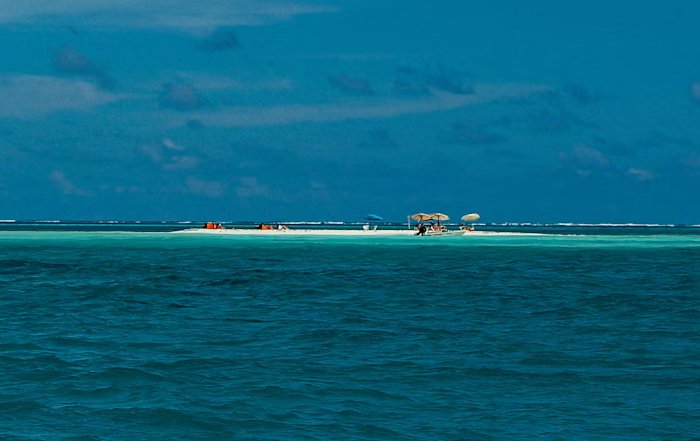
Exploring the Remote Atolls of the South Pacific: Strategy, Seamanship, and Sustainability
The South Pacific Atolls: Frontier of Modern Yacht Exploration
The remote atolls of the South Pacific occupy a unique position in the imagination of yacht owners, charter clients, designers, and maritime professionals. They represent both the last frontier of true bluewater adventure and a living laboratory for how high-end yachting will adapt to climate realities, regulatory shifts, and rapidly evolving guest expectations. From the coral-ringed lagoons of French Polynesia to the sparsely charted atoll chains of Kiribati, Tuvalu, and the Marshall Islands, these destinations require a different mindset than the well-trodden Mediterranean circuits or Caribbean hubs, and yacht-review.com has increasingly become a reference point for owners and captains seeking practical, experience-based insight that goes beyond brochure imagery and marketing narratives.
The remote nature of these atolls means that any voyage into their waters is as much a test of seamanship and operational discipline as it is a lifestyle experience, and this duality is exactly what appeals to a new generation of yacht owners from the United States, United Kingdom, Germany, Australia, and across Europe and Asia. For many of these owners, the decision to venture into the South Pacific is not driven only by the desire to reach pristine anchorages, but also by a wish to align their cruising choices with more conscious environmental and community engagement objectives, reflecting an awareness of how vulnerable atoll nations are to climate change and rising sea levels. This evolving mindset is reshaping how yachts are specified, how itineraries are designed, and how crews are trained, and it is within this context that yacht-review.com has been documenting the shift from mere luxury consumption to a more responsible, knowledge-driven form of maritime exploration.
Why the Atolls Matter Now: Climate, Culture, and Geopolitics
The remote atolls of the South Pacific hold outsized strategic and cultural importance compared with their small landmass. Nations such as Kiribati, Tuvalu, the Marshall Islands, and parts of French Polynesia are on the front line of sea-level rise, coral bleaching, and changing weather patterns, all of which have direct implications for navigation, anchoring, and long-term cruising plans. Organizations like the Intergovernmental Panel on Climate Change (IPCC) have repeatedly highlighted the existential risks facing low-lying atolls; understanding these dynamics is no longer optional for yacht owners who wish to operate responsibly in the region. Those planning voyages now routinely consult scientific resources to learn more about climate impacts on small island states, integrating environmental data into their route planning and seasonal timing.
At the same time, the atolls are cultural strongholds, preserving traditions of seafaring, navigation, and community organization that predate modern yachting by centuries. Polynesian and Micronesian navigators once crossed vast distances using stars, swells, and bird patterns long before the advent of GPS, and this heritage continues to shape local attitudes toward the ocean. For yacht guests arriving from North America, Europe, China, Japan, or Singapore, an encounter with these communities can be a powerful reminder that the sea is not just a playground but a shared, finite space. In recent years, yacht-review.com has observed a marked increase in owners and charterers requesting itineraries that integrate cultural visits, traditional navigation demonstrations, and locally guided excursions, reflecting a broader trend toward more meaningful, context-rich cruising experiences.
Geopolitically, the South Pacific has become a region of heightened interest for major powers, with new infrastructure, port developments, and maritime agreements reshaping access and logistics. While superyachts are not the primary drivers of these shifts, they are affected by changes in customs procedures, fuel availability, and local regulations. Reliable, up-to-date information is therefore critical, and many captains now cross-reference official resources such as the International Maritime Organization with region-specific intelligence and the experiential reports featured on yacht-review.com/global.html to build a realistic picture of what to expect at each atoll or island state.
Vessel Selection and Technical Readiness for Atoll Voyaging
Choosing the right yacht for atoll exploration is a strategic decision that goes beyond aesthetics and interior layout. While yacht-review.com has long covered a wide spectrum of vessels on yacht-review.com/boats.html, from performance sailing yachts to expedition-style motor yachts, the requirements for navigating shallow passes, coral-strewn lagoons, and remote anchorages place a premium on specific characteristics. Draft, fuel range, redundancy of critical systems, and tender capability become central design criteria, particularly for owners based in Canada, Italy, Spain, Netherlands, Norway, or New Zealand who may be considering multi-season Pacific programs.
In practice, this has led to a growing interest in hybrid expedition yachts, often with reinforced hulls, dynamic positioning, and sophisticated navigation suites, coupled with shallow drafts and flexible tenders or landing craft able to operate in minimal depths. Naval architects and designers featured on yacht-review.com/design.html are increasingly asked to reconcile the desire for beach-club-level comfort with the operational realities of coral environments, where a misjudged approach can result in significant reef damage as well as costly hull repairs. As a result, design discussions now often include integrated sonar mapping, forward-looking depth sounders, and modular tender garages that accommodate both luxury RIBs and more utilitarian workboats.
Technical readiness also extends to energy systems and environmental performance. With many atoll nations tightening regulations on waste discharges and fuel quality, yachts must be capable of extended autonomous operation while minimizing their footprint. Owners and captains are paying closer attention to guidance from organizations such as the International Council on Clean Transportation, where it is possible to learn more about sustainable maritime technologies, and are applying these insights to refit decisions, including advanced wastewater treatment, battery-assisted propulsion, and solar integration. yacht-review.com has seen a clear uptick in interest around these topics on yacht-review.com/technology.html, with readers from Sweden, Denmark, Finland, and South Korea particularly engaged, reflecting the strong maritime innovation cultures in those countries.
Route Planning, Weather Windows, and Operational Risk
For captains and owners contemplating an atoll-focused itinerary, route planning is as much about risk management as it is about scenic variety. The remoteness of many South Pacific atolls means limited search and rescue capacity, sparse medical facilities, and often rudimentary port infrastructure, which, in turn, places a premium on self-sufficiency and careful seasonal timing. Many yachts now rely on specialist meteorological services and data from agencies such as the National Oceanic and Atmospheric Administration (NOAA) to access detailed Pacific marine forecasts, integrating real-time satellite data with long-range climate outlooks to avoid cyclone seasons and periods of heightened swell.
From a navigational standpoint, even the most modern electronic charts can be incomplete or inaccurate around lesser-known atolls, and experienced captains frequently report discrepancies between charted and actual reef positions. As a result, there is renewed appreciation for traditional seamanship skills: visual piloting, the use of high sun angles to read water color and depth, and conservative speed and approach protocols when entering passes or lagoons. Many of the case studies and incident analyses highlighted on yacht-review.com/cruising.html emphasize the importance of arriving at passes with favorable light and tide, maintaining adequate safety margins, and using tenders to scout uncertain routes.
Risk considerations also extend to provisioning and medical preparedness. While some atolls in French Polynesia and Fiji offer reasonable resupply options, others in more remote chains may have little or no access to high-quality fuel, fresh produce, or technical support. This reality has led many yachts to upgrade cold storage, spare parts inventories, and onboard medical facilities, often with telemedicine support from specialized providers. For family-oriented programs, particularly those involving guests from France, Switzerland, Singapore, Japan, or Thailand, the ability to guarantee a high standard of safety and care is non-negotiable, and yacht-review.com has seen increased interest in long-form features on yacht-review.com/family.html that address these concerns in a practical, experience-based manner.
Guest Experience: From Luxury Escape to Immersive Exploration
The guest experience on board a yacht exploring South Pacific atolls in 2026 is defined less by conspicuous consumption and more by immersion, authenticity, and narrative. Owners and charter clients from United States, United Kingdom, Germany, Australia, Brazil, and South Africa are increasingly seeking itineraries that combine the traditional hallmarks of superyacht luxury-privacy, comfort, and exceptional service-with opportunities for genuine discovery. This might mean snorkeling in rarely visited coral gardens, participating in locally led conservation initiatives, or spending time in villages where traditional crafts and dance are still practiced daily.
From a hospitality perspective, this shift requires crews to be not only technically proficient but also culturally literate and environmentally informed. Captains and chief officers are expected to brief guests on local customs, marine protected areas, and appropriate behavior ashore, while chefs are encouraged to incorporate locally sourced ingredients where possible, respecting seasonal availability and community priorities. Onboard educators or specialist guides-marine biologists, photographers, or cultural liaisons-are becoming more common, particularly on larger expedition yachts, and their presence can transform a trip from a simple escape into a curated learning journey. For readers of yacht-review.com/lifestyle.html, this represents a new benchmark in experiential luxury: one where knowledge, context, and connection are central to the value proposition.
Water-based activities remain a core attraction, but even here the emphasis is shifting. Diving and snorkeling in atoll lagoons now often come with briefings about coral health, fish population dynamics, and the impact of warming seas, drawing on research disseminated through organizations like the National Geographic Society, where interested owners can explore in-depth reporting on ocean ecosystems. Kiteboarding, paddleboarding, and free diving are popular among younger guests, while older family members may gravitate toward coastal walks, birdwatching, or simply observing the interplay of tide and light from the comfort of a shaded aft deck. Across these activities, the guiding principle is to experience the atolls as living, changing environments rather than static backdrops.
Sustainability and Stewardship in Fragile Atoll Environments
No discussion of South Pacific atoll cruising in 2026 can be complete without addressing sustainability and stewardship. Atoll ecosystems are among the most fragile on the planet, and the presence of large yachts-however well-intentioned-inevitably creates pressure on local resources and habitats. Recognizing this, many owners and charterers are actively seeking guidance on how to minimize their impact, and yacht-review.com has made this a central theme of its coverage on yacht-review.com/sustainability.html, providing practical frameworks for responsible operation.
Anchoring practices are a critical area of focus. In many atolls, traditional anchoring can cause devastating damage to coral, prompting both local regulations and voluntary codes of conduct that encourage the use of moorings where available or the careful selection of sandy patches with minimal ecological value. Advanced positioning systems can reduce the need for anchors in some conditions, but they must be used judiciously to avoid excessive fuel consumption and noise. Waste management is another key concern, with best practice now dictating zero discharge of plastics and untreated wastewater, strict segregation of recyclables, and careful planning for disposal in ports with appropriate facilities. Owners and captains are increasingly drawing on frameworks developed by organizations such as the World Wildlife Fund (WWF) to learn more about sustainable business practices and adapt them to the realities of yacht operations.
Beyond compliance, many yachts are taking a proactive role in supporting local conservation and community initiatives. This can range from funding reef monitoring programs to providing logistical support for scientific expeditions or educational outreach. For some owners, particularly those with business interests aligned to ESG principles, these efforts are integrated into broader corporate responsibility strategies, with the yacht serving as both a platform and a symbol of commitment. The editorial team at yacht-review.com has observed that such programs resonate strongly with readers across Europe, Asia, and North America, who increasingly view stewardship not as an optional add-on but as a core component of modern yachting identity.
Economic and Community Dimensions of Atoll Yachting
The economic impact of visiting yachts on remote atoll communities is complex and requires careful management. On the one hand, yacht traffic can bring valuable revenue through provisioning, guiding services, cultural performances, and fees, providing diversification for economies that may otherwise rely heavily on fishing or limited forms of tourism. On the other hand, unplanned or poorly coordinated engagement can distort local markets, create dependency, or undermine traditional ways of life. As a result, communities and governments in countries such as Fiji, French Polynesia, and Vanuatu are increasingly developing structured frameworks for yacht visits, often drawing on broader policy guidance from entities like the World Bank, where stakeholders can review analysis on sustainable tourism and small island economies.
For yacht owners and captains, this means that relationship-building and advance communication are essential. Engaging with local authorities, village leaders, and community organizations before arrival can help align expectations, identify appropriate opportunities for economic support, and avoid cultural missteps. In practice, this may involve hiring local guides, sourcing produce and crafts directly from communities, and ensuring that any financial contributions are channeled through transparent, locally endorsed mechanisms. Features on yacht-review.com/community.html have highlighted numerous examples where thoughtful engagement has led to long-term partnerships, educational exchanges, and even co-created conservation projects, demonstrating that yachting can be a force for positive development when approached with humility and respect.
The business side of atoll cruising is also evolving within the yacht industry itself. Charter brokers, management companies, and insurance providers are recalibrating their offerings to reflect the higher operational complexity and risk profile associated with remote South Pacific itineraries. This includes more detailed due diligence on vessel capability, crew experience, and emergency response plans, as well as bespoke charter contracts that account for weather-related contingencies and local regulatory nuances. Readers of yacht-review.com/business.html are paying close attention to these developments, recognizing that the commercial viability of atoll-based programs depends on aligning guest expectations with operational realities and legal frameworks.
Events, Knowledge Sharing, and the Future of Atoll Exploration
As interest in remote atoll cruising grows, so too does the ecosystem of events, conferences, and knowledge-sharing platforms that support it. Yacht shows in Monaco, Fort Lauderdale, Singapore, and Australia are hosting dedicated panels on expedition cruising, sustainability, and Pacific operations, often featuring captains and owners who have completed multi-season atoll programs. These discussions are complemented by more specialized gatherings focused on marine science, climate adaptation, and indigenous knowledge, where the presence of yacht stakeholders is increasingly welcomed as part of a broader coalition of ocean users. Coverage on yacht-review.com/events.html has underscored how these forums are helping to bridge the gap between the luxury yacht sector and the scientific and policy communities.
Digital platforms are amplifying this exchange of experience. Detailed voyage reports, technical analyses, and design reviews on yacht-review.com/reviews.html are being read and referenced by professionals from China, Malaysia, New Zealand, South Africa, and beyond, many of whom are planning their own South Pacific projects. These narratives often include candid assessments of what worked and what did not: the reliability of local fuel supplies, the effectiveness of specific navigation technologies, the nuances of engaging with local communities, and the realities of operating in regions with limited connectivity. Over time, this body of shared knowledge is raising the overall standard of atoll cruising, making it safer, more sustainable, and more rewarding for all stakeholders.
Looking ahead, the trajectory of atoll exploration will be shaped by multiple forces: advances in vessel design and propulsion, evolving climate patterns, regulatory developments, and shifts in guest preferences. There is growing interest in alternative fuels and low-impact propulsion systems, with some visionary owners and shipyards exploring hydrogen, methanol, and advanced battery technologies. At the same time, there is a recognition that technological solutions alone will not be enough; genuine progress will depend on a deeper cultural shift within yachting toward long-term stewardship, collaboration with local communities, and a willingness to listen and learn. In this evolving landscape, yacht-review.com is committed to providing rigorous, experience-driven coverage that supports informed decision-making across the global yachting community.
Conclusion: A New Paradigm for Bluewater Luxury
Exploring the remote atolls of the South Pacific is far more than an exercise in reaching beautiful, secluded anchorages. It is a test of strategic planning, technical competence, cultural sensitivity, and environmental responsibility, and it offers a glimpse into the future of yachting as a whole. Owners and guests from North America, Europe, Asia, Africa, and South America who choose these itineraries are effectively positioning themselves at the forefront of a new paradigm in which luxury is defined not only by comfort and exclusivity but also by knowledge, connection, and purpose.
For the editorial team and expert contributors at yacht-review.com, this frontier is both a subject of ongoing analysis and a lived reality, reflected in the growing body of insights across yacht-review.com/travel.html, yacht-review.com/history.html, and the broader home of the brand at yacht-review.com. As more yachts venture into these remote waters, the shared experiences, lessons, and innovations that emerge will continue to refine best practice and expand what is possible, ensuring that the remote atolls of the South Pacific remain not only a symbol of untouched beauty but also a benchmark for how the global yachting community can operate with expertise, authority, and genuine trustworthiness in a rapidly changing world.