

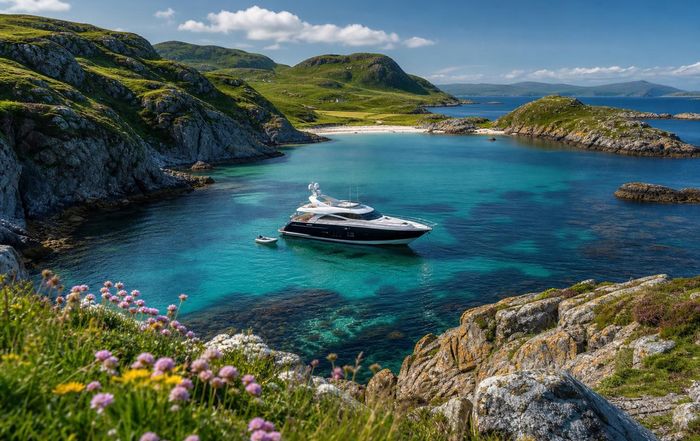
Hidden Yacht Cruising Grounds in the United Kingdom
The United Kingdom is often associated with crowded Solent anchorages, busy West Country harbours and the classic routes of the English Channel, yet for owners and captains willing to look beyond the usual pilotage notes, the country offers an extraordinary collection of lesser-known cruising grounds. These areas, stretching from remote Scottish sea lochs to sheltered Welsh estuaries and quietly revitalised industrial waterfronts in northern England, combine navigational interest with cultural depth and an increasing emphasis on sustainability. For the the cruise loving visiting fans here, which is accustomed to evaluating yachts and destinations with a discerning, global perspective, the UK's hidden cruising grounds present a compelling blend of authenticity, privacy and long-term investment potential.
This article draws on recent navigational guidance, marina developments and conservation initiatives from sources including the Royal Yachting Association, Cruising Association, UK Hydrographic Office, National Trust and regional harbour authorities, cross-checked where necessary to ensure accuracy. It focuses on lesser-publicised destinations that can reward both performance motor yachts and cruising sailboats, from compact 30-40 footers to larger superyachts with professional crews, while remaining realistic about access, infrastructure and environmental responsibilities.
Why the UK Still Surprises Experienced Cruisers
For many international yacht owners, the UK is perceived as a transit zone between the Mediterranean and northern Europe or as a base for racing rather than extended cruising. However, recent years have seen a quiet evolution. Investment in small marinas and harbour facilities across England, Wales, Scotland and Northern Ireland has improved access to previously underused ports, while modern electronic navigation tools and detailed digital charts from the UK Hydrographic Office have reduced the perceived risk of exploring tidal rivers and complex coasts.
At the same time, climate data from organizations such as the UK Met Office indicates a gradual lengthening of shoulder seasons, with milder spring and autumn conditions creating more flexible windows for cruising beyond the traditional peak summer months, though weather remains changeable and requires prudent planning. As a result, a growing number of owners who once confined their British cruising to a few familiar harbours are now seeking quieter, more characterful waters, where a well-found yacht can anchor in solitude yet remain within reach of high-quality shoreside services.
For readers accustomed to the polished marinas of the Mediterranean or Caribbean, the appeal of these British cruising grounds lies less in opulent infrastructure and more in the combination of safe anchorages, rich maritime history and a strong sense of place. Many of these areas are ideally explored in stages, making them natural candidates for the kind of progressive itineraries and in-depth destination coverage that yacht-review.com develops across its cruising features and regional reports.
Northumberland and the Farne Islands: Quiet Drama on the North Sea
The coast of Northumberland, in north-east England, remains one of the most underused stretches of cruising water for visiting yachts, despite being within reasonable reach of major yachting centres in Scotland and the Humber. From a navigational perspective, the area is dominated by open North Sea passages, but the rewards include dramatic coastal scenery, wildlife-rich islands and historic ports that have invested modestly yet effectively in visiting yacht facilities.
The Farne Islands, managed by the National Trust, are particularly notable. While yacht skippers must treat the surrounding waters with respect due to strong tidal streams and overfalls, authoritative guidance from the Royal Yachting Association and regional cruising guides confirms that, in settled conditions and with appropriate tidal planning, experienced crews can find temporary anchorages offering close views of seabird colonies and, in season, grey seals. Landing restrictions and seasonal closures to protect wildlife are strictly enforced, and up-to-date information is available directly from the National Trust and local harbour authorities, underscoring the importance of responsible visitation.
Shoreward, the small harbour towns of Amble and Blyth provide practical bases. Amble Marina has, according to local reports and marina operators, steadily upgraded its pontoons and visitor services over the past decade, transforming what was once a purely working harbour into a low-key yachting hub without losing its authenticity. For owners looking to combine a passage leg with discreet shore excursions, this region offers access to castles such as Bamburgh and Alnwick, as well as quiet beaches that remain relatively uncrowded even at the height of summer.
For readers of yacht-review.com planning north-south transits along the UK's east coast, incorporating a short detour into Northumberland can transform a functional passage into a memorable cruising chapter, with the added benefit that these waters remain well charted and supported by modern electronic aids, provided that crews remain alert to tidal gates and rapidly changing weather.
The Yorkshire and Humber Estuaries: Industrial Heritage Reimagined
Further south, the Humber and Yorkshire coast rarely feature in superyacht brochures, yet ongoing regeneration projects and improving marina infrastructure are making this region more attractive for adventurous cruising yachts. Ports such as Hull and Grimsby, traditionally associated with commercial shipping and fishing, have seen targeted investment in marina facilities and waterfront redevelopment, in part supported by wider economic initiatives highlighted by UK government regional development agencies.
While the Humber estuary is a complex tidal environment, with strong currents and shifting sandbanks requiring careful pilotage, digital chart updates and local notices to mariners, published by the Humber Harbour Authority and cross-referenced through platforms like Admiralty EasyTide, provide reliable guidance for well-prepared crews. For yachts transiting between the North Sea and inland destinations, the estuary also offers access to the inland waterways network, though air draft and lock dimensions limit this to smaller vessels.
From a lifestyle and business perspective, the region's emerging cultural scene, including the legacy of Hull's UK City of Culture 2017 status, has encouraged new restaurants, galleries and hospitality ventures along the waterfront. These developments, though modest compared with major yachting hubs, create opportunities for owners and charter guests who value genuine local character over homogenised marina villages. For those interested in the broader economic context of waterfront regeneration and its impact on maritime leisure, insights from organizations such as the British Marine Federation can provide useful background on how UK coastal towns are repositioning themselves within the global boating industry.
For yacht-review.com, which frequently examines the intersection of design, lifestyle and maritime business in its business-oriented coverage, the Humber region demonstrates how industrial heritage and yachting can coexist, creating distinctive cruising experiences that differ sharply from more conventional UK destinations.
Cardigan Bay and the West Coast of Wales: Understated Wilderness
On the opposite side of the country, the west coast of Wales offers a very different cruising experience, characterised by long, open sweeps of coastline, low population density and a mixture of small ports and natural anchorages. Cardigan Bay, stretching from the Llŷn Peninsula in the north to Pembrokeshire in the south, is particularly well suited to yachts seeking space and seclusion.
Harbours such as Aberystwyth, Pwllheli and Barmouth provide entry points, with marina facilities that have been gradually enhanced over recent years according to regional tourism and marina operators. Pwllheli, home to Plas Heli and a national sailing academy, has developed a reputation as a performance sailing hub, yet the wider bay remains relatively quiet for cruising yachts, especially outside peak school holiday periods. The combination of sandy beaches, coastal walking routes and small market towns gives the area a relaxed, family-friendly character that contrasts with more crowded south coast resorts.
To the south, Pembrokeshire's coastline, much of it protected as part of the Pembrokeshire Coast National Park, offers dramatic cliffs, islands and sheltered anchorages, although strong tidal streams and overfalls, particularly around Ramsey Sound and Jack Sound, demand respect and careful timing. Guidance from the Cruising Association and official pilot books corroborates that, with prudent planning and favourable conditions, yachts can enjoy anchorages near Skomer Island and other wildlife-rich areas, while adhering to conservation regulations designed to protect seabirds and marine mammals.
This region is also at the forefront of UK marine conservation and sustainable tourism initiatives, with local authorities and conservation groups promoting low-impact boating practices. For readers interested in how cruising can align with environmental stewardship, resources from organizations such as Marine Conservation Society and the UK's Joint Nature Conservation Committee provide detailed information on marine protected areas and best practice, complementing the sustainability-focused editorials and destination guides available in the sustainability section of yacht-review.com.
The Clyde and Argyll Sea Lochs: Accessible Adventure in Western Scotland
Western Scotland is no secret to experienced sailors, yet even here significant areas remain comparatively underused by visiting yachts, particularly among international owners more familiar with the Hebrides headline destinations. The Firth of Clyde and adjacent Argyll sea lochs form a vast, sheltered cruising ground that combines good infrastructure with a sense of remoteness that is rare in European waters so close to major airports and rail links.
Marinas at Largs, Kip, Rhu and Troon, documented by RYA and regional marina groups, provide full-service bases for larger yachts, including berths suitable for superyachts in selected locations. From these hubs, yachts can access the Kyles of Bute, Loch Fyne, Loch Goil and numerous smaller anchorages, many of which are fringed by small villages or single hotels with deep-water moorings. Reports from local cruising associations and harbourmasters confirm that the past decade has seen a gradual increase in visitor moorings and shore facilities, yet the area still absorbs traffic easily, maintaining a sense of space even in high season.
The sea lochs of Argyll, including Loch Riddon, Loch Striven and Loch Sween, offer particularly rewarding exploration for yachts with shallow to moderate draft. These inlets provide excellent shelter and scenic backdrops of forested hills and mountains, with occasional piers or pontoons that allow access to small communities and historic sites. The region's whisky distilleries, many located close to the water, add a cultural dimension that resonates strongly with international guests; authoritative background on Scotland's whisky heritage can be found through organizations such as Scotch Whisky Association and tourism bodies like VisitScotland.
For the audience of yacht-review.com, which often evaluates how design and onboard lifestyle intersect with destination choice, the Clyde and Argyll area exemplifies a cruising ground where a yacht's range and comfort can be fully exploited. Extended itineraries can seamlessly combine remote anchorages, high-quality shoreside dining and cultural excursions, making this region particularly attractive for owners considering a season based in northern Europe. Further planning inspiration can be found in our broader cruising destination coverage, which frequently highlights multi-week itineraries suited to both private and charter yachts.
Orkney and Shetland: High-Latitude Exploration within Reach
For yachts capable of longer passages and equipped for more demanding conditions, the archipelagos of Orkney and Shetland, north of mainland Scotland, represent some of the most distinctive and least crowded cruising grounds in the British Isles. These islands, though exposed to North Atlantic weather systems, offer a network of natural harbours and small marinas that, according to local harbour authorities and cruising reports, have been steadily improved to accommodate visiting yachts.
Orkney, with its main town of Kirkwall and secondary hub of Stromness, combines deep historical significance with practical facilities. Sites such as Skara Brae and the Ring of Brodgar, managed by Historic Environment Scotland, provide an exceptional cultural backdrop to a cruising itinerary, while sheltered anchorages in Scapa Flow and surrounding bays offer opportunities for exploration in settled conditions. The area's strong tidal streams and overfalls, particularly in the Pentland Firth, require meticulous planning using authoritative tide and current data, yet experienced skippers consistently report that the navigational challenges are manageable with modern tools and conservative decision-making.
Further north, Shetland's scattered islands and voes (sea inlets) create a labyrinthine coastline where yachts can find shelter even when conditions offshore are more severe. Marinas and small harbours at Lerwick, Scalloway and other communities provide essential services, while local tourism and development agencies have, in recent years, promoted visiting yachts as part of a broader sustainable tourism strategy. For those interested in high-latitude cruising and its logistical and technical implications, resources from organizations such as Royal Cruising Club Pilotage Foundation and high-latitude sailing specialists offer practical insights that complement the technology-focused articles in the technology section of yacht-review.com.
These northern archipelagos are unlikely to become mass-market cruising destinations, yet for a subset of owners and captains, they represent a rare opportunity to combine genuine exploration with the safety net of UK infrastructure and regulatory standards. In this sense, they align closely with a growing global interest in expedition yachting and authentic, low-density travel experiences.
The East Coast Rivers of England: Subtle Cruising close to Major Hubs
While the Thames Estuary and approaches to London are well known, the smaller rivers of England's east coast, particularly in Essex and Suffolk, remain underappreciated among international cruisers. The rivers Orwell, Deben, Blackwater and Crouch form a network of sheltered, tidal waterways that allow yachts to penetrate deep into rural landscapes while remaining relatively close to major transport connections.
Marinas on the River Orwell, including those near Ipswich and Levington, have, according to British Marine and local marina groups, maintained and improved facilities for visiting yachts, offering full-service berthing and easy access to local services. From these bases, yachts can explore the Deben and Ore, where careful attention to bar crossings and tidal height is rewarded with tranquil anchorages and mooring fields bordered by saltmarsh, heathland and historic villages. The region has a strong boatbuilding and design heritage, with classic yacht designers and builders historically associated with the area, a topic that resonates with the design-focused readership of yacht-review.com and is explored in greater depth in our design-focused content.
Further south, the Rivers Crouch and Roach offer similarly peaceful cruising, with a mixture of yacht clubs, moorings and marinas that cater to both local and visiting boats. These waters have long been favoured by racing sailors and performance cruisers for their combination of sheltered conditions and tactical tidal challenges, yet they also suit family cruising, thanks to short distances between safe havens and the possibility of quick returns to base if weather conditions deteriorate offshore.
For owners considering basing a yacht in the UK while maintaining easy access to London and international travel, the east coast rivers represent a strategic compromise: a low-profile, cost-effective cruising ground with strong local expertise and a deep-rooted yachting culture, without the congestion often associated with southern England's better-known harbours.
Northern Ireland and the Antrim Coast: Emerging on the Cruising Map
Northern Ireland's coastline, particularly along the Antrim Coast and around Belfast Lough, has historically seen less visiting yacht traffic than comparable regions in Scotland or the Republic of Ireland. However, in recent years, investment in marina infrastructure and waterfront regeneration has begun to alter this pattern, creating new opportunities for cruising itineraries that combine urban culture with dramatic coastal scenery.
Belfast Harbour Marina, positioned close to the city's redeveloped waterfront and attractions such as the Titanic Belfast visitor centre, offers visiting yachts a secure base with immediate access to a revitalised urban environment. Tourism bodies and maritime organizations highlight the city's transformation from an industrial port to a modern cultural destination, supported by hospitality, arts and conference facilities that can appeal to yacht owners who combine leisure cruising with business commitments.
North of Belfast Lough, the Antrim Coast, including areas around Glenarm, Ballycastle and the approach to the Giant's Causeway, offers striking cliffs, small harbours and views toward Scotland's Mull of Kintyre. Recent marina developments at Glenarm and Ballycastle, documented by local councils and marina operators, have improved facilities for visiting yachts, while ferry links and road connections make it feasible to integrate these stops into broader regional travel itineraries. For insights into the wider tourism context and sustainable development along this coast, sources such as Tourism Northern Ireland and UNESCO documentation on the Giant's Causeway World Heritage Site provide authoritative background.
For the growing readership of yacht-review.com, Northern Ireland illustrates how emerging cruising regions can leverage targeted investment, heritage branding and improved access to attract a new segment of visiting yachts, particularly those seeking alternatives to more saturated western Scotland or Irish Sea destinations.
Integrating Hidden UK Cruising Grounds into Broader Itineraries
For yacht owners and captains planning seasonal strategies, the hidden cruising grounds of the UK are best understood not as isolated destinations but as components of flexible, multi-region itineraries. A yacht based on the south coast of England can, over the course of a summer, progress north via the east coast rivers and Northumberland, explore the Firth of Forth and eastern Scotland, transition through the Caledonian Canal or round the north of Scotland to access the Clyde and Hebrides, and, for those with sufficient time and capability, extend further to Orkney and Shetland.
Alternatively, a yacht based in western Scotland or Northern Ireland can integrate the Clyde, Argyll, Antrim Coast and north-west Ireland into a circular route that balances remote anchorages with well-serviced marinas and transport gateways. For owners with limited time on board, staging the yacht seasonally and using regional hubs such as Glasgow, Edinburgh, Belfast or Manchester for crew changes and guest arrivals can make these itineraries logistically feasible.
From a strategic perspective, the UK's hidden cruising grounds offer several advantages to globally mobile yacht owners. They provide variety and privacy within a single regulatory and safety framework, benefit from high-quality hydrographic data and search and rescue capabilities, and allow for meaningful engagement with local communities and heritage. They also align with a broader industry shift toward more sustainable, experience-driven cruising, where time at anchor in unspoilt locations is valued at least as much as time spent in iconic but crowded resorts.
People seeking to evaluate specific yachts for these kinds of itineraries can refer to the detailed boat and yacht reviews and model overviews on yacht-review.com, which assess range, seakeeping, draft and onboard autonomy in the context of real-world cruising scenarios. Those interested in the lifestyle and family aspects of extended UK cruising can explore our lifestyle features and family-oriented content, which examine how onboard design, layout and amenities support multi-generational use in varied climates and conditions.
A Positive Outlook for Discerning Cruisers
The hidden yacht cruising grounds of the United Kingdom are not likely to supplant the Mediterranean or Caribbean in terms of volume, yet they are increasingly significant for a particular segment of the global yachting community: owners and guests who value authenticity, privacy and a sense of discovery, supported by reliable infrastructure and strong safety standards. The combination of evolving marina networks, enhanced digital navigation, growing environmental awareness and the enduring appeal of Britain's coastal landscapes and maritime heritage creates a favourable environment for long-term cruising investment.
For all new cruise enthusiasts these developments reinforce the importance of looking beyond the obvious, both in yacht selection and in destination planning. The UK's lesser-known cruising grounds demonstrate that, even in a mature boating nation, new experiences await those willing to plan carefully, respect local conditions and engage thoughtfully with the communities they visit. As the global yachting industry continues to evolve, these regions will likely play an increasingly prominent role in itineraries that prioritise depth of experience over sheer distance travelled, offering owners and guests a distinctive blend of challenge, comfort and inspiration.