

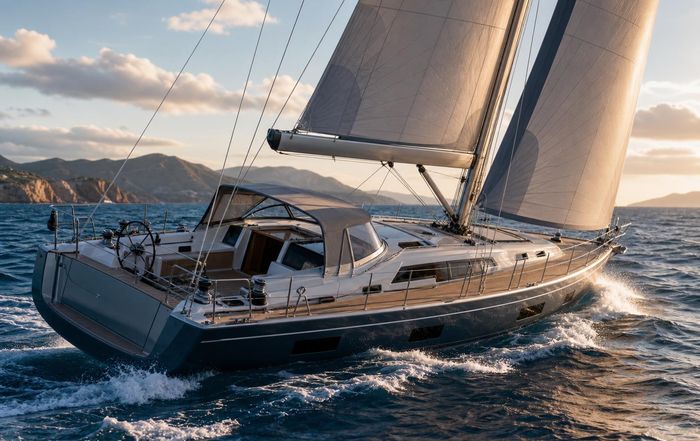
Essential Features of a Modern Offshore Cruiser
Modern offshore cruising yachts sit at the intersection of engineering discipline, seafaring tradition and lifestyle aspiration. For owners and crews who regularly follow World Cruising Club routes across the Atlantic, explore high latitudes or undertake extended independent voyages, the choice of vessel is no longer only about length and aesthetics; it is increasingly about resilience, safety, efficiency and the ability to live comfortably at sea for weeks at a time. From our perspective around developments across bluewater design, systems and cruising practice, the contemporary offshore cruiser has evolved into a highly specialized platform that must reconcile ocean-going robustness with the expectations of a discerning global clientele.
This feature page examines the essential features that define a modern offshore cruiser today, drawing on current best practice in naval architecture, materials, onboard systems, sustainability and safety. It also considers how changing owner expectations and technological advances are reshaping what serious sailors now regard as "non-negotiable" for bluewater passage-making.
Defining the Modern Offshore Cruiser
An offshore cruiser is typically understood as a sailing yacht purpose-built for extended passages beyond coastal waters, capable of safely crossing oceans with a small crew while carrying sufficient stores, fuel and water for self-reliant operation. While there is no universal size threshold, many contemporary designs in this category range from around 40 to 60 feet, where a balance can be struck between manageable sail plans, habitable volume and the capacity for redundancy in critical systems.
Organizations such as World Sailing and national bodies including the Royal Yachting Association provide offshore safety guidelines and training frameworks that indirectly influence design expectations, from watertight bulkheads and stability standards to emergency gear stowage and communication equipment. At the same time, leading yards and designers respond to the demands of an international clientele that increasingly treat their offshore cruiser as both expedition platform and mobile residence, a trend that has become evident in recent launches from builders such as Oyster Yachts, Hallberg-Rassy, Amel, Boreal, Contest Yachts and Garcia Yachts, among others.
For readers of yacht-review.com, who follow our detailed cruising coverage and bluewater reviews, the offshore cruiser is less a single template than a set of priorities: safety in heavy weather, predictable handling, ease of operation for a small crew, robust construction, and a layout that supports both long passages and extended stays at anchor.
Hull, Structure and Seaworthiness
The foundation of any serious offshore cruiser is its hull form and structural integrity. While racing yachts have trended towards ever lighter displacement and aggressive appendages, bluewater cruisers have evolved more cautiously, incorporating modern materials but retaining conservative safety margins.
Many of the most respected offshore designs employ moderate displacement hulls with relatively full sections forward to reduce slamming, combined with sufficient beam carried aft to provide form stability without compromising motion comfort. Designers such as Frers Naval Architecture, Berret-Racoupeau and Johan Anker's successors at Hallberg-Rassy have consistently emphasized balanced hulls that track well and remain controllable in strong conditions. Modern offshore cruisers frequently feature deeper, efficient fin keels with substantial ballast ratios, sometimes in combination with a skeg-hung or semi-balanced rudder for directional stability and protection. High-latitude expedition yachts from builders like Garcia and Boreal may favor aluminum construction with integral centerboards or lifting keels, trading some simplicity for shoal-draft versatility and improved access to remote anchorages.
Structural considerations have also evolved. According to guidance from classification societies such as DNV and Lloyd's Register, offshore vessels benefit from localized reinforcement in areas prone to impact or cyclical loading, including chainplates, keel attachments and rudder stocks. Many modern cruisers integrate structural grids, crash bulkheads and watertight compartments, features that, while not always mandated, are increasingly appreciated by experienced owners. Those who follow our design analyses will recognize a consistent trend towards conservative engineering hidden beneath sleek superstructures and modern deck layouts.
Deck Layout and Sail Handling for a Small Crew
A defining characteristic of the contemporary offshore cruiser is the ability for a couple or small crew to manage the yacht safely in a wide range of conditions. This requirement has driven the widespread adoption of powerful yet controllable sail-handling systems, ergonomic deck layouts and protected working areas.
Many bluewater designs now favor cutter rigs or sloop rigs with furling headsails and in-mast or in-boom furling mainsails, allowing reefing and sail changes from the safety of the cockpit. Electric or hydraulic primary winches, self-tailing secondary winches and well-placed rope clutches reduce the physical strain on crew and help maintain order in heavy weather. Walkthrough cockpits with high coamings, deep seating and robust dodgers or hard biminis provide shelter and security, while center cockpit configurations remain popular among yards such as Oyster and Hallberg-Rassy for their separation of working and living areas and enhanced sense of protection.
The offshore cruiser's deck plan is increasingly seen as a safety system in its own right. Clear side decks, secure handholds, jackline attachment points and non-slip surfaces are treated as core design elements rather than afterthoughts. The American Boat and Yacht Council (ABYC) and ISO standards for deck hardware and lifeline strength have become widely referenced benchmarks, encouraging builders to adopt fittings and layouts capable of withstanding offshore loads. Owners contemplating extended passages, as reflected in our boat review section, often prioritize these practical details above purely aesthetic considerations.
Rig, Stability and Performance Underway
While safety and comfort are paramount, performance remains central to offshore cruising. A yacht that can make consistent daily runs with a comfortable motion not only shortens passage times but also reduces exposure to adverse weather systems. Modern offshore cruisers therefore aim for a blend of moderate sail area, efficient foil design and controllable power.
High-aspect rigs with efficient sail plans, combined with advances in sailcloth technology such as low-stretch laminates and high-modulus fibers, allow cruisers to carry manageable yet powerful sail areas. Many bluewater sailors now opt for multiple headsails, including staysails or inner jibs on furlers and downwind sails such as asymmetric spinnakers or code sails, to maintain speed in light to moderate conditions without excessive sail changes. Stability curves and righting moments, often discussed in professional resources like Practical Boat Owner and Yachting World, have become key decision factors for buyers evaluating offshore designs, with particular attention paid to AVS (angle of vanishing stability) and dynamic behavior in waves rather than static numbers alone.
Performance predictions are increasingly validated by real-world data, as owners and builders share passage logs and polars; this aligns with the analytical approach that yacht-review.com applies in its independent reviews, where hull efficiency, upwind ability and downwind control are examined from both technical and experiential perspectives. The essential point is that a modern offshore cruiser must be fast enough to be safe, yet forgiving enough to remain manageable when conditions deteriorate.
Power, Energy Management and Systems Redundancy
Long-range independence depends heavily on reliable power generation, storage and distribution. Where older cruisers often relied on a single diesel engine and limited battery banks, current offshore yachts are increasingly conceived as multi-source energy systems with built-in redundancy.
Diesel propulsion remains the backbone of most bluewater cruisers, with well-proven marine engines from manufacturers such as Yanmar and Volvo Penta widely adopted. However, the integration of large alternators, efficient battery chargers and high-capacity lithium or AGM battery banks has transformed onboard energy profiles. Many owners now specify solar arrays integrated into biminis or hardtops, wind generators and, in some cases, hydrogenerators, allowing for sustained operation of autopilots, navigation electronics, refrigeration and communication systems without constant engine use. Publications like Cruising World and Sail Magazine have documented the growing trend towards hybrid energy systems and the careful management of loads, including induction cooking and high-capacity watermakers, which were once considered luxuries but are now common on larger offshore cruisers.
Redundancy is a core theme. Dual fuel filters, parallel freshwater pumps, backup autopilots, separate navigation systems and independent communication channels such as satellite phones and devices using networks like Iridium or Starlink are increasingly viewed as essential rather than optional. From the perspective of bluewater business analysis on our technology channel, this has driven a robust aftermarket for marine electronics, power management solutions and monitoring platforms that give owners real-time oversight of critical systems, even when away from the vessel.
Interior Design: Comfort, Safety and Liveability
The interior of a modern offshore cruiser must reconcile two sometimes competing imperatives: seagoing practicality and residential comfort. Unlike purely performance-oriented yachts, offshore cruisers are expected to serve as homes for months or even years, accommodating work, family life and extended guest stays while still allowing safe movement and operation at sea.
Contemporary bluewater interiors often feature secure sea berths with lee cloths, U-shaped galleys positioned near the companionway for reduced motion, and well-placed handholds and fiddles throughout. At the same time, designers have embraced larger windows, lighter woods and contemporary styling to create bright, open spaces that appeal to a global clientele. Renowned yards such as Oyster, Contest and Amel have demonstrated that it is possible to combine generous owner's suites, dedicated workspaces and comfortable saloons with sensible stowage, watertight bulkheads and practical machinery access.
Ventilation and climate control have gained prominence as owners explore both tropical and high-latitude cruising grounds. Effective dorade vents, opening hatches, insulated hulls and optional heating or air-conditioning systems are now common, supported by the more capable energy systems described earlier. For readers interested in the broader lifestyle implications of living aboard, our lifestyle coverage explores how these design choices affect daily life, from work-from-boat routines to onboard hospitality and wellness at sea.
Navigation, Electronics and Digital Integration
The digital revolution has transformed navigation and situational awareness on offshore cruisers. Where paper charts and standalone GPS units once dominated, modern yachts now carry integrated navigation suites combining chartplotters, AIS transceivers, radar, depth and wind instruments, and sometimes forward-looking sonar. Leading marine electronics brands such as Garmin, Raymarine, B&G and Furuno have developed sophisticated systems that merge data into coherent, user-friendly interfaces, often accessible via tablets and smartphones throughout the vessel.
Electronic charting, when used in conjunction with official hydrographic data from agencies such as the UK Hydrographic Office and the National Oceanic and Atmospheric Administration (NOAA), has become the primary navigation method for many offshore sailors, although prudent mariners still maintain paper backups and traditional skills. Integration with autopilot systems allows for efficient route-following and sail trim optimization, while AIS and radar enhance collision avoidance in busy shipping lanes and poor visibility.
Connectivity at sea has also evolved dramatically. Satellite communication, once the preserve of large yachts, has become more accessible, enabling weather routing services, telemedicine support and continuous contact with shore-based teams or family. Companies like PredictWind and MaxSea offer advanced weather routing and performance analysis tools that serious cruisers increasingly rely on when planning ocean passages. From a business and technology standpoint, which we examine on our business pages, this connectivity is reshaping expectations around remote work, distance learning and vessel management, making offshore cruising a more viable lifestyle for professionals and families.
Safety, Emergency Preparedness and Regulatory Frameworks
Safety remains the non-negotiable core of offshore cruising, and modern yachts are designed and equipped with a more systematic approach to risk than in the past. Compliance with international and national standards, such as World Sailing Offshore Special Regulations, SOLAS requirements for certain equipment categories and guidelines from organizations like the US Coast Guard, informs both construction and outfitting decisions.
Essential safety features today include robust liferafts sized for the full complement of crew, EPIRBs registered with national authorities, AIS man-overboard devices, grab bags with emergency supplies, and comprehensive medical kits tailored to long-range voyaging. Many bluewater sailors also carry drogue or sea anchor systems to manage extreme weather, while some high-latitude cruisers invest in additional survival gear such as immersion suits and storm boards. Training organizations, including the RYA and US Sailing, emphasize the importance of regular safety drills, crew briefings and realistic emergency planning, which complements the physical attributes of the yacht.
From our position which covers offshore safety considerations alongside global cruising developments, an essential feature of the modern offshore cruiser is not merely a checklist of equipment but a design philosophy that supports safe operation: clear emergency exits, accessible seacocks, logically organized electrical panels, and documentation that allows both owners and service professionals to understand and maintain complex systems over time.
Sustainability and Environmental Responsibility
Sustainability has become a defining theme in the broader marine industry, and offshore cruisers are at the forefront of this shift. Many owners who undertake long-range voyages develop a heightened awareness of their environmental footprint, and builders are responding with more efficient hulls, cleaner propulsion options and environmentally conscious materials.
Efforts to reduce emissions and fuel consumption include optimized hull forms, efficient diesel engines, hybrid propulsion systems and increased reliance on renewable energy sources such as solar and wind. Some yards are experimenting with alternative materials, improved insulation and low-VOC finishes, while others are focusing on modular construction and life-cycle analysis to reduce waste. Organizations like the Water Revolution Foundation and initiatives such as the SeaKeepers Society highlight best practices and research in sustainable yachting, encouraging owners and builders alike to adopt cleaner technologies and behaviors.
Onboard, many offshore cruisers now incorporate advanced wastewater treatment, careful greywater management and responsible waste handling, particularly important when visiting sensitive ecosystems. For readers interested in the intersection of bluewater cruising and environmental stewardship, our sustainability section explores how yacht owners can align their cruising ambitions with a responsible approach to the oceans they traverse. Learn more about sustainable business practices through resources such as the UN Global Compact, which provides frameworks for integrating environmental and social responsibility into corporate and personal decision-making, including in the maritime sector.
Lifestyle, Travel and the Human Dimension
Beyond the technical features, the modern offshore cruiser is ultimately a vehicle for experience: exploration, family connection, personal challenge and cultural discovery. The rise of bluewater rally circuits, from the ARC to circumnavigation events, reflects a growing community of owners who view their yachts as platforms for global travel and cross-cultural engagement. Destinations ranging from the Caribbean and Pacific atolls to the fjords of Norway and the remote anchorages of Patagonia are now regularly visited by well-prepared cruising yachts, supported by improved information, satellite forecasting and digital cruising guides.
This lifestyle dimension has influenced design priorities. Many offshore cruisers now feature flexible accommodation layouts that can serve both family and occasional charter use, dedicated storage for diving, paddle sports and exploration gear, and onboard spaces designed for remote work and education. Our travel coverage frequently highlights how thoughtful onboard design-ample storage, comfortable communal areas, reliable communication systems-enhances not only safety but also the quality of life during extended voyages.
The human factor also extends to community. Online and in-person networks of bluewater sailors share technical knowledge, local insights and mutual assistance, reinforcing a culture of preparedness and continuous learning. This collaborative environment has accelerated the spread of best practices in areas such as rig maintenance, storm tactics and medical readiness, which in turn influence what owners demand from new offshore cruiser designs and refits.
The Business of Offshore Cruising Yachts
From a business perspective, the offshore cruising segment has become a distinct and influential niche within the global yachting market. While not as visible as the superyacht sector, it commands a loyal and well-informed customer base that often invests heavily in quality, customization and long-term durability. Builders in Europe, North America and increasingly Asia have responded with product lines specifically targeted at bluewater sailors, emphasizing semi-custom options, robust after-sales support and refit services.
Market analyses from maritime industry observers and financial publications such as the Financial Times and The Economist have noted the resilience of the premium yacht segment, even amid broader economic fluctuations, supported by a clientele that values experiential assets and global mobility. Offshore cruisers, in particular, appeal to owners seeking both autonomy and a tangible connection to the natural world, a trend that intensified as many people reassessed lifestyle priorities in recent years.
Our news coverage tracks how these market dynamics influence product development, from the launch of new bluewater models to investments in sustainable technologies and service infrastructure. The essential features described in this article are not static; they evolve as builders compete to offer safer, more efficient and more comfortable platforms for a growing community of serious cruisers.
Conclusion: An Integrated Vision of the Offshore Cruiser
The essential features of a modern offshore cruiser cannot be reduced to a simple checklist. Instead, they represent an integrated vision in which hull design, rig, systems, interior layout, safety equipment, sustainability measures and lifestyle considerations all reinforce one another to create a vessel capable of carrying its crew safely and comfortably across oceans.
From robust hull structures and conservative stability to efficient sail plans and redundant energy systems; from ergonomically secure decks and seagoing interiors to advanced navigation, connectivity and environmental responsibility, the contemporary offshore cruiser embodies a mature balance between tradition and innovation. For the global audience of yacht-review.com, which spans seasoned circumnavigators and aspiring bluewater families alike, these yachts are more than technical achievements; they are enablers of ambitious, responsible and deeply personal journeys.
As design philosophies continue to evolve and new technologies emerge, the core principles outlined here-seaworthiness, reliability, self-sufficiency and respect for the marine environment-remain the enduring benchmarks by which offshore cruisers will be judged. Owners and builders who align their decisions with these principles will be best positioned to navigate not only the world's oceans but also the rapidly changing landscape of modern yachting. For those seeking to explore this world further, the broader content here, from historical perspectives to community-focused features and event coverage, offers a continuing, in-depth companion to the evolving story of offshore cruising.