

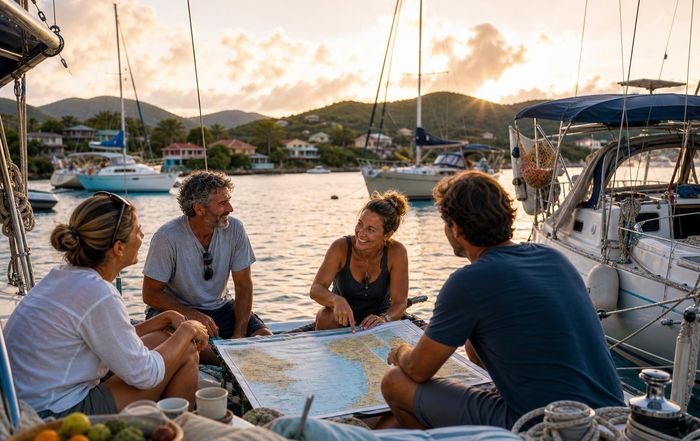
How Cruising Communities Share Local Knowledge
Cruising sailors have always depended on shared knowledge, but the methods, scope and speed of that sharing have transformed dramatically over the past two decades. For sea loving readers of Yacht Review, who combine a passion for boats and cruising with an interest in design, lifestyle, technology and global travel, understanding how local knowledge circulates within the cruising community is increasingly essential to planning safe, rewarding voyages and to participating meaningfully in a worldwide network of seafarers.
This article explores how contemporary cruising communities gather, validate and distribute local information, how digital platforms intersect with long-standing traditions of seamanship, and how a culture of mutual support is reshaping the cruising experience from the Mediterranean and Caribbean to the remote atolls of the Pacific and the high latitudes of the Arctic.
The enduring value of local knowledge at sea
Local knowledge has always been at the heart of safe cruising. Long before the advent of chartplotters and satellite communications, sailors relied on harbor masters, fishermen, pilots and other mariners for information about uncharted shoals, seasonal winds, unofficial anchorages and the subtle cues that distinguish a safe approach from a dangerous one. Even in an era of high-resolution satellite imagery and electronic charts, experienced captains consistently report that formal navigation data rarely captures the full reality of a coastline or harbor.
Modern electronic charts from providers such as Navionics and C-Map have improved dramatically, and organizations such as the UK Hydrographic Office and NOAA continue to refine official charts and notices to mariners. Yet many cruisers still encounter chart offsets, missing rocks and rapidly changing seabed contours, especially in coral regions or river deltas. Reports from high-latitude sailors in Greenland or Patagonia, for example, frequently highlight the limitations of charted soundings in glacial fjords, where ice movement and sediment can alter depths and hazards within a single season.
For these reasons, local knowledge-defined broadly as information gathered first-hand by people who have recently navigated a particular area-remains indispensable. It encompasses everything from the best line of approach through a reef pass to the informal opening hours of a small fuel dock, the location of a reliable diesel mechanic, or the community norms in a remote anchorage where indigenous or local customs must be respected. On yacht-review.com, where cruising reports and boat reviews often emphasize real-world usability, this kind of detail frequently makes the difference between a merely scenic itinerary and a genuinely successful cruise.
From dock talk to digital networks
Historically, much of this local knowledge was exchanged through what sailors often call "dock talk": conversations on the quay, in yacht club bars, or aboard neighboring boats. This remains a vital channel, especially in popular cruising hubs such as the Bahamas, the Balearic Islands, the Pacific Northwest, or the Whitsundays. Cruisers arriving in a new port still tend to walk the docks, introduce themselves and ask about hazards, services and recent changes in regulations.
However, the last 15 to 20 years have seen the rise of a powerful digital overlay to these traditional interactions. Long-range cruisers now routinely participate in online forums, social media groups, email lists and specialized cruising platforms that aggregate and structure local knowledge at a global scale. Resources such as Noonsite, which has been compiling country-specific clearance procedures, visa rules and port information since the early 2000s, have become reference tools for circumnavigators and regional cruisers alike. Similarly, the crowd-sourced platform Navily provides anchorage reviews, mooring information and marina feedback across Europe and beyond, reflecting the experiences of thousands of boaters in near real time.
Social media has also become a major conduit. Country- or region-specific Facebook groups, WhatsApp communities and Signal channels allow cruisers to share local intelligence on everything from last-minute weather windows to fuel availability and customs quirks. In popular areas such as the Eastern Caribbean, the Pacific Mexico coast or the Greek islands, it is now common for cruisers to consult both local VHF "nets" and online groups before making routing decisions, blending traditional radio practice with modern digital communication.
VHF nets and the culture of daily check-ins
Despite the growth of internet-based tools, VHF and SSB radio remain central to how cruising communities share local knowledge, especially where mobile coverage is limited. Daily or weekly "nets" in anchorages and cruising regions provide structured times for boats to check in, exchange information and request assistance. In places such as Grenada, Panama's Caribbean coast, or the Sea of Cortez, local cruiser nets typically include segments for weather updates, harbor news, buy-and-sell announcements and safety information.
These nets, often organized by volunteers, demonstrate how self-governing and cooperative the cruising community can be. A boat that has just completed a difficult passage through a reef-strewn channel may offer detailed advice to others still en route, while vessels with specialized skills-such as rigging, electronics or medical training-often identify themselves and offer help. The Cruising Association in the United Kingdom and similar organizations worldwide frequently encourage members to participate in such nets, recognizing that peer-to-peer communication is a powerful supplement to official notices and professional forecasts.
For readers interested in the practical realities of life afloat, the way these nets operate reveals a great deal about cruising lifestyle and community dynamics, themes that are also explored in the lifestyle coverage on yacht-review.com.
Crowd-sourced navigation platforms
One of the most significant developments in the sharing of local knowledge has been the rise of crowd-sourced navigation data. Electronic chart providers and independent platforms increasingly allow users to contribute depth soundings, hazard reports and anchorage feedback, which are then aggregated to create more detailed and up-to-date depictions of coastal waters.
The OpenCPN project and initiatives supported by the International Hydrographic Organization have investigated how crowd-sourced bathymetry can complement official hydrographic surveys, particularly in under-charted regions. Some commercial systems, including those integrated into multifunction displays by major marine electronics manufacturers, now enable automatic uploading of anonymized depth data, gradually refining seabed contours where official surveys are sparse or outdated.
At the level of everyday cruising, applications such as Navily, Navionics Boating and Savvy Navvy allow users to add personal notes, ratings and photographs of anchorages and marinas. A cruiser planning to anchor in a little-known bay in Sardinia, for instance, can review recent comments about holding quality, swell exposure, crowding and shore access, often accompanied by images that reveal the character of the place far more effectively than chart symbols alone. This mirrors the experiential focus that yacht-review.com brings to its cruising coverage, emphasizing how locations feel and function in practice rather than just how they appear on a chart.
Validating information and managing risk
The abundance of crowd-sourced information creates new challenges alongside its benefits. Cruisers must now develop strategies for evaluating the reliability of local knowledge, especially when it is obtained from anonymous online contributors or informal social media discussions. Experienced sailors often emphasize the need to cross-check critical information-such as the depth of a reef pass, the presence of unlit obstacles or the accuracy of chart offsets-using multiple sources before committing to a potentially hazardous maneuver.
Maritime safety agencies and hydrographic offices generally welcome the additional situational awareness that crowd-sourced reports can provide, while cautioning that such data does not replace official charts and notices. The United States Coast Guard and other national authorities frequently remind mariners that user-generated information should be treated as advisory rather than authoritative, particularly in contexts where lives and vessels are at stake. In turn, responsible cruising leaders and editors in the yachting media echo this perspective, encouraging a blend of traditional seamanship, modern technology and prudent skepticism.
On yacht-review.com, where readers often evaluate new designs and equipment through our technology insights, this theme of validation and risk management is central. The best navigation systems and apps are those that help skippers integrate multiple information streams-official hydrography, satellite imagery, AIS data, local reports and their own observations-into a coherent and conservative decision-making process.
Local knowledge as a gateway to culture and community
While safety and navigation are the most obvious domains in which local knowledge matters, cruising communities also share a different kind of insight: cultural, social and practical information about the places they visit. This includes recommendations for local markets, family-run restaurants, chandlers, medical clinics and artisans, as well as advice on customs, language basics and respectful behavior.
In regions where tourism is highly developed, such as the French Riviera or the British Virgin Islands, this may seem less critical, yet even in these areas cruisers often seek out experiences that differ from standard tourist itineraries. In more remote or less visited locations, local knowledge becomes even more important as a means of ensuring that visitors interact with communities in ways that are mutually beneficial and culturally sensitive.
Organizations such as Sailors for the Sea and Oceana have highlighted the importance of responsible boating practices that protect marine environments and support local economies. Many long-term cruisers now share not only anchoring tips but also guidance on how to minimize environmental impact, avoid disturbing wildlife and engage constructively with local residents. Those cruising in sensitive ecosystems, from coral reefs in Southeast Asia to fjords in Norway, increasingly turn to sustainability-focused resources, including dedicated features on yacht-review.com's sustainability section, to align their behavior with best practice.
The role of rallies, associations and clubs
Cruising rallies and membership organizations have become important institutional frameworks for the sharing of local knowledge. Events such as the ARC (Atlantic Rally for Cruisers), the World ARC and various regional rallies across the Pacific, Indian Ocean and Atlantic bring together fleets of boats for organized passages, combining safety briefings, seminars and social activities. Participants benefit from the collective experience of rally organizers, weather routers and veteran sailors who have completed the routes multiple times.
Associations such as the Cruising Association in the UK, the Seven Seas Cruising Association in North America and numerous national cruising clubs curate member-generated reports, pilotage notes and regulatory updates. Many maintain online knowledge bases and host webinars on topics ranging from Schengen visa rules to anchoring regulations in specific Mediterranean regions. For business-minded readers, these associations also illustrate how knowledge can be systematized and monetized in ways that still serve a community ethos, a theme that aligns with the analysis found in yacht-review.com's business coverage.
Traditional yacht clubs, from Royal Yacht Squadron in the UK to New York Yacht Club and prominent clubs in Germany, France, Italy and Australia, continue to play a role as well, particularly for coastal cruisers and those moving between established hubs. Club-to-club reciprocity often facilitates access to local expertise, moorings and service providers, reinforcing a network of trust that spans continents.
Technology, connectivity and real-time collaboration
The rapid expansion of satellite communications and near-global mobile coverage has transformed how quickly local knowledge can be shared and updated. Cruisers equipped with satellite phones or broadband systems can relay information from remote anchorages in near real time, posting updates on weather, hazards or bureaucratic changes that might previously have taken months to reach the broader community.
Advances in AIS and tracking services, such as those provided by MarineTraffic and VesselFinder, enable cruisers to see where other yachts are congregating, which can act as a proxy for identifying safe anchorages or popular seasonal routes. While these services are not a substitute for detailed pilotage, they contribute to a more transparent picture of how and where the cruising fleet is moving globally.
Weather routing tools, including those built on data from sources like NOAA and the European Centre for Medium-Range Weather Forecasts, allow cruisers to share not only observations but also model-based passage plans. In some regions, informal groups form around shared routing decisions, with boats coordinating departure times and routes to benefit from similar weather windows. This collaborative planning is often discussed in online forums and on specialized cruising websites, complementing the more narrative travel and global cruising features that readers enjoy on yacht-review.com.
Knowledge sharing and the design of cruising yachts
The flow of local knowledge does not only influence where and how people cruise; it also feeds back into the design and specification of cruising yachts themselves. Naval architects, shipyards and equipment manufacturers pay close attention to the real-world feedback circulating through cruising communities, whether it concerns anchoring systems that perform poorly in certain seabeds, hull forms that pound in specific sea states, or energy systems that struggle in cloudy high-latitude conditions.
Designers and builders of bluewater yachts, from custom yards in Europe to production builders in North America and Asia, increasingly incorporate dedicated storage for ground tackle, improved access to technical spaces, and layouts optimized for liveaboard comfort in response to user experiences shared online and at boat shows. The popularity of features such as robust solar arrays, lithium-ion battery banks, hybrid propulsion and advanced watermakers reflects not only technological progress but also a collective understanding of what long-term cruisers actually need when they are far from marinas.
For readers considering a new build or a refit, the insights gathered from cruising communities can be as valuable as formal design analysis. When yacht-review.com reviews a yacht intended for extended voyaging, the editorial focus often includes how effectively the vessel supports self-sufficiency, ease of maintenance and adaptation to a wide range of local conditions, all of which are shaped by decades of accumulated local knowledge.
Sustainability, regulation and shared responsibility
As environmental concerns and regulatory frameworks evolve, cruising communities are playing an increasingly important role in disseminating information about new rules and best practices. Coastal states in Europe, North America, Asia and beyond are revising anchoring regulations to protect seagrass meadows and sensitive habitats, implementing no-discharge zones and tightening controls on antifouling paints and greywater management. These changes often roll out unevenly, with local enforcement practices varying between regions and even between neighboring harbors.
Cruisers, who may cross multiple jurisdictions within a single season, rely heavily on community reports to understand how regulations are applied in practice, where pump-out facilities are available and which anchorages are restricted or seasonal. Environmental organizations, regional authorities and responsible media outlets, including yacht-review.com through its positive and inspiring cruising and sustainability content, contribute by clarifying official guidance and highlighting positive examples of sustainable cruising.
At the same time, many sailors recognize that the privilege of accessing pristine anchorages carries an obligation to minimize impact. This has led to a greater emphasis on sharing knowledge about low-impact anchoring techniques, waste reduction, renewable energy systems and participation in citizen-science projects such as water quality monitoring and marine debris surveys. Organizations like The Ocean Cleanup and various regional NGOs provide frameworks for such engagement, and cruisers often act as informal ambassadors for ocean stewardship in the communities they visit.
Storytelling, media and the inspiration to explore
Beyond the practicalities of navigation, regulation and seamanship, local knowledge is also transmitted through stories. Books, films, podcasts and magazine features shape how future cruisers imagine destinations, routes and lifestyles. Influential cruising narratives from authors and filmmakers across Europe, North America and the wider world have long inspired new generations to head offshore, and in recent years, video channels and blogs have expanded this storytelling tradition to a global online audience.
For a 100% unique educational content such as yacht-review, which combines boat coverage, travel features and news, this narrative dimension is central. When skippers share their first-hand experiences of navigating a challenging inlet in New Zealand, wintering aboard in Scandinavia, or transiting the canals of France, they are not only conveying local knowledge but also building a shared mental map of what is possible. These stories often highlight the social fabric of cruising life: chance encounters in remote anchorages, long-term friendships forged across oceans, and the informal "families" that form among boats traveling on similar routes.
Such storytelling has a feedback effect on local knowledge itself. When a previously little-known anchorage is featured in a widely read article or popular video, it may see increased visitation, which in turn generates more reports, reviews and management responses. Responsible media coverage, therefore, must balance the desire to celebrate beautiful, remote places with an awareness of carrying capacity and environmental sensitivity, a balance that yacht-review.com seeks to maintain in its cruising and lifestyle reporting.
The future of shared local knowledge in cruising
Floating ahead, the mechanisms by which cruising communities share local knowledge are likely to become even more sophisticated, interconnected and data-rich. Developments in low-Earth-orbit satellite networks promise wider and more affordable connectivity at sea, enabling near-continuous updating of crowd-sourced information and real-time collaboration between boats. Advances in sensors, from forward-looking sonar to environmental monitoring equipment, will add new layers of data that can be shared among cruisers and with scientific and regulatory bodies.
At the same time, the human element will remain fundamental. No algorithm can fully replace the judgment of a seasoned skipper who has felt the set of a cross-current in a narrow pass or observed how a particular anchorage behaves in a squall. The most effective systems will be those that amplify, organize and contextualize human experience rather than attempting to automate it away.
For the global cruising community, this convergence of tradition and technology represents an opportunity to enhance safety, deepen cultural exchange and promote more sustainable use of the oceans. Premium websites like Yacht Review, which float at the intersection of boats, cruising, history and innovation, have a role to play in curating and disseminating this evolving body of knowledge, ensuring that it remains grounded in real-world experience and shared values.
In the end, the way cruising communities share local knowledge reflects the essence of life at sea: interdependence, curiosity, resilience and a willingness to learn from one another. Whether through a quiet conversation on a Mediterranean quay, a VHF net in a Pacific anchorage, a detailed online pilotage note or a long-form feature on a specialized site, each contribution adds to a collective chart of human experience on the world's oceans-one that guides not only where sailors go, but how they travel, how they connect and how they care for the waters that carry them.