

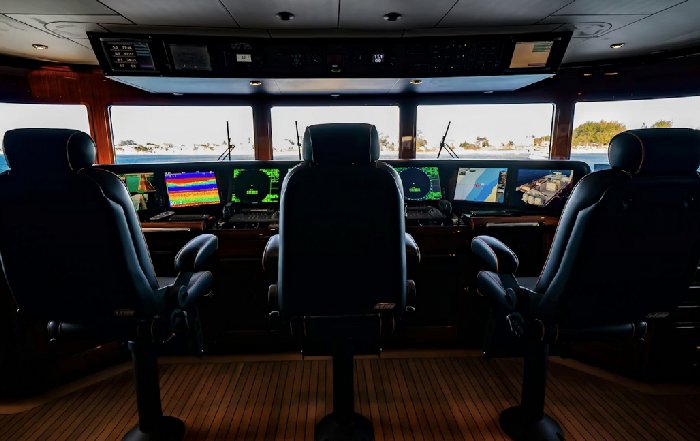
How Smart Systems Redefine Onboard Comfort
A New Era of Intelligent Comfort at Sea
Onboard comfort aboard luxury yachts has matured into a multidimensional concept in which digital intelligence, human-centric design, and global connectivity are inseparably intertwined, and this evolution is now central to how discerning owners and charter guests evaluate a vessel's true quality. Across North America, Europe, Asia, the Middle East, Africa, and South America, clients no longer regard technology as an optional enhancement but as the underlying fabric that determines how naturally, privately, and efficiently life unfolds at sea. Within this landscape, smart systems have become the invisible operating system of the yacht, orchestrating climate, lighting, entertainment, privacy, safety, and sustainability in ways that feel effortless to those on board yet demand substantial expertise behind the scenes.
For yacht-review.com, which has spent years examining the intersection of design, engineering, and lifestyle across its design, technology, and lifestyle coverage, this shift marks one of the most significant transformations since the rise of composite hulls and hybrid propulsion. Leading shipyards such as Feadship, Benetti, Lürssen, Sanlorenzo, Oceanco, and Heesen Yachts now present comfort not as a static specification but as a dynamic capability: the yacht learns, adapts, and refines itself over time, responding to the preferences of owners from the United States and Canada, to charter guests from the United Kingdom, Germany, France, Italy, Spain, the Netherlands, Switzerland, China, Singapore, and beyond. The result is a new benchmark in which the most successful yachts are judged as much by their digital fluency as by their hull form or interior craftsmanship, a reality that yacht-review.com documents through detailed reviews and in-depth technical features.
Unified Control as the Foundation of Guest Experience
Only a decade ago, even highly customized superyachts often relied on a fragmented array of control panels, each dedicated to a single function and frequently sourced from different vendors, forcing guests to rely on crew to operate relatively simple features. In 2026, the expectation is entirely different. Integrated control platforms from companies such as Crestron, Lutron, and Control4, together with marine-focused integrators, now consolidate lighting, climate, blinds, audiovisual systems, and privacy features into unified interfaces accessible through dedicated touchscreens, smartphones, and voice assistants. The complexity is still there, but it has been pushed behind a layer of carefully designed simplicity.
For a guest flying in from New York, London, Singapore, Sydney, Dubai, the experience of boarding a well-configured yacht now feels immediately familiar. A single screen or app offers contextual scenes such as "Morning Swim," "Business Call," or "Evening Cruise," each triggering a cascade of adjustments to lighting levels, air temperature, acoustic settings, and media sources. On yacht-review.com, where readers compare yachts across the boats and cruising sections, this degree of integration has become a key differentiator, especially for owners who value independence and wish to minimize crew intrusion in private areas without sacrificing service quality elsewhere.
Behind the polished interface, marine-grade Ethernet backbones, redundant controllers, and standardized communication protocols-shaped in part by work from the International Electrotechnical Commission and industry guidance aligned with organizations such as ASHRAE-ensure that these systems remain reliable in the harsh marine environment. In practice, this means that an owner can transition from the Norwegian fjords to the South Pacific or from the Caribbean to the Mediterranean with the assurance that the yacht's core comfort systems will behave consistently, even as external conditions, shore power standards, and connectivity options change dramatically. This underlying resilience is increasingly recognized by investors and family offices who study the operational dimension of yachting through the business coverage at yacht-review.com, where total lifecycle value is weighed alongside initial build cost.
Intelligent Climate Management in a Volatile Climate
As climate patterns become more volatile and yachts venture further afield-from polar cruising in Norway, Greenland, and Antarctica to tropical itineraries in Thailand, Indonesia, and the South Pacific-climate control has emerged as a critical test of onboard intelligence. Modern HVAC systems, developed in partnership with marine engineering specialists and informed by classification societies such as DNV and ABS, now combine dense sensor networks, zoned distribution, and predictive algorithms to maintain stable, individualized comfort while minimizing energy consumption and noise.
Each cabin and living area effectively functions as its own microclimate. Guests from Canada, Germany, South Korea, or Brazil, each accustomed to different ambient conditions, can fine-tune temperature, humidity, and airflow without affecting adjacent spaces. Smart thermostats and occupancy sensors detect presence, adapt settings in real time, and reduce output when areas are unoccupied, thereby lowering fuel burn and extending the range of hybrid or battery-assisted propulsion systems. This targeted efficiency is not merely a technical triumph; it directly affects the operating profile of the yacht, a consideration that resonates strongly with the readership of yacht-review.com, particularly those who follow long-range projects and operating economics in the business and global sections.
The integration of environmental data has also become more sophisticated. Weather intelligence from organizations like NOAA in the United States and Météo-France in Europe can be fed into onboard control systems, allowing the yacht to anticipate significant temperature or humidity changes as it approaches new regions. Smart glazing, electrochromic windows, and automated blinds work in concert with the HVAC plant to manage solar gain, especially in sun-intensive areas such as the Mediterranean, Caribbean, and Australian east coast. For owners and captains planning extended passages, this interplay between predictive data, smart hardware, and system intelligence is increasingly viewed as essential to achieving hotel-level comfort throughout a demanding itinerary, a topic explored regularly in the cruising analysis on yacht-review.com.
Human-Centric Lighting and Acoustic Wellbeing
Lighting has moved decisively from being a purely aesthetic consideration to a core component of health and wellbeing on board. In 2026, human-centric lighting systems draw on circadian research from institutions such as Harvard Medical School and guidelines from the Illuminating Engineering Society, enabling designers to create schemes that support natural sleep cycles, reduce fatigue, and improve mood. On a modern yacht, the color temperature and intensity of lighting can subtly shift throughout the day, mirroring the progression of natural daylight and helping guests adjust to time zone changes when cruising between North America, Europe, Asia, and Oceania.
In practice, this may mean cooler, more energizing light in breakfast areas and gyms in the morning, balanced neutral light for workspaces and salons during the day, and warmer, softer tones in cabins and lounges as evening approaches. Smart control systems coordinate indirect cove lighting, spotlights, reading lamps, and exterior deck illumination to create cohesive scenes that enhance both safety and ambiance. Through the lens of design, yacht-review.com has observed a growing demand from owners in Italy, France, the United Kingdom, and the Netherlands for bespoke lighting narratives that reflect personal taste while quietly supporting physical comfort and mental clarity.
Acoustic comfort has followed a similar trajectory, moving beyond simple noise reduction to embrace intelligent sound management. Advances in hull design, isolation mounts, and hybrid propulsion have already reduced mechanical noise, particularly on yachts built for high-latitude or expedition cruising. Building on this foundation, smart audio systems from brands such as Bang & Olufsen, Bowers & Wilkins, and Sonos now employ room correction algorithms, adaptive equalization, and precise zoning to deliver tailored soundscapes. The system may automatically adjust volume in response to ambient noise from wind or sea state, or re-balance frequencies to suit the materials and geometry of each space.
For families, multi-generational groups, and corporate charters-a demographic that features prominently in the family and lifestyle content on yacht-review.com-this means that children can sleep undisturbed in lower deck cabins while adults enjoy late-night entertainment in the sky lounge, or that a quiet library can coexist with a high-energy gym on the same deck. The result is a subtler, more holistic form of comfort that recognizes sound as a fundamental part of the onboard environment, not merely an accessory to entertainment.
Data-Driven Personalization and Discreet Hospitality
Perhaps the most visible manifestation of smart systems for guests is the degree of personalization they now encounter on board. Modern yachts increasingly maintain encrypted preference profiles for owners and repeat charter guests, capturing details such as favored cabin temperature, lighting scenes, music playlists, preferred streaming platforms, dietary requirements, and even habitual wake-up times. When a guest steps back on board in Monaco, Miami, Dubai, Phuket, or Auckland, the yacht can quietly reconfigure their cabin and favorite spaces to align with their established profile, creating a sense of continuity that rivals the best private residences.
This approach is informed by broader hospitality trends documented by consulting firms such as McKinsey & Company and Deloitte, which have shown that data-enabled personalization significantly enhances guest satisfaction and loyalty. On board, the impact is tangible: a returning guest may find their cabin already set to their ideal temperature, their preferred news channels preselected, and their favorite beverages stocked without needing to repeat requests. For captains and management companies, this intelligence also supports more accurate provisioning and crew planning, allowing them to anticipate service demands while maintaining the discretion that high-net-worth clients in the United States, United Kingdom, Middle East, and Asia expect.
From the perspective of yacht-review.com, which regularly examines these trends in its global and travel sections, the most successful implementations are those that keep the human element firmly in the foreground. Smart systems are most appreciated when they enhance, rather than replace, the intuitive service of an experienced crew, freeing stewards and chefs to focus on creativity and personal interaction rather than repetitive tasks. This balance between automation and human hospitality is rapidly becoming a marker of maturity in yacht operations, and it is reshaping how the market evaluates crew training, management structures, and long-term asset positioning.
Connectivity, Work-From-Sea, and the Always-On Lifestyle
In 2026, the definition of comfort for many owners and charter guests includes the ability to work seamlessly from sea, maintain global business interests, and stay connected to family and social networks without compromise. The rapid deployment of low-Earth-orbit satellite constellations by providers such as Starlink and OneWeb has transformed connectivity expectations, making high-bandwidth internet increasingly available in regions that were previously challenging, from high-latitude expedition routes to remote Pacific atolls.
Onboard network management systems now act as intelligent traffic controllers, prioritizing business-critical traffic, allocating bandwidth between owner, guest, and crew networks, and enforcing cybersecurity policies aligned with best practices promoted by organizations such as the National Institute of Standards and Technology and ENISA. For owners running complex enterprises from Zurich, New York, London, Singapore, or Hong Kong, this capability has become a non-negotiable requirement, directly influencing build and refit decisions, a reality reflected in the business reporting on yacht-review.com, where the convergence of corporate needs and leisure expectations is a recurring theme.
Entertainment has evolved in parallel. Smart media servers, cloud-based libraries, and region-aware streaming platforms ensure that guests from Germany, Japan, Brazil, South Africa, or Australia can access familiar content wherever they cruise. Personalized profiles, voice-activated controls, and synchronized multi-room playback create an entertainment environment that adapts to the occasion, whether hosting a corporate presentation, family movie night, or late-night party. Emerging applications such as virtual reality experiences, immersive gaming, and interactive fitness platforms are beginning to appear on the most forward-thinking yachts, hinting at a future in which the boundary between digital and physical leisure is increasingly fluid. For a global audience following these developments through yacht-review.com, connectivity is no longer just about checking email; it is a core ingredient of lifestyle, productivity, and pleasure at sea.
Safety, Security, and Psychological Comfort
True comfort at sea is inseparable from the sense of safety and security that underpins every voyage, and in this domain smart systems are now playing a decisive role. Integrated security platforms bring together CCTV, access control, intrusion detection, and cyber monitoring into a single situational awareness environment, allowing captains and security officers to respond rapidly to anomalies while maintaining a relaxed, low-profile atmosphere for guests. This is particularly important for high-profile owners and charter clients from the United States, United Kingdom, Switzerland, South Africa, and the Middle East, who expect robust protection without the visual cues of overt security.
Biometric access controls, encrypted credentials, and geofencing technologies enable precise management of who can enter specific areas and when, drawing on methodologies refined in corporate security and luxury real estate, where organizations such as ASIS International and the SANS Institute contribute to best-practice frameworks. In parallel, smart safety systems extend to fire detection, flood monitoring, and damage control, with distributed sensors feeding real-time data to central control software that can automatically close watertight doors, adjust ventilation, and trigger alarms or suppression systems as needed.
Moreover, integration with navigation, weather, and stability data allows systems to anticipate hazardous conditions, automatically securing exterior doors, hatches, and tenders in heavy seas or storms. For readers of yacht-review.com who follow technical developments in the technology section, this convergence of operational safety and comfort is increasingly recognized as a decisive factor in long-range and expedition yacht design. The psychological reassurance that comes from knowing that the yacht is continuously monitoring its own integrity and surroundings contributes directly to the perception of comfort, particularly for families and less experienced guests.
Sustainability and the Ethics of Comfortable Cruising
Environmental responsibility has moved from the periphery to the center of yacht ownership and charter, particularly in regions such as Scandinavia, the Netherlands, Germany, New Zealand, and parts of North America where regulatory and social expectations are rapidly intensifying. Smart systems are now essential to reconciling high comfort standards with reduced environmental impact, and they are reshaping what affluent clients consider to be "responsible luxury." Energy management platforms monitor generator loads, battery state of charge, shore power quality, and renewable inputs such as solar, optimizing the operation of propulsion, hotel loads, and auxiliary systems in real time.
Hybrid and fully electric propulsion solutions, guided by intelligent control algorithms, allow yachts to cruise silently in sensitive marine areas, reducing both emissions and acoustic disturbance. Waste management, water production, and HVAC systems are increasingly integrated into holistic sustainability strategies designed in alignment with guidelines from the International Maritime Organization and supported by initiatives such as the Water Revolution Foundation, which promotes measurable reductions in environmental footprint across the superyacht sector. For readers seeking broader context on these trends, global institutions such as the World Economic Forum and the United Nations Environment Programme provide in-depth resources that complement the dedicated sustainability reporting on yacht-review.com, where the economic, regulatory, and reputational aspects of sustainable yachting are examined in detail.
From a comfort perspective, these technologies offer more than ethical reassurance. Reduced generator runtime lowers vibration and noise, improved air filtration enhances onboard air quality, and advanced hull and propulsion design often leads to smoother, more stable passages. Guests cruising in fragile ecosystems-from the Galápagos and Arctic to Southeast Asian marine parks and South Pacific archipelagos-increasingly expect the yacht to embody best environmental practice, and they view intelligent, efficient systems as a hallmark of modern luxury rather than a concession. This alignment of comfort, ethics, and technology is becoming a defining narrative across the global readership of yacht-review.com, influencing not only newbuild specifications but also refit priorities and charter selection criteria.
Cultural Expectations, Regional Nuances, and Design Expression
Although smart comfort systems are becoming a global standard, their expression and emphasis vary markedly across regions and cultures, and this diversity is now a key theme in how yacht-review.com approaches its history, global, and lifestyle stories. In North America and much of Western Europe, where smart homes and connected devices are well established, owners often arrive at a newbuild project with clear expectations about interface design, integration with personal ecosystems, and remote access to onboard systems. They may prioritize seamless synchronization with cloud services, security cameras, and home automation platforms, expecting the yacht to function as an extension of their digital life.
In highly digitized markets such as South Korea, Japan, Singapore, and parts of China, the appetite for cutting-edge technology is often even more pronounced, with interest in multi-language voice control, AI-driven virtual assistants, and advanced analytics that optimize everything from route planning to wellness routines. Conversely, in traditional yachting heartlands such as Italy, France, Spain, and the United Kingdom, many owners maintain a strong focus on craftsmanship, materiality, and aesthetic continuity, preferring that technology remain visually discreet and subordinate to the interior design narrative. For designers and integrators, this creates the challenge of embedding sophisticated sensors, interfaces, and actuators invisibly within bespoke joinery, stonework, and soft furnishings, ensuring that the yacht feels timeless even as its underlying systems are state-of-the-art.
Emerging markets in Africa, South America, Southeast Asia, and parts of Eastern Europe add further complexity, as infrastructure, regulatory environments, and local service capabilities can shape decisions about which technologies to adopt and how they are supported. Nevertheless, as more yachts are delivered to clients in South Africa, Brazil, Thailand, Malaysia, and other growing markets, and as remote diagnostics and over-the-air updates become standard, the baseline expectation for smart comfort continues to rise globally. For yacht-review.com, whose audience spans continents and cultures, documenting these nuances is essential to providing relevant, authoritative guidance, whether through reviews of individual yachts or broader analyses of regional trends.
Events, Community, and the Next Wave of Smart Comfort
Major industry events such as the Monaco Yacht Show, Fort Lauderdale International Boat Show, Boot Düsseldorf, and the Singapore Yacht Show have become pivotal stages for showcasing the latest advances in smart comfort, from AI-enhanced automation platforms to immersive entertainment environments and next-generation sustainable propulsion. Demonstrations at these shows increasingly focus on the lived experience of owners and guests rather than raw technical specifications, reflecting a market that evaluates technology through the lens of comfort, wellness, and lifestyle. Through its events and news coverage, yacht-review.com provides readers with curated insights from these gatherings, connecting product announcements and prototype reveals to the practical realities of ownership, charter, and long-range cruising.
At the same time, a more collaborative community is emerging around smart systems in yachting. Captains, engineers, designers, shipyards, and technology providers are engaging more actively through professional associations, online forums, and cross-industry initiatives, sharing lessons on interface design, cybersecurity, crew training, and long-term maintenance. The community section of yacht-review.com increasingly reflects this dialogue, highlighting case studies where owners, crews, and yards have worked together to refine the balance between automation and human service, or to retrofit legacy vessels with modern smart capabilities without compromising their character.
Looking ahead, advances in artificial intelligence, edge computing, and sensor miniaturization point toward a future in which yachts will exhibit even more anticipatory behavior, adjusting itineraries based on real-time port congestion and weather, optimizing onboard energy flows in response to dynamic pricing of shore power, or proposing wellness routines tailored to each guest's biometric data. At the same time, the industry will need to address important questions around data governance, digital fatigue, and the preservation of the uniquely analog pleasures of life at sea-sunsets on deck, quiet anchorages, and unmediated social interaction. For yacht-review.com, whose mission is to help readers navigate both the opportunities and trade-offs of modern yachting, this tension between ever-greater intelligence and the desire for simplicity will be a central editorial theme in the years ahead.
Smart Systems as the Quiet Architects of Contemporary Luxury
By 2026, smart systems have firmly established themselves as the quiet architects of onboard comfort, shaping the yachting experience in ways that are profound yet, when executed well, almost invisible. Integrated control platforms, intelligent climate management, human-centric lighting, acoustic optimization, personalized hospitality, robust connectivity, advanced safety, and sustainability-focused energy management now operate together as an ecosystem that supports the diverse needs of owners and guests across continents and cultures. For a global clientele stretching from the United States, Canada, and the United Kingdom to Germany, France, Italy, Spain, the Netherlands, Switzerland, China, Singapore, Japan, South Korea, Australia, New Zealand, South Africa, Brazil, and beyond, the expectation is clear: a contemporary yacht must be not only beautiful and seaworthy but also perceptive, responsive, and ethically aligned with modern values.
Within this context, yacht-review.com has taken on a distinct role as an independent, expert voice that connects technology with real-world experience. Across its coverage of boats, cruising, lifestyle, and technology, the publication consistently emphasizes Experience, Expertise, Authoritativeness, and Trustworthiness, helping readers distinguish between transient trends and durable innovations. As smart systems continue to evolve, the yachts that stand out will be those where intelligence is not an end in itself but a means to make every moment on board feel intuitively, personally right-whether that moment is a quiet family breakfast at anchor, a high-stakes video conference mid-Atlantic, or a silent glide through a protected marine reserve.
In that sense, the true luxury of 2026 is not defined solely by rare materials or imposing dimensions, but by the seamless, almost imperceptible way in which a yacht's intelligent systems anticipate needs, respect privacy, enhance wellbeing, and support responsible enjoyment of the world's oceans. It is this convergence of comfort, technology, and conscience that yacht-review.com will continue to explore, analyze, and, where necessary, challenge, ensuring that its global audience remains at the forefront of what it means to feel genuinely comfortable at sea in an increasingly connected world.