

How to Create a Comfortable Yacht Guest Cabin
Designing a genuinely comfortable guest cabin on a yacht is far more complex than simply scaling down a shoreside bedroom. Space is constrained, systems are integrated into every surface, safety regulations shape layout, and guests often arrive with expectations formed by luxury hotels rather than by the realities of life at sea. Yet, when executed well, a guest cabin can become a quiet sanctuary that enhances the entire onboard experience and reflects the owner's values, taste and hospitality.
For the expert boating and sailing team here, which regularly examines how design decisions translate into real-world comfort at sea, the guest cabin is one of the clearest indicators of a yacht's overall quality. Observing current practice from leading shipyards, naval architects and interior designers, and cross-checking with recent refit trends and charter feedback, several principles emerge that can guide owners, captains and project managers who want to elevate their guest spaces without compromising practicality or safety.
Understanding the Guest Cabin's Role Onboard
On contemporary yachts, particularly in the 24-60 metre segment, guest cabins are no longer viewed as secondary spaces; they are core elements of the onboard experience. Charter clients in particular increasingly expect that every cabin, not just the master suite, offers hotel-level comfort, privacy and technology integration. This shift is reflected in new-build projects from European yards such as Feadship, Benetti, Heesen Yachts and Sanlorenzo, where guest accommodation layouts now receive as much design attention as saloons and beach clubs.
Industry reports from organizations such as Boat International and Superyacht Times show that a significant proportion of refit budgets is directed towards upgrading interiors, with guest cabins among the most frequently reconfigured spaces. Owners are asking designers to convert twin cabins into flexible double/twin arrangements, introduce more natural light through hull windows, and incorporate wellness elements like improved air quality and noise control. These changes align with wider hospitality trends documented by resources such as Hospitality Net, where guest expectations for personalized comfort and technology-enabled convenience continue to rise.
Within this context, creating a comfortable yacht guest cabin is about much more than high-end finishes. It requires a holistic approach that considers ergonomics, acoustics, climate control, storage, lighting, safety, digital connectivity and the psychological impact of space and movement at sea. For readers who follow our in-depth yacht assessments on yacht-review.com/reviews, the best examples integrate all of these elements in a way that feels effortless to the guest, even though it is anything but simple to achieve behind the scenes.
Space Planning, Layout and Movement
The foundation of any successful guest cabin is a layout that respects the realities of life at sea. Unlike land-based rooms, cabins must accommodate movement of the vessel, technical systems routed through floors and bulkheads, and strict requirements for escape routes and fire safety.
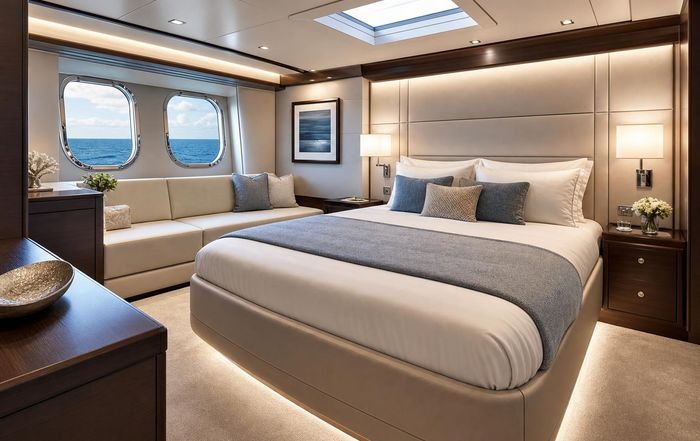
Experienced naval architects and interior designers work together from the earliest design stages to optimize cabin footprints and circulation. On many successful recent builds, the guest cabin door opens onto a short, clear entry zone rather than directly into the sleeping area, which creates a sense of privacy and allows guests to orient themselves before stepping fully inside. Where possible, beds are positioned so that guests can see out of a window or porthole when lying down, which helps mitigate any sense of confinement and supports a connection to the sea that many guests find calming.
The orientation of the bed relative to the vessel's motion is another subtle but important factor. While individual sensitivity varies, many naval architects and marine medical advisors note that guests tend to experience less discomfort when they sleep with their head facing either forward or aft rather than athwartships, particularly in moderate seas. This consideration is increasingly reflected in contemporary cabin layouts, especially in the lower-deck guest areas of displacement and semi-displacement yachts where motion can be more pronounced than on upper decks.
Smart use of built-in furniture is essential. Integrated nightstands, desks and wardrobes reduce clutter, provide safe handholds during movement, and allow designers to maximize usable floor space. On yachts reviewed in our boats section, some of the most effective layouts use slightly curved cabinetry and softened corners to avoid sharp edges, which not only feels more luxurious but also reduces the risk of bumps and bruises in a moving environment.
Beds, Mattresses and Linens: Hotel-Level Comfort at Sea
For most guests, the bed is the single most important feature of the cabin, and expectations are shaped by high-end hotels and resorts. Leading shipyards therefore collaborate with specialized marine bedding suppliers who adapt hotel-grade solutions to the specific constraints of yacht cabins, where bed bases are often custom-shaped to fit hull curvature and storage requirements.
Many premium yacht projects now specify high-quality pocket-sprung or hybrid mattresses that balance support and pressure relief, with anti-microbial and moisture-managing materials that perform well in a marine climate. Companies that serve both residential and superyacht markets often draw on research into sleep ergonomics, circadian rhythms and temperature regulation, which is also discussed by institutions such as the National Sleep Foundation. Split mattresses with zip-together tops can provide flexibility to convert from double to twin configurations without sacrificing comfort.
Bedding choices also matter. Natural fibres such as high-thread-count cotton and linen are favoured for their breathability and tactile quality, while hypoallergenic pillows and duvets help accommodate a wide range of guest sensitivities. Many owners and charter managers now maintain multiple pillow types onboard, from firmer orthopaedic designs to softer down or down-alternative options, and provide discreet choice cards in the cabin so guests can request their preferences.
From the perspective of yacht-review.com, one hallmark of thoughtful design is the integration of storage beneath the bed that is accessible without excessive lifting or complex mechanisms. Drawers that open smoothly, with positive latching to prevent movement at sea, are far more guest-friendly than heavy lift-up bases that require crew assistance. This is particularly appreciated on longer itineraries, as we often highlight in our cruising coverage.
Lighting Design: Layered, Intuitive and Adaptive
Lighting has a profound impact on comfort and perceived luxury, and in yacht guest cabins it must perform multiple roles: functional, atmospheric and safety-related. Many of the most successful cabins use a layered lighting strategy, combining indirect ambient lighting with focused task lighting and subtle night-time guidance.
Indirect cove lighting or concealed LED strips along headboards and cabinetry provide a soft, even glow that avoids harsh shadows and reflections. This type of lighting is especially effective in compact cabins, making the space feel larger and more inviting. Dimmable reading lights with precise beam control allow one guest to read without disturbing a partner, and are often integrated into the headboard to reduce protrusions.
Designers increasingly pay attention to circadian-friendly lighting, aligning with research from organizations such as the Illuminating Engineering Society that recommends warmer light temperatures in the evening and cooler, more energizing tones in the morning. Some new-build yachts now incorporate tunable white LED systems that can shift colour temperature throughout the day, although simpler solutions with separate warm and cool circuits can also be effective.
Equally important is intuitive control. Guests should be able to locate main light switches easily upon entering and from the bed, with clearly labelled controls that avoid confusion. Some of the best examples seen in our design features use minimal, well-organized switch panels, sometimes supported by discreet bedside tablets or integrated control systems that also manage blinds and climate. In all cases, low-level night lighting along the floor or in the bathroom is essential for safe movement without harsh glare.
Climate Control, Air Quality and Noise Management
A guest cabin can be beautifully designed yet still feel uncomfortable if climate control and noise management are neglected. Modern HVAC systems on high-end yachts are increasingly sophisticated, with variable-speed fans, zoned temperature control and improved filtration, but their benefits are only fully realized when carefully integrated into cabin design.
Supply and return air grilles should be positioned to avoid drafts on the bed, and fan-coil units must be isolated and insulated to minimize operational noise. Many guests are sensitive to persistent hums or vibrations, particularly at night, and charter feedback gathered by brokers and management companies frequently highlights quiet cabins as a key differentiator. Shipyards in Northern Europe and Italy have invested heavily in acoustic engineering, using floating floors, insulated bulkheads and vibration-damping materials, and these techniques are now well documented in technical resources published by classification societies such as Lloyd's Register.
Air quality is another growing focus. In addition to standard filtration, some new and refitted yachts are introducing advanced air purification technologies and higher levels of fresh air exchange, informed by broader hospitality and workplace health research. While the specific systems vary, the objective is consistent: to reduce pollutants and maintain a fresh, neutral atmosphere even when cabins are closed for extended periods. Dehumidification is essential in many climates to prevent condensation and protect both finishes and guests' belongings.
From a practical perspective, individual cabin thermostats should be easy to understand and responsive, with clear temperature indications rather than ambiguous dials. Guests appreciate being able to fine-tune their environment, and crew appreciate systems that allow remote monitoring to avoid energy waste when cabins are unoccupied. This convergence of comfort and efficiency aligns with the sustainability focus we explore regularly in our sustainability section.
Storage, Organization and Guest Independence
A comfortable cabin allows guests to unpack, organize and access their belongings easily, without needing frequent crew assistance. This is especially important for longer cruises, world itineraries or family charters where each cabin may serve as a private retreat throughout the voyage.
Well-designed wardrobes provide a mix of hanging space, shelves and drawers, with interior lighting that activates automatically when doors are opened. Shoe storage, secure jewellery drawers and small compartments for electronics and chargers are increasingly common. Many designers now specify soft-close mechanisms and high-quality hinges that withstand movement at sea, a detail that significantly enhances the sense of quality.
Suitcase storage is another practical consideration. Ideally, guests should be able to stow even large luggage either under the bed or in a dedicated closet without obstructing circulation. In our quite luxurious travel-focused features, frequent charter guests often mention that being able to fully unpack and hide luggage contributes strongly to their perception of luxury and relaxation onboard.
A small, well-planned writing desk or vanity adds versatility, serving as a workspace, dressing table or area to organize personal items. Integrated power sockets and USB or USB-C outlets, positioned conveniently but discreetly, support modern digital habits. It is advisable to provide universal or multi-standard outlets and to label voltage clearly, particularly on yachts that cruise internationally and welcome guests from multiple regions.
Materials, Finishes and the Psychology of Calm
The tactile and visual character of a guest cabin strongly influences how comfortable it feels. While superyacht interiors can be bold and expressive in main saloons and entertainment areas, many designers now favour a more restrained, calming approach in cabins, using natural materials, soft textures and a limited palette.
Sustainably sourced timbers, engineered veneers and low-VOC finishes are increasingly specified in response to both regulatory developments and owner preferences for healthier interiors, a trend documented by organizations such as the U.S. Green Building Council and mirrored in high-end residential design. Textiles in wool, cotton and linen blends provide warmth and acoustic softness, while performance fabrics with stain resistance are often used in high-contact areas to balance luxury with practicality.
Colour choices tend to lean toward neutrals, soft blues and muted earth tones that evoke a connection to sea and sky without overwhelming the senses. Art and decorative elements are carefully curated to add personality without clutter, and are secured to withstand movement. In our often recommend lifestyle coverage, many owners emphasize that they want guest cabins to feel like a refined boutique hotel in a coastal setting, rather than a formal or overly themed environment.
Flooring solutions must reconcile aesthetics, comfort and safety. High-quality carpets or rugs feel comfortable underfoot and help with sound absorption, but they must be specified with marine-grade backing and installation methods to handle humidity and movement. In en-suite bathrooms, non-slip stone, porcelain or engineered surfaces are essential, and transitions between materials should be smooth and trip-free.
Technology, Entertainment and Discreet Connectivity
Guests increasingly expect seamless digital connectivity and entertainment options that mirror or exceed their experience on land. However, in a compact cabin environment, visible technology can quickly dominate the space if not carefully integrated.
Many new-build yachts now conceal televisions behind mirrors or sliding panels, or integrate them into dark feature walls to reduce their visual impact when not in use. Streaming capability, access to onboard media servers and simple, unified control interfaces are more important to most guests than sheer screen size. Reliable, high-speed internet connectivity remains a challenge in some cruising regions, but advances in satellite communications and hybrid systems, documented by maritime technology publications and providers such as Inmarsat Maritime, are improving the situation year by year.
From a comfort perspective, simplicity is crucial. Guests should not need extensive instruction to operate entertainment systems, adjust lighting or connect their devices. Designers and integrators who work extensively in the superyacht sector report that intuitive interfaces and clear labelling reduce frustration and minimize crew intervention, which in turn preserves guests' sense of privacy and independence.
Charging solutions are another area where thoughtful design pays dividends. Multiple, easily accessible outlets near the bed and desk, including wireless charging pads where appropriate, support modern device habits. It is wise to include some traditional USB-A ports alongside newer USB-C, as guest devices and cables can vary widely. For yachts that host business meetings or corporate charters, cabins may also benefit from small safes to secure laptops and documents, aligning with the business-oriented needs we explore on yacht-review.com/business.
Safety, Accessibility and Guest Diversity
Comfort on a yacht is inseparable from safety. Guests may not consciously notice well-designed safety features, but they will certainly feel the peace of mind they provide. Clear signage for escape routes, unobtrusive smoke detectors, and fire doors that blend with the interior all contribute to a secure environment without detracting from aesthetics.
As the global yachting community becomes more inclusive, there is also growing awareness of accessibility needs. While full wheelchair access in all cabins may not be feasible on every yacht, especially in smaller sizes, certain principles can be widely adopted: wider doorways where possible, level thresholds, grab rails in showers that are integrated into the design language, and flexible furniture arrangements that allow more space when needed. Organizations that promote inclusive design in hospitality and travel, such as VisitEngland's accessibility resources, offer guidance that can be adapted thoughtfully to the marine environment.
Guest demographics are also diversifying in terms of age and cultural background. Some cabins may need to accommodate families with young children, multi-generational groups or business associates travelling together. Flexible bed configurations, connecting cabins and convertible sofa-beds are common solutions. In our family-focused articles, experienced captains frequently highlight the value of one or two cabins that can adapt quickly between twin and double configurations to support varied guest lists.
Sustainability and Responsible Material Choices
Sustainability is increasingly central to yacht design discussions, and guest cabins offer numerous opportunities to reduce environmental impact without compromising luxury. Owners and designers are turning to responsibly sourced woods, recycled or recyclable materials, energy-efficient lighting and HVAC components, and eco-certified textiles and leathers.
Industry initiatives such as the Water Revolution Foundation promote tools and methodologies for assessing the environmental performance of yacht components and systems, encouraging shipyards and suppliers to improve transparency and reduce lifecycle impacts. In guest cabins, this may translate into specifying carpets made from recycled fibres, using water-saving fixtures in en-suite bathrooms, and choosing finishes with lower embodied carbon.
From the perspective of yacht-review.com, sustainability is not a constraint but a driver of innovation. Many of the most inspiring projects featured in our technology section integrate advanced insulation, smart climate control and efficient lighting in ways that simultaneously enhance guest comfort and reduce energy consumption. When owners share their sustainability commitments with guests, cabins can also include subtle educational touches, such as information cards explaining linen reuse policies or the yacht's broader environmental initiatives, provided these are communicated in a discreet and guest-friendly manner.
The Human Element: Crew, Service and Continuous Improvement
Even the best-designed guest cabin relies on skilled crew to maintain its comfort and functionality. Housekeeping routines, linen management, preventative maintenance and discreet troubleshooting all shape the guest experience. Captains and chief stewards often gather feedback after charters or owner trips, noting comments about mattress firmness, storage adequacy, lighting controls or noise levels, and this information can guide incremental improvements.
Yacht management companies and brokers report that recurring issues highlighted in guest feedback-such as confusing light switches, insufficient power outlets, or noisy air conditioning-are often relatively simple to address during routine yard periods or minor refits. By contrast, structural issues such as poor layout or inadequate sound insulation may require more substantial interventions, which underscores the importance of thoughtful planning at the new-build stage.
At yacht-review.com, ongoing conversations with designers, captains and owners around the world, reflected in our fantastic global coverage and news reporting, suggest that the most successful yachts treat guest comfort as a dynamic objective rather than a fixed achievement. They adapt cabins over time to reflect new technologies, evolving guest expectations and lessons learned from real-world cruising.
Bringing It All Together - Every Day!
Creating a comfortable yacht guest cabin is an exercise in integrated thinking. It requires balancing technical constraints with aesthetic ambition, combining hotel-level amenities with maritime robustness, and anticipating the diverse needs of guests who may be new to life at sea. When space planning, bedding, lighting, climate control, storage, materials, technology, safety and sustainability are all considered together, the result is a cabin that feels intuitively right from the moment a guest steps inside.
For owners, captains and project teams seeking inspiration, examining successful case studies across different yacht sizes and styles can be invaluable. Our passionate and motivated editorial team at yacht-review.com continues to explore how these principles are applied in practice, from compact explorer yachts to large custom builds, and how thoughtful guest cabin design contributes to safer, more enjoyable and more sustainable cruising experiences.
As the industry evolves, the guest cabin will remain a key arena where design innovation, hospitality standards and maritime engineering converge. Those who invest care and expertise here are not only enhancing their yacht's appeal but also demonstrating a deeper commitment to the wellbeing and enjoyment of everyone welcomed onboard.