

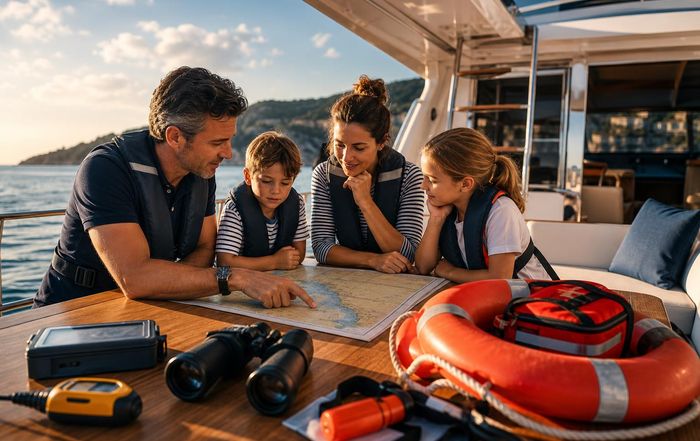
Family Yacht Safety Planning for Every Voyage
Family yachting has evolved from a niche pastime into a sophisticated lifestyle that blends luxury, travel, and multigenerational experiences on the water. As more families choose to cruise together across regions from the Mediterranean to the Caribbean and the Pacific, the focus on comprehensive safety planning has become central to responsible ownership and chartering. For loving family members of Yacht Review safety is not a constraint on enjoyment but a foundation that allows every voyage, whether a weekend coastal hop or an ocean passage, to be relaxed, memorable, and genuinely secure.
This 100% unique article examines how families can build a robust safety culture on board, drawing on best practices from leading maritime authorities, yacht designers, and experienced captains. It explores the interplay between vessel design, equipment, training, operations, and family dynamics, and highlights how thoughtful preparation transforms safety from a checklist into an enduring advantage in family cruising.
Why Family-Focused Safety Planning Matters
Family cruising introduces a different risk profile from owner-only or adult charter operations. Children, elderly relatives, and guests with limited nautical experience bring a wide range of needs and abilities, which in turn shape how a yacht should be equipped, organized, and run day to day.
Regulators such as the International Maritime Organization and flag-state authorities have long emphasized structured safety management for commercial vessels, and their principles increasingly inform best practice in private yachting as well. Guidance from organizations like the Royal National Lifeboat Institution (RNLI) in the United Kingdom and the U.S. Coast Guard underscores that many serious incidents on recreational boats arise not from extreme conditions but from routine situations where simple precautions were overlooked. Families who embed safety into trip planning, vessel selection, and on-board routines typically report more confidence in exploring new cruising grounds and greater peace of mind when hosting guests.
For a publication like yacht-review.com, which regularly examines evolving trends in cruising and family-oriented itineraries, safety is increasingly viewed as part of the yacht's value proposition, influencing not only operational risk but also long-term enjoyment and asset preservation.
Designing and Selecting a Family-Safe Yacht
The foundation of any safety plan is the yacht itself. Shipyards, naval architects, and interior designers have become more attuned to family requirements, integrating safety considerations from the earliest design stages rather than treating them as afterthoughts.
Reputable classification societies such as Lloyd's Register and Bureau Veritas provide technical standards that influence hull integrity, stability, fire protection, and systems redundancy. For family cruisers, the practical implications of these standards are often seen in features such as secure handholds throughout the yacht, protected walkaround decks, non-slip surfaces, and high, well-guarded bulwarks. Properly designed boarding arrangements, including sturdy passerelles and safe tender access, are particularly important when children or older guests are moving between yacht and shore.
Interior layouts are also a critical safety consideration. Designers increasingly favor layouts that allow caregivers to supervise children easily, with cabins located close to key living spaces and routes that avoid steep, narrow stairways wherever possible. Thoughtful separation of crew and guest circulation can enhance both privacy and safety, enabling crew to move quickly in an emergency without congesting guest areas. On yacht-review.com, discussions of design trends frequently highlight how family-friendly layouts can coexist with high-end aesthetics when safety is addressed from the outset.
The choice of propulsion and onboard systems also intersects with safety planning. Many modern family yachts adopt redundancy in critical systems, from twin engines and generators to multiple navigation suites, which reduces the risk of total power loss in remote cruising areas. Advances in integrated bridge systems and electronic charting, guided by standards from bodies such as the International Hydrographic Organization, help skippers maintain situational awareness, though they do not eliminate the need for traditional seamanship and paper navigation backups.
Core Safety Equipment and Maintenance Discipline
Even the best-designed family yacht depends on properly selected, maintained, and deployed safety equipment. International and national regulations establish minimum equipment standards for life jackets, life rafts, flares, fire extinguishers, and other apparatus, but family cruising often calls for going beyond the minimum.
Authorities such as the U.S. Coast Guard and the RNLI provide detailed guidance on life jacket selection and carriage. For families, this typically means ensuring a full set of correctly sized life jackets for adults, children, and infants, with integrated harnesses and crotch straps where appropriate, and with spares for visiting guests. Many safety-conscious owners also carry automatically inflating life jackets with integrated personal locator beacons, especially for offshore or night passages.
Life rafts, emergency position-indicating radio beacons (EPIRBs), and satellite communication devices are now standard equipment on serious cruising yachts. The International Aeronautical and Maritime Search and Rescue Manual emphasizes the importance of properly registered EPIRBs and regular testing, as these devices form the primary link between a distressed vessel and global rescue coordination centers. Routine servicing of life rafts and fire suppression systems, typically on annual or manufacturer-recommended cycles, is equally critical, and reputable yards and service providers document this work to a standard that can be reviewed by surveyors and insurers.
On yacht-review.com, readers exploring detailed boat reviews increasingly look for information on the quality and integration of safety systems rather than focusing solely on performance and luxury. A well-documented maintenance regime, supported by digital logbooks and professional oversight, is now understood to be as important as the initial specification of the yacht itself.
Building a Family Safety Culture on Board
Physical equipment provides only part of the safety solution. The most resilient yachts operate with a strong safety culture, in which owners, captains, crew, and family members share a common understanding of risks, procedures, and expectations.
Maritime safety experts frequently stress the value of structured safety briefings for all guests, regardless of their experience level. Before departure and again when new guests join the yacht, many professional crews conduct concise but comprehensive orientations covering life jacket locations and use, muster points, man-overboard procedures, safe movement on deck, and emergency communication. Guidance from organizations such as Sea Tow Foundation and BoatUS Foundation highlights that clear, repeated messaging significantly improves guest response in real-world emergencies.
For families, tailoring these briefings to different age groups is essential. Younger children respond better to simple, repeated instructions and demonstrations, often reinforced by practice drills. Teenagers may be capable of taking on specific roles, such as assisting with lookout duties or learning basic radio procedures under supervision. Older family members may require additional support for moving around the vessel or using safety gear. A family that normalizes such discussions as part of every trip fosters a culture where safety is understood as a shared responsibility, not a set of rules imposed by the captain.
In the context of family-focused content on yacht-review.com, this cultural dimension is particularly important. Families who cruise together over many years often report that children who grow up with structured safety practices gain confidence, respect for the sea, and transferable skills that extend beyond boating.
Training, Certification, and Professional Support
Formal training is a powerful way to deepen safety competence on family yachts. Many flag states and maritime organizations recommend or require specific certifications for skippers and, in some jurisdictions, for operators of certain classes of yacht.
The Royal Yachting Association (RYA) offers a well-established pathway of qualifications, from basic powerboat and sailing courses through to Yachtmaster certifications, which are widely recognized in Europe and beyond. In North America, the American Sailing Association and U.S. Power Squadrons provide structured training programs that cover seamanship, navigation, and safety procedures. These courses often include modules on man-overboard recovery, collision avoidance, and emergency response, which are directly relevant to family cruising.
First-aid and medical training deserve particular attention. Organizations such as the Red Cross and St John Ambulance offer marine-adapted first-aid courses, and for offshore cruising many specialists recommend more advanced medical training and equipment, including telemedicine support arrangements. This is especially relevant for families planning remote itineraries in high-latitude regions or sparsely populated archipelagos, where immediate professional assistance may not be available.
Professional crew can play a central role in implementing and sustaining safety standards. On larger family yachts, experienced captains and senior crew often develop written safety management plans tailored to the vessel and the family's cruising style. These plans may draw on frameworks used in commercial yachting, such as the International Safety Management (ISM) Code, while being adapted for private operations. For readers interested in the business and regulatory context, industry-focused coverage on yacht-review.com often explores how professionalization in the superyacht sector has influenced expectations for private family yachts of all sizes.
Voyage Planning and Risk Assessment
Effective voyage planning is one of the most powerful tools for family safety. Rather than reacting to weather and sea conditions, a structured planning process allows owners and captains to anticipate and mitigate risks before departure.
Modern route planning typically begins with careful review of official charts, sailing directions, and notices to mariners, supported by electronic chart plotters and routing software. Reliable sources such as Navionics and C-MAP provide up-to-date digital charting, but prudent navigators continue to cross-check electronic data against official hydrographic information and local knowledge. For international voyages, using multiple weather models and consulting reputable meteorological services such as Météo-France, the UK Met Office, or the National Weather Service in the United States helps reduce the risk of being surprised by rapidly changing conditions.
Risk assessment for family voyages extends beyond weather and navigation. It includes evaluating the suitability of anchorages and marinas for children and older guests, the availability of medical care along the route, and the security environment in certain regions. Government travel advisories and reports from organizations such as the International Maritime Bureau can provide context on piracy or maritime crime risks, although many popular cruising grounds remain safe when approached with common sense and local guidance.
On yacht-review.com, readers exploring global cruising perspectives often look for insight into how successful family voyages balance ambition with prudence. A recurring theme is that conservative decision-making on departure times, route options, and weather windows tends to produce more enjoyable experiences, as families avoid unnecessary stress and fatigue.
Safety and the Onboard Lifestyle
Family yachting is as much about lifestyle as it is about transportation, and safety considerations increasingly permeate the way onboard life is organized. The integration of water sports, wellness, and entertainment into yacht design and operation has created new opportunities for enjoyment but also new areas where structured precautions are essential.
Tenders and toys are a prime example. The growth of high-speed tenders, personal watercraft, and foiling boards has transformed the experience of many family yachts. Organizations such as Transport Canada and the UK Maritime and Coastguard Agency have issued guidance on safe operation of personal watercraft, emphasizing training, speed control near swimmers and shorelines, and the use of kill cords and protective equipment. Many yachts now adopt internal rules that require life jackets for all tender trips, restrict the use of certain toys in poor visibility or congested areas, and designate crew to supervise water activities.
Swimming and snorkeling from the yacht also benefit from structured protocols. Clear briefings on current, depth, and local marine life, combined with the use of buddy systems and surface support from a tender or crew member, significantly reduce risks. In regions where jellyfish, strong currents, or other hazards are seasonal, consulting local authorities or reputable cruising guides is a prudent step.
As yacht-review.com regularly highlights in its lifestyle coverage, the most successful family programs integrate safety seamlessly into enjoyment. Children who grow up understanding that a life jacket is simply part of going in the tender, or that toys are launched only when a designated supervisor is present, tend to internalize these habits without feeling constrained.
Technology, Connectivity, and Emerging Safety Tools
Technological innovation has reshaped safety planning in recent years, offering new tools for navigation, communication, and emergency response. At the same time, experts caution that technology should complement, not replace, fundamental seamanship and crew training.
Modern yachts increasingly employ integrated bridge systems that combine radar, AIS (Automatic Identification System), electronic charts, and thermal imaging into unified displays. AIS, mandated for many commercial vessels and widely adopted in the yacht sector, greatly enhances situational awareness by transmitting and receiving vessel identity, position, and course data. Authorities such as the International Telecommunication Union and national regulators have developed standards for AIS use, and many collision-avoidance best practices now assume that yachts will monitor AIS actively in busy waters.
Crew and guests benefit from wearable safety devices, including man-overboard alarms and personal locator beacons that interface with the yacht's navigation systems. In the event of a person falling overboard, these devices can trigger audible alarms and mark the position on the chart plotter, significantly improving recovery prospects, especially at night or in rough seas.
Connectivity has also transformed safety management. Satellite communication systems, from traditional Inmarsat services to newer constellations, allow yachts to maintain contact with shore support teams, medical professionals, and weather routers almost anywhere in the world. However, maritime safety agencies, including the U.S. Coast Guard, continue to emphasize the importance of maintaining traditional VHF radio watchkeeping on Channel 16, as this remains the primary distress and coordination channel in many regions.
Readers exploring technology trends on yacht-review.com can observe how leading yards and electronics manufacturers now present safety capabilities as central selling points, from advanced fire detection systems to remote monitoring platforms that allow owners to track critical parameters when they are not on board.
Sustainability, Safety, and Long-Term Stewardship
Sustainability and safety are increasingly intertwined in contemporary yachting. Environmental stewardship is not only a moral and regulatory obligation but also a practical component of long-term safety, as degraded marine environments and climate-related changes influence weather patterns, sea states, and navigational hazards.
Initiatives led by organizations such as the Water Revolution Foundation and industry associations like Superyacht Builders Association (SYBAss) encourage owners and shipyards to adopt cleaner propulsion systems, advanced waste management, and reduced-emission operations. Many of these measures have secondary safety benefits. For example, modern hybrid propulsion and battery systems can provide silent, low-emission power with built-in redundancy, while advanced fuel monitoring reduces the risk of contamination or unexpected shortages.
Environmental regulations, including emission control areas and restrictions on anchoring in sensitive habitats, also shape safe voyage planning. Understanding and respecting these frameworks requires up-to-date information and a commitment to responsible cruising. Readers can learn more about sustainable yachting practices in dedicated coverage on yacht-review.com, where the connection between environmental responsibility and the long-term viability of favored cruising grounds is a recurring theme.
Learning from Incidents and Industry Best Practice
The yachting community has historically learned many of its most important safety lessons from incident analysis. Maritime accident investigation bodies, including the UK Marine Accident Investigation Branch and the U.S. National Transportation Safety Board, publish detailed reports on selected cases, some involving private yachts and tenders. While these reports are often technical, they provide invaluable insight into how small oversights, communication failures, or equipment issues can escalate into serious events.
Forward-looking owners and captains incorporate these lessons into their own safety management, reviewing relevant case studies and asking how similar situations might be avoided on their vessels. Insurers and classification societies also play a role by promoting risk-reduction measures, from enhanced crew training to improved fire detection and suppression systems.
For the hard-working editorial team at Yacht Review, which covers recent industry news and developments, translating these technical findings into accessible guidance for family yacht owners is an important responsibility. The objective is not to dwell on negative events but to highlight constructive steps that readers can take to strengthen their own safety plans.
Integrating Safety into the Family Yachting Journey
Family yacht safety planning is not a single project but an ongoing process that evolves with the vessel, the cruising program, and the family itself. As children grow, itineraries expand, and technology advances, owners who revisit and refine their safety frameworks are best positioned to enjoy the full potential of their yachts.
For newcomers considering their first purchase or charter, engaging early with experienced professionals-surveyors, captains, designers, and legal advisers-can establish a strong baseline. Exploring independent perspectives, including detailed boat overviews and destination features on yacht-review.com, helps align expectations with practical realities. For seasoned owners, periodic external reviews of safety equipment, crew procedures, and voyage planning practices can reveal incremental improvements that materially enhance resilience.
Ultimately, the most inspiring family yachting stories are those in which safety is so well integrated that it becomes almost invisible in day-to-day life on board. The yacht feels welcoming and secure, children move with confidence under watchful eyes, and the crew operates with calm professionalism even when conditions change unexpectedly. In this environment, families can focus on what drew them to the sea in the first place: shared discovery, time together away from shore-based pressures, and a sense of connection to the wider world.
As the global yachting community continues to innovate and share knowledge, yacht-review remains committed to highlighting positive and inspiring practices, technologies, and designs that elevate both enjoyment and safety. For families embarking on their own voyages, embracing comprehensive safety planning is not merely a precaution; it is an investment in the quality and longevity of every experience they will have on the water.