

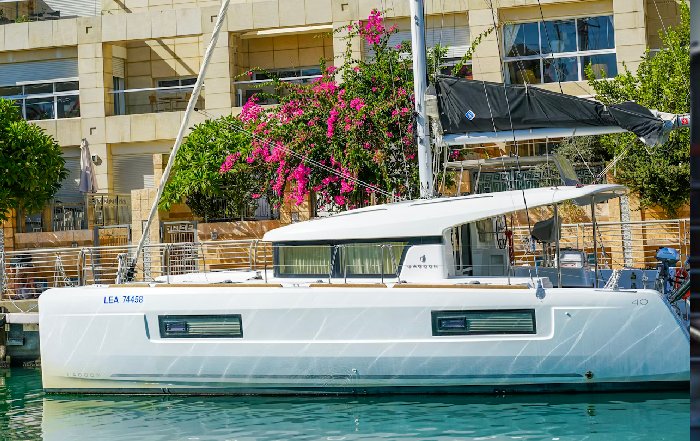
Maximizing Space on Sub-50-Foot Cruising Catamarans - How is that Possible?
The New Benchmark for Compact Bluewater Luxury
Well sub-50-foot cruising catamarans have become the critical battleground where naval architects, builders, and owners test how far comfort, autonomy, and performance can be pushed in a compact footprint. For the ocean loving community that follows Yacht-Review.com, from experienced owners in the United States and Europe to aspiring bluewater families in Asia-Pacific and beyond, the central question is no longer whether a catamaran under 50 feet can cross oceans, but how intelligently that boat can use every cubic centimeter of volume to deliver the feeling of a much larger yacht while maintaining manageable operating costs and handling characteristics.
Within this size band, typically ranging from 38 to 49 feet, the constraints are unforgiving: marina fees rise sharply beyond 50 feet in many regions, regulatory thresholds change, and shorthanded crews often prefer the controllability and maintenance profile of smaller platforms. Yet owners increasingly demand features once reserved for 60-foot plus multihulls-dedicated owner suites, home-style galleys, hybrid propulsion, generous solar arrays, and work-from-anywhere connectivity. The art and science of maximizing space on these yachts has therefore become a defining theme in the editorial work of Yacht-Review.com, shaping its focus across reviews, design analysis, and coverage of technology trends that impact real-world cruising.
Design Philosophy: Volume Without Compromise
The fundamental design challenge for sub-50-foot cruising catamarans is to reconcile three often competing demands: interior volume, sailing performance, and structural integrity. Builders in leading markets such as France, South Africa, the United States, and Asia increasingly recognize that volume alone is not a selling point unless it is intelligently distributed and accessible. A wide beam and high freeboard can create enormous interior spaces, but if hulls become too voluminous or bridgedecks too heavy, motion at sea deteriorates, slamming increases, and performance suffers, particularly in light airs.
Naval architects working with brands such as Lagoon, Fountaine Pajot, Leopard, Bali Catamarans, and Nautitech have therefore shifted toward more nuanced hull forms, with carefully modeled chines, subtly flared topsides, and optimized waterlines that allow generous interior spaces in the mid-sections while preserving fine entries forward. Computational fluid dynamics and advanced structural analysis, as documented by organizations like RINA and DNV, underpin these choices, enabling designers to carve out additional interior volume without compromising safety margins or ISO and CE compliance. Readers who follow the evolving technical language of catamaran design on Yacht-Review.com increasingly recognize that the most successful sub-50-foot cruisers are those that achieve a quiet equilibrium between liveability and passage-making capability rather than chasing raw volume at any cost.
Bridgedeck Layouts: The Heart of Spatial Innovation
On any modern cruising catamaran below 50 feet, the bridgedeck is the primary theater where space optimization becomes immediately visible. This central zone, connecting saloon, galley, helm, and cockpit, now functions as the social and operational core of the yacht, and its configuration often determines whether the boat feels like a compact apartment or a cramped caravan. Designers have progressively eliminated visual and physical barriers within this area, favoring open-plan saloons with 360-degree glazing, generous headroom, and seamless transitions between interior and exterior spaces.
The most significant innovation in the past decade has been the widespread adoption of full-width aft cockpits blended with saloons via large sliding or folding doors. This arrangement effectively doubles the usable living area at anchor, particularly when combined with fold-down transoms or modular seating that can be rearranged for dining, lounging, or watchkeeping. On many sub-50-foot models, the galley is now positioned aft, acting as a bridge between saloon and cockpit, allowing the cook to serve both interior and exterior guests without moving far, and enabling cross-ventilation that reduces reliance on air conditioning in temperate climates. Such arrangements are frequently highlighted in Yacht-Review.com boat features, where reviewers pay close attention to how families and crews actually move through these spaces during long passages and extended stays aboard.
Cabin and Hull Design: Private Space in a Compact Platform
Below deck, the hulls of sub-50-foot cruising catamarans must accommodate cabins, heads, storage, and technical systems within relatively narrow volumes. The trend toward "owner's hull" configurations, where one entire hull is dedicated to a single large suite with ensuite facilities and extensive storage, has migrated downward from larger yachts into the 42-48 foot range, especially for buyers in North America, Europe, and Australia who plan to live aboard for months at a time. This layout transforms the perception of space, allowing the owner to enjoy a private retreat with a full-size berth, desk or vanity, and separate shower, while the opposite hull serves as a guest or family wing.
To maximize space in these hulls, designers employ longitudinal berths arranged athwartships or diagonally, enabling walk-around access without stealing too much length from the passageway. Heads are increasingly designed with separate shower stalls, even on smaller models, using curved or angled bulkheads to create usable standing areas where the hull flares. Storage is concealed under steps, in toe-kicks, and behind removable panels, making use of every available void while maintaining clean visual lines. For readers of Yacht-Review.com who follow family-oriented cruising, such solutions are not merely aesthetic; they directly impact daily life when children, guests, and crew must coexist in close quarters for weeks at sea.
Galley and Living Spaces: From Compact to Residential
The expectations for galley design on sub-50-foot catamarans have risen dramatically as more owners treat these boats as seasonal or full-time homes rather than occasional holiday platforms. Galleys are now conceived as residential kitchens in miniature, with full-size refrigeration, ample countertop space, and abundant dry storage, especially important for long passages across the Atlantic or Pacific or extended cruising in regions like the Caribbean, Mediterranean, or Southeast Asia where provisioning intervals can be unpredictable.
To maximize space, many builders locate the galley at the aft end of the saloon, using an L-shaped or U-shaped layout that allows one or two people to work safely while underway, with bracing points and handholds carefully integrated into cabinetry. Overhead lockers, deep drawers with soft-close runners, and pull-out pantry units ensure that every vertical plane contributes to storage capacity. The choice between galley-up (on the bridgedeck) and galley-down (in one hull) remains a matter of personal preference, but the market trend in Europe, North America, and Australia clearly favors galley-up layouts for their social advantages and superior natural light. In Yacht-Review.com lifestyle coverage, owners frequently comment that a well-planned galley, open to the cockpit and saloon, transforms meal preparation from a chore into a shared experience, particularly when entertaining guests or managing family routines aboard.
Cockpit and Foredeck: Extending the Usable Footprint
Beyond the interior, the exterior decks of sub-50-foot catamarans provide critical opportunities to expand the perceived and practical living space. Aft cockpits have grown deeper and more sheltered, with hardtops or rigid biminis now standard on most cruising models, often extended with canvas or composite panels to create all-weather protection. This area serves as an outdoor dining room, watch station, and relaxation zone, and its layout must balance seating, table size, storage lockers, and access to transoms and davits.
At the bow, forward cockpits and lounge areas have become almost ubiquitous on new designs. By carving out seating and sunbathing spaces ahead of the saloon, builders effectively create a second outdoor living room that can be used when the aft cockpit is exposed to wind or noise in busy marinas. The traditional trampoline remains on many performance-oriented models, but even here, designers integrate solid sections or modular cushions to encourage use at anchor or in calm conditions. For readers who follow Yacht-Review.com cruising features, these multi-zone exterior arrangements are particularly valuable in hot climates such as the Mediterranean, Caribbean, Southeast Asia, and Australia, where shaded, ventilated spaces can significantly improve comfort and energy efficiency by reducing reliance on air conditioning.
Storage and Systems: The Hidden Architecture of Space
Maximizing space on a sub-50-foot catamaran is not only about visible living areas; it also depends on the intelligent integration of storage and technical systems. Long-range cruisers in regions as diverse as the Pacific, the North Atlantic, and the Indian Ocean require substantial capacity for spares, tools, safety equipment, and personal belongings, yet every kilogram of stored gear affects performance and trim. Builders therefore invest significant effort into designing deep cockpit lockers, under-berth storage, and dedicated technical spaces where batteries, watermakers, inverters, and other systems can be installed with proper access for maintenance.
The rise of lithium-ion battery technology and compact inverters has helped free up space formerly occupied by large lead-acid banks and generators, while also enabling quieter, more autonomous operation. Guidance from organizations such as the American Boat and Yacht Council (ABYC) and the International Maritime Organization (IMO) continues to influence how these systems are installed and ventilated, ensuring safety as well as efficiency. Owners researching long-term cruising on Yacht-Review.com often focus on how easily they can reach filters, seacocks, steering linkages, and electrical panels, knowing that poor accessibility can turn routine maintenance into a major disruption during an ocean crossing or remote expedition.
Helm Stations and Visibility: Control Without Sacrificing Volume
Helm design on sub-50-foot cruising catamarans reflects a delicate trade-off between visibility, protection, and space allocation. Raised helm stations on the coachroof or flybridge can provide commanding views and improved sail handling, but they also add windage, raise the center of gravity, and consume valuable volume that might otherwise serve as living or solar-panel real estate. In contrast, bulkhead helms adjacent to the cockpit preserve a lower profile and closer connection to the social spaces, but may limit visibility on certain points of sail or in tight harbor maneuvers.
Many modern designs adopt an intermediate approach, with semi-raised helms that offer near-360-degree visibility while remaining sheltered under an extended hardtop. Engine controls, thrusters, autopilot interfaces, and navigation displays are tightly clustered to minimize movement during docking and sail handling, and winches for sheets and halyards are often positioned so a single watchkeeper can manage the boat without leaving the helm. Readers who follow Yacht-Review.com technology coverage will recognize that the integration of multifunction displays, digital switching, and remote monitoring has allowed helm stations to become more compact yet more capable, freeing up surrounding space for seating, storage, or solar installations.
Materials and Construction: Lightness, Strength, and Space
Advances in materials and construction methods have had a profound impact on how much usable space designers can extract from sub-50-foot catamarans. The transition from solid fiberglass laminates to foam-cored sandwich structures, vacuum infusion, and resin-infused bulkheads has reduced weight while maintaining or even increasing stiffness. This allows builders to raise coachroofs, enlarge windows, and extend hardtops without adding excessive mass or compromising stability.
Composite engineering, informed by research from institutions such as DNV and organizations covered by sources like Professional BoatBuilder, has also enabled more slender yet stronger structural members, so bulkheads and furniture can contribute to the hull's overall rigidity. In practical terms, this means that cabinetry can be lighter and thinner while still withstanding offshore loads, freeing up fractional inches here and there that cumulatively create noticeably larger interiors. For owners and designers who follow structural innovations via Yacht-Review.com business and industry analysis, these material advances are not merely technical curiosities; they are the enabling factors that make it possible to fit three or four cabins, multiple heads, and generous living spaces into a hull length once associated with far more spartan accommodations.
Sustainability and Energy Management: Space as an Environmental Asset
Space optimization on modern catamarans is increasingly intertwined with sustainability. Larger, well-oriented deck surfaces provide prime real estate for solar arrays, while carefully planned technical spaces allow for the integration of lithium batteries, hybrid propulsion systems, and energy-efficient appliances. Catamarans in the 40-49 foot range are now routinely launched with solar capacities exceeding 2 kW, enabling extended periods at anchor without running a generator, particularly when combined with energy-conscious habits and efficient refrigeration, lighting, and ventilation.
Organizations such as The Ocean Cleanup and research published through platforms like UN Environment Programme have heightened awareness of the environmental impact of recreational boating, encouraging owners to consider not only their fuel consumption but also their emissions, waste management, and anchoring practices. For Yacht-Review.com, the intersection of sustainability and design has become a recurring editorial theme, exploring how smart space planning-such as allocating room for waste segregation, grey-water treatment, and efficient dinghy stowage-can reduce environmental footprints while improving onboard organization. Space that once served as little more than a catch-all locker is now often repurposed to house solar controllers, watermakers, and storage systems that support more sustainable cruising lifestyles across Europe, North America, Asia, and beyond.
Regional Preferences: How Owners Around the World Use Space
While the principles of space optimization are broadly universal, regional preferences strongly influence how sub-50-foot catamarans are configured and marketed. In North America, particularly the United States and Canada, there is strong demand for owner's-version layouts with fewer but more luxurious cabins, reflecting a preference for liveaboard comfort and extended seasonal cruising. In Europe, especially France, Italy, Spain, Germany, the Netherlands, and Scandinavia, buyers often balance private use with charter potential, leading to versatile layouts that can accommodate both family cruising and revenue-generating weeks in the Mediterranean or Caribbean.
In Asia-Pacific markets such as Australia, New Zealand, Singapore, Thailand, and Japan, climatic conditions favor large, shaded exterior spaces and excellent ventilation, with many owners prioritizing cockpit and foredeck living areas over enclosed saloon volume. In emerging markets across South America, Africa, and regions like South Africa and Brazil, robust construction, ease of maintenance, and generous storage for spares and provisions become paramount, given the longer distances between service hubs and marinas. Yacht-Review.com reflects these diverse priorities in its global coverage, ensuring that reviews and design analyses consider how a given model's space planning aligns with different cruising grounds, cultural expectations, and regulatory environments.
Technology Integration: Digital Tools as Space Multipliers
Technology now plays a subtle but powerful role in maximizing space on sub-50-foot catamarans. The shift toward integrated multifunction displays, digital switching, and compact communication systems reduces the need for multiple panels and bulky instrumentation scattered around the saloon and helm. Tablets and smartphones increasingly serve as secondary or even primary interfaces for navigation, system monitoring, and entertainment, allowing physical control panels to shrink or disappear behind discreet cabinetry.
Advances in satellite connectivity and 5G coastal networks, documented by organizations such as the International Telecommunication Union (ITU) and covered by sources like Cruising World, enable remote work and digital schooling from aboard, but they also require careful planning of antenna placement, router locations, and cable runs. When these systems are integrated into the design from the outset, rather than retrofitted, they consume minimal space and avoid clutter. Readers who follow Yacht-Review.com news and technology updates increasingly expect builders to treat connectivity and digital infrastructure as core elements of space planning rather than optional extras, ensuring that compact cruising catamarans can function as fully connected homes and offices afloat.
Lifestyle and Community: How Real Cruisers Experience Space
Beyond technical specifications and architectural diagrams, the true test of space optimization lies in lived experience. Owners who share their stories with Yacht-Review.com consistently highlight how small design decisions-such as the height of a step, the width of a passageway, or the placement of a handhold-shape their daily comfort and sense of security. A well-planned cockpit that allows children to move safely, a dedicated workspace that can double as a navigation station, or a discreet laundry area tucked into a head can make the difference between a boat that feels cramped and one that feels like a functional, adaptable home.
For families cruising in regions as diverse as the Mediterranean, the Caribbean, the Baltic, the Pacific, or Southeast Asia, community and shared experience also influence how space is perceived and used. Raft-ups, regattas, and cruising rallies, many of which are covered in Yacht-Review.com events reporting, showcase how compact catamarans become social hubs, hosting dinners, workshops, or informal gatherings in cockpits and saloons that must flexibly accommodate fluctuating numbers of guests. In these contexts, fold-out tables, modular seating, and easily reconfigurable spaces prove their worth, allowing a 45-foot catamaran to feel surprisingly expansive when entertaining crews from neighboring yachts.
The Evolving Role of Yacht-Review.com with its Continual Publishing of Unique Yacht Focused Content
As the global market for sub-50-foot cruising catamarans continues to mature, the role of Yacht-Review.com has expanded from simple product reviews to a broader, more authoritative yacht news outlet that connects design innovation, real-world cruising practice, and long-term ownership considerations. Through detailed reviews, technical design insights, and coverage of business and technology trends, the publication offers a curated perspective that helps readers distinguish between marketing claims and genuinely well-executed space solutions.
And now the most successful sub-50-foot cruising catamarans are those that treat space not as an abstract volume to be maximized at all costs, but as a carefully orchestrated resource that must support safety, comfort, sustainability, and evolving digital lifestyles. By documenting how these yachts perform in real conditions-from the marinas of the United States and the United Kingdom to the archipelagos of Greece, Croatia, Thailand, and French Polynesia-Yacht-Review.com continues to build a excellent repository of experience and expertise that informs purchasing decisions and inspires new design directions. For owners, designers, and aspiring cruisers alike, the site serves as a trusted reference point, demonstrating that with thoughtful design, rigorous engineering, and a clear understanding of how people actually live aboard, a well-conceived catamaran under 50 feet can deliver a level of space, autonomy, and quality of life that would have seemed improbable only a decade ago.