
Cruising with Children: Safety and Education Afloat
A New Family Paradigm on the Water
Family cruising has moved from niche lifestyle choice to a credible, increasingly structured alternative to land-based family life, with more parents in the United States, Europe, Asia and beyond choosing to raise and educate their children aboard yachts for months or even years at a time. Within this evolving landscape, yacht-review.com has observed a marked shift in expectations: families no longer see a yacht merely as a platform for leisure but as a mobile classroom, a secure home and a gateway to global culture, all at once. This shift demands a higher standard of safety, educational planning and vessel selection than ever before, and it has driven rapid innovation in yacht design, onboard technology and cruising practices across key markets from the Mediterranean and Caribbean to Southeast Asia and the South Pacific.
As the family cruising community matures, the central questions have become more strategic and less experimental. Parents now ask how to architect a multi-year voyage that supports rigorous education, robust safety standards and long-term mental wellbeing, rather than simply whether such a lifestyle is possible. They are supported by a growing ecosystem of professional captains, naval architects, marine educators and child psychologists who understand that cruising with children is not an extended holiday but a demanding, high-reward project that requires meticulous planning and disciplined execution. In this context, yacht-review.com has positioned itself as a trusted guide, integrating real-world family experiences with expert analysis across its dedicated sections on cruising, boats, family and sustainability.
Choosing and Configuring the Right Family Yacht
Selecting a yacht for family cruising has become an exercise in risk management and long-term lifestyle design, rather than a simple matter of length and brand. Parents increasingly prioritise redundancy, stability and ease of handling over pure speed or styling, and this is evident in the rising popularity of modern sailing catamarans and semi-displacement motor yachts in markets such as the United States, United Kingdom, Australia and the Mediterranean charter hubs of France, Italy and Spain. Catamarans offer wide decks, generous beam and clear separation of living and sleeping areas, which can be critical when children of different ages share a confined space for extended periods, while semi-displacement motor yachts provide reliable range, predictable motion and simplified systems that appeal to less sail-experienced families.
From a safety perspective, the most family-ready yachts share several common characteristics. High, continuous guardrails, carefully positioned jackline runs, non-slip decks, recessed hatches and well-protected cockpits significantly reduce the risk of falls and injuries. Interior layouts that allow parents to maintain visual and auditory contact with younger children, even when they are working in a pilothouse or galley, are also increasingly sought after. Many designers now integrate dedicated children's cabins within easy reach of the master suite, with secure storage for toys, books and devices, while reserving separate work or study spaces that can be used for remote schooling. Readers can explore how these trends are reflected in current models through the detailed coverage in the design and reviews sections of yacht-review.com, where layouts and safety features are assessed through a family-focused lens.
The technical specification of a family cruising yacht in 2026 also reflects heightened expectations for digital connectivity and energy independence. Parents increasingly demand robust satellite and cellular systems to support online schooling and remote work, alongside solar arrays, lithium battery banks and efficient generators that reduce dependence on marinas and noisy engine hours. Developments in marine connectivity documented by organizations such as Inmarsat and Starlink have made it feasible for families to maintain stable online access even in remote regions, which in turn has expanded the viable cruising grounds for education-focused voyages. Families in Canada, New Zealand and Scandinavia, for example, can now realistically plan extended high-latitude cruises without sacrificing access to educational platforms and digital resources, provided their yacht's systems are correctly specified and maintained.
Building a Safety Culture Aboard
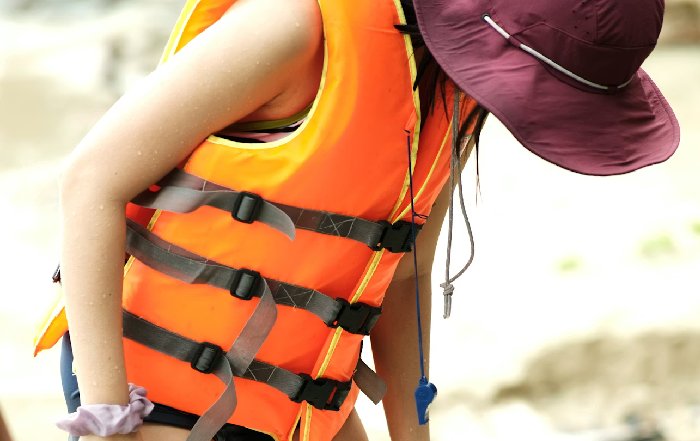
For families cruising with children, safety is not a collection of equipment but a culture that must be consciously created and reinforced every day. In mature family cruising programs, parents treat the yacht as a dynamic risk environment, where conditions can change rapidly and where clear rules, repetitive training and age-appropriate responsibility are the first line of defence. Lifejackets, tethers, jacklines, harnesses and personal locator beacons are essential, but they are only effective when children are trained to use them consistently and understand the reasons behind the rules. Many experienced cruising families now adopt written "ship rules" that cover everything from footwear and sun protection to night-time movement on deck, and these rules are reviewed and adapted as children grow older and more capable.
Professional frameworks have helped formalise this approach. Guidance from organisations such as the Royal Yachting Association in the United Kingdom and the United States Coast Guard provides clear benchmarks for equipment and training, and parents increasingly draw on these standards when planning their own safety manuals and emergency drills. Families are encouraged to learn more about structured safety recommendations through resources such as the U.S. Coast Guard Boating Safety portal and the RYA's training pages, which outline age-appropriate skills and certifications. Many long-term cruisers now incorporate regular man-overboard simulations, fire drills, abandon-ship rehearsals and medical scenarios into their routine, ensuring that children understand not only what to do but also why speed, calmness and teamwork matter in a genuine emergency.
The medical dimension of safety afloat has also become more sophisticated. In 2026, it is increasingly common for cruising families to undertake advanced first-aid and offshore medical training, sometimes including paediatric modules tailored to remote environments. Organizations like St John Ambulance and the Red Cross have expanded their offerings in this area, while telemedicine providers and specialist maritime medical services have made it possible to access professional advice from almost anywhere. Parents planning multi-year voyages are advised to assemble a comprehensive medical kit based on professional guidance, to maintain clear medical records for each family member, and to understand the specific requirements of the regions they plan to visit, whether that involves vaccinations for Southeast Asia, malaria precautions for parts of Africa and South America, or awareness of tick-borne illnesses in Northern Europe and North America.
Education Afloat: From Ad Hoc to Structured Excellence
Perhaps the most transformative development in family cruising over the past decade has been the professionalisation of education afloat. What began as improvised homeschooling has evolved into a structured blend of national curricula, international schooling platforms and experiential learning, enabled by high-bandwidth connectivity and a growing ecosystem of digital tools. Parents from Germany, France, Italy, the Netherlands and the Nordic countries increasingly seek to ensure that their children's education remains aligned with recognised standards, whether they intend to reintegrate into traditional schools or to pursue international qualifications such as the International Baccalaureate.
Online and hybrid schooling platforms accredited in major jurisdictions, including the United States, United Kingdom and Australia, now make it possible for children aboard yachts to follow rigorous programmes in mathematics, sciences, languages and humanities, often with live classes, assessments and teacher feedback. Families exploring this route are well served by independent research on remote learning from institutions such as UNESCO, whose resources on education and digital learning help parents understand best practices in structuring online study, managing screen time and supporting self-directed learning. For those who prefer more autonomy, traditional homeschooling frameworks, including those informed by Khan Academy and similar platforms, provide curricular scaffolding and assessment tools that can be adapted to the rhythm of passage-making and seasonal cruising.
The most successful education-afloat programs, however, do not rely solely on screens and textbooks; they integrate the yacht and the voyage into the curriculum itself. A crossing from the Canary Islands to the Caribbean becomes a multi-week project in meteorology, oceanography, physics and navigation, while a season in the Mediterranean can anchor studies in history, art, literature and comparative politics. Visits to museums, historical sites and cultural institutions in cities such as Rome, Athens, Barcelona, Singapore and Tokyo transform abstract lessons into tangible experiences, and many families now build their itineraries around such opportunities. Readers interested in how travel can be harnessed as a structured learning tool can explore relevant features in the travel and global sections of yacht-review.com, where itineraries are evaluated not only for scenic value but also for educational depth.
Technology as an Enabler of Safe and Effective Learning
By 2026, the technology stack aboard a family cruising yacht often rivals that of a small office and a remote classroom combined. Beyond navigation and safety electronics, families now depend on a carefully curated suite of devices, platforms and policies that ensure children can learn effectively while remaining protected from online risks. High-gain antennas, dual-SIM 5G routers, satellite communication terminals and network management systems are increasingly installed as standard on family-focused yachts, with redundancy designed to mitigate coverage gaps in remote regions. The technology coverage at yacht-review.com has tracked this progression, highlighting how advances in marine connectivity, cloud services and edge computing have reshaped what is possible for families afloat.
At the educational level, cloud-based learning management systems, video conferencing platforms and digital libraries have become indispensable, but they bring with them concerns about data security, privacy and content control. Parents must now act as both IT managers and digital guardians, implementing content filters, usage schedules and device policies that balance academic requirements with healthy screen habits. Guidance from organisations such as Common Sense Media and research from bodies like the OECD on digital education and wellbeing can help families define age-appropriate boundaries, ensuring that children develop digital literacy and critical thinking without becoming over-dependent on constant connectivity. Offline resources, including downloaded course materials, e-books and pre-recorded lectures, remain critical for passages and remote anchorages where connectivity may be degraded or unavailable.
From a safety and operational standpoint, the integration of advanced navigation and monitoring systems has also improved the feasibility of cruising with children. Modern chartplotters, AIS transponders, radar overlays and collision-avoidance algorithms reduce cognitive load on the watchkeeper, freeing parents to supervise children more effectively without compromising situational awareness. Remote monitoring of bilge levels, battery status, engine parameters and security systems via mobile devices allows parents to maintain oversight even when they are ashore with their children, while sophisticated autopilots and sail-handling systems reduce the number of crew required for routine manoeuvres. Nevertheless, seasoned professionals emphasise that technology must complement, not replace, seamanship, and that children benefit from being progressively introduced to manual skills, from paper chart navigation to line handling and sail trim.
Psychological, Social and Family Dynamics
Raising children aboard a yacht is as much a psychological and social project as it is a logistical and educational one. The confined space, constant proximity and periodic isolation that characterise long-term cruising can either strengthen family bonds or expose unresolved tensions, depending on how consciously parents manage expectations, routines and communication. Mental health professionals and experienced cruisers alike emphasise the importance of predictable daily rhythms that include dedicated study time, physical activity, shared meals, quiet reading and unstructured play, as well as clear boundaries between parental work, vessel operations and family leisure.
Socialisation remains a central concern for many parents considering a move afloat, particularly in regions with fewer established cruising communities. In popular cruising grounds such as the Caribbean, Mediterranean, South Pacific and parts of Southeast Asia, "kid boats" often form informal networks, with children building friendships that extend across anchorages and seasons. Events, regattas and rallies documented in the events and community sections of yacht-review.com increasingly include child-focused activities, from sailing clinics and beach games to cultural excursions and environmental projects. For families cruising in more remote or off-season locations, structured online communities and virtual study groups can partially compensate for reduced in-person interaction, though parents must remain alert to the particular challenges of digital-only friendships.
Psychological resilience is another key factor. Children who grow up aboard often develop high levels of adaptability, independence and cross-cultural competence, but they may also experience anxiety related to storms, mechanical failures or medical events. Parents are advised to discuss risks openly, to involve children in age-appropriate decision-making and problem-solving, and to model calm, methodical responses to unexpected situations. Research from organisations like the American Psychological Association on resilience and child development can help families understand how to foster coping skills and emotional literacy. In practice, many successful cruising families treat the yacht as both a home and a training ground for adulthood, where children are trusted with real responsibilities and are encouraged to reflect on their experiences through journals, photography, video projects or blogs.
Sustainability, Responsibility and Global Citizenship
In 2026, family cruising exists within a broader conversation about climate change, marine conservation and responsible travel. Parents who choose to raise and educate their children aboard are increasingly aware that their lifestyle has both environmental costs and unique opportunities to instil a deep sense of stewardship. Advances in yacht design, propulsion and onboard systems have enabled more sustainable cruising practices, from hybrid propulsion and regenerative energy systems to advanced wastewater treatment and sustainable materials. Coverage in the sustainability and business sections of yacht-review.com has highlighted how builders, equipment manufacturers and marinas in Europe, North America and Asia are responding to regulatory and market pressures by investing in greener technologies and infrastructure.
For families, the practical application of sustainable principles can be woven into both daily routines and the educational curriculum. Children can participate in energy budgeting, waste reduction, water conservation and provisioning choices, learning to evaluate products based on packaging, origin and environmental impact. Partnerships between cruising families and marine conservation organisations, including citizen science initiatives supported by bodies like NOAA and Ocean Conservancy, enable children to contribute to data collection on water quality, marine life and plastic pollution, transforming abstract environmental concerns into tangible, place-based learning. Parents who wish to deepen this dimension of their programme can explore independent resources that help them learn more about sustainable business practices, connecting personal choices aboard with wider economic and policy trends.
Global citizenship is the natural extension of this sustainability mindset. Children who grow up crossing borders and oceans gain first-hand exposure to diverse cultures, languages, political systems and socioeconomic realities, from the marinas of the United States and Western Europe to fishing villages in Southeast Asia, Pacific island communities and ports in Africa and South America. When parents approach these encounters with humility and respect, emphasising listening over judgement and reciprocity over consumption, children can develop a nuanced understanding of privilege, inequality and interdependence. Thoughtfully designed projects, such as language exchanges, local school visits, volunteering and cultural workshops, can deepen this learning, turning the yacht into a bridge rather than a bubble.
The Role of Professional Guidance and Industry Evolution
The rise of families cruising with children has not gone unnoticed by the wider yachting industry. Builders, brokers, charter companies, training centres and insurers have all begun to adapt their offerings to this growing segment, recognising that family-focused cruising represents a long-term, multi-region market rather than a transient trend. Shipyards in Italy, France, the Netherlands, Germany and the United Kingdom now routinely consult child-safety specialists and educational advisors when developing new models or custom projects aimed at family owners, while charter operators in the Caribbean, Mediterranean, Australia and Southeast Asia increasingly offer family-oriented packages that include child-safe equipment, flexible schooling support and curated educational excursions.
Professional training organisations have also expanded their curricula to address the specific needs of family crews. Courses that combine traditional seamanship with family dynamics, onboard education planning and child safety protocols are gaining traction, and insurers in markets such as the United States, Canada and Europe are beginning to recognise the value of such training in underwriting decisions. Business analysts following the yacht sector will find relevant commentary in the news and business sections of yacht-review.com, where the economic implications of these shifts are examined alongside technological and regulatory developments.
For individual families, engaging with professional expertise early in the planning process can significantly improve outcomes. Consulting naval architects on layout and safety, educational specialists on curriculum design, medical professionals on offshore health planning and experienced cruisers on route selection helps transform an aspirational vision into a robust, actionable plan. Many families now treat the preparation phase as a multi-year project in its own right, using shorter coastal cruises, charters and training courses to test assumptions, refine onboard systems and assess how children respond to life at sea before committing to extended bluewater itineraries.
Sailing Ahead: A Mature, Trustworthy Pathway for Families
Cruising with children has evolved into a mature, credible pathway for families seeking an alternative to conventional land-based life, combining rigorous safety standards, high-quality education and unparalleled experiential learning. The lifestyle is demanding and not suited to every family, but for those who approach it with careful planning, realistic expectations and a commitment to continuous learning, it can deliver extraordinary rewards: stronger family bonds, resilient and adaptable children, and a lived understanding of the world that no classroom alone can provide.
Yacht review occupies a distinctive position within this ecosystem, curating insights from designers, builders, educators, safety experts and cruising families across its integrated coverage of lifestyle, history, cruising and reviews. As more families from the United States, United Kingdom, Europe, Asia-Pacific and beyond contemplate taking their children to sea, the need for authoritative, experience-based guidance will only grow. The future of family cruising will be shaped by technological innovation, regulatory evolution and shifting cultural attitudes toward work, education and travel, but its core will remain constant: parents and children sharing the challenges and wonders of the ocean, learning together how to move through the world with competence, curiosity and care.