

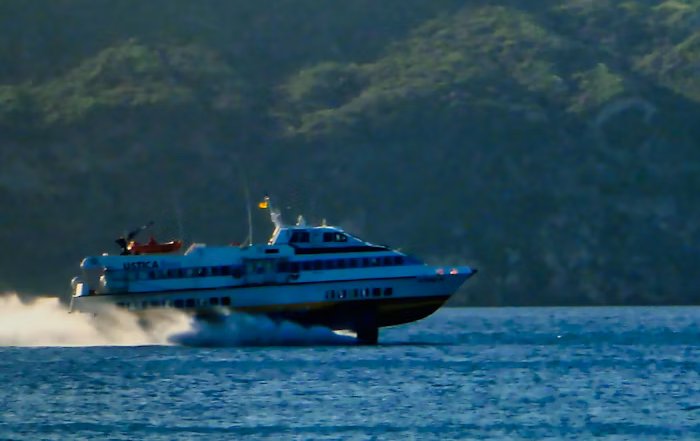
A New Generation of Foiling Day Boats
A Turning Point for Performance Day Boating
These days foiling technology has moved decisively from the rarefied world of grand-prix sailing and experimental prototypes into the mainstream of premium day boating, and nowhere is this transition more visible than in the new generation of foiling day boats now appearing in marinas from Miami and Cannes to Sydney and Singapore. What was once the preserve of America's Cup campaigns and a handful of avant-garde shipyards has become a serious commercial segment, with established builders and ambitious start-ups competing to define the aesthetics, performance envelope, and ownership experience of the foiling leisure craft of the future. For yacht-review.com, which has followed this cool evolution from early concept studies to fully fledged production models, this moment represents a pivotal convergence of design innovation, sustainability pressures, and changing expectations among affluent, globally mobile owners.
This new class of foiling day boats is not merely about higher speeds and dramatic imagery of hulls levitating above the water, although both remain powerful attractions. It reflects a broader rethinking of what a day boat should be in an era shaped by climate concerns, digital integration, and a more experience-driven luxury market. As foiling systems become more refined, more automated, and more closely integrated with electric and hybrid propulsion, they are redefining comfort, efficiency, and range expectations in a way that would have seemed improbable a decade ago. In parallel, the business models around these vessels, from fractional ownership to high-end charter and resort fleets, are evolving rapidly, a trend closely tracked in the business coverage at yacht-review.com and its dedicated marine business insights section.
From Experimental Curiosity to Market Segment
The journey from experimental foiling prototypes to commercially viable day boats has been shaped by several key technological and regulatory milestones. Early hydrofoil experiments in the mid-20th century demonstrated the hydrodynamic advantages of lifting a hull clear of the water, but it was not until the 2010s, with the advent of foiling America's Cup catamarans and the subsequent spread of foiling one-designs and boards, that the broader leisure market began to take real notice. The combination of carbon composites, advanced simulation tools, and increasingly powerful yet compact electric drivetrains created a fertile environment for innovators to attempt what had previously been considered impractical for private owners.
By the early 2020s, pioneering brands such as Candela, Enata, and Foiler began delivering early series-production foiling day boats, while electric-focused builders in Europe and North America used these projects to demonstrate the range and efficiency advantages of hydrofoils. Public interest was amplified by coverage from mainstream business and technology media, with outlets like the Financial Times and Bloomberg exploring how hydrofoils might transform coastal mobility and premium waterborne transport. Concurrently, regulatory bodies and safety agencies, including organizations referenced by the International Maritime Organization at imo.org, started to examine how existing frameworks for small craft could accommodate vessels that operated at higher speeds and in a different dynamic regime than conventional planing hulls.
For yacht-review.com, which documents the historical arc of yachting at its history and heritage section, this progression is seen as part of a longer lineage of step-changes in small boat design, comparable in impact to the adoption of fiberglass in the post-war period or the widespread emergence of high-performance planing hulls in the 1970s and 1980s. However, foiling adds an additional layer of complexity, as it merges naval architecture with aviation-style control logic and sensor fusion, demanding a different level of engineering integration and validation.
Design Language: From Technical Curiosity to Desirable Object
The most visible change in the new generation of foiling day boats is the evolution of their design language. Early models often looked like engineering demonstrators, with exposed struts, visibly experimental appendages, and interiors that prioritized weight savings over comfort. By contrast, the 2025-2026 cohort of foiling day boats embraces a more mature, lifestyle-oriented design ethos, aiming to compete directly with conventional premium day boats on aesthetics, onboard comfort, and social space, rather than relying solely on the novelty of flight.
Design studios in Italy, France, and the United Kingdom have been especially influential in this transition, working closely with builders to reconcile the strict structural and weight constraints of foiling platforms with the expectations of owners who might previously have chosen a classic open day cruiser from Riva, Sunseeker, or Chris-Craft. At yacht-review.com, the design team's coverage within design features and analysis has highlighted how these projects increasingly involve multidisciplinary collaboration, bringing together naval architects, aerospace engineers, UX designers, and interior specialists.
Externally, contemporary foiling day boats tend to adopt clean, sculpted hull lines that conceal much of the foil mechanism when retracted, with carefully chamfered chines and low visual weight aft to emphasize the sensation of lift. The integration of folding or retractable foils is now handled with far greater elegance, allowing boats to berth in standard marinas or be trailered in some smaller sizes, an important practical consideration for owners in markets such as the United States, Australia, and New Zealand. Internally, layouts increasingly mirror those of high-end non-foiling day cruisers, with generous sunpads, convertible seating, compact galleys, and protected helm stations that emphasize all-weather usability in regions like Northern Europe and Canada.
Technology at the Core: Foils, Control Systems, and Propulsion
Beneath the refined exterior, the technological sophistication of the latest foiling day boats is what truly distinguishes them from earlier efforts. The core hydrofoil architectures fall into three broad categories: fully submerged foils with active control, surface-piercing foils with passive stability characteristics, and hybrid systems that blend elements of both. Each approach carries trade-offs in terms of efficiency, sea-state tolerance, and complexity, and different builders have made distinct strategic choices based on their target markets and price points.
Active foil systems rely on a network of sensors, including accelerometers, gyros, and sometimes forward-looking sonar, feeding into control algorithms that adjust foil angle and ride height in real time. This approach, inspired in part by aerospace fly-by-wire systems and high-performance sailing campaigns, allows for smoother ride characteristics in choppy conditions and can automatically compensate for load changes and shifting centers of gravity as guests move around the deck. The development of these systems has been accelerated by advances in marine electronics and automation from companies such as Raymarine, Garmin, and Navico, whose broader technology roadmaps are often discussed in resources like IHS Markit's maritime technology insights and other specialist analyst platforms.
Propulsion is another defining axis of differentiation. The majority of new-generation foiling day boats in 2026 adopt fully electric or hybrid-electric systems, leveraging the inherent efficiency gains of foiling to extend range and reduce battery capacity requirements. As studies summarized by the International Energy Agency at iea.org have underscored, the combination of electric propulsion and hydrodynamic efficiency is one of the most promising pathways to decarbonizing short-range maritime transport, particularly in coastal and lake environments. For owners operating in regions with strong regulatory pressure on emissions, such as parts of Europe, California, and select Asian metropolises, this alignment with sustainability objectives is no longer a niche preference but increasingly a prerequisite.
At the same time, some yards continue to offer high-performance combustion or hybrid options, especially in markets where fast coastal commuting or long-distance cruising remains a priority and charging infrastructure is still developing. Here, foiling provides a different advantage: the ability to maintain high speeds in moderate sea states with significantly reduced fuel consumption compared to conventional planing hulls. The engineering challenge is to ensure that these systems remain robust, serviceable, and safe across a broad range of operating conditions, a topic that yacht-review.com frequently revisits in its technology-focused coverage.
The On-Water Experience: Comfort, Noise, and Range
For owners and guests, the most immediately noticeable difference when stepping onto a modern foiling day boat is the quality of the ride once the vessel transitions onto its foils. At speed, hull-borne slamming is largely eliminated, spray is significantly reduced, and the acoustic environment is transformed, particularly on electric models where machinery noise is minimal. This combination of low noise, low vibration, and reduced motion has important implications not only for perceived luxury but also for accessibility, making day boating more appealing to those who might previously have been deterred by seasickness or discomfort in choppy waters.
Range remains a key consideration, especially for electric foiling boats. While not yet matching the longest-legged diesel-powered planing craft, the latest generation of foiling day boats has made notable progress, thanks to both incremental improvements in battery energy density and the efficiency gains of refined foil geometry and control logic. Owners in cruising hotspots such as the Mediterranean, the Caribbean, and the Pacific Northwest are finding that typical day-use profiles-short hops between anchorages, lunch stops, and watersports locations-fit comfortably within the practical range envelope of current models. For those interested in planning such itineraries, the cruising guides and destination coverage at yacht-review.com increasingly incorporate foiling-specific considerations, from charging availability to recommended speed and sea-state guidelines.
Another experiential dimension is docking and low-speed maneuvering. Modern foiling day boats place considerable emphasis on intuitive control at displacement speeds, often employing bow thrusters, joystick systems, and advanced dynamic positioning to compensate for the unfamiliar geometry of foils and the need to protect appendages in tight quarters. Manufacturers have invested heavily in helm interface design, drawing on human-machine interaction research and automotive UX paradigms, an area where cross-industry insights from organizations like McKinsey & Company, accessible via mckinsey.com, have influenced how builders think about owner onboarding and training.
Business Models and Market Adoption
The commercial landscape for foiling day boats has evolved markedly since the first pioneering models reached early adopters. Initially targeted at highly technical, enthusiast owners willing to accept prototype-like quirks and higher maintenance overheads, these boats are now being positioned as credible alternatives to conventional premium day cruisers for a broader, though still affluent, customer base. This shift has been enabled by more predictable performance, improved reliability, and a growing ecosystem of trained service partners.
In parallel, new business models have emerged to accelerate adoption. High-end resorts and branded residences in regions such as Southeast Asia, the Caribbean, and the Mediterranean are incorporating foiling day boats into their mobility and experience offerings, using them for airport transfers, private excursions, and branded water-shuttle services. Charter operators in cities including Miami, Dubai, and Singapore are experimenting with foiling fleets that offer time-compressed sightseeing and premium experiences for corporate and leisure clients, a trend mirrored in data and case studies periodically highlighted in the news and market updates section of yacht-review.com.
Fleet operators and institutional buyers are particularly sensitive to lifecycle costs and sustainability metrics, and here foiling day boats have a compelling story to tell. Reduced energy consumption per passenger-kilometer, lower wake impact in sensitive waterways, and the marketing value of visibly innovative, low-emission craft align with broader corporate ESG commitments. Organizations such as the World Economic Forum, via resources at weforum.org, have drawn attention to the role of advanced marine mobility in sustainable urban development, and foiling day boats are increasingly cited as part of this narrative, especially in waterfront cities seeking to alleviate road congestion and reduce emissions.
Sustainability and Regulatory Pressures
The rise of foiling day boats cannot be understood in isolation from the broader regulatory and societal shift toward decarbonization and environmental stewardship. Coastal and inland waters across Europe, North America, and parts of Asia are subject to increasingly stringent emissions and noise regulations, as well as growing scrutiny of wake and shoreline impact. Foiling, by lifting hulls clear of the water and reducing drag, directly addresses several of these concerns, particularly when combined with electric propulsion.
Environmental agencies and non-governmental organizations, drawing on research synthesized by bodies such as the Intergovernmental Panel on Climate Change at ipcc.ch, have underscored the need for rapid reductions in emissions across all transport modes, including recreational boating. In response, classification societies and standards bodies are developing frameworks specifically tailored to high-speed, low-emission craft, while port authorities and marinas are beginning to offer incentives-such as reduced fees or preferential berthing-for electric and low-impact vessels. For readers interested in how these policy trends intersect with yacht ownership and operation, yacht-review.com maintains dedicated coverage in its sustainability section, with analyses that place foiling developments within the wider maritime decarbonization agenda.
At the same time, sustainability is increasingly a demand-side driver. Younger buyers in markets like Germany, Sweden, Norway, and Canada, many of whom have grown up with electric vehicles and are attuned to climate discourse, often view traditional high-consumption powerboats as misaligned with their values. For these customers, foiling day boats offer a way to enjoy high-performance leisure boating while maintaining a more consistent personal sustainability narrative, a consideration that also influences corporate buyers seeking to align hospitality and incentive programs with ESG commitments.
Global Adoption Patterns and Regional Nuances
Although foiling day boats are a global phenomenon, adoption patterns vary significantly by region, shaped by infrastructure, regulatory context, cultural attitudes toward innovation, and the specific characteristics of local cruising grounds. In the United States, early uptake has been particularly strong on the West Coast and in tech-adjacent hubs where electric mobility and advanced design are already part of the lifestyle fabric. The East Coast, from New York to Florida, is now catching up, with foiling day boats appearing in brokerage listings and marina berths alongside traditional sport boats and tenders, a trend that yacht-review.com tracks in its boats and model overviews.
In Europe, Scandinavia has emerged as a natural early adopter, thanks to a combination of strong environmental policy, high purchasing power, and a cultural affinity for both design minimalism and outdoor recreation. Italy, France, and Spain have seen growing interest from style-conscious owners along the Côte d'Azur, the Balearics, and the Amalfi Coast, where the visual drama of foiling aligns with a long tradition of glamorous day boating. In Germany, Switzerland, and the Netherlands, lake and river environments provide ideal testbeds for electric foiling craft, supported by dense charging infrastructure and relatively predictable conditions.
Across Asia-Pacific, adoption is more uneven but increasingly significant. Singapore, Hong Kong, and select coastal cities in China and South Korea are exploring foiling day boats as part of premium urban mobility and hospitality offerings, while Australia and New Zealand see a blend of private ownership and high-end charter in regions such as the Whitsundays and the Hauraki Gulf. For a broader view of how these trends intersect with global yachting patterns, readers can consult yacht-review.com's global coverage hub, where regional dispatches and market reports frequently highlight foiling developments.
Lifestyle, Family Use, and Community Perception
As the technology matures, the narrative around foiling day boats is shifting from pure performance and innovation toward lifestyle integration and family suitability. Early adopters were often technophiles and performance enthusiasts; today's buyers are more likely to ask how a foiling day boat fits into a broader family and social ecosystem, including watersports, children's safety, and multigenerational use. Builders have responded with features such as safer boarding arrangements, integrated swim platforms that function effectively when the boat is not foiling, and configurable seating that allows both convivial entertaining and secure seating for younger passengers.
Noise reduction is particularly valued in family contexts, where the ability to converse at normal levels underway and to enjoy quieter anchorages becomes a significant quality-of-life factor. For families balancing work, school, and travel commitments across multiple regions, the prospect of a boat that can be used for quick, low-stress day trips rather than extended voyages also aligns well with modern time constraints. At yacht-review.com, the family-oriented content increasingly features case studies and owner interviews that explore how foiling day boats are being integrated into real-world lifestyles, from weekend escapes in New England to summer lake use in Finland and Canada.
Community perception is another dimension that cannot be overlooked. In some traditional yachting communities, the visual and behavioral distinctiveness of foiling boats initially generated skepticism or even resistance, particularly around perceived safety and wake concerns. Over time, however, as more professionally operated foiling craft demonstrate responsible operation and low environmental impact, attitudes are softening. Events and demonstrations at major boat shows and waterfront festivals, many of which are previewed and reviewed in yacht-review.com's events coverage, have played a role in normalizing foiling as part of the broader boating landscape.
Challenges Ahead: Infrastructure, Training, and Standardization
Despite impressive progress, the foiling day boat sector still faces significant challenges on the path from early majority adoption to true mainstream status. Charging infrastructure remains a limiting factor for fully electric models in certain regions, particularly outside major urban centers and established yachting hubs. While marinas in parts of Europe, North America, and Asia are investing in higher-capacity shore power and fast-charging solutions, the pace of deployment is uneven, and coordination between utilities, local governments, and private operators is often complex. Reports and guidance from organizations such as the International Council on Clean Transportation, accessible at theicct.org, provide useful frameworks for understanding these infrastructure challenges and potential policy responses.
Training and certification present another set of issues. Operating a foiling day boat, while increasingly automated, still demands a nuanced understanding of speed, sea state, and traffic conditions, especially during takeoff and landing phases. Many manufacturers now offer comprehensive training programs, and some flag states and classification societies are exploring foiling-specific endorsements or guidance notes. Until such frameworks are widely adopted, insurers and lenders may remain cautious, affecting financing and resale values. For prospective owners, the in-depth reviews and operational analyses published by yacht-review.com can serve as a critical resource in evaluating both the capabilities and the practical demands of individual models.
Standardization of components and interfaces is also an emerging concern. With multiple proprietary foil geometries, control systems, and battery architectures in the market, long-term serviceability and upgrade paths can be difficult to assess. Industry forums and working groups are beginning to discuss common protocols and safety standards, but competitive pressures and rapid innovation cycles can slow convergence. Savvy buyers are therefore placing a premium on builders with strong balance sheets, established service networks, and clear technology roadmaps, reflecting a broader shift in luxury purchasing behavior where long-term support and brand resilience weigh heavily alongside design and performance.
The Next Spets of Yacht Review in a Foiling Future
As the foiling day boat segment moves from novelty to a serious pillar of the premium day boating market, the need for independent, technically literate, and globally informed coverage becomes ever more important. yacht-review.com, with its integrated focus on reviews, design, technology, business, and sustainability, is uniquely positioned to guide current and prospective owners, industry professionals, and policymakers through this transition.
The platform's editorial approach emphasizes first-hand testing, comparative analysis across regions from North America and Europe to Asia and Africa, and a commitment to Experience, Expertise, Authoritativeness, and Trustworthiness. By combining sea trials with interviews of designers, engineers, and owners, and by situating individual models within broader market and regulatory trends, yacht-review.com aims to provide the depth and context necessary for well-informed decisions in a rapidly changing landscape.
Looking ahead, foiling day boats appear poised to play an increasingly central role in both the aspirational and practical dimensions of modern yachting. They offer a compelling synthesis of performance, efficiency, and experiential quality that aligns with the evolving expectations of a global, environmentally conscious, and technologically sophisticated clientele. As infrastructure improves, standards mature, and the knowledge base expands, these craft are likely to move from the cutting edge into the core of the premium day boat market, reshaping not only how people move on the water, but also how they think about the relationship between innovation, luxury, and responsibility in the marine environment.
For those seeking to understand and engage with this transformation-whether as owners, operators, investors, or policymakers-staying close to the evolving insights, analyses, and on-water experiences documented at yacht-review.com will be essential. The new generation of foiling day boats is not just a technological curiosity; it is a defining chapter in the ongoing story of how humanity designs, builds, and enjoys its passage across the water.