

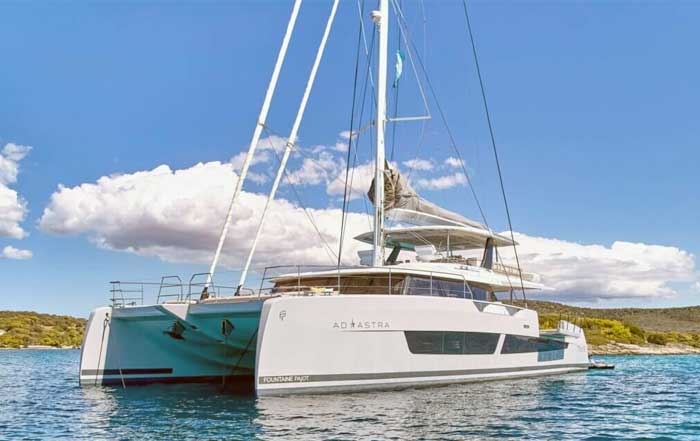
Minimalist Catamaran Interiors: When Less Becomes the Ultimate Luxury
Minimalist design has moved from being a visual trend to becoming the defining language of contemporary catamaran interiors, and by 2026 it is clear that this evolution is reshaping expectations across the global yachting community. For the readership of yacht-review.com, which spans seasoned owners, designers, and business stakeholders from North America, Europe, Asia, and beyond, minimalism now represents far more than a clean aesthetic; it is a strategic choice that touches experience, technology, sustainability, and long-term asset value. The modern catamaran has emerged as the ideal platform for this shift, with its broad beam, generous volume, and inherently stable architecture allowing designers to express a refined, uncluttered vision of life at sea that aligns with how high-net-worth individuals increasingly live and work in 2026.
From the United States and United Kingdom to Germany, Singapore, Australia, and the Mediterranean hubs of France, Italy, and Spain, owners are gravitating toward interiors that feel more like contemporary waterfront residences than traditional yachts. In this environment, brands such as Sunreef Yachts, Lagoon, Fountaine Pajot, Silent-Yachts, and Balance Catamarans have become reference points for an aesthetic that privileges calm over ostentation and intentionality over accumulation. Minimalist catamaran interiors now reflect a global convergence of design philosophies, technological innovation, and environmental responsibility, and they sit at the heart of the editorial focus at Yacht Review's Design section, where these trends are documented and critically examined for a discerning audience.
Redefining Luxury: Minimalism as a Strategic Design Philosophy
The appeal of minimalism in 2026 is inseparable from broader lifestyle and business shifts. Owners in North America, Europe, and Asia increasingly divide their time between remote work, high-intensity professional commitments, and extended cruising; they expect their yachts to function as mobile offices, wellness retreats, and family homes, often simultaneously. In this context, the old equation of luxury with ornamentation and visual density feels outdated. Minimalist interiors, with their emphasis on open volume, natural light, and material honesty, offer a more sophisticated, future-oriented expression of status: quiet confidence rather than conspicuous display.
From an experiential standpoint, minimalism on catamarans is about choreographing space so that every surface and junction contributes to clarity and calm. Excess cabinetry is eliminated, visual lines are simplified, and circulation routes are intuitively organized to reduce cognitive load. Owners report that when they step aboard a well-executed minimalist catamaran, the immediate sensation is one of mental decompression, a contrast to the constant visual and digital noise of urban life. This is particularly relevant for families and multigenerational owners, a topic explored frequently in Yacht Review's Family coverage, where design is evaluated not only for visual impact but for its effect on relationships, privacy, and shared experiences on board.
Light, Space, and Material Integrity: The Core Principles
Minimalist catamaran interiors in 2026 are built on three interlocking pillars: light, space, and material integrity. Catamarans offer a naturally generous platform, and leading naval architects and interior designers have learned to exploit this geometry with remarkable precision. Walls and partitions are minimized, structural elements are integrated into furniture where possible, and panoramic glazing wraps saloons and owner suites to create an almost loft-like transparency. The horizon becomes the primary artwork, and the sea itself functions as the dominant decorative element.
Natural light is treated as a structural material, not an afterthought. Full-height windows, overhead skylights, and glazed aft bulkheads are calibrated to bring daylight deep into the hulls, reducing reliance on artificial lighting and enhancing the perception of volume. At night, layered LED systems allow for subtle shifts from functional brightness to intimate warmth, echoing the approach seen in high-end hospitality projects documented by organizations such as Dezeen and Architectural Digest. Materials are selected to reinforce this luminous quality: light oaks, ash, bamboo composites, and pale stone surfaces are paired with matte metals and finely woven textiles to create an environment that feels weightless yet grounded.
For readers of yacht-review.com, the technical underpinnings of this approach are frequently unpacked in the Technology section, where the relationship between structural engineering, glazing systems, and interior finishes is analyzed through the lens of performance, maintenance, and long-term durability.
Global Design DNA: From Scandinavian Calm to Japanese Precision
The minimalist catamaran interior of 2026 is an inherently global construct, drawing on a cross-pollination of design cultures that has accelerated over the last decade. Scandinavian influences from Denmark, Sweden, Norway, and Finland contribute an emphasis on light, warmth, and tactile comfort: bleached timbers, wool textiles, honest joinery, and a pervasive sense of hygge create inviting spaces that remain visually restrained. Japanese design principles, particularly the concepts of ma (the space between things) and wabi-sabi (the beauty of imperfection and impermanence), bring an appreciation of emptiness, asymmetry, and the quiet power of negative space.
This fusion, often described as "Japandi," is now a familiar language in premium catamarans delivered to clients in Europe, North America, and Asia-Pacific. It manifests in low, linear furniture; sliding panels that redefine spaces without adding bulk; and carefully orchestrated sightlines that frame both interior vignettes and external sea views. Leading studios such as Nauta Design, Winch Design, and Vripack have become adept at translating these philosophies into marine environments, where weight constraints, safety regulations, and durability requirements add layers of complexity not found in land-based projects.
The global nature of this design dialogue is a recurring theme in Yacht Review's Global section, which tracks how aesthetic ideas travel between Milan, Copenhagen, Tokyo, Sydney, and the major yacht-building hubs of Italy, France, Poland, and South Africa.
Technology as Invisible Luxury
Minimalist interiors demand that technology recede from view, yet owners in 2026 expect unprecedented levels of digital sophistication. The solution has been a quiet revolution in integration. Navigation, climate control, audio-visual systems, lighting, and shading are now orchestrated through centralized platforms from companies such as Garmin, Raymarine, B&G, Lutron, and Crestron, with interfaces accessible via touchscreens, tablets, and smartphones. The hardware itself is often hidden behind flush panels or embedded within furniture, preserving the visual purity of the space.
At the same time, the rise of digital-twin modeling and virtual prototyping has transformed how these interiors are developed. Designers work within advanced 3D environments to test sightlines, light behavior, and ergonomics long before production begins, a process that reduces errors, shortens build times, and supports more ambitious minimalist geometries. Prospective owners in the United States, United Kingdom, Germany, and Singapore increasingly expect immersive virtual walkthroughs as part of the decision-making process, and shipyards have responded with sophisticated AR and VR experiences that mirror best practices from sectors covered by platforms such as Wired and MIT Technology Review.
For the business-minded reader, this convergence of design and digitalization is examined in depth in Yacht Review's Business coverage, where the financial and operational implications of these technologies are explored from an investment and ownership perspective.
Sustainability and Responsible Minimalism
Minimalism and sustainability are natural allies, and in 2026 this alignment has become central to the value proposition of modern catamarans. Owners across Europe, North America, and Asia are increasingly sensitive to environmental impact, and regulatory pressures in regions such as the European Union, the United States, and parts of Asia-Pacific are pushing the industry toward cleaner solutions. Minimalist interiors, with their emphasis on reduction, durability, and material honesty, provide an ideal framework for this transition.
Builders such as Sunreef Yachts Eco, Silent-Yachts, HH Catamarans, and Fountaine Pajot have invested heavily in eco-oriented materials: bio-based resins, FSC-certified woods, recycled textiles, cork, basalt fiber, and plant-based leathers now appear regularly in high-end fit-outs. Lightweight composite structures reduce fuel consumption or increase the efficiency of electric propulsion systems, while solar arrays and large lithium battery banks support extended periods of silent, emission-free operation. These developments are consistent with broader sustainability narratives tracked by organizations such as UNEP and the World Economic Forum, where maritime decarbonization is a growing focus.
On yacht-review.com, this intersection of design restraint and environmental performance is a core editorial pillar of the Sustainability section, which evaluates not only the materials and technologies themselves but also their long-term lifecycle implications and relevance to cruising grounds from the Mediterranean and Caribbean to Southeast Asia and the South Pacific.
Furniture, Function, and the Economics of Space
One of the most sophisticated aspects of minimalist catamaran interiors is the way furniture is deployed to reconcile comfort, flexibility, and weight efficiency. In 2026, the best examples are characterized by built-in, low-profile seating that doubles as storage; dining tables that convert into coffee tables or additional berths; and modular lounge configurations that can be reoriented for private relaxation, family gatherings, or corporate entertaining. This is particularly important for owners who use their yachts in multiple modes, from private family cruising to charter operations in markets such as the Caribbean, Mediterranean, and Southeast Asia.
High-end residential brands including B&B Italia, Minotti, and Poliform continue to collaborate with yacht designers, adapting their signature pieces for marine conditions through lightweight structures, secure anchoring systems, and moisture-resistant finishes. The result is an interior language that feels familiar to owners accustomed to prime real estate in cities like New York, London, Zurich, Singapore, and Sydney, yet is optimized for the dynamic loads and spatial constraints of a seagoing vessel. Galley design follows the same logic: appliances are fully integrated, handles are minimized or eliminated, and worktops flow seamlessly into storage, creating a visual quietness that belies the functional sophistication beneath.
For readers interested in how such design decisions affect charter desirability, resale values, and operational efficiency, Yacht Review's Reviews section offers in-depth analyses of specific models, while Yacht Review's Boats hub provides a structured overview of the market landscape.
Sound, Light, and the Psychology of Calm
Minimalist catamaran interiors are increasingly designed with a nuanced understanding of human psychology. The interplay of light, acoustics, and color is calibrated to support mental well-being, focus, and restorative rest, reflecting research from fields such as environmental psychology and biophilic design. Neutral palettes-soft whites, sand, stone grays, and muted earth tones-form a backdrop against which the blues and greens of the surrounding sea become vivid, an approach that resonates strongly with owners seeking respite from overstimulating urban environments.
Acoustic design has become an equally important frontier. Engineers and interior architects collaborate to minimize mechanical noise, vibration, and reverberation, using multilayer insulation, decoupled structures, and sound-absorbing finishes. On well-executed catamarans, the dominant sounds underway are the natural ones: wind, water, and the muted hum of propulsion systems, particularly when hybrid or fully electric configurations are employed. This "sound of silence" enhances the emotional impact of minimalist spaces, reinforcing the sense of sanctuary that many owners in markets as diverse as Canada, Switzerland, Japan, and New Zealand now expect from their yachts.
Such experiential refinements are frequently contextualized in Yacht Review's Lifestyle section, where interiors are evaluated not only for design innovation but for their impact on sleep quality, stress reduction, and the overall onboard lifestyle of owners, guests, and crew.
Cultural Symbolism and Market Perception
By 2026, minimalism in catamaran interiors has also acquired a specific cultural symbolism in the global yachting community. It signals a shift from display-oriented ownership to a more introspective, values-driven approach, particularly among younger entrepreneurs and professionals in the United States, United Kingdom, Germany, China, Singapore, and the Nordic countries. For this demographic, a yacht that is visually restrained, technologically advanced, and demonstrably sustainable communicates discernment, discipline, and long-term thinking.
This symbolism is increasingly visible at major events such as the Monaco Yacht Show, Cannes Yachting Festival, Fort Lauderdale International Boat Show, and key regional shows in Asia and Australia. Minimalist catamarans consistently draw attention not because they are visually loud, but because they project a coherent narrative of modern luxury that aligns with global trends tracked by institutions like McKinsey & Company and Boston Consulting Group, both of which highlight the growing importance of sustainability and authenticity in high-end consumer markets.
For readers of yacht-review.com, this cultural dimension is regularly explored in the Events section and the broader News hub, where editorial coverage connects aesthetic trends to shifting buyer profiles, charter demand, and regional market dynamics from Europe and North America to Asia, Africa, and South America.
Minimalism for Long-Range and Liveaboard Cruising
Another reason minimalism has taken root so deeply in catamaran interiors is its compatibility with long-range and liveaboard cruising, a lifestyle that has expanded significantly in the post-pandemic years. Owners from Canada, Australia, South Africa, Brazil, and New Zealand, as well as established European and North American markets, are increasingly choosing to spend months at a time aboard, often working remotely while exploring regions such as the Mediterranean, Caribbean, Pacific islands, and Southeast Asia.
For these owners, clutter is not simply an aesthetic issue; it is a practical and psychological burden. Minimalist interiors, with their emphasis on concealed storage, adaptable furniture, and efficient circulation, allow a family or couple to live aboard comfortably without feeling overwhelmed by possessions. When combined with solar generation, advanced battery systems, watermakers, and intelligent resource management software, these catamarans become self-sufficient platforms that support what some commentators have termed "blue-water minimalism": a lifestyle based on conscious consumption, mobility, and a close relationship with nature.
This evolving liveaboard culture is a recurring topic in Yacht Review's Cruising and Travel sections, where itineraries, refit strategies, and onboard life are examined through the lens of long-term comfort and operational resilience.
Craftsmanship, Customization, and the Business of Bespoke Minimalism
Minimalism may suggest simplicity, but in practice it often requires a higher standard of craftsmanship and project management than more decorative styles. In a pared-back interior, every junction, reveal, and alignment is exposed to scrutiny, and any imperfection becomes immediately visible. Shipyards such as Sunreef Yachts, Balance Catamarans, Privilege Marine, and Lagoon have therefore invested heavily in precision joinery, digital fabrication, and quality control processes capable of delivering the seamless surfaces and razor-sharp detailing that minimalist aesthetics demand.
At the same time, high-end owners in markets from the United States and Europe to Asia and the Middle East expect a high degree of customization. Minimalist catamaran interiors in 2026 are often the result of close collaboration between client, yard, and design studio, with choices ranging from alternative layout configurations to bespoke material palettes and integrated art installations. The challenge is to incorporate these personal touches without compromising the coherence and calm that define the minimalist language. When executed well, the result is a yacht that feels unmistakably individual yet visually timeless, a balance that enhances both personal satisfaction and long-term resale value.
The commercial and strategic implications of this bespoke minimalism-its effect on build times, pricing, and asset performance-are analyzed in Yacht Review's Business articles, where readers can assess how leading brands position themselves in an increasingly competitive and design-conscious global market.
Looking Ahead: Minimalism as a Long-Term Foundation
As 2026 unfolds, it is evident to the editorial team at yacht-review.com that minimalist catamaran interiors are not a transient fashion but a durable foundation for the next decade of yacht design. The convergence of environmental regulation, digital integration, and shifting cultural values suggests that simplicity, efficiency, and emotional clarity will only grow in importance. Artificial intelligence and smart materials will further enhance the responsiveness of interiors-adjusting lighting, temperature, and even furniture configurations to user behavior-yet the visible language is likely to remain calm, neutral, and restrained.
From a global perspective, this aesthetic continuity offers a common ground for owners from diverse cultures: a yacht delivered to a client in the United States, United Kingdom, Germany, China, or Singapore can express local nuances while still participating in a shared minimalist vocabulary that feels current and future-proof. For designers, builders, and investors, this provides a stable design framework within which innovation can unfold incrementally rather than through disruptive stylistic swings.
For readers who wish to follow this evolution in detail-through model launches, technology updates, market analysis, and in-depth design features-the core hubs of yacht-review.com remain essential reference points: Design for aesthetic and architectural insight, Technology for innovation, Sustainability for environmental progress, History for context, and Lifestyle for understanding how these interiors shape the lived experience of owners and guests.
Minimalist catamaran interiors, as they stand in 2026, embody a mature synthesis of form, function, and responsibility. They affirm that in the most successful examples of contemporary yacht design, true luxury is measured not by how much is added, but by how intelligently everything unnecessary is left out-leaving space for light, silence, and the endless horizon to do the rest.