

Seabourn: Ultra-Luxury Voyaging Through a Yacht Owner's Lens
Seabourn continues to occupy a singular position in the ultra-luxury cruise and expedition market, standing at the intersection of private yacht culture and large-ship capability in a way that resonates deeply with the readership of Yacht Review. Since its founding in 1988, the brand has evolved from a pioneering small-ship cruise line into a benchmark for experiential, design-driven, and sustainability-aware ocean travel, appealing to discerning guests from North America, Europe, and Asia who are accustomed to the standards of fine superyacht living. For yacht owners, charter clients, and maritime investors who follow developments across reviews, design, cruising, and business, Seabourn's trajectory offers a revealing case study in how experience, expertise, and trust can be translated into long-term competitive advantage at sea.
From Boutique Vision to Mature Ultra-Luxury Brand
From its earliest days, the Seabourn brand has been defined less by scale and more by philosophy. Unlike conventional cruise lines that built their models around volume, Seabourn focused on intimacy and the feeling of being aboard a private yacht, with early vessels such as Seabourn Pride, Seabourn Spirit, and Seabourn Legend deliberately designed for a few hundred guests rather than thousands. This choice shaped everything that followed: service culture, onboard layout, culinary identity, and the kind of guests it attracted.
Over time, as the brand matured and the ultra-luxury segment expanded, Seabourn introduced Seabourn Odyssey, Seabourn Sojourn, and Seabourn Quest, followed by the more spacious Seabourn Encore and Seabourn Ovation, whose design language and onboard ambience align closely with the refined, residential aesthetic familiar to readers of Yacht Review's design coverage. These ships extended Seabourn's reach while preserving the hallmarks that built trust with its clientele: all-suite accommodation, a high staff-to-guest ratio, and a service style that feels more like a well-run private yacht than a hotel at sea.
For yacht-savvy observers, what stands out is the brand's ability to maintain coherence as it grew. While many cruise operators responded to rising demand with larger ships and more theatrical features, Seabourn stayed close to its original promise of quiet sophistication, investing in materials, craftsmanship, and spatial flow rather than spectacle. This long-term consistency has underpinned its authority in the market and helps explain why the brand remains a reference point for ultra-luxury voyaging in 2026.
Small-Ship Intimacy as Strategic Differentiator
The Seabourn experience is built around a guest count that rarely exceeds 600 per ship, a scale that will feel familiar and comfortable to owners and charterers who follow Yacht Review's boats and superyacht profiles. This deliberate constraint enables an atmosphere that is social yet never crowded, where crew can recognize guests by name, and where the onboard rhythm mirrors that of a well-managed private vessel rather than a resort.
Suites are all ocean-view, predominantly with verandas, and their layout reflects a yacht-inspired approach to ergonomics: generous yet efficient, with attention paid to sightlines, natural light, and the tactile quality of finishes. For readers accustomed to scrutinizing joinery, hardware, and material palettes, Seabourn's interiors show a clear lineage from high-end residential and superyacht design, translated into a commercial context. This is particularly evident on Seabourn Encore and Seabourn Ovation, where designer Adam D. Tihany has created spaces that feel curated rather than themed, with an emphasis on calm, layered textures and understated luxury.
From a business perspective, this small-ship model has proven resilient. While it limits absolute capacity, it also supports premium pricing, high repeat-guest ratios, and strong brand loyalty, reinforcing Seabourn's position within the ultra-luxury segment tracked closely by analysts and investors across global yachting and cruise markets.
Expedition Luxury: Seabourn Venture and Seabourn Pursuit
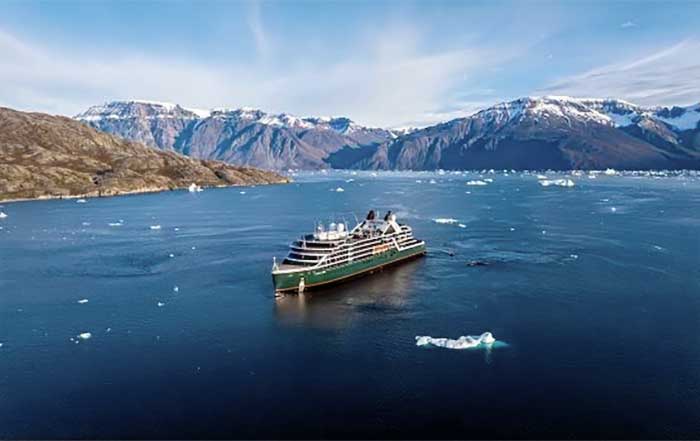
One of the most important developments of the past few years, both for Seabourn and for the wider high-end maritime sector, has been the rise of expedition cruising. With the launch of Seabourn Venture and Seabourn Pursuit, the brand has moved decisively into this space, offering polar-class capability while retaining the aesthetic and service standards that define its classic fleet.
These ships are built to PC6 Polar Class specifications, enabling safe navigation in ice-affected waters in Antarctica, the Arctic, Greenland, and other remote regions. They carry an array of expedition hardware-Zodiacs, kayaks, and custom-built submarines-allowing guests to explore coastlines, ice fields, and wildlife habitats far beyond the reach of traditional cruise itineraries. Yet inside, the environment remains firmly ultra-luxury: all-suite accommodation with verandas, refined public spaces, and culinary offerings shaped by the collaboration with Chef Thomas Keller, whose land-based restaurants such as The French Laundry are regularly cited among the best in the world by sources like The World's 50 Best Restaurants.
For the Yacht Review audience, these expedition ships are particularly interesting because they sit at the convergence of naval architecture, advanced technology, and hospitality design-a convergence that mirrors many of the trends seen in the latest explorer-style superyachts. The Seabourn Expedition Team, comprising marine biologists, glaciologists, historians, and photographers, adds a layer of intellectual depth that aligns with the experiential expectations of high-net-worth travelers who view exploration as both adventure and education. Readers who follow Yacht Review's cruising and technology features will recognize in Seabourn's expedition program a blueprint for how to integrate serious exploration with genuine comfort and safety.
Culinary Identity as Brand Signature
Culinary excellence has become one of the most visible markers of ultra-luxury credibility, and Seabourn's partnership with Chef Thomas Keller has been central to its positioning. Menus on selected ships and venues draw inspiration from Keller's philosophy of ingredient-driven, technically precise cuisine, interpreted for a maritime context with an emphasis on consistency and guest choice. For travelers who are familiar with leading gastronomic institutions, this association signals standards that go beyond typical cruise dining.
Equally important is the way Seabourn adapts its culinary program to itinerary. In the Mediterranean, menus may highlight regional olive oils, seafood, and wines in a way that reflects local provenance; in Northern Europe, Nordic influences and seasonal produce may come to the fore; in Asia-Pacific, spices and techniques from Japan, Thailand, and Singapore are incorporated with care. This degree of contextualization mirrors the approach taken by top hotels and resorts documented by organizations such as Forbes Travel Guide, and it reinforces Seabourn's authority as a curator of place-specific experiences rather than a provider of generic luxury.
For readers of Yacht Review's lifestyle coverage, where fine dining, wine programs, and onboard entertaining are recurring themes, Seabourn's culinary strategy illustrates how gastronomy can function as both a differentiator and a storytelling device, connecting guests more deeply to the regions they visit.
Service Culture: Human-Centric Luxury in a Digital Age
What continues to distinguish Seabourn in 2026 is the depth of its service culture. The line's consistently high scores in guest satisfaction surveys from sources such as Condé Nast Traveler and Travel + Leisure reflect an approach that prioritizes emotional intelligence and personal recognition over scripted formality. Crew members are trained to anticipate preferences, remember names, and create moments that feel spontaneous yet carefully supported-an ethos that will be familiar to owners of well-run private yachts and to readers who value the human element in maritime hospitality.
In an era when many luxury brands are leaning heavily into automation and AI-driven personalization, Seabourn has adopted a more balanced stance. Technology is present-mobile apps for embarkation, excursion management, and onboard communication; robust connectivity for remote work and family contact-but it is kept deliberately in the background, serving logistics rather than defining the guest relationship. For business-minded readers of Yacht Review's industry analysis, this approach offers a useful case study in how to deploy digital tools without eroding the trust and intimacy that underpin high-end service models.
Design, Space, and the Language of Quiet Luxury
From a design perspective, the modern Seabourn fleet embodies a language of quiet luxury that resonates strongly with the superyacht aesthetic. Under the guidance of Adam D. Tihany, public spaces have been conceived as a series of flowing, interconnected environments rather than discrete "rooms," with transitions that echo the movement of guests throughout the day: coffee in a light-filled lounge, reading in a sheltered corner of the Observation Bar, aperitifs on an open deck with subtly framed sea views.
Materials tend toward natural woods, stone, and textiles in soft, layered tones, avoiding overt opulence in favor of refinement. This is particularly evident on Seabourn Ovation and Seabourn Encore, where the design vocabulary would not be out of place in a high-end residential project in London, New York, or Singapore. For Yacht Review readers who evaluate vessels through the lens of proportion, circulation, and craftsmanship, these ships demonstrate how commercial tonnage can still deliver a sense of intimacy and aesthetic coherence comparable to that of a custom yacht.
On the expedition side, Seabourn Venture and Seabourn Pursuit showcase how technical requirements-ice-strengthened hulls, specialized equipment storage, reinforced tenders-can be integrated without compromising ambience. Expedition lounges and briefing theaters are equipped with advanced audiovisual systems and interactive displays, aligning with the best practice standards promoted by institutions such as the International Association of Antarctica Tour Operators. Yet these spaces retain a club-like warmth, underscoring Seabourn's understanding that even in the most remote regions, guests expect an environment that feels curated, not clinical.
Sustainability and Responsible Luxury
As environmental scrutiny intensifies across the maritime sector, Seabourn has continued to invest in technologies and practices designed to reduce its ecological footprint and demonstrate credible alignment with international standards such as the IMO's MARPOL Convention. Newer ships incorporate energy-efficient propulsion, optimized hull forms, advanced wastewater treatment, and waste-management systems that meet or exceed regulatory requirements in key jurisdictions in Europe, North America, and Asia-Pacific.
On expedition itineraries in Antarctica, the Arctic, and other sensitive regions, Seabourn operates within strict environmental frameworks, coordinating with scientific advisors and local authorities to minimize disturbance to wildlife and habitats. Practices such as controlled landing numbers, biosecurity protocols, and guest education sessions align with guidelines promoted by organizations like the UN Environment Programme. For readers of Yacht Review's sustainability section, this demonstrates how a large-scale operator can adapt many of the same principles that are increasingly common in responsible yacht ownership and charter.
Beyond operational measures, Seabourn participates in broader ESG initiatives within Carnival Corporation, supporting research and community programs that connect tourism with local benefit. This includes collaboration with coastal communities, support for cultural preservation, and partnerships that channel guest interest into tangible conservation outcomes. Such initiatives reflect a recognition that long-term brand trust depends on more than compliance; it requires visible, verifiable commitment to stewardship.
Wellness and the Evolving Definition of Luxury
The integration of wellness into the Seabourn experience has become more pronounced, reflecting a wider shift across the luxury travel market in which guests from the United States, United Kingdom, Germany, Canada, Australia, and increasingly Asia view health, mental balance, and recovery from digital overload as central to their travel decisions. The Spa & Wellness with Dr. Andrew Weil program, developed with the renowned integrative medicine pioneer Dr. Andrew Weil, combines fitness, spa treatments, mindfulness sessions, and educational talks into a coherent offering that sits naturally within the voyage rather than feeling bolted on.
Morning yoga on deck, guided meditation with an ocean backdrop, and menus that incorporate lighter, nutritionally considered options enable guests to maintain or even enhance their wellness routines while at sea. This holistic approach aligns with wider industry trends documented by bodies such as the Global Wellness Institute and is particularly relevant to the Yacht Review community, many of whom approach the yachting lifestyle as a route to long-term wellbeing rather than short-term indulgence. Readers can find parallel perspectives in Yacht Review's lifestyle features, where wellness, design, and seaborne living are increasingly interlinked.
Global Itineraries and Market Reach
In 2026, Seabourn's itineraries span the globe, with strong deployment in the Mediterranean, Northern Europe, the Caribbean, and the Americas, alongside growing presence in Asia-Pacific and polar regions. For guests from Europe and North America, classic routes through the Greek Islands, the Amalfi Coast, the Balearics, and the French Riviera remain central pillars, offering a style of travel that will feel familiar to yacht owners who cruise these waters privately. The difference lies in the curation of shore experiences-private concerts, after-hours museum access, vineyard visits, and guided cultural immersions-that extend the sense of exclusivity beyond the ship.
In Northern Europe, itineraries through the Norwegian fjords, Iceland, the Baltic capitals, and the British Isles appeal strongly to guests from Germany, the UK, Scandinavia, and North America who are drawn to dramatic landscapes and cultural depth. In Asia, growing demand from markets such as Singapore, Japan, South Korea, and Thailand has encouraged Seabourn to expand its presence, combining marquee ports with lesser-known islands and coastal communities.
For the Yacht Review readership, many of whom track global deployment patterns across both yachts and cruise ships via our global and travel pages, Seabourn's network illustrates how a brand can balance commercial considerations with a commitment to distinctive, often smaller ports that align more naturally with yacht-style travel.
Digital Experience and Guest Journey
While Seabourn's core identity is rooted in human service, its digital evolution has been significant. Pre-cruise planning tools, interactive deck plans, and online shore excursion catalogs allow guests and their advisors-whether in the United States, Europe, or Asia-to shape highly personalized itineraries before boarding. Onboard, apps and digital interfaces streamline operations without intruding on the physical experience, reflecting a philosophy that technology should be invisible infrastructure rather than a dominant feature.
For Yacht Review's business and technology audience, who follow the latest developments through our technology and business coverage, Seabourn offers a model of digital transformation that supports, rather than substitutes, the high-touch environment that ultra-luxury guests expect. The brand's online storytelling-cinematic video, destination narratives, and behind-the-scenes content-has also become more sophisticated, targeting a younger, globally mobile demographic without alienating its traditional base.
The Seabourn Guest and the New Luxury Mindset
The profile of the Seabourn guest in 2026 reflects broader changes in global wealth and taste. While the line continues to attract experienced travelers from the United States, United Kingdom, Germany, Canada, Australia, and across Europe, it is also seeing increased interest from younger entrepreneurs and professionals in Asia and the Middle East who are seeking meaningful, low-friction experiences rather than overt displays of status.
These guests often own or charter yachts, stay at top-tier hotels, and are familiar with the benchmarks set by brands such as Aman, Six Senses, and One&Only. For them, Seabourn's appeal lies in its blend of privacy, access, and cultural depth: the ability to visit remote or highly sought-after destinations in comfort; to engage with experts and local communities; and to do so in an environment where service is discreet, intuitive, and unfailingly professional.
This mindset aligns closely with the editorial stance of Yacht Review's lifestyle and travel content, which treats luxury not as conspicuous consumption but as a framework for craftsmanship, environmental respect, and personal growth. In this sense, Seabourn is not merely a cruise brand; it is part of a wider ecosystem of high-end maritime experiences that our readers navigate when choosing how to spend their most valuable resource: time.
Summary Perspective
For Yacht Review, which has long chronicled the evolution of yachting, superyacht design, and experiential travel, Seabourn offers a particularly instructive example of how the principles that guide successful yacht projects-precision, restraint, human-centric design, and technical excellence-can be scaled while retaining authenticity. Its ships may not be private yachts, but the way they are conceived, operated, and experienced speaks directly to the values of our community.
Readers who explore our sections on reviews, design, cruising, lifestyle, and sustainability will find in Seabourn a recurring reference point: a brand that demonstrates how to balance commercial realities with a commitment to excellence, how to integrate technology without sacrificing warmth, and how to pursue growth without losing sight of environmental and social responsibilities.
As the ultra-luxury maritime sector continues to expand across North America, Europe, Asia, Africa, and South America, Seabourn's path offers lessons not only for cruise operators but also for yacht builders, designers, family offices, and investors who are shaping the next generation of seaborne experiences. In 2026, the brand stands as a reminder that, at the highest level, luxury voyaging is less about scale and spectacle and more about the timeless art of voyage itself: the choreography of ship, sea, and human connection that keeps discerning travelers returning to the water, year after year.