

Norway's Remote Islands for Yacht Cruising: Quiet Frontiers at the Edge of Europe
Norway's outer islands have long appeared on nautical charts as scattered punctuation marks in the North Atlantic, yet for many yacht owners and charter guests they remain more aspiration than itinerary. As high-latitude cruising matures and the search for authentic, low-density destinations intensifies, these remote Norwegian islands are emerging as some of the most compelling waters in Europe for experienced yachts seeking silence, scenery and substance rather than spectacle.
This feature for yacht-review.com explores how Norway's outlying archipelagos are redefining high-end cruising, what distinguishes the major island groups, how owners and captains are adapting to Arctic-influenced conditions, and why this region now sits at the intersection of adventure, sustainability and refined Nordic lifestyle.
A New Frontier in European Cruising
For decades, the Mediterranean and the Caribbean have dominated global yachting routes, with the Norwegian fjords treated as an occasional expedition detour. Over the last ten to fifteen years, however, a steady shift has been visible in brokerage itineraries, charter marketing materials and marina development plans. Northern European high latitudes, and Norway in particular, are now consistently featured as seasonal highlights by leading expedition and superyacht operators, a trend documented by organizations such as Superyacht Global and specialist high-latitude brokers.
While the classic fjord routes between Bergen and Ålesund remain popular, the real transformation is taking place farther offshore, among island chains that historically served fishing communities and coastal traders rather than leisure vessels. From the Lofoten Islands and Vesterålen to Senja, Helgeland's thousands of skerries, and the far-flung Svalbard archipelago, these areas are gaining recognition not only for their landscapes but also for the way they align with evolving expectations in yacht travel: nature-forward experiences, cultural authenticity and measurable environmental responsibility.
For readers of yacht-review.com, who follow developments in cruising innovation and destination trends, Norway's remote islands illustrate how a mature yachting market can still find genuinely new frontiers within a stable, well-regulated and safe jurisdiction.
Lofoten and Vesterålen: Iconic Peaks and Working Harbours
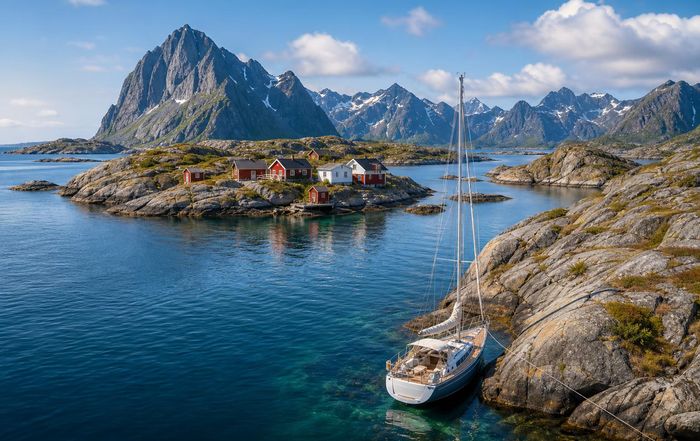
The Lofoten archipelago has arguably become Norway's best-known island destination, its jagged granite peaks rising directly from the sea in a way that has captured global attention through photography, film and social media. Yet despite its fame, Lofoten remains a working maritime landscape first and a leisure destination second, with cod fisheries, small shipyards and local ferries shaping daily life.
From a yachting perspective, Lofoten offers a rare combination of reliable nautical infrastructure and dramatic wilderness. Harbours such as Svolvær, Henningsvær and Reine provide protected moorings, fuel and basic technical support, while the surrounding sounds and fjords offer short, visually intense passages that can be comfortably navigated in a day. According to regional tourism and maritime authorities, the main cruising season typically extends from late May to early September, with the midnight sun transforming night passages into continuous daylight for much of that period.
Vesterålen, immediately to the north, is less photographed but arguably more tranquil, with wider sounds, lower visitor numbers and excellent opportunities for whale watching and birdlife encounters. Independent marine research organizations have documented the presence of sperm whales, orcas and humpback whales in these waters at different times of year, and specialist operators based in Andenes and Sortland have developed responsible wildlife viewing protocols that visiting yachts are increasingly adopting.
For captains and owners who value a balance between solitude and services, the Lofoten-Vesterålen region functions as a natural gateway into high-latitude cruising. It offers abundant anchorages, well-charted waters and access to shore-based experiences such as traditional fishing villages, contemporary Nordic cuisine and small-scale art galleries that showcase the islands' cultural evolution. Those planning itineraries can complement destination research with broader boat and yacht insights to match vessel capabilities with local conditions.
Senja and the "Arctic Riviera": Quiet Luxury in the North
Further north, the island of Senja has earned a reputation as a quieter, more contemplative counterpart to Lofoten. Sometimes marketed domestically as part of an "Arctic Riviera" due to its sheltered south-facing bays and white-sand beaches, Senja combines steep mountains with surprisingly gentle anchorages, particularly along its southern and eastern coasts.
Over the past several years, Norwegian and international media have highlighted Senja's growing profile as a nature-based destination, with new hiking routes, scenic roads and small-scale lodges emphasizing low-impact design and local materials. For yachts, the appeal lies in the island's balance of accessibility and seclusion. Modern marinas and guest harbours provide shore power, provisioning and waste facilities, while a short tender ride can bring guests to trailheads, viewpoints and small communities that remain largely untouched by mass tourism.
Maritime safety information from the Norwegian Coastal Administration and navigational resources such as the official Norwegian Pilot Guide underline that Senja's western coastline, facing the open Norwegian Sea, can be exposed in heavy weather, while the inner fjords offer shelter and calmer conditions. This dual character allows experienced captains to adjust itineraries dynamically, shifting between adventurous outer-coast passages and protected inner routes as forecasts evolve.
The island's growing emphasis on sustainable tourism also resonates with yacht owners who are increasingly aware of their environmental footprint. Many of the local businesses that have emerged in recent years, from sea-kayak guides to farm-to-table restaurants, prioritize regional supply chains and minimal-impact operations, aligning with global best practices promoted by organizations such as the Global Sustainable Tourism Council. Those seeking to align cruising choices with broader environmental commitments can explore sustainability-focused features that contextualize Norway's approach within the global yachting community.
Helgeland Coast: A Labyrinth of Skerries and Secret Anchorages
South of the Arctic Circle, the Helgeland coastline stretches between Trøndelag and Bodø, encompassing a maze of islands, islets and skerries that many Norwegian sailors quietly regard as the country's finest cruising ground. Internationally, the area is less widely known than Lofoten, yet it offers an extraordinary concentration of sheltered channels, white-sand beaches, shallow lagoons and traditional coastal settlements.
The UNESCO-listed Vega Archipelago, part of Helgeland, has drawn particular attention for its cultural landscape shaped by centuries of eider duck tending and coastal farming. UNESCO's documentation of the site emphasizes the interplay between human activity and fragile ecosystems, a theme that resonates strongly with contemporary discussions about sustainable coastal development. Yachts visiting Vega and its surrounding islands can observe historic boathouses, small-scale fishing operations and community-run museums that illustrate how local residents have adapted to the maritime environment over generations.
Navigation in Helgeland demands care and up-to-date charts due to the density of reefs and islets, yet modern electronic aids and detailed Norwegian Hydrographic Service data have significantly reduced the risk for well-prepared vessels. The reward is access to anchorages where only the sound of seabirds and distant surf break the silence, even during peak summer weeks. For many owners, these quiet anchorages deliver precisely the sense of privacy and connection to nature that first inspired investment in a yacht.
Helgeland's communities have also embraced a measured form of tourism development, with guest harbours, small inns and local food producers collaborating to create coherent visitor experiences without overwhelming local infrastructure. Initiatives highlighted by Innovation Norway and regional tourism bodies showcase how coordinated planning, transparent environmental standards and community involvement can help remote regions welcome higher-value, lower-volume visitors. Readers interested in the commercial dynamics of such development can find additional context in our business coverage of emerging yachting destinations.
Svalbard: Expedition Yachting at the Edge of the Arctic
For the most adventurous yachts, Norway's remote islands extend far beyond the mainland coast to the Svalbard archipelago in the high Arctic. Located roughly midway between mainland Norway and the North Pole, Svalbard has become a focal point for polar expedition cruising, scientific research and climate observation. While large expedition vessels have visited for decades, privately owned and chartered yachts have increasingly appeared in Longyearbyen and outlying anchorages, drawn by the prospect of glaciers, polar bears and vast, unpopulated landscapes.
Svalbard's legal and environmental framework is notably stringent. The Governor of Svalbard and the Norwegian Environment Agency enforce detailed regulations governing protected areas, wildlife disturbance, waste management and fuel handling, with particular attention to the risks posed by heavy fuel oils and black carbon emissions. In recent years, Norwegian authorities have introduced restrictions on heavy fuel oil use in parts of Svalbard's territorial waters, aligning with broader Arctic environmental initiatives supported by bodies such as the Arctic Council.
For yacht operators, compliance requires careful planning, specialized equipment and often the engagement of experienced expedition leaders familiar with local rules and conditions. Ice charts, search and rescue capabilities and self-sufficiency standards are all critical considerations. Many high-end charter companies working in the region have adopted best practices such as limiting group sizes ashore, maintaining strict wildlife approach distances and offsetting emissions through verified climate projects, although the effectiveness of various offset schemes remains an active area of debate among climate scientists and policy experts.
Despite these complexities, Svalbard continues to grow in prominence as an aspirational destination for yachts that meet the technical and regulatory standards. The region's blend of raw Arctic nature, historical remnants of whaling and mining, and cutting-edge scientific research stations offers a uniquely layered experience. For readers exploring advanced vessel systems and expedition-capable design, our technology-focused features provide further insight into how builders and refit yards are adapting yachts for polar operations.
Seamanship, Seasonality and Safety
Cruising Norway's remote islands demands a higher level of seamanship than many temperate destinations, yet the country's robust maritime infrastructure and transparent safety culture provide a reliable foundation for well-prepared crews. The Norwegian Coastal Administration, Norway's Meteorological Institute and national search and rescue services collaborate to provide detailed forecasts, navigational warnings and emergency response capabilities along the entire coast, including remote island regions.
Seasonality is a defining factor. In most of coastal Norway, the primary yachting season runs from late spring through early autumn, with daylight hours peaking around the summer solstice and sea temperatures remaining relatively cool throughout. In the far north and Svalbard, the midnight sun brings continuous daylight in early summer, while winter and early spring can offer exceptional conditions for those combining yacht-based accommodation with activities such as ski touring or Northern Lights viewing, provided vessels are properly winterized and ice-aware.
Weather systems in the Norwegian and Barents Seas can change rapidly, with low-pressure systems bringing strong winds and swell. Professional captains planning itineraries typically allow generous margins for weather-related adjustments and often rely on multiple forecast models, local pilotage advice and conservative passage planning. For private owners new to the region, engaging a local pilot or experienced delivery captain for the first season can significantly enhance safety and enjoyment.
The emphasis on safety and preparation aligns with Norway's broader maritime culture, in which coastal navigation, fishing and shipping are deeply integrated into national identity. For those interested in the historical evolution of this seafaring tradition, including the development of pilotage and lighthouse networks, our history section offers additional context that enriches any cruise along these coasts.
Design and Technology: Yachts Built for the North
As interest in Norway's remote islands and other high-latitude destinations has grown, yacht design has quietly evolved to meet the demands of colder, more variable environments. A new generation of explorer and expedition yachts, many built or refitted in Northern Europe, features reinforced hulls, greater fuel capacity, enhanced stabilization systems and advanced heating and insulation, enabling comfortable operations in conditions that would have been considered impractical for conventional Mediterranean-focused yachts.
Leading naval architecture firms and shipyards across Europe, including several in Norway, the Netherlands and Germany, have integrated lessons from commercial offshore vessels into luxury yacht projects. Ice-class hulls, dynamic positioning systems and hybrid propulsion technologies are increasingly visible in the specifications of yachts marketed for Arctic and sub-Arctic cruising, reflecting both safety considerations and evolving environmental expectations. Industry analyses by organizations such as DNV and Lloyd's Register highlight how classification standards are adapting to support safer and more sustainable operations in sensitive polar and near-polar regions.
Onboard, design trends emphasize panoramic observation lounges, enclosed deck spaces with large glazing and flexible interior layouts that can transition between social gatherings and quiet, contemplative viewing of the landscape. Materials and finishes often draw inspiration from Nordic design principles, with natural woods, muted textiles and subtle lighting creating a sense of warmth and calm that contrasts with the raw environment outside. For readers exploring how these trends manifest across different size segments and builders, the design coverage on yacht-review.com's dedicated design pages provides detailed case studies and visual examples.
Lifestyle and Shore Experiences: Nordic Calm and Local Culture
While the landscapes of Norway's remote islands are undeniably dramatic, the lifestyle that unfolds around them is often characterized by calm, understatement and a strong connection to everyday local life. Rather than large-scale marinas and luxury retail, visiting yachts are more likely to encounter small harbours, family-run cafes, local craft shops and seasonal festivals that reflect regional traditions.
Coastal cuisine is a highlight. Norway's emphasis on high-quality seafood, seasonal vegetables and clean, traceable supply chains has earned recognition from international culinary media and guides, with several restaurants in coastal towns and islands receiving awards and listings over the past decade. Even in small communities, visitors may find menus featuring locally caught cod, king crab, Arctic char and lamb from nearby islands, often accompanied by artisanal breads, cheeses and preserves.
Cultural experiences range from visits to historic trading posts and fishing villages to contemporary art installations and architecture that respond to the coastal landscape. In Lofoten, for example, galleries and museums explore themes of light, isolation and maritime history, while in Helgeland and Senja, community centers and cultural houses host concerts, exhibitions and storytelling events that often welcome visiting crews.
For many yacht owners and guests, these interactions with local culture, combined with outdoor activities such as hiking, kayaking, cycling and wildlife watching, create a holistic lifestyle experience that feels distinct from more conventional resort-based cruising. Those seeking to integrate such elements into longer itineraries can draw inspiration from the broader lifestyle coverage on yacht-review.com, which examines how sea-based travel intersects with wellness, culture and personal development.
Sustainability and Stewardship in Sensitive Environments
Norway's remote islands are not only visually striking; they are also environmentally sensitive, with ecosystems that can be vulnerable to disturbance and climate change. The Norwegian government, local municipalities and international organizations have invested considerable effort in developing frameworks to protect coastal habitats, regulate tourism and manage fisheries sustainably. Policies range from marine protected areas and strict waste regulations to emissions standards for vessels operating in certain fjords and Arctic regions.
For the yachting community, this regulatory environment presents both obligations and opportunities. On the one hand, compliance with discharge rules, anchoring restrictions and wildlife approach guidelines is essential, particularly in national parks, nature reserves and Svalbard's protected zones. On the other hand, Norway's transparency and emphasis on science-based policy provide clarity for operators who seek to align their practices with recognized standards. International reference points such as the UN Environment Programme and International Maritime Organization offer additional guidance on best practices for low-impact marine operations.
Forward-looking yacht owners and charterers are increasingly incorporating environmental considerations into vessel choice, itinerary planning and onboard operations. Measures such as shore-power use where available, careful fuel selection, advanced waste treatment systems and engagement with local conservation initiatives are becoming more common, especially among expedition-oriented yachts whose brand identity emphasizes responsible exploration. For readers who wish to explore these themes in greater depth, our global sustainability and policy coverage situates Norway's approach within a broader international context.
Planning a Voyage: Practical Considerations and Strategic Choices
For those contemplating a cruise to Norway's remote islands, the planning phase is as important as the voyage itself. Key strategic decisions include vessel selection, seasonal timing, route structure and the balance between independence and local support.
Many owners opt to base their yachts in Northern Europe for at least one full season, combining Norwegian island cruising with visits to other North Atlantic destinations such as Iceland, the Faroe Islands and Scotland's Hebrides. This regional approach allows for flexible routing in response to weather while maximizing the value of repositioning voyages. Charter clients, meanwhile, often focus on more concentrated itineraries, for example a ten- to fourteen-day exploration of Lofoten and Vesterålen or a combined Helgeland-Arctic Circle route.
Engaging local expertise can significantly enhance both safety and cultural depth. Norwegian pilot services, regional yacht agents and specialist expedition planners offer support with permits, provisioning, fuel logistics and shore excursions, while also providing insight into local customs, language nuances and community expectations. For families and multi-generational groups, tailored itineraries that balance quiet anchorages with accessible activities can create memorable shared experiences, a theme explored further in our family-oriented cruising features.
Insurance, classification and regulatory compliance should be reviewed well in advance, especially for vessels intending to operate in Svalbard or other Arctic-influenced waters. Underwriters and classification societies may require detailed risk assessments, ice-navigation plans and evidence of crew training. Owners and captains who treat these requirements not as obstacles but as part of a broader commitment to safe and responsible operations often find that they contribute positively to the overall quality of the voyage.
Norway's Remote Islands in the Future of Yachting
As global yachting continues to evolve, Norway's remote islands are likely to play an increasingly prominent role in shaping what high-end cruising means. They offer a counterpoint to crowded marinas and highly developed resort areas, demonstrating that luxury can be expressed through space, silence and authenticity rather than scale alone. They also serve as real-world laboratories for sustainable maritime tourism, where policies, technologies and community partnerships are tested in environments that demand long-term thinking.
For yacht-review.com, these islands represent more than a destination; they embody many of the values that define the next chapter of yacht ownership and chartering: respect for nature, curiosity about local cultures, investment in robust and efficient vessels, and a willingness to embrace the unknown within a framework of careful preparation. Readers who wish to follow ongoing developments, from new marina projects to regulatory changes and notable yacht expeditions, can stay informed through our regularly updated news coverage and in-depth reviews of expedition-capable yachts.
In the end, Norway's remote islands are not simply remote; they are connected-to centuries of maritime history, to contemporary debates about climate and conservation, and to the personal journeys of those who choose to explore them by sea. For yacht owners and guests seeking experiences that are both enriching and enduring, these scattered fragments of rock and community in the North Atlantic may well define the horizon of what is possible in modern cruising.