

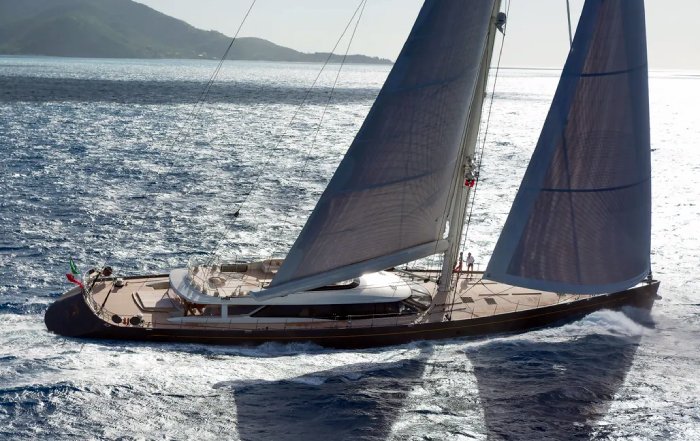
A Fast Cruising Aluminum Sloop from Italy Redefines Bluewater Performance
A New Italian Chapter in Performance Bluewater Cruising
The launch of a new fast cruising aluminum sloop from Italy signaled a decisive moment for performance-oriented bluewater sailors who refuse to compromise between speed, safety, and long-range comfort. For yacht-review.com, which has followed the evolution of performance cruisers for more than a decade, this yacht represents a culmination of trends that have been steadily reshaping the premium segment: all-metal hulls engineered for ocean resilience, race-bred lines softened for liveaboard practicality, and a design philosophy that treats sustainability and technology as core elements rather than optional extras.
The yacht in question, conceived and built by a specialist Italian yard in collaboration with a leading European naval architect, sits in the increasingly important 60-70 foot bracket, a size range that appeals to experienced owners in the United States, United Kingdom, Germany, and across Europe and Asia who seek true world cruising capability without stepping into the logistical and crew-intensive world of superyachts. This sloop is expressly aimed at sailors who want to cross oceans at pace, explore high latitudes with confidence, and still arrive in Mediterranean or Caribbean harbors with the elegance and refinement that Italian design has long been known for.
Readers familiar with the performance and cruising coverage on yacht-review.com will immediately recognize how this new yacht fits into a broader narrative that has been explored in depth in the site's dedicated sections on reviews, design, and cruising. Yet this Italian aluminum sloop does more than simply follow existing trends; it refines and in some respects redefines what a modern fast cruiser can be in 2026.
Design Philosophy: Italian Style Meets Northern Latitude Capability
The design brief behind this aluminum sloop was ambitious and unapologetically global. The Italian yard, working closely with a renowned naval architecture studio known for its work with Nautor Swan and several custom projects in Northern Europe, set out to create a yacht that could transition seamlessly from a brisk regatta in the Mediterranean to a self-reliant expedition in the fjords of Norway or the remote archipelagos of the South Pacific. In doing so, the team embraced a design language that merges the crisp lines favored by performance sailors in the United States and Australia with the understated luxury that appeals to owners in the United Kingdom, Germany, France, and Switzerland.
The hull is a full aluminum structure with a pronounced chine, a plumb bow, and a moderately wide stern, carefully balanced to deliver both form stability and soft motion at sea. While composite construction remains dominant in many performance yachts, the decision to work in aluminum reflects a clear commitment to durability, reparability, and long-term ownership, particularly valuable for sailors planning extended voyages far from major service centers. Those interested in the broader evolution of metal yacht construction can find context in the historical coverage at yacht-review.com/history, where aluminum's role in offshore yacht design has been followed from its early adoption in the 1960s to today's refined applications.
From a stylistic standpoint, the yacht's profile is unmistakably Italian. The low, sleek coachroof, carefully proportioned coamings, and expansive flush foredeck create a sense of visual lightness that belies the strength of the underlying structure. The design team has clearly studied the latest developments in contemporary yacht aesthetics showcased at leading European boat shows and events, and distilled them into a coherent whole that feels timeless rather than trend-driven. The result is a yacht that will look at home moored alongside high-profile designs from Oyster Yachts, CNB, and Baltic Yachts, yet retains a distinctly Italian character.
Aluminum Hull and Structural Engineering: Strength with Purpose
Aluminum remains a material that divides opinion among sailors, but for owners prioritizing resilience and bluewater capability, its advantages are compelling. The Italian yard's engineers have leveraged advances in finite element analysis and modern welding techniques, similar to those documented in technical resources from organizations like DNV and RINA, to optimize plate thickness, internal framing, and load paths in a way that was simply not possible a generation ago. For those who want to understand how such classification and safety frameworks shape real-world yacht construction, it is useful to explore resources from RINA or broader maritime safety discussions on International Maritime Organization.
This fast cruising sloop employs a double-bottom arrangement in critical areas, watertight bulkheads fore and aft, and carefully isolated tanks that contribute both to structural integrity and to damage resilience. The keel structure is integrated into a heavily reinforced grid that spreads grounding loads, an important consideration for high-latitude cruising where uncharted rocks and ice debris can pose serious risks. The hull plating in way of the bow and waterline is intentionally over-specified compared to many composite rivals, allowing the yacht to venture into colder waters such as Greenland, Patagonia, or the Southern Ocean with confidence.
The engineering philosophy extends to the deck and superstructure, where aluminum is combined with composite elements in non-structural areas to reduce weight aloft without compromising strength. This hybrid approach is increasingly common among advanced performance cruisers, and the Italian yard has executed it with a level of precision that demonstrates both expertise and trustworthiness in its engineering culture. Owners who follow developments in yacht technology on yacht-review.com/technology will recognize how this integration of materials reflects a broader industry shift toward intelligent, data-driven design.
Rig, Sailplan, and Performance Under Sail
As a sloop designed for fast cruising, the yacht's rig and sailplan are central to its identity. The naval architects have chosen a high-aspect fractional rig with a three-spreader carbon mast and carbon boom, supported by discontinuous rod rigging. The decision to opt for carbon, while increasing initial cost, significantly reduces weight aloft and improves righting moment, which in turn contributes to both performance and comfort. The mast section is engineered to accommodate a square-top mainsail for owners who prioritize speed, with a more conservative pinhead option available for those who prefer simpler handling.
The sailplan is optimized around a powerful but manageable mainsail and a suite of headsails on modern furling systems. A self-tacking jib on an inner forestay provides effortless upwind handling in strong breezes or when shorthanded, while a larger overlapping genoa on the primary forestay offers additional power in lighter conditions. For downwind and reaching performance, the yacht is equipped with a furling Code 0 and optional asymmetric spinnakers flown from a fixed bowsprit. This configuration allows the yacht to sustain high average speeds on long passages, particularly valuable for owners planning transatlantic or transpacific routes documented in the cruising and global sections of yacht-review.com.
On the water, the Italian aluminum sloop has already demonstrated the ability to maintain double-digit speeds in moderate conditions, with polars indicating 9-10 knots upwind in 18 knots of true wind and comfortably exceeding 15 knots on a broad reach under Code 0. While such numbers are not unusual among modern performance cruisers, what sets this yacht apart is the consistency of its performance across a wide range of conditions, thanks to a well-balanced hull form, a deep T-keel with a lead bulb, and twin rudders that provide precise control even at high heel angles. Experienced sailors from North America, Europe, and Asia who have tested the yacht report a helm feel that is light yet communicative, allowing the skipper to sense subtle changes in trim and pressure.
Deck Layout and Handling: Designed for Real-World Cruising
A fast cruiser lives or dies by the practicality of its deck layout, especially for owners who intend to sail with a small crew or as a couple. The Italian yard has clearly invested significant thought into ergonomics, line management, and safety at sea. The cockpit is divided into distinct working and relaxation zones, with twin helm stations aft, primary winches within easy reach of the helms, and a protected central area where guests can sit or dine without interfering with sail handling. The mainsheet is led to a dedicated arch or bridle system that keeps loads away from the cockpit, reducing risk while maintaining precise control of sail shape.
All critical sail controls, including halyards, reefing lines, and control lines for the vang and traveler, are led aft to powered winches concealed beneath sleek coamings, which preserve the yacht's clean lines while keeping the working area uncluttered. This arrangement allows the yacht to be sailed effectively with just two experienced crew, a key consideration for owners in Canada, Australia, and New Zealand who often undertake extended passages with limited manpower. The side decks are wide and free of obstructions, with substantial handholds and high stanchions that reflect a bluewater mindset rather than a purely coastal one.
Forward, the flush deck and recessed hatches create a safe, secure platform for sail changes or anchoring operations in challenging conditions. The anchor system itself is robust, with a deep chain locker, high-capacity windlass, and provision for secondary anchors, acknowledging the real-world needs of cruisers who may spend extended periods at anchor in remote regions. For those interested in how such practicalities influence long-term cruising lifestyles, yacht-review.com explores these topics extensively in its lifestyle and travel sections, where owners share experiences from the Caribbean, Pacific, and high-latitude expeditions.
Interior Design: Italian Craftsmanship for Long-Range Living
If the exterior of this aluminum sloop speaks of performance and capability, the interior reveals the full depth of Italian craftsmanship. The design team has drawn inspiration from contemporary residential architecture in Milan and Turin, blending clean lines, natural light, and tactile materials into a cohesive environment that feels more like a high-end penthouse than a traditional yacht cabin. Large hull windows and overhead skylights flood the saloon with daylight, while carefully positioned indirect lighting creates a warm, inviting atmosphere after dark.
The layout is optimized for extended liveaboard use, with a generous owner's suite forward or aft depending on the chosen configuration, complemented by two or three guest cabins and a dedicated crew cabin for those who prefer professional assistance on longer passages. The owner's suite features a full-size berth, ample wardrobe space, and an en-suite bathroom with separate shower, executed with materials and detailing that would not be out of place in boutique hotels in London, Paris, or Singapore. The guest cabins are similarly refined, with flexible berths that can be configured as doubles or twins, catering to family cruising or hosting friends from across North America, Europe, or Asia.
The main saloon is arranged to facilitate both social gatherings and quiet evenings at sea. A large dining area to port, with a table that can be expanded for entertaining, faces a comfortable lounge to starboard, where an integrated media system and discreet storage solutions maintain a sense of calm order. The navigation station, positioned slightly aft, is more akin to a compact command center, with multiple displays, redundant communication systems, and space for paper charts, reflecting the serious offshore intentions of the yacht. For readers accustomed to comparing interior solutions across different models, the boats and reviews sections of yacht-review.com provide useful benchmarks that highlight how this Italian sloop stands out in its segment.
Systems, Technology, and Onboard Intelligence
The technological expectations of premium yacht owners have evolved significantly, with digital integration, remote monitoring, and energy management now considered essential rather than optional. This Italian aluminum sloop embraces that reality with a comprehensive suite of systems designed to make long-distance cruising safer, more efficient, and more sustainable. A central vessel management system ties together navigation, power distribution, tank monitoring, and environmental controls, accessible via touchscreens at the nav station and helm, as well as through secure remote interfaces on tablets and smartphones.
The yacht is equipped with advanced navigation electronics from leading manufacturers such as B&G and Raymarine, integrated with AIS, radar, and high-precision GPS to provide situational awareness in busy shipping lanes off the coasts of the United States, United Kingdom, and Asia, as well as in challenging low-visibility conditions in higher latitudes. Owners can learn more about best practices in marine navigation and safety through resources from organizations like the Royal Yachting Association and US Sailing, which align closely with the safety ethos embedded in this yacht's design.
On the propulsion side, the yacht combines a modern, efficient diesel engine with a parallel hybrid or enhanced regeneration system, depending on owner preference. Under sail, the propeller and shaft can generate electrical power, feeding substantial lithium battery banks that support hotel loads, refrigeration, and climate control. Solar panels integrated into the hardtop and deck surfaces further reduce reliance on fossil fuels, especially valuable for long passages in sun-rich regions such as the Mediterranean, Caribbean, and South Pacific. The technical analysis and sustainability discussions frequently featured on yacht-review.com/technology and yacht-review.com/sustainability have consistently emphasized the importance of such integrated energy solutions for modern cruising yachts.
Sustainability and Long-Term Stewardship
As environmental considerations become increasingly central to yacht ownership, particularly among younger buyers in Europe, North America, and Asia-Pacific, the choice of aluminum as a primary hull material takes on additional significance. Aluminum is highly recyclable, and many yards now source a substantial portion of their raw material from recycled streams, reducing the embodied carbon of new builds. While the initial energy input for aluminum production remains high, its long service life and recyclability can make it a responsible choice when considered over multiple ownership cycles. Those wishing to explore broader perspectives on sustainable materials and lifecycle analysis can refer to resources from the World Green Building Council or learn more about sustainable business practices through organizations such as the World Economic Forum.
Beyond materials, the Italian yard has focused on minimizing the yacht's operational footprint. Efficient hull forms reduce fuel consumption under power, while the integrated renewable energy systems lessen generator run times. Black and grey water systems are designed to meet or exceed stringent environmental regulations in sensitive regions such as the Baltic, Mediterranean marine parks, and certain North American and Asia-Pacific protected areas. Non-toxic bottom coatings and careful selection of interior finishes further demonstrate a commitment to reducing harmful emissions and chemical leaching into the marine environment.
For yacht-review.com, which has increasingly highlighted sustainability as a key pillar in its business and sustainability coverage, this Italian fast cruiser offers a compelling case study in how high performance and environmental responsibility can coexist without diluting the essential joy of sailing. The yacht does not pretend to be impact-free, but it embodies a thoughtful, forward-looking approach that aligns with the values of a new generation of owners from Sweden, Norway, Denmark, the Netherlands, and beyond.
Ownership Experience, Market Position, and Global Appeal
In the competitive landscape of premium bluewater cruisers, this Italian aluminum sloop occupies a distinctive niche. It is positioned above mass-produced composite cruisers in terms of customization, build quality, and performance, yet remains more accessible and manageable than fully custom superyachts. Its closest competitors include semi-custom offerings from Northern European yards specializing in aluminum and high-latitude cruising, as well as composite performance cruisers from France, the United Kingdom, and South Africa. However, the combination of Italian design flair, meticulous engineering, and a genuine focus on owner-driven customization gives this yacht a personality that resonates strongly with discerning buyers in markets as diverse as the United States, Germany, Canada, Singapore, and Japan.
The yard offers a comprehensive ownership program that includes detailed handover, training, and support, recognizing that many buyers will be transitioning from smaller yachts or from different construction philosophies. This focus on education and partnership reflects a broader trend in the yachting industry, where long-term relationships and transparent communication are increasingly seen as key components of brand trust. Readers who follow industry developments in the news and business sections of yacht-review.com will recognize how such owner-centric approaches can differentiate a yard in a market that is both competitive and increasingly global.
The yacht's appeal is not limited to one region or sailing culture. In the Mediterranean, it will be appreciated for its ability to cover distances quickly between Italy, France, Spain, and Croatia while offering luxurious comfort at anchor. In the Caribbean and Bahamas, its shallow-draft options and robust anchoring systems will be valued by owners exploring remote cays and reefs. In the high latitudes of Norway, Iceland, and Patagonia, its aluminum hull, strong structure, and protected deck layout will inspire confidence in challenging conditions. And in the Pacific, from New Zealand to Hawaii and Japan, its blend of performance and autonomy will attract those who view the ocean as a genuine frontier rather than a backdrop.
How This Yacht Fits into the Evolving World of Fast Cruisers
From the vantage point of today, the Italian fast cruising aluminum sloop reviewed here can be seen as both a product of its time and a signal of where the market is heading. It embodies a synthesis of trends that Yacht Review has been tracking across its global, community, and events coverage: the rise of semi-custom platforms that allow for deep personalization; the growing importance of sustainability in design and operation; the integration of digital technologies that enhance safety and autonomy; and a renewed appreciation for materials and construction methods that prioritize longevity and real-world robustness.
For the readership of yacht-review, which spans experienced bluewater cruisers, aspiring circumnavigators, and industry professionals across Europe, North America, Asia, and beyond, this yacht offers a compelling benchmark against which future designs will inevitably be measured. It demonstrates that Italian yards, often associated primarily with luxury motor yachts and stylish coastal cruisers, are fully capable of competing at the highest level in the demanding arena of performance bluewater sailing. It also underscores the fact that aluminum, far from being a niche material, remains a powerful choice for owners who view their yacht not as a disposable asset, but as a long-term partner in exploration.
In the end, what distinguishes this Italian fast cruising aluminum sloop is not a single headline feature, but the coherence of its overall concept. Every element, from the hull form and rig to the interior layout and energy systems, has been conceived with a clear understanding of how serious sailors actually use their boats over months and years, in conditions ranging from the warm trade winds of the Caribbean to the challenging waters around South Africa or Chile. For a publication dedicated to in-depth, experience-based evaluation like yacht-review.com, that holistic integrity is the true measure of excellence, and it is in that light that this yacht stands out as one of the most significant new bluewater cruisers of 2026.