

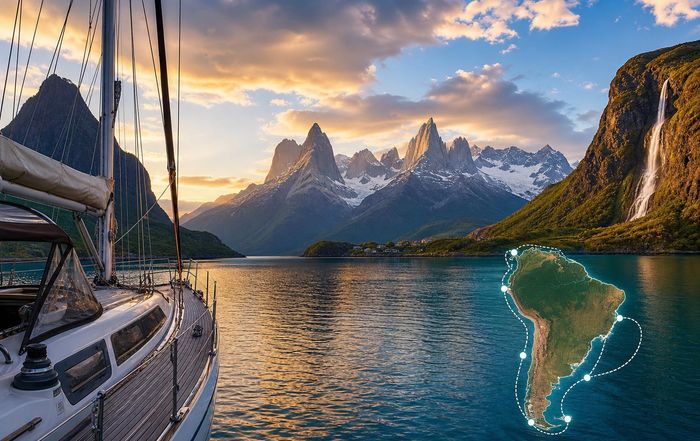
South America Yacht Cruising Route Ideas: Strategic Itineraries for Ambitious Owners
South America has long stood slightly to the side of the world's most publicised yachting circuits, overshadowed by the Mediterranean's heritage and the Caribbean's charter infrastructure. Yet for owners and captains seeking routes that combine blue-water challenge, cultural depth and genuine discovery, the continent is increasingly regarded as one of the most compelling frontiers. From tropical archipelagos on the Atlantic side to glacial channels in the far south, South America offers an extraordinary range of cruising grounds that can be woven into ambitious, multi-season itineraries or explored as standalone destinations.
For the yacht-review.com readership, the region also aligns with several broader trends shaping the global fleet: a growing appetite for expedition-style cruising, heightened interest in sustainability, and a desire to combine yachting with meaningful travel experiences. Drawing on recent developments in marina infrastructure, regulatory frameworks and expedition support services, this article outlines key South American cruising routes and examines how owners, captains and managers can approach them strategically.
Reframing South America as a High-Value Yachting Region
The traditional image of South America as a remote or logistically complex destination is gradually being replaced by a more nuanced picture. Investment in marinas and nautical tourism has increased in countries such as Brazil, Chile and Colombia, while specialist expedition operators and yacht agents have expanded their presence in gateway ports. Organisations such as IGY Marinas and regional marina groups have contributed to higher service standards and better connectivity between cruising grounds, and over the past decade several South American destinations have become regular features in the schedules of large expedition yachts and refit-capable support vessels.
At the same time, global interest in long-range cruising has grown, supported by advances in yacht technology and design that are frequently covered in the yacht-review.com technology section at yacht-review.com/technology.html. Efficient hull forms, hybrid propulsion, improved stabilisation and increasingly sophisticated onboard routing and weather systems have made high-latitude and off-the-beaten-path routes more accessible for private vessels and charter programs alike.
For South America, this convergence of infrastructure, technology and owner ambition is particularly powerful: the continent's coastline extends for more than 25,000 kilometres when islands and fjords are included, encompassing virtually every climatic zone, yet many of its most impressive anchorages remain uncrowded even in peak season.
Northern Atlantic Gateways: Brazil and the Guianas
For yachts crossing the Atlantic from Europe or West Africa, Brazil is often the first significant landfall and an ideal starting point for a north-south cruising strategy along the continent's Atlantic seaboard. The Brazilian coast alone runs for approximately 7,400 kilometres, and while not every stretch is yachting-friendly, several clusters of destinations have emerged as reliable hubs for both private and charter yachts.
In the northeast, the historic city of Salvador in the state of Bahia provides a culturally rich gateway, with marinas that can accommodate larger yachts and a vibrant urban backdrop of colonial architecture, music and gastronomy. The nearby Baía de Todos os Santos offers sheltered waters and numerous islands suitable for shorter day cruises and weekend itineraries, making it an attractive base for owners who wish to combine city life with relaxed coastal cruising. Further north, the region around Recife and Fortaleza is often used as a staging area for Atlantic crossings or repositioning voyages, taking advantage of the trade winds and favourable currents.
The more remote archipelagos off Brazil's northeastern coast, such as Fernando de Noronha, are renowned for their marine life and clear waters. Access is carefully regulated, with visitor quotas and environmental protections overseen by Brazilian authorities, and captains must work closely with local agents to secure permits and comply with conservation requirements. Those obligations reflect a broader shift towards more responsible yachting that aligns with the themes explored in the yacht-review.com sustainability coverage at yacht-review.com/sustainability.html, and they underscore the importance of integrating environmental planning into route design.
To the north, the Guianas-French Guiana, Suriname and Guyana-remain relatively undeveloped from a yachting infrastructure perspective, but they are drawing attention from expedition-oriented vessels interested in riverine exploration and biodiversity. In these areas, reliance on local pilots, shallow-draft tenders and detailed hydrographic information is essential, and owners considering such itineraries typically work with specialist expedition planners and reference resources such as the Royal Cruising Club Pilotage Foundation to supplement official charts.
The Caribbean-South America Bridge: Colombia and Venezuela
For yachts already based in the Caribbean, Colombia's Caribbean coast presents a natural bridge into South America. The historic walled city of Cartagena has become a recognised stopover for superyachts, with marinas capable of handling larger vessels and an established network of yacht agents. The city's UNESCO-listed old town, combined with its proximity to the Rosario Islands and the San Bernardo archipelago, provides a compact yet diverse cruising area that can be integrated into broader regional itineraries.
Colombia's nautical tourism sector has received increasing attention from both government and private stakeholders, and international travel media such as Condé Nast Traveler and Travel + Leisure have highlighted Cartagena as one of the most appealing urban destinations in the Americas. For owners and charter guests, this growing profile translates into better onshore services, improved air links and a more familiar operating environment, while still retaining a sense of discovery compared with the more saturated Caribbean hubs.
Venezuela, by contrast, presents a more complex picture. Some of its offshore islands, such as Los Roques, have long been regarded as world-class cruising grounds, with expansive sandbanks and clear waters that appeal to sailors and motor yachts alike. However, security concerns and political instability have led many yacht operators and insurers to take a cautious approach, and prospective visitors often rely on updated advisories from their flag state, insurance providers and organisations such as the UK Foreign, Commonwealth & Development Office or the US Department of State. When reputable sources diverge in their assessments, captains and managers typically adopt a conservative stance, reflecting a broader industry emphasis on risk management.
Brazil's Southern Coast and the Approach to the River Plate
As yachts proceed south along Brazil's coast, the regions around Rio de Janeiro, Angra dos Reis and Paraty stand out as some of the country's most established yachting areas. The protected bays and island groups in this zone offer a mix of resort-style marinas, traditional fishing communities and forested backdrops, providing a versatile setting for both seasonal home-porting and shorter charter itineraries. The combination of coastal cruising and proximity to major urban centres has encouraged the development of yacht services and refit capabilities, making this region an important logistical anchor for longer South American voyages.
The transition from Brazil to the River Plate region marks a climatic and cultural shift as yachts enter the temperate waters shared by Uruguay and Argentina. The Uruguayan resort town of Punta del Este has a long history as a summer destination for South American and international elites, and its marina infrastructure, seasonal events and coastal scenery make it a logical stopover for yachts en route to or from Patagonia. Montevideo, Uruguay's capital, offers additional port facilities and access to services that can support larger vessels.
Across the estuary, Buenos Aires provides a cosmopolitan counterpoint, with a strong maritime heritage and a network of yacht clubs along the Río de la Plata and its tributaries. While the river's shallows and shifting channels limit access for deep-draft superyachts, smaller vessels and support craft can explore a labyrinth of waterways that evoke the charm of European river cruising combined with distinctly Argentine culture. For owners interested in the history of yachting and maritime exploration in the region, institutions such as the Museo Naval de la Nación and international resources like the National Maritime Museum in the United Kingdom offer valuable context and archival material.
Patagonia by Sea: Argentina and Chile's Wild Frontier
For many in the yacht-review.com community, the name Patagonia is synonymous with the ultimate South American cruising experience. Stretching across southern Argentina and Chile, this vast region of fjords, glaciers, windswept channels and remote anchorages has become a focal point for expedition yachts and robust long-range cruisers. The combination of dramatic landscapes, wildlife encounters and genuine seclusion sets it apart even in a global context.
On the Atlantic side, yachts often stage from ports such as Puerto Madryn or Ushuaia in Argentina, making use of local provisioning and technical services before heading into more remote waters. Ushuaia, frequently described as one of the southernmost cities in the world, has developed into a key hub for Antarctic expedition vessels, and its port facilities have adapted to support a mix of commercial and private traffic. On the Pacific side, Chile's long, indented coastline offers a sequence of natural harbours and sheltered channels that reward meticulous planning and patience.
The Chilean fjords, extending from around Puerto Montt to Cape Horn, are increasingly recognised as one of the world's premier cold-water cruising regions. Government agencies and scientific organisations, including CONAF (Chile's National Forestry Corporation) and international partners, have emphasised the ecological sensitivity of these areas, which host unique ecosystems and serve as crucial habitats for marine mammals and seabirds. Yachts operating here must adhere to strict regulations regarding discharges, wildlife interaction and anchoring, and many owners choose to work with expedition leaders who have prior experience in the region.
Weather routing and seasonal timing are critical considerations. The austral summer offers the most favourable conditions, yet even at this time yachts must be prepared for rapid shifts in wind and visibility. Advances in onboard technology, such as satellite communications, high-resolution weather models and dynamic positioning systems, have significantly improved safety margins, but the fundamental requirement for seamanship and redundancy remains unchanged. Those seeking a deeper understanding of the technical and operational demands of such voyages may find relevant perspectives in the yacht-review.com cruising features at yacht-review.com/cruising.html.
The Antarctic Connection: Beyond the South American Mainland
Although Antarctica lies beyond the strict geographical boundaries of South America, it is inextricably linked to South American yachting, given that most private and commercial expeditions to the White Continent depart from ports such as Ushuaia or Punta Arenas. Over the past two decades, a small but growing number of private yachts, often purpose-built or extensively refitted for polar conditions, have incorporated Antarctic segments into multi-year world cruises.
Access to Antarctica is governed by the Antarctic Treaty System and associated environmental protocols, and private vessels must comply with a complex set of regulations, including requirements overseen by the International Association of Antarctica Tour Operators (IAATO). These frameworks are designed to protect one of the planet's most fragile environments and to manage the cumulative impact of increasing visitor numbers. For owners contemplating such itineraries, consultation with legal and environmental experts is now standard practice, and many choose to collaborate with established polar operators for logistics, permitting and safety support.
The inclusion of Antarctic cruising in a South American route underscores a broader shift in yachting culture, away from purely hedonistic models of consumption and towards experiences that combine adventure, scientific engagement and conservation awareness. Leading universities and research institutions, such as Columbia University's Lamont-Doherty Earth Observatory and the British Antarctic Survey, have occasionally partnered with private vessels for specific projects, illustrating how yachts can contribute to knowledge generation when properly equipped and managed.
The Pacific Edge: Peru, Ecuador and the Galápagos
While much of South American yachting discourse centres on the Atlantic and southern routes, the continent's Pacific seaboard is increasingly relevant, particularly for yachts undertaking circumnavigations or extended Pacific campaigns. Peru offers several ports suitable for reprovisioning and crew changes, with Lima's Callao port serving as a primary gateway. The Peruvian coast combines desert landscapes, archaeological sites and rich marine upwelling zones that support significant fisheries and wildlife.
Further north, Ecuador occupies a pivotal position due to its jurisdiction over the Galápagos Islands, one of the world's most tightly regulated and scientifically important archipelagos. The Galápagos Marine Reserve is a UNESCO World Heritage Site, and access for private yachts is highly controlled, with strict limits on where vessels can anchor, how long they can stay and which activities are permitted. Local regulations require the use of licensed guides for most land visits, and many yachts opt to charter locally flagged expedition vessels for the Galápagos segment while remaining offshore or repositioning.
The regulatory framework in the Galápagos is often cited by environmental organisations, including the World Wildlife Fund, as an example of rigorous conservation management, and it serves as a case study for discussions about sustainable marine tourism. For the yachting community, it illustrates both the constraints and opportunities associated with operating in ecologically sensitive areas: careful planning, respect for local rules and a willingness to adapt traditional cruising habits are essential.
Integrating Design, Range and Comfort for South American Routes
The diversity of South American cruising grounds has direct implications for yacht design and specification. Long-range capability, fuel efficiency and robust seakeeping characteristics are particularly valuable for itineraries that include both tropical and high-latitude segments, where distances between full-service ports can be considerable. Many recent explorer and expedition yacht projects have been conceived with such routes in mind, blending commercial-grade engineering with the comfort and aesthetic refinement expected at the top end of the market.
Naval architects and designers have responded with hull forms optimised for efficiency across a range of speeds, bow designs suited to heavy weather, and layouts that facilitate the carriage of tenders, landing craft, scientific equipment and adventure toys. Owners considering South American voyages often prioritise flexible interior spaces that can adapt from formal entertaining in urban ports to more informal, expedition-style living in remote anchorages. The yacht-review.com design section at yacht-review.com/design.html regularly explores such trends, highlighting how the boundaries between luxury yacht and small expedition ship are increasingly blurred.
From a technical perspective, redundancy in critical systems, enhanced tankage for fuel and freshwater, advanced waste treatment and ice-capable features (where relevant) all contribute to operational resilience. Partnerships with classification societies and designers experienced in polar and offshore projects, such as DNV, Lloyd's Register or Bureau Veritas, help ensure that vessels are equipped to meet both regulatory and practical demands.
Lifestyle and Onshore Experience: Culture, Cuisine and Community
Beyond navigation and design, South America's appeal for yacht owners lies in the richness of its onshore experiences. The continent's major cities-Rio de Janeiro, São Paulo, Buenos Aires, Santiago, Lima, Bogotá and others-offer world-class gastronomy, arts and nightlife, while smaller coastal towns and islands provide more intimate encounters with local traditions. For many owners, the opportunity to combine high-end yachting with immersive travel is a key motivation for exploring the region.
Culinary tourism has become a significant draw, with restaurants in cities such as Lima, São Paulo and Buenos Aires frequently ranked among the best in the world by guides and lists like The World's 50 Best Restaurants. Vineyard visits in Chile and Argentina, cultural festivals in Brazil and Colombia, and indigenous heritage in the Andean and Amazonian regions all contribute to itineraries that extend far beyond the marina. Those seeking inspiration for lifestyle-oriented cruising concepts can find additional ideas in the yacht-review.com lifestyle features at yacht-review.com/lifestyle.html.
Equally important is the growing emphasis on community engagement and responsible tourism. Many yacht owners now seek opportunities to support local initiatives, whether through educational projects, conservation partnerships or heritage preservation. Organisations such as UNESCO and regional NGOs provide frameworks for understanding the cultural and environmental significance of the places visited, encouraging a more thoughtful approach to shore excursions and philanthropic activity.
Sustainability and Responsible Operations in Sensitive Environments
South America's most iconic cruising regions-Patagonia, the Galápagos, the Amazon basin and various marine protected areas-are also among its most environmentally sensitive. This reality places particular responsibility on yacht owners, captains and guests to adopt best practices that minimise impact and, where possible, contribute positively to conservation efforts.
Measures such as strict waste segregation, advanced onboard treatment systems, careful fuel management and adherence to no-discharge zones are increasingly regarded as standard rather than exceptional. The use of low-impact tenders, electric or hybrid propulsion for local exploration, and anchor-less mooring solutions in fragile seabeds further reduce the footprint of visiting yachts. Industry initiatives such as the Water Revolution Foundation and guidelines from bodies like the International Maritime Organization offer frameworks and tools that can be applied to South American operations.
For readers of yacht-review.com, the intersection of sustainability, technology and cruising strategy is a recurring theme, and the dedicated business and sustainability sections at yacht-review.com/business.html and yacht-review.com/sustainability.html provide additional context on how the sector is evolving. In South America, where many coastal communities depend directly on fisheries, tourism and ecosystem services, responsible yachting is not only an ethical imperative but also a practical necessity for maintaining long-term access and goodwill.
Strategic Planning: Seasonality, Logistics and Risk Management
Designing a South American cruising route requires more than simply connecting points of interest on a map. Seasonality, weather patterns, political conditions and logistical support all play crucial roles in determining what is feasible and advisable at any given time. The austral summer is typically preferred for high-latitude cruising in Patagonia and Antarctic approaches, while the tropical and equatorial regions have their own dry and wet seasons that influence comfort and safety.
Fuel availability, spare parts, technical support and medical facilities vary significantly across the continent, and many yachts rely on a combination of local agents, global service networks and onboard inventories to maintain operational continuity. Air connectivity is another key consideration, particularly for charter programs and owners who wish to embark or disembark at specific points along the route. Major hubs such as São Paulo, Rio de Janeiro, Buenos Aires, Santiago, Lima and Bogotá offer frequent international flights, while smaller regional airports support more remote segments.
Risk management encompasses not only weather and technical issues but also security and regulatory compliance. Reputable sources such as the International Maritime Bureau, national foreign affairs departments and specialist maritime security firms provide updated information on piracy, crime and regional tensions, which can influence routing decisions. When information from different sources is inconsistent, prudent operators tend to err on the side of caution, adjusting itineraries or enhancing onboard security measures accordingly.
South America in the Global Yachting Portfolio
In the broader context of global yachting, South America occupies a distinctive position. It is neither as densely trafficked as the Mediterranean nor as infrastructure-intensive as some parts of the Caribbean, yet it offers a combination of scale, diversity and authenticity that is difficult to match. For owners and captains willing to invest in planning and preparation, the continent can serve as the backbone of a multi-year cruising strategy that integrates Atlantic crossings, Pacific explorations and polar adventures.
From the perspective of yacht-review.com, South America exemplifies the future of ambitious yacht cruising: technically demanding yet deeply rewarding, environmentally sensitive yet accessible with the right approach, and rich in opportunities for cultural engagement and personal growth. Readers interested in more detailed evaluations of specific yachts suited to these routes can explore our boat and yacht reviews at yacht-review.com/reviews.html and the broader fleet coverage at yacht-review.com/boats.html. For those considering how South American itineraries fit into a global cruising plan, additional perspectives on long-range routing and regional dynamics can be found in our global cruising coverage at yacht-review.com/global.html and travel-focused features at yacht-review.com/travel.html.
As more yachts turn south in search of new horizons, the continent's role in the international yachting landscape is likely to grow, shaped by ongoing investments in infrastructure, evolving environmental standards and the aspirations of a new generation of owners who see their vessels not only as symbols of success but also as platforms for exploration, connection and stewardship.