

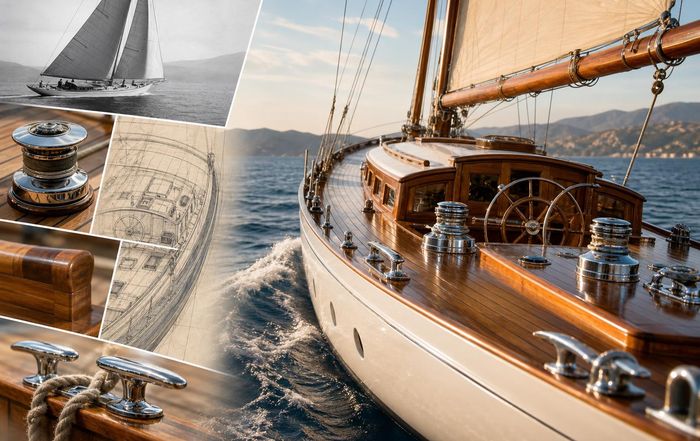
Historic Yacht Design Features Still Used Today
Yachting is often portrayed as an arena of constant innovation, yet many of the features that define contemporary yachts have roots stretching back centuries. From hull forms and rig configurations to interior layouts and even lifestyle expectations on board, today's owners and designers draw heavily on a long lineage of maritime experimentation and craftsmanship. For the water-focused readers of yacht-review, understanding these enduring design elements is not only a matter of historical curiosity; it is central to making informed decisions about investment, refit, charter positioning, and long-term value.
This article explores key historic yacht design features that continue to shape modern vessels, examining how they have evolved, why they persist, and how they are being reinterpreted for a new era of performance, comfort, and sustainability.
From Working Sail to Luxury Yacht: Hull Forms That Endure
Long before the word "superyacht" existed, naval architects were solving the same fundamental problem faced by today's designers: how to move safely and efficiently through the water while carrying people and their belongings in reasonable comfort. Many of the hull forms now associated with leisure craft began life as working or naval vessels.
The long, fine entry and overhanging bow that became iconic in classic racing yachts of the late nineteenth and early twentieth centuries can be traced to fast naval and pilot cutters, which needed to perform in rough conditions while maintaining speed. The celebrated J-Class yachts of the 1930s, immortalised by the America's Cup and documented in detail by organisations such as the J Class Association, refined these principles into a visually dramatic and hydrodynamically efficient package. Their long overhangs increased waterline length when heeled, effectively providing more speed potential under sail while preserving elegant proportions at rest.
Modern performance cruisers and racer-cruisers still echo these lines, even when built in advanced composites. Many owners continue to favour a relatively fine bow and balanced overhangs for their combination of aesthetic appeal and seakeeping behaviour, particularly in upwind conditions. While plumb bows and broad sterns dominate the most aggressive racing classes, a significant segment of the premium cruising market still gravitates toward hull shapes that feel reassuringly "classic" underway, and this preference is frequently reflected in the projects covered in our own yacht reviews.
Equally enduring is the deep, ballasted keel. The principle of a weighted appendage providing righting moment has changed less in concept than in execution. Traditional full-keel yachts, common on bluewater cruisers and classic designs, offered directional stability and protection for the rudder and running gear, features still prized by ocean-going sailors today. Modern fin keels with bulbs or wings are more efficient and lighter, yet the fundamental idea-using low-placed weight to resist heeling and improve stability-remains identical to that of nineteenth-century sailing ships. Classification societies such as Lloyd's Register and DNV continue to develop rules that build on this long heritage of stability analysis, reflecting the deep continuity between historic practice and contemporary safety standards.
Rigs and Sail Plans: Classic Solutions to Modern Demands
The sight of a modern ketch or schooner slipping into a Mediterranean anchorage may feel like a romantic throwback, but these rigs survive because they solve practical problems as effectively today as they did a century ago. Dividing sail area among multiple masts reduces individual sail size, making sail handling easier for smaller crews and enabling more flexible sail combinations across a wider range of conditions.
Historic schooners, which emerged in the eighteenth century and became widely used in North America and Europe, were prized for their ability to sail close to the wind and their efficient use of fore-and-aft sails. Contemporary luxury schooners, including several high-profile custom builds documented by Royal Huisman and Perini Navi, retain the same fundamental geometry while integrating modern materials such as carbon masts, high-modulus rigging, and advanced sail fabrics. Readers can explore how such traditional rigs are interpreted aboard modern cruising yachts in our cruising features, where the balance between heritage and innovation is often a central theme.
The ubiquitous sloop rig also has deep historical roots. As early as the eighteenth century, sloops were valued for simplicity and performance, and by the late nineteenth century they had become dominant in competitive yachting. Today's fractional rigs, self-tacking jibs, and large mainsails are evolutionary rather than revolutionary steps from these origins, optimising the same basic configuration for ease of handling and better aerodynamic efficiency. The prevalence of the Bermuda rig, which largely displaced gaff rigs in the early twentieth century, exemplifies how a single historic design shift continues to define the silhouette of most modern sailing yachts.
Deck Layouts: From Workspaces to Social Stages
Historic sailing ships and early yachts were working platforms first and leisure spaces second, yet many of their functional arrangements remain visible on contemporary decks. The concept of a raised quarterdeck, for example, provided officers with a commanding view and a relatively dry position aft; today, many sailing superyachts and motoryachts adopt raised aft decks or split-level cockpits that serve as protected outdoor lounges while preserving line of sight for helmsmen and crew.
The classic centre-cockpit sailing yacht, which became popular in the twentieth century for bluewater cruising, is itself an adaptation of historic working layouts in which a sheltered command area was placed near the middle of the vessel for comfort and security. Modern centre-cockpit cruisers continue to appeal to owners who prize a dry, secure helm position and separation between social spaces and sailing operations, particularly on long passages. Readers interested in how different deck arrangements influence cruising comfort can explore further through our dedicated boats section, where layout decisions are often evaluated in the context of real-world use.
Teak decks are another enduring legacy. Historically, teak was adopted for its resistance to rot, non-slip properties when wet, and relative ease of maintenance. These qualities remain attractive, and teak has become an aesthetic hallmark of luxury yachting. However, increased awareness of environmental and ethical concerns surrounding tropical hardwoods has spurred the adoption of alternatives such as synthetic teak, modified woods, and cork-based products. Organisations including the World Wildlife Fund and certification bodies such as the Forest Stewardship Council have highlighted the importance of responsible sourcing, and many leading yards now offer verified or alternative decking solutions. The visual language of the teak deck remains, but the material reality is gradually evolving in response to sustainability imperatives.
Interior Layouts: Time-Tested Spatial Logic
While materials and styling have changed dramatically, the core spatial logic of yacht interiors has altered less than some might assume. The separation of crew and guest areas, the positioning of galleys and navigation stations, and the distribution of cabins along the hull all reflect principles that can be traced back to classic ocean-going vessels.
In traditional sailing ships and early steam yachts, the after part of the vessel was generally reserved for the owner and officers, offering a quieter, more comfortable motion, while crew were housed forward. Many modern motor and sailing yachts maintain this aft-focused arrangement for owners' suites and main salons, with guest cabins amidships and crew quarters forward or in the bow, thereby preserving a hierarchy of comfort and privacy that has proved functionally effective over generations. This arrangement also aligns with modern weight-distribution and noise-management strategies, as naval architects strive to isolate guest spaces from machinery and anchor-handling operations.
The linear galley along one side of the hull, familiar from countless production cruising yachts, descends from the need to create secure working spaces for food preparation on a moving platform. Classic bluewater designs placed galleys close to the vessel's centre of motion and provided extensive handholds and bracing points. Contemporary galleys may be more open and integrated into saloons, but many still respect the same fundamental requirement for safe, ergonomic operation at sea.
Readers seeking deeper insight into how interior layouts have evolved in parallel with lifestyle expectations can find numerous case studies within our design coverage, where naval architects and interior designers often discuss the tension between tradition and innovation.
Classic Aesthetics in a Contemporary Market
The enduring commercial appeal of "classic" lines is one of the most striking continuities in yacht design. Long overhangs, sheerlines with gentle spring, varnished brightwork, and traditional coachroof shapes continue to command strong interest, particularly in the premium and custom segments. Shipyards such as Feadship, Royal Huisman, and Spirit Yachts have built reputations on blending modern engineering with nostalgic aesthetics, demonstrating that heritage can be a powerful differentiator in a competitive global market.
The popularity of retro-inspired motoryachts, often described as "gentleman's yachts" or "lobster boats," reflects the same sentiment. Many of these designs draw heavily from mid-twentieth-century commuter yachts and working lobster boats from New England, combining flared bows, tumblehome sterns, and sweeping sheerlines with contemporary propulsion and electronics. Publications including Boat International and Yachting World regularly highlight such vessels, noting that owners often perceive them as timeless and less vulnerable to fashion cycles than aggressively modern designs.
From a business perspective, yachts that successfully integrate classic aesthetics with up-to-date systems and compliance standards can enjoy strong residual values and broad charter appeal. For charter operators and brokers, positioning a vessel as a "modern classic" can help differentiate it in crowded markets such as the Mediterranean and Caribbean, where many guests seek an experience that feels both luxurious and authentic. Our lifestyle features frequently explore how this blend of heritage and modern comfort shapes on-board experiences, from formal dining rooms reminiscent of early twentieth-century steam yachts to libraries and observation lounges that evoke an era of grand ocean voyages.
Propulsion and Systems: Old Ideas, New Technologies
Although contemporary yachts increasingly rely on advanced propulsion technologies, many of the underlying concepts predate the leisure yachting industry by decades. The transition from sail to auxiliary engines in the late nineteenth and early twentieth centuries established patterns that still define modern motor-sailers and long-range cruisers. Early auxiliary engines were installed primarily for manoeuvring and calm-weather passages, and even today, many bluewater sailors view engines as tools for reliability and safety rather than as replacements for sail.
The long-range displacement motor yacht, a staple of expedition and explorer segments, owes much to the design of commercial trawlers and naval patrol vessels. Deep, efficient hulls optimised for moderate speeds, generous fuel capacity, and robust engine rooms are all direct descendants of working craft that needed to operate economically over long distances. Contemporary explorer yachts, such as those documented by Damen Yachting and Nordhavn, refine these characteristics with stabilisation systems, hybrid propulsion options, and advanced navigation suites, but the underlying philosophy remains consistent with historic ocean-going workboats.
On the systems side, principles of redundancy, compartmentalisation, and watertight integrity that were codified in early twentieth-century maritime regulations continue to underpin modern yacht engineering. Bodies such as the International Maritime Organization and classification societies have progressively updated standards, yet the basic approach-multiple independent systems, watertight bulkheads, and carefully managed weight distribution-reflects lessons learned from historic incidents and long-standing naval practice.
Seamanship, Safety, and the Human Element
Historic yacht design features cannot be fully understood without considering the seamanship traditions that shaped them. Many design decisions that persist today were originally driven by safety and practicality, and they continue to influence how crews operate modern yachts.
High bulwarks and substantial guardrails, for instance, have long been used to protect crew on working decks, particularly in heavy weather. Modern yachts often combine these traditional safety measures with recessed walkways and integrated handholds, yet the core idea-providing physical barriers and secure pathways-remains unchanged. Similarly, the positioning of winches, cleats, and fairleads along side decks often follows patterns established on classic sailing vessels, where lines needed to run cleanly and predictably under load.
The enduring importance of proper lookout positions, sheltered helm stations, and clear sightlines also reflects centuries of accumulated seamanship. Even the most advanced helm consoles and flybridges are laid out with reference to these long-standing principles, ensuring that captains can maintain situational awareness in a variety of conditions. Industry organisations such as the Royal Yachting Association and American Boat and Yacht Council continue to promote best practices that are deeply rooted in historic maritime experience, reinforcing the connection between traditional design and modern safety culture.
For those interested in how these seamanship-driven design elements contribute to real-world cruising experiences, our travel features often highlight the practical implications of layout and equipment choices when yachts venture beyond familiar waters.
Heritage as a Strategic Asset in the Yacht Business
In the contemporary yacht market, heritage is more than an aesthetic preference; it is a strategic asset. Owners, charter guests, and investors increasingly value authenticity, narrative, and craftsmanship, and historic design features provide a tangible link to these qualities. Shipyards and brands that can trace their design DNA to iconic vessels or long-standing traditions often enjoy a competitive advantage, particularly in high-end segments where differentiation is critical.
Classic and neo-classic yachts also play a significant role in events and regattas, where historic design features are central to the experience. Regattas dedicated to classic yachts in regions such as the Mediterranean, the Caribbean, and New England attract owners who appreciate both the sailing qualities and the cultural cachet of older designs. Coverage in outlets like Classic Boat and international yachting media reinforces the perception that traditional features are not merely nostalgic, but actively relevant to contemporary yachting culture.
From a business perspective, understanding which historic features resonate with current buyers can inform new-build specifications, refit priorities, and marketing strategies. For example, retaining or reintroducing classic deckhouses, porthole shapes, or sheerlines can significantly influence a yacht's perceived character and market positioning, even when the underlying structure, systems, and compliance standards are entirely modern. Our readers can explore the commercial implications of such decisions in greater depth in the business section of yacht-review.com, where market trends and investment considerations are analysed through a design-conscious lens.
Sustainability: Old Wisdom for New Challenges
As the yachting industry confronts the environmental and regulatory challenges of the coming decades, many of the most promising solutions draw on historic design wisdom. Efficient hull forms, reliance on wind power, and careful management of weight and resources were once matters of survival for long-distance mariners; today, they are increasingly recognised as pathways to reduced emissions and more responsible operation.
The resurgence of interest in performance cruising catamarans and trimarans, for instance, reflects an appreciation of multihull efficiency that has roots in traditional Pacific and Asian sailing craft. Lightweight, easily driven hulls require less propulsion power, whether under sail or engine, and can therefore play a role in reducing fuel consumption. Similarly, the renewed emphasis on sailing performance in some contemporary superyachts-encouraged by advances in sail-handling technology-reconnects with the historic reality that wind is a free and renewable energy source.
Material choices also illustrate the interplay between tradition and sustainability. While advanced composites and alloys dominate modern construction, there is growing interest in responsibly sourced timber, recyclable cores, and alternative decking materials. Initiatives by organisations such as the Water Revolution Foundation and various industry coalitions aim to accelerate sustainable practices, yet many of the underlying principles-build light but strong, minimise waste, and design for longevity-would be familiar to master shipwrights of previous centuries.
Readers seeking a deeper exploration of how heritage design principles intersect with environmental responsibility can refer to our dedicated sustainability coverage, where traditional wisdom and modern technology are frequently analysed side by side.
Continuity, Innovation, and the Future of Yacht Design
The persistence of historic yacht design features in contemporary practice is not a sign of stagnation; rather, it reflects the cumulative nature of maritime knowledge. Successful solutions tend to endure, even as materials, regulations, and owner expectations evolve around them. In an industry where safety, comfort, and performance are non-negotiable, designers are understandably cautious about discarding proven ideas without compelling reasons.
At the same time, innovation continues to reshape the context in which these historic features operate. Digital design tools, computational fluid dynamics, and advanced manufacturing techniques allow naval architects to refine traditional forms with unprecedented precision. Hybrid propulsion, energy recovery systems, and smart onboard management platforms are transforming how yachts are operated and maintained, even when their silhouettes evoke the golden age of sail or early motor yachting.
For the often daily returning sailing community here, the key takeaway is that a deep appreciation of historic design features is not merely an academic exercise; it is a practical asset in evaluating new builds, assessing refit opportunities, and understanding long-term value. Whether an owner is drawn to the sweeping sheer of a classic ketch, the purposeful stance of a trawler-style explorer, or the understated elegance of a retro commuter yacht, the features that attract them are part of a long and evolving story.
By recognising how these elements have proven themselves over time, industry professionals and enthusiasts alike can make more informed, confident decisions-balancing heritage and innovation to create yachts that are not only beautiful and capable today, but also enduringly relevant in the decades to come. For ongoing analysis of how this balance plays out across new launches, refits, and market trends, readers are invited to follow the latest updates in our news section and broader coverage at yacht-review.com.