

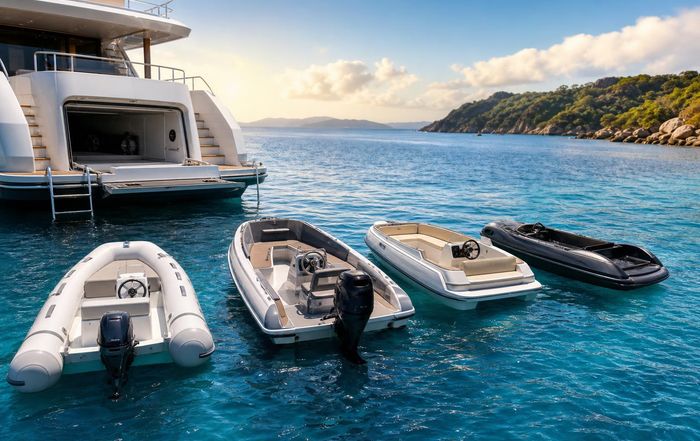
Best Tender Options for Cruising Yacht Owners
Choosing the right tender has become one of the most consequential decisions for modern cruising yacht owners, shaping not only how they move between anchorages and shore, but also how they explore, entertain, provision, and even future-proof their onboard lifestyle. As cruising ranges extend, owners spend more time at anchor, and environmental regulations tighten, the tender is increasingly viewed as a versatile, semi-independent craft rather than a simple shuttle. For sea loving individuals who typically approach ownership with a long-term, global perspective, the tender decision is now a strategic one that blends design, technology, practicality, and brand reputation. This page reviews the main categories of tenders available today, highlights key developments in propulsion and design, and explores how owners can match the right solution to different cruising profiles, while maintaining a clear focus on safety, sustainability, and long-term value.
The Tender's Expanding Role in Modern Cruising
In the past, a tender's primary function was to move guests and crew between the yacht and shore. Today, for long-range cruising yachts and expedition vessels, the tender is expected to perform a much broader portfolio of roles, including guest transfer, water sports, provisioning and logistics, exploration and shore excursions, safety and rescue duties, and discreet independent use when the mothership remains at anchor.
The evolution of the tender mirrors the broader transformation of the superyacht and large cruising yacht sector. According to market analyses from organizations such as Boat International Media and Superyacht Times, owners are increasingly specifying multiple tenders tailored to different missions rather than relying on a single multi-purpose craft. At the same time, owners of performance cruisers and blue-water family yachts in the 40-80 ft range are seeking tenders that remain compact and manageable while still offering greater comfort, stability, and range than earlier generations of small inflatables.
For yacht-review.com readers, this shift is clearly visible in the way new builds are being conceived. Designers now integrate tender garages, foredeck cranes, beach clubs, and fold-out platforms specifically around the anticipated tender fleet, which in turn influences the yacht's layout, stability calculations, and even classification. Owners who start the tender conversation early in the design process, or during a refit, typically achieve a far more cohesive cruising experience, as our editorial team frequently highlights in our dedicated design features and build case studies.
Core Tender Categories: From Compact RIBs to Luxury Limousines
Although the market is highly diversified, most cruising yacht tenders fall into several broad categories, each with its own strengths and compromises. Understanding these helps owners and captains build a coherent tender strategy that aligns with their cruising style.
RIB Tenders: The Versatile Workhorses
Rigid Inflatable Boats (RIBs) remain the backbone of the tender world. Their combination of a rigid hull and inflatable tubes offers a compelling blend of seaworthiness, stability at rest, and relatively low weight. Brands such as Williams Jet Tenders, Zodiac Nautic, Highfield, and BRIG have built strong reputations in this segment, supported by extensive dealer networks and after-sales service in major cruising regions.
For cruising yacht owners, the advantages of RIB tenders include excellent load-carrying capacity for guests and gear, good seakeeping for their size, forgiving handling for less experienced drivers, and a broad range of lengths and propulsion options, from small outboard-powered 2.5-3.5 m models to 7-9 m offshore-capable RIBs. Many production RIBs are also designed with modular seating and console layouts, allowing yards and owners to tailor them for guest transfer, diving operations, or water sports.
However, the inflatable tubes that make RIBs so stable and safe also occupy valuable beam when stowed in garages or on foredecks, and they can be vulnerable to UV degradation if not properly maintained. Owners who cruise extensively in tropical regions or leave tenders uncovered for long periods should pay particular attention to tube material and construction. Independent testing and buyer guides from publications such as Yachting World and Practical Boat Owner emphasize the importance of high-quality Hypalon or equivalent materials, professional tube construction, and reputable after-sales support for long-term durability.
Jet Tenders: Compact Power and Garage-Friendly Design
Jet-propelled tenders have gained significant traction with owners who prioritize compact dimensions, interior volume, and safe operation around swimmers. By eliminating the outboard or stern drive and locating the jet unit within the hull, these tenders often fit more easily in tight garages and can offer a lower profile for stowage under foredeck hatches.
Manufacturers such as Williams Jet Tenders, Castoldi, and Avon (now under the Zodiac Nautic group) have led this category, with models ranging from compact 3.25 m garage tenders to larger 7 m+ guest-transfer craft. Jet tenders are particularly attractive for performance sailing yachts and planing motor yachts where garage dimensions are tightly constrained, and for owners who want the reassurance of no exposed propeller when guests are swimming off the beach club.
On the other hand, jet systems can be more sensitive to debris ingestion in shallow or weedy waters, and they may require more specialized servicing than conventional outboards, especially in remote cruising grounds. Owners planning extended off-grid itineraries often weigh these factors carefully, balancing the convenience of a jet tender against the global service network and parts availability of mainstream outboard brands. Technical overviews from sources such as Boating Magazine and Power & Motoryacht highlight that modern jet systems have improved significantly in reliability and efficiency, but also underline the need for regular maintenance by trained technicians.
Luxury Limousine and Shuttle Tenders: Privacy, Comfort, and Image
For larger superyachts and high-profile owners, limousine and shuttle tenders have become essential components of the onboard experience. These enclosed or semi-enclosed craft, often built by specialist yards such as Hodgdon Tenders, Compass Tenders, and Pascoe International, place emphasis on guest comfort, privacy, noise reduction, and all-weather capability. They frequently mirror the interior design language of the mothership, with custom upholstery, climate control, and advanced entertainment systems.
While such tenders are more commonly associated with 60 m+ superyachts, a growing number of 40-50 m displacement cruising yachts are specifying smaller limousine or semi-enclosed shuttles to extend their operational envelope in cooler climates and shoulder seasons. For owners who cruise extensively in the Baltic, the Pacific Northwest, or high-latitude regions, the ability to move guests ashore in comfort regardless of wind or rain conditions can materially expand the usable season and enhance the overall cruising lifestyle.
From a business perspective, limousine tenders involve a higher degree of customization and engineering complexity, which in turn demands careful project management and a strong relationship between the owner's team, the yacht builder, and the tender yard. Industry commentary in outlets such as Boat International and SuperyachtNews emphasizes that delays or mis-specification in limousine tender projects can have knock-on effects on the mothership's delivery and classification, underscoring the need to lock in tender design early in the build program.
Multi-Purpose Utility and Explorer Tenders
As expedition and explorer yachts become more mainstream, many owners are prioritizing robust, multi-purpose utility tenders capable of operating safely in remote and challenging environments. These craft often feature aluminum or reinforced GRP hulls, high freeboard, self-bailing decks, and flexible layouts that can accommodate diving gear, scientific equipment, fishing tackle, or adventure toys such as kayaks and paddleboards.
Brands with strong reputations in this segment include Searider, Gemini Marine, and several Scandinavian and North American builders specializing in professional and rescue craft. For high-latitude or off-grid cruising, owners may also specify heated consoles, shock-mitigating seats, and redundant systems to ensure reliability during long runs in cold or rough conditions.
For yacht-review.com's global readership, who increasingly look beyond traditional Mediterranean and Caribbean routes, these tenders can be instrumental in unlocking more remote experiences. Our editorial team has seen a marked increase in owner and captain reports that highlight the role of rugged utility tenders in successful expeditions, a trend we continue to explore in depth in our cruising features and remote-destination reports.
Beachlanders and Landing Craft-Style Tenders
Beachlander tenders, equipped with bow doors or fold-down bow sections, have evolved from niche solutions into mainstream options for owners who frequently visit undeveloped shorelines, islands, and remote beaches. These designs allow guests to step directly ashore without wading through surf, and they greatly simplify the loading of provisions, bicycles, and light vehicles.
European yards such as Wajer Yachts, Goldfish Boat, and several custom tender specialists have developed beachlander models that combine this functionality with high-end finishes and powerful performance. For family-oriented cruising or charter operations, the safety and convenience of direct bow access can be particularly compelling, especially when moving young children or older guests in moderate swell.
From an operational standpoint, beachlander mechanisms add complexity and weight, and they require careful integration with the hull structure to maintain seaworthiness and reliability. Owners should work closely with naval architects and class societies to ensure that the chosen design meets relevant standards, particularly if the tender will be used in more exposed conditions or for commercial charter operations.
Propulsion Choices: Internal Combustion, Electric, and Hybrid
One of the most dynamic areas of tender development concerns propulsion. While conventional petrol and diesel engines remain dominant, electric and hybrid solutions have moved from early experimentation to practical reality in specific use cases, reflecting a broader maritime shift documented by organizations such as the International Council on Clean Transportation and the International Maritime Organization.
Conventional Outboards and Inboards
For most cruising yacht owners, four-stroke petrol outboards and compact diesel inboards continue to offer the most straightforward combination of performance, range, and global serviceability. Major manufacturers such as Yamaha, Mercury Marine, Honda Marine, and Suzuki provide extensive dealer networks across popular cruising regions, which is particularly important for yachts operating on transoceanic itineraries.
Modern four-stroke outboards have improved significantly in fuel efficiency, emissions, and noise reduction compared with earlier generations, as documented in comparative tests by publications such as Boating Magazine and Motor Boat & Yachting. Diesel inboards, meanwhile, remain the preferred choice for larger tenders where torque, range, and shared fuel with the mothership are priorities, although they may involve more complex installation and maintenance.
For owners focused on long-term value and reliability, the key considerations remain engine brand reputation, local service support in planned cruising regions, and the ability to integrate engine monitoring with the yacht's broader technical systems. Our technology pages frequently highlight advances in telematics and remote diagnostics that can help engineers monitor tender engines alongside the mothership's machinery.
Electric Tenders: Quiet Luxury and Zero-Emission Operation
Electric tenders have moved firmly into the mainstream conversation, driven by advances in battery technology, regulatory pressure in sensitive environments, and owner interest in quieter, more sustainable operations. Builders such as X Shore, Candela, RAND Boats, and Edorado are developing electric or hydrofoiling tenders that promise low noise, zero tailpipe emissions, and in some cases dramatically reduced wake.
Electric tenders are particularly attractive for use in marine protected areas, lakes, and regions where local regulations restrict or penalize combustion engines. They also align closely with the sustainability objectives of many new-build yacht projects, especially when paired with solar arrays, energy-recovery systems, and large battery banks on board the mothership. Learn more about sustainable business practices in yachting and beyond from organizations such as the World Economic Forum, which regularly analyzes maritime decarbonization and innovation.
However, range and charging infrastructure remain critical constraints, especially for owners who cruise outside well-developed hubs or who require long-distance tender operations. Independent testing and real-world reports indicate that most current electric tenders are best suited for shorter shuttle runs, harbor operations, and leisure outings within a limited radius of the yacht or shore-based charging point. For blue-water cruisers and expedition yachts, careful operational planning is essential to avoid range anxiety and charging bottlenecks.
Hybrid and Range-Extender Concepts
Hybrid tender solutions, which combine electric drives with conventional engines or range-extender generators, are emerging as a bridge between pure combustion and full electric propulsion. Some builders are experimenting with parallel-hybrid systems that allow silent, low-speed electric operation in harbors and protected areas, while retaining combustion power for longer runs. Others integrate compact generators to recharge batteries on the move, extending effective range without reliance on shore power.
These technologies are still evolving, and there is less long-term operational data compared with conventional systems. Owners interested in hybrid tenders should consult multiple independent sources, including class societies, technical advisors, and real-world owner feedback, to assess reliability, maintenance demands, and total cost of ownership. Coverage by outlets such as Marine Technology Reporter and The Maritime Executive provides useful context on broader hybrid trends in the maritime sector, which increasingly influence tender development.
For yacht-review.com's readership, hybrid tenders can be particularly appealing when aligned with a wider sustainability strategy, something we explore frequently in our dedicated sustainability section, where energy efficiency, emissions reduction, and responsible cruising practices are recurring themes.
Matching Tender Choices to Cruising Profiles
No single tender can meet every requirement, and the most successful tender strategies start with a clear understanding of how the yacht will be used. Owners and captains who define their cruising profile early - including likely regions, season length, guest demographics, and preferred activities - tend to make better-informed decisions and achieve better integration between yacht and tender.
For Mediterranean and Caribbean seasonal cruising, where shore infrastructure is relatively developed and tender runs are often short, a primary guest-transfer RIB or jet tender complemented by a smaller crew or utility tender may suffice. Owners who prioritize water sports might opt for a slightly larger, open-deck RIB with ample storage for boards, dive gear, and inflatables, while those focused on discreet movements in busy harbors may lean toward semi-enclosed or limousine options.
Blue-water and world-cruising owners, by contrast, often prioritize redundancy, ruggedness, and range. A robust utility or explorer tender, capable of safe operation in open water and marginal conditions, is often paired with a more refined guest tender that remains protected in the garage when conditions deteriorate. For these owners, our global cruising coverage frequently highlights the importance of tender autonomy, fuel capacity, and the ability to carry spare parts and tools for extended periods away from major service hubs.
Family-oriented cruising introduces another set of considerations, including safety features such as deep freeboard, secure handholds, non-slip decks, and shaded seating. Owners with young children or older family members often favor stable RIBs or beachlanders that simplify boarding and disembarkation, and they may choose lower maximum speeds to prioritize comfort and safety over outright performance. Our happy boating followers who focus on family voyages will find complementary perspectives in our family-cruising insights, where practical safety and usability are recurring themes.
Finally, charter-oriented yachts need tenders that are intuitive for crew to operate, easy to maintain under tight turnaround schedules, and versatile enough to satisfy a wide range of guest expectations. In this context, proven brands, standardized components, and robust after-sales support often take precedence over experimental technologies or extreme customization.
Design Integration, Stowage, and Handling
Beyond performance and propulsion, the most successful tender choices are those that integrate seamlessly with the mothership's layout, handling systems, and aesthetic language. Early collaboration between the yacht's naval architect, exterior designer, and tender builder is critical, particularly for new builds and major refits.
Stowage solutions vary widely, from aft garages with side-opening doors to foredeck cradles, under-deck wells, and integrated beach club arrangements. Each configuration has implications for yacht stability, trim, crew workflow, and guest movement. For example, foredeck tenders are exposed to weather and require robust covers and lifting systems, but they can free up valuable aft space for beach clubs and toys. Aft garages provide more protection and can create dramatic waterside lounges when open, but they demand careful attention to ventilation, watertight integrity, and launch-and-recovery safety.
The choice of crane or launch system is equally important. Davits, telescopic cranes, sliding platforms, and submersible transoms all have different operational profiles, and they affect how quickly and safely crew can deploy and retrieve tenders in varying sea states. Industry safety guidance from organizations such as the Maritime and Coastguard Agency (MCA) and classification societies underscores the need for thorough crew training, clear procedures, and regular drills, particularly on charter vessels and larger yachts.
Aesthetic integration is not merely a matter of vanity. When tenders echo the lines, color palette, and detailing of the mothership, they contribute to a cohesive brand and guest experience, which can be a differentiator in both private and charter contexts. Custom tender specialists work closely with yacht designers to achieve this alignment, and owners who invest in such integration often see it reflected in charter demand and resale interest. Fans interested in the broader design context can explore related themes in our yacht design coverage and boat review features, where tender integration is increasingly part of the narrative.
Safety, Regulation, and Crew Training
Regardless of size or sophistication, every tender is a small vessel subject to local regulations, classification requirements, and international conventions when used commercially. Lifejackets, navigation lights, fire extinguishers, and other safety equipment must be correctly specified, maintained, and readily accessible, and tenders used for charter operations may need to comply with additional standards depending on flag state and operating area.
Crew training is a critical component of tender safety and guest experience. Many incidents reported in maritime safety bulletins involve tenders rather than motherships, often due to high speeds, unfamiliar waters, or insufficient local knowledge. Reputable training providers and organizations such as the Royal Yachting Association (RYA) and U.S. Coast Guard emphasize structured training programs for tender handling, navigation, and passenger management, which can significantly reduce risk and improve professionalism.
For owners and captains, investing in formal tender training and certification for deck crew is both a safety measure and a service upgrade. Well-trained crews can operate tenders more confidently in marginal conditions, manage guest expectations more effectively, and respond more competently in the event of mechanical issues or emergencies. Our new business and operations coverage frequently highlights the link between training, risk management, and long-term asset value in the yachting sector.
Sustainability and the Future of Tenders
As environmental considerations move to the center of yacht ownership, tenders are increasingly viewed through a sustainability lens. Even when the mothership remains conventionally powered, owners and designers are exploring ways to reduce the environmental footprint of day-to-day tender operations, which can represent a significant share of fuel consumption and local emissions in busy anchorages.
Electric and hybrid tenders are the most visible expression of this shift, but other measures are gaining traction as well, including cleaner combustion engines that meet the latest emissions standards, hull designs optimized for efficiency and reduced wake, advanced antifouling solutions that minimize ecological impact, and operational practices that prioritize slower, more fuel-efficient transit speeds and careful routing.
Industry initiatives such as the Water Revolution Foundation and sustainability programs promoted at major yacht shows encourage owners, builders, and suppliers to adopt more responsible practices across the yacht and tender lifecycle. For yacht-review.com, this aligns closely with the themes we explore in our sustainability coverage and our broader lifestyle and cruising features, where responsible enjoyment of the oceans is a recurring motif.
Looking ahead, advances in battery energy density, charging infrastructure, hydrogen and alternative fuels, and lightweight materials are likely to reshape the tender landscape further. Hydrofoiling electric tenders, for example, already demonstrate how drag reduction can dramatically improve range and comfort, as documented by manufacturers and independent testers. Regulatory pressure in sensitive regions, including certain European lakes and marine protected areas, will almost certainly accelerate the adoption of low-emission and zero-emission tenders over the coming decade.
Conclusion: Building a Coherent Tender Strategy
For today's cruising yacht owners, the tender is no longer an afterthought or a simple accessory; it is a core component of the onboard experience, a key enabler of exploration, and increasingly a visible expression of the owner's values and priorities. The best tender options are those that align closely with the yacht's cruising profile, integrate seamlessly with its design and operations, and balance performance, safety, comfort, and sustainability in a coherent package.
You know our editorial team consistently sees the benefits when owners, captains, and designers treat tender selection as an integral part of the yacht's conception rather than a late-stage procurement decision. Whether the priority is fast, stylish guest transfer in the Mediterranean, rugged autonomy in high-latitude expedition cruising, or quiet, zero-emission operation in sensitive environments, the current market offers more choice and innovation than ever before.
By combining careful research, expert advice, and a clear understanding of how the yacht will be used, owners can select tenders that not only meet immediate practical needs but also enhance the long-term enjoyment, safety, and sustainability of their cruising lives. For those exploring specific models, technical comparisons, and real-world owner feedback, our dedicated review section, news coverage, and travel features provide a continually updated resource, reflecting the best of what the global yachting industry has to offer.