

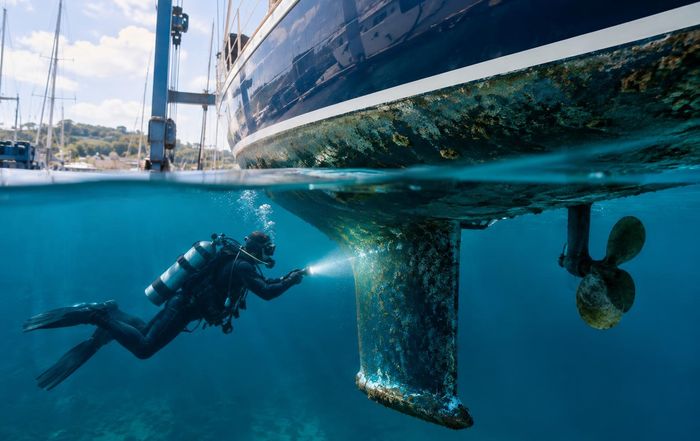
How to Inspect a Used Sailing Yacht Below the Waterline
A careful below-the-waterline inspection is one of the most important parts of buying a used sailing yacht, because the visible topsides can look immaculate while the structure, systems, and underwater coatings tell a very different story. Buyers often focus first on sail inventory, upholstery, electronics, and layout, but the real costs and risks frequently sit out of sight: osmosis in a fiberglass hull, corrosion around fittings, tired seacocks, grounding damage, failed keel bolts, or a neglected shaft and propeller. A disciplined inspection does not replace a professional survey, but it can help a buyer decide whether a yacht is worth pursuing, what questions to ask, and where the expensive surprises are likely to be hiding. For readers exploring broader buying and maintenance topics, Yacht Review's boat coverage, reviews, and technology section can provide useful context on design choices and onboard systems that affect long-term ownership.
Start with the hull, not the polish
The first mistake many buyers make is assuming a clean hull means a healthy one. Antifouling paint can conceal repairs, blistering, old impact marks, and uneven fairing work, so the inspection should begin with a slow visual sweep from bow to stern while the yacht is out of the water or hauled high enough for a proper look. Attention should go to the entire underwater surface, but especially the bow sections, keel root, rudder stock area, and around through-hull fittings, where stress and wear tend to concentrate. A hull that has been repeatedly pressure-washed, patched, or heavily sanded may still be sound, but the finish can also hide clues about previous damage or poor maintenance. The aim is not cosmetic perfection; it is to understand whether the yacht has been cared for systematically or merely made presentable for sale.
Fiberglass yachts merit special attention for osmosis, which can appear as blistering, weeping, or a persistent vinegar-like smell when the laminate is opened by a surveyor. Not every blister is a disaster, and not every older hull will be blister-free, but widespread or deep blistering deserves closer scrutiny. Buyers who want a better sense of how hull design and construction influence durability can also browse Yacht Review's design coverage and history section, where build methods and materials are often discussed in broader context. Official and industry guidance from organizations such as the Royal Yachting Association, the American Boat & Yacht Council, and the International Organization for Standardization is useful when interpreting construction standards, although a surveyor's hands-on judgment remains essential.
Keel, ballast, and the signs of grounding
The keel area tells a great deal about how a sailing yacht has lived. Look closely at the keel-hull joint for cracking, rust staining, repaired fairing, or fresh sealant that may indicate a recent strike or movement. On fin-keel boats, any evidence of distortion, uneven gaps, or stress marks around the joint should be treated seriously, especially if the boat has a history of running aground. Lead, iron, and composite ballast arrangements each have their own vulnerabilities, but the common thread is that impact loads can travel into the structure in ways that are not obvious to the naked eye. A boat that has grounded hard may still appear fine to a casual buyer while hiding internal tabbing damage, compressed floors, or loosened bolts.
Keel bolts deserve direct inspection wherever access is possible. Corrosion, weeping rust, elongated holes, cracked backing structure, or unusual movement under load are all reasons to slow down and investigate further. Some older yachts have keel bolts that are difficult to inspect fully without removing interior panels, which is one reason a buyer should never rely on a quick external glance alone. If the yacht has a lifting keel, centerboard, or swing keel, the inspection becomes even more important because the pivot points, lifting mechanism, and seals add failure modes that a fixed-keel boat does not have. A buyer planning bluewater use should be especially cautious here, because offshore loads are less forgiving than weekend coastal sailing. For related ownership context, Yacht Review's cruising section and global coverage can help frame how different sailing grounds and use patterns affect wear.
Through-hulls, seacocks, and the systems that keep water out
Below the waterline, the smallest fittings can create the biggest emergencies. Every through-hull should be identified, traced, and inspected for material condition, installation quality, and accessibility. Bronze, DZR brass, stainless steel, composites, and plastic each have strengths and weaknesses, but the main question is whether the fitting is suitable for its purpose and maintained correctly. Seacocks should operate smoothly and close fully, with no signs of stiffness, dezincification, cracking, or leakage around the base. Hoses should be double-clamped where appropriate, properly supported, and free from hardening, chafe, or age-related cracking. A neglected hose on a cheap-looking cockpit drain or engine intake can be just as dangerous as a more glamorous structural defect.
This is also the point where buyers should think like operators, not just owners. A yacht may pass a visual inspection yet still be awkward to isolate in an emergency if valves are hidden behind tanks, lockers, or engines. That matters because the best-built boat can still be vulnerable if the crew cannot reach and shut the right fitting quickly. Practical safety guidance from the U.S. Coast Guard, the National Marine Manufacturers Association, and the BoatUS Foundation is worth reviewing when assessing onboard plumbing and emergency readiness. If the yacht's underwater systems appear dated or poorly arranged, the cost is not only replacement parts but also the time and access work needed to make the system genuinely safe.
Rudder, bearings, and steering integrity
A used sailing yacht can hide serious steering problems below the waterline long before they become obvious at the helm. The rudder should be checked for play, water ingress, impact damage, delamination, or signs that it has been repaired after a strike. On spade rudders, the stock, bearings, and blade structure are critical; on skeg-hung or partial-skeg designs, the supporting structure and attachment points deserve equal attention. Any unusual movement when the rudder is loaded by hand, or any visible gap around the stock exit, should be taken seriously. Water inside a rudder is not always catastrophic, but it can indicate long-term deterioration that eventually becomes expensive to remedy.
Steering gear should be assessed as part of the same system, not as a separate cockpit feature. Cable runs, quadrant condition, rudder stops, emergency tiller access, and corrosion around fittings all matter. If the boat has been involved in a grounding or collision, the steering system is one of the first places where hidden damage can linger. It is also worth checking whether the rudder has ever been removed, repaired, or rebalanced, because a poorly executed repair can create vibration, heavy steering, or structural weakness that only becomes apparent under sail. Buyers who are comparing older cruising yachts with newer designs can use Yacht Review's news section and family coverage to see how safety, handling, and usability are discussed across different types of sailing.
Propulsion appendages on sailing yachts still matter
Even on a sailboat, the propeller, shaft, saildrive, cutless bearing, and related underwater components deserve close inspection. A folding or feathering propeller may be a selling point, but it should be checked for smooth operation, corrosion, excessive play, and signs of impact. Fixed props can suffer from bent blades, cavitation wear, or electrolysis. Shaft systems should be inspected for alignment issues, pitting, and leakage at the stern gland or shaft seal. Saildrives require especially careful attention because the bellows, seal system, and gearbox interface can be expensive if neglected. In many cases, the condition of these parts tells you as much about ownership discipline as the condition of the sails.
Galvanic corrosion is another reason to look beyond the obvious. Sacrificial anodes should be present, correctly sized, and not already exhausted. If they are disappearing too quickly, the yacht may have bonding issues, stray current problems, or incompatible metals in the underwater package. Reputable technical guidance from manufacturers and standards bodies such as ABYC and ISO can help buyers understand why these systems fail, but a marine surveyor or yard technician should confirm the diagnosis. A yacht that appears cheap because it needs "just a few underwater items" can become expensive very quickly once the owner starts replacing bearings, seals, anodes, and corroded hardware together.
Osmosis, repairs, and what old paint may be hiding
Antifouling layers often conceal the most important part of the inspection. A hull that has been repeatedly repainted without a proper moisture assessment may look serviceable while hiding laminate issues underneath. Osmosis is more common in some older fiberglass yachts than in newer ones, but age alone does not tell the whole story; build quality, resin choice, maintenance history, and storage conditions all matter. Moisture readings can help, but they are not definitive on their own, especially if the hull has been recently hauled, pressure-washed, or treated. The best approach is to combine visual inspection, tapping, moisture measurement, and, when necessary, professional opening-up of suspect areas.
Repairs should also be judged on quality, not just on the fact that they exist. A neat patch is not proof of a good repair. Buyers should ask what caused the damage, who carried out the work, whether the structure was restored to original strength, and whether the repair was documented. This is particularly important around the keel, rudder, and bow sections, where previous impacts may have been hidden under fairing compound and fresh antifouling. For owners who want to understand the broader maintenance environment and how repair choices affect resale value, Yacht Review's business coverage and sustainability section can offer useful perspective on lifecycle cost, materials, and responsible upkeep.
When to bring in a surveyor, diver, or yard
A buyer can do a great deal with a flashlight, a scraper, a moisture meter, and patience, but there is a limit to what a pre-purchase inspection can safely conclude without expert help. A professional marine surveyor is especially important if the yacht shows signs of grounding, osmosis, keel movement, unusual corrosion, or any history that is incomplete or inconsistent. In-water diver checks can be useful for confirming propeller condition, rudder movement, and obvious external damage, though they are not a substitute for a haul-out. If the boat is already ashore, a yard technician may be able to remove access panels, open seacocks, or expose structural areas that a casual buyer cannot inspect.
The right question is not whether the inspection is expensive, but whether the absence of one is more expensive later. A modest survey fee can save a buyer from inheriting structural work, safety defects, or months of repair delays. This is especially true in the current market, where many used sailing yachts have been lightly used but poorly maintained, and where cosmetic refits can distract from deeper issues below the waterline. Buyers who are still narrowing choices may find Yacht Review's community page useful for broader ownership discussion and practical peer experience, while the site's travel section can help connect a yacht's condition to the kind of cruising it is likely to support.
A practical buyer's mindset
The best below-the-waterline inspection is methodical, slightly skeptical, and focused on consequences rather than appearances. A pristine hull can still conceal a tired seacock, a damaged keel joint, or a corroded steering system, while a cosmetically rough boat may have a structurally honest and well-maintained underwater profile. The goal is to separate age-related wear from neglect, and normal maintenance from warning signs that change the economics of the purchase. If the yacht is structurally sound, mechanically coherent, and properly documented, the underwater condition can support a confident offer. If the inspection raises unanswered questions, the smartest move is usually to slow down, ask for more evidence, and let the boat prove itself before money changes hands.