

Top Yacht Destinations Across Asia: A Strategic Guide for Discerning Owners
Asia has moved decisively from being a peripheral cruising option to a central pillar of global yachting itineraries, offering owners and charter guests a combination of cruising grounds, cultural depth, and investment opportunity that is difficult to match elsewhere. For the readership of yacht-review.com, which consistently seeks a balance of lifestyle, design appreciation, and business insight, Asia now represents not only an extraordinary playground but also a region where the yacht industry's future is being actively shaped.
This article surveys leading yacht destinations across Asia, examines the infrastructure that supports them, and highlights how owners and professionals can integrate these waters into long-term cruising and asset-management strategies, while remaining aligned with evolving expectations around sustainability and responsible luxury.
The Rise of Asia as a Premier Yachting Region
Over the past decade, Asia has seen steady growth in marina infrastructure, yacht service capability, and charter regulation clarity. Industry reports from organizations such as Superyacht Group, Boat International, and the Global Marine Business Advisors network have noted an increase in both locally based yachts and visiting superyachts repositioning between the Mediterranean and Pacific via Asian waters. This reflects a broader shift in global wealth, particularly in Southeast and East Asia, and a growing appetite for marine leisure among high-net-worth individuals in markets such as Singapore, Hong Kong, mainland China, South Korea, and Japan.
For owners planning extended itineraries, Asia offers a rare combination: large, relatively uncrowded cruising areas, a long season that can be optimized by moving latitudinally, and a rapidly maturing ecosystem of marinas, refit yards, and crew services. On yacht-review.com, this trend is mirrored in rising interest across our cruising features, as more captains and managers evaluate Asian routes not as occasional diversions but as core elements of multi-year cruising programs.
Southeast Asia: The Heart of Warm-Water Cruising
Thailand: Phuket and the Andaman Sea
Thailand remains the most established superyacht hub in mainland Southeast Asia, with Phuket acting as a central base for Andaman Sea cruising. Marinas such as Ao Po Grand Marina, Royal Phuket Marina, and Yacht Haven Marina have invested in facilities capable of accommodating larger yachts, and Thailand has made periodic regulatory moves to attract foreign-flagged charter vessels, though exact rules and implementation can evolve and should be checked carefully with local legal advisers.
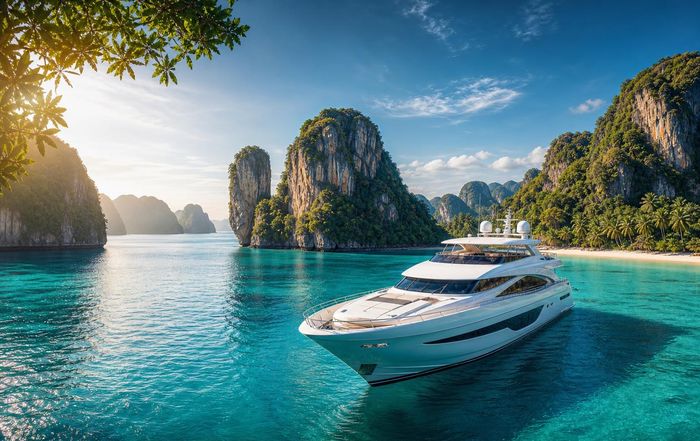
From Phuket, itineraries typically extend north to Phang Nga Bay's limestone karsts and sea caves, west to the Similan and Surin Islands with their clear waters and dive sites, or south towards the Malaysian border and the Langkawi archipelago. The region's combination of protected anchorages, beach clubs, and high-end hospitality has made it a reliable choice for owners seeking a blend of privacy and onshore experiences. For up-to-date guidance on Thai tourism and marine regulations, many captains consult resources from the Tourism Authority of Thailand and marine notices published via local port authorities and specialist yachting agencies.
Indonesia: Raja Ampat, Komodo, and the Indonesian Archipelago
With more than 17,000 islands, Indonesia offers one of the most diverse cruising theatres on the planet. Among the most sought-after destinations is Raja Ampat in West Papua, widely recognized by marine scientists and organizations such as Conservation International as one of the world's richest coral reef ecosystems. The region is renowned for exceptional diving, with strict conservation regulations and marine park fees that yacht operators must respect and plan for.
Further south, the Komodo National Park area, including Komodo, Rinca, and surrounding islands, offers dramatic volcanic landscapes, pink-sand beaches, and the famous Komodo dragons. Many luxury expedition yachts and high-end phinisi-style charter vessels base themselves seasonally between Raja Ampat and Komodo, following weather patterns and optimizing guest experiences. Owners considering long-term cruising in Indonesia benefit from working with specialist local agents who understand the country's complex permitting requirements and can coordinate with conservation rules and national park authorities. Those interested in responsible tourism can learn more about sustainable business practices and how they are being applied in Indonesia's marine protected areas.
Malaysia and Singapore: Strategic Hubs and Gateway Ports
Malaysia's Langkawi archipelago, with its duty-free status and growing marina infrastructure, serves as a convenient base for yachts operating between Thailand and the Strait of Malacca. Marinas such as Royal Langkawi Yacht Club offer haul-out options for mid-sized yachts and an increasingly sophisticated service network. Meanwhile, Kuala Terengganu and islands off the east coast, including the Perhentians and Redang, attract divers and owners seeking quieter anchorages.
Singapore operates more as a strategic hub than a cruising destination in its own right, but it is indispensable as a logistics, finance, and crew-change center. Facilities like ONE°15 Marina Sentosa Cove and Raffles Marina provide high-end berthing and service access, while Singapore's port and aviation connectivity make it a favored embarkation and disembarkation point for charter guests and owners flying in from global financial centers. The city-state's regulatory clarity and strong legal framework are also significant for yacht ownership structures, flagging, and insurance, topics which we regularly explore within our business insights for industry professionals.
East Asia: Emerging Luxury Corridors
Japan: From the Seto Inland Sea to Okinawa
Japan has been steadily raising its profile as a yachting destination, supported by government initiatives to expand marina capacity and promote nautical tourism. The Seto Inland Sea, sheltered by Honshu, Shikoku, and Kyushu, offers relatively calm waters, a tapestry of small islands, and access to culturally rich cities such as Hiroshima and Takamatsu. To the south, the Okinawa and Yaeyama islands provide subtropical waters, coral reefs, and a climate that encourages winter cruising, particularly for yachts repositioning between the North Pacific and Southeast Asia.
While Japan's marina network is still developing compared to Mediterranean standards, recent years have seen new investment and international events that have highlighted the country's potential. Owners and captains must remain attentive to customs and cabotage rules, but there is a growing ecosystem of specialist agencies and local partners able to support foreign-flagged yachts. For broader context on Japan's tourism and infrastructure strategies, many investors reference analyses from organizations like the OECD and Japan Tourism Agency, which track long-term plans for coastal development and sustainable tourism.
South Korea and the Yellow Sea
South Korea's yachting scene is relatively young but expanding, with marinas near Busan, Incheon, and Jeju Island supporting both domestic boaters and visiting yachts. Jeju, with its volcanic landscapes and UNESCO-listed natural sites, has been a focus of tourism development efforts and cruise infrastructure. Although superyacht-specific facilities are more limited than in Southeast Asia, regional owners and charterers increasingly view the Korean coast and Yellow Sea islands as part of a broader East Asian circuit.
From a business perspective, Korean shipyards and technology firms are also relevant, as they participate in the wider marine supply chain, including advanced materials, electronics, and propulsion systems. Readers interested in technical developments may wish to follow coverage from sources such as Lloyd's Register or explore marine innovation trends that are shaping future yacht builds and refits worldwide.
Greater China and Hong Kong
The Chinese mainland has seen fluctuating regulatory and market conditions for yachting, with some coastal provinces investing heavily in marinas and yacht clubs, while others remain more restrictive. Hainan Island, designated as a free trade port, has been positioned as a leisure and tourism hub, with marinas in Sanya and Haikou targeting domestic and international boaters. Regulatory frameworks, including cruising permits and charter rules, continue to evolve and require specialist guidance.
Hong Kong retains strategic importance due to its legal system, financial services, and yachting culture, even as berth availability remains constrained in certain marinas. The city's position at the intersection of Southeast and East Asia makes it a convenient waypoint for yachts moving seasonally, with local yacht clubs and service providers offering a high standard of maintenance and support. Industry observers often consult analyses from Asian Marine & Boating and regional brokerage houses to track how policy shifts and economic conditions are influencing yacht ownership patterns in Greater China.
South Asia: Long-Range Voyaging and Cultural Depth
The Maldives: Atolls for Ultra-High-End Cruising
The Maldives has become a flagship destination for ultra-luxury resort and yacht experiences, with its chain of atolls providing sheltered lagoons, sandbanks, and world-class diving. Many superyachts visit the Maldives as part of Indian Ocean crossings, often combining time in the atolls with onward routes to Southeast Asia or the Middle East. The Maldivian government has implemented specific rules for foreign yachts, including cruising permits and designated entry points, which are typically managed through local agents and resort partners.
The country's vulnerability to climate change and sea-level rise has made it a focal point for discussions on sustainable tourism and marine conservation. Environmental organizations and bodies such as the UN Environment Programme have highlighted both the risks and the opportunities for the Maldives to lead in low-impact luxury travel. Owners and charterers who prioritize responsible operations can explore sustainability perspectives that align high-end cruising with reef protection and community engagement.
Sri Lanka and the Indian Subcontinent
Sri Lanka, strategically located near major shipping lanes, has been positioning itself as a yachting and cruise destination, with ports such as Galle, Colombo, and Trincomalee offering potential bases for exploration. The island's cultural heritage, wildlife, and surf breaks create a compelling mix for owners seeking off-the-beaten-path experiences, though superyacht-specific marinas and service infrastructure are still developing.
On the broader Indian subcontinent, yacht infrastructure remains relatively limited compared to Asia's other regions, but there is growing interest around Goa, Kerala, and the Andaman and Nicobar Islands. These areas are generally better suited to expedition-style yachts and owners comfortable with more self-sufficient operations. Industry stakeholders often review policy updates and infrastructure plans via sources like India's Ministry of Tourism and Maritime Boards to assess long-term potential.
Designing the Ultimate Asian Itinerary
For owners and captains developing multi-season plans, Asia rewards a strategic approach that integrates weather patterns, visa and customs rules, and maintenance windows. Many yachts adopt a seasonal rhythm, spending the Northern Hemisphere winter in Southeast Asia and the Indian Ocean, then moving northwards towards Japan or eastwards into the Pacific as conditions change.
From a design and refit perspective, Asia's environments encourage thoughtful onboard planning. Tropical humidity, intense UV exposure, and the need for extended periods at anchor all place specific demands on exterior finishes, air-conditioning systems, tenders, and water toys. Naval architects and designers, including leading European and Asian studios, increasingly consider Asian cruising scenarios when specifying range, shallow draft capabilities, and flexible guest spaces. Readers seeking deeper insight into how design responds to regional cruising can explore our dedicated yacht design coverage, where case studies often reference lessons learned from extended operations in Asia.
Owners are also paying closer attention to onboard wellness and cultural immersion. Asia's spa traditions, culinary diversity, and artistic heritage lend themselves naturally to yacht experiences that go beyond conventional sun-and-sea itineraries. Chefs source regional ingredients from Thai markets, Japanese fish auctions, or Indonesian spice islands, while concierges coordinate onshore experiences from private temple visits in Bali to contemporary art tours in Singapore and Hong Kong.
Lifestyle, Hospitality, and Onshore Experiences
Asia's top yacht destinations are closely linked with some of the world's most sophisticated hospitality offerings. High-end resorts and private island developments in Thailand, Indonesia, the Maldives, and Vietnam increasingly integrate superyacht access into their planning, providing deep-water jetties, tender docks, and seaplane connections. This allows owners to combine the privacy of their vessel with the amenities of flagship properties operated by groups such as Aman, Four Seasons, and Six Senses, many of which feature prominently in global luxury travel rankings from sources like Condé Nast Traveler and Travel + Leisure.
Urban centers including Singapore, Hong Kong, Tokyo, and Seoul complement these remote anchorages with world-class dining, healthcare, and cultural institutions. For many yacht owners, Asia is not only a cruising destination but also a base for business and family life, enabling seamless transitions between boardroom, marina, and remote archipelago. At yacht-review.com, this integration of work, travel, and leisure is a recurring theme in our lifestyle features, reflecting how modern owners increasingly view their yachts as mobile extensions of home and office.
Sustainability and Responsible Cruising in Asia
As awareness of environmental impacts grows, Asia's yachting community is confronting the challenge of preserving fragile marine ecosystems while supporting local economies that benefit from high-value tourism. Coral bleaching events, plastic pollution, and overfishing have been documented in multiple Asian regions by scientific bodies such as the Intergovernmental Panel on Climate Change (IPCC) and regional research institutes. In response, many marine parks and local authorities have introduced stricter rules on anchoring, waste disposal, and wildlife interaction.
Forward-looking owners and operators are adopting best practices that include the use of advanced wastewater treatment systems, hull coatings that reduce fuel consumption, and voyage planning that minimizes unnecessary repositioning. Some yachts now work with marine biologists and NGOs to support citizen science projects, reef restoration, or community education, particularly in destinations like Raja Ampat, the Maldives, and Thailand's national marine parks. Those seeking a broader framework for responsible operations can consult guidance from organizations such as the International Maritime Organization and explore sustainability-focused content that highlights global best practices being applied in Asian waters.
From a business standpoint, sustainable operations are increasingly seen not as a discretionary choice but as integral to long-term asset value and brand reputation. Charter clients, especially younger generations, are asking more questions about environmental credentials, supply chains, and local impact. Yards and designers are responding with hybrid propulsion concepts, alternative materials, and more efficient hull forms, many of which are showcased at major regional events such as the Singapore Yachting Festival and Thailand's boat shows, which in turn are covered widely by industry media and our own news reporting.
Infrastructure, Regulation, and Investment Opportunities
The maturation of Asia's yachting landscape has attracted significant investment into marinas, shipyards, and service businesses. Countries such as Thailand, Indonesia, Malaysia, Singapore, and Japan have announced or implemented marina development projects aimed at capturing a share of the global superyacht fleet. These projects often involve complex public-private partnerships and require careful environmental assessment, but they also create opportunities for investors, operators, and suppliers across the value chain.
Regulation remains a critical variable. Charter rules, cabotage laws, tax treatment, and visa requirements differ widely between jurisdictions and can change with relatively short notice. Professional yacht managers and legal advisers often rely on regional law firms, classification societies, and industry associations such as the Superyacht Association of Asia and the Pacific (SYP) and Asia Pacific Superyacht Association (APSA) for up-to-date guidance. For our readers involved in ownership structures, brokerage, or marina development, the intersection of regulation and opportunity across Asia is a recurring topic within our business analysis, where case studies and expert interviews illuminate both the potential and the practical constraints.
In parallel, several Asian shipyards have moved beyond commercial and patrol vessels into custom and semi-custom yacht construction, refit, and maintenance. These facilities, located in countries including Indonesia, Thailand, and China, often offer cost advantages and geographic proximity for yachts based in the region. Owners considering substantial refit work in Asia must evaluate not only technical capability but also project management, supply chains, and classification compliance, referencing trusted industry sources and, where possible, prior project outcomes.
Integrating Asia into a Global Cruising Strategy
For many owners, the key question is not whether to cruise Asia, but how to integrate the region into a coherent long-term plan that balances lifestyle aspirations, operational realities, and asset preservation. Some yachts adopt a circumnavigation-style route, spending one or two seasons in Asia before moving on to the South Pacific or Indian Ocean. Others choose to homeport in hubs such as Singapore, Phuket, or Hong Kong, using these bases for regular regional itineraries and periodic returns to Europe or the Americas.
The editorial team at yacht-review.com has observed a growing number of owners who view Asia as a multi-year chapter rather than a brief detour, drawn by the region's diversity and the ability to combine remote expedition-style cruising with sophisticated urban experiences. Our boat and yacht reviews increasingly reference performance and comfort in Asian conditions, while our cruising narratives highlight the depth of cultural and natural encounters available across the continent.
Ultimately, Asia's appeal lies in its multiplicity. From the karst pinnacles of Phang Nga Bay to the coral gardens of Raja Ampat, from the neon skylines of Tokyo and Singapore to the tranquil temples of Bali and Kyoto, the region offers a spectrum of experiences that can be curated to match the preferences of each owner, family, or charter group. With careful planning, trusted local partnerships, and a commitment to responsible operations, Asia can form the centerpiece of a yachting life that is as enriching as it is enjoyable.
For readers considering their first foray into these waters, or for seasoned captains refining existing routes, the resources available across yacht-review.com-from in-depth reviews and historical perspectives to coverage of industry events and community initiatives-provide an evolving reference point as Asia continues to define the future of global yachting.