

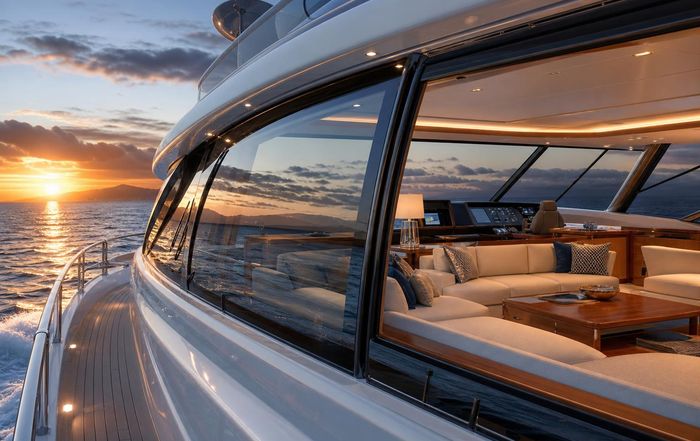
How Yacht Windows Shape Safety, Comfort, and Character at Sea
Yacht windows, once treated as secondary details in naval architecture, now sit at the intersection of safety, comfort, design, and brand identity. For owners, captains, and designers who regularly visit us, windows are no longer just openings in a hull or superstructure; they have become critical structural elements, performance components, and lifestyle features that define the onboard experience.
Advances in glass technology, composite engineering, and classification standards over the past decade have transformed how shipyards approach glazing on both custom superyachts and production boats. From panoramic main-deck salons to near floor-to-ceiling hull windows in guest cabins, the modern yachting aesthetic increasingly depends on transparent surfaces that must be as resilient as they are beautiful.
This article explores how yacht windows influence safety and comfort, how regulations and engineering are evolving to keep pace with ambitious designs, and how owners can think strategically about glazing choices when commissioning or refitting a yacht.
From Portholes to Panoramas: The New Role of Yacht Windows
Historically, seagoing vessels relied on small, round portholes set into heavy steel or aluminum structures. The limited size and number of openings reflected a conservative view of structural integrity and water ingress risk. As composite hulls, advanced finite element analysis, and high-performance glazing entered mainstream yacht building, the visual language of yachting shifted decisively toward openness and light.
Contemporary designs from shipyards such as Feadship, Benetti, and Sanlorenzo increasingly feature elongated hull windows, multi-deck glass façades, and fully glazed sky lounges. Publications such as Boat International and SuperYacht Times have documented a clear trend toward larger glazed surfaces over the last decade, particularly on yachts above 40 meters, where owners expect close visual contact with the sea even from interior spaces.
For followers of our own yacht design insights, this evolution is evident in the way designers integrate windows as defining lines of the profile rather than afterthoughts. The shift from functional openings to architectural elements has profound implications for safety and comfort that must be carefully managed from concept to delivery.
Structural Integrity and Impact Resistance
The primary safety function of yacht windows is to maintain the integrity of the hull and superstructure under dynamic loads. Modern marine glazing is typically composed of laminated, toughened glass or acrylic/polycarbonate composites engineered to withstand impact, pressure differentials, and flexing.
Classification societies such as Lloyd's Register, DNV, and Bureau Veritas set standards for glass thickness, framing, and installation based on vessel size, window position, and design pressure. These rules, which can be reviewed through organizations like Lloyd's Register, require rigorous calculations and testing to ensure that windows can endure slamming loads, green water impacts, and in some cases collision forces.
In practice, window safety begins long before a single pane is installed. Naval architects and structural engineers model the hull and superstructure using finite element analysis to quantify stress concentrations around large openings. As glazing areas expand, more of the load is redistributed into mullions, frames, and adjacent structural members. Leading yards now treat major glass panels almost as structural components, integrating them into the global stiffness strategy of the yacht.
For hull windows close to the waterline, impact resistance is particularly critical. Laminated glass with multiple interlayers, or in some cases high-grade polycarbonate, is used to prevent catastrophic failure and to ensure that even if one layer cracks, the pane remains intact and watertight. Classification rules typically require these windows to withstand significant pressure margins above expected operational loads, adding an important safety buffer for offshore cruising.
Owners and captains evaluating new builds or refits can benefit from consulting independent surveyors or classification engineers early in the process. This is especially important when considering modifications such as enlarging existing windows or cutting new openings, which can alter the structural behavior of the hull or superstructure and must be engineered carefully to maintain compliance and safety margins.
Water Tightness, Weather Protection, and Damage Control
Water ingress remains one of the most serious risks associated with yacht windows, particularly in the hull. Even small leaks can cause interior damage and mold, while significant failures pose a direct threat to buoyancy and stability.
To mitigate these risks, modern marine glazing systems rely on robust seals, high-quality marine adhesives, and carefully engineered frames. Leading adhesive manufacturers such as Sika and 3M provide specialized bonding systems for structural glazing, designed to accommodate differential expansion between glass and composite or metal structures, as documented in their marine technical literature.
Routine inspection and maintenance of seals and bonding lines are essential components of safe yacht operation. Over time, UV exposure, temperature cycles, and mechanical stress can degrade sealants and gaskets, particularly in tropical or high-latitude climates with strong sun or large temperature variations. Professional surveys often include close examination of window perimeters, with recommendations for resealing or replacement when early signs of deterioration appear.
The industry has learned valuable lessons from past incidents where hull windows or large glazed areas suffered damage. Although such events remain rare relative to the size of the global fleet, they have prompted many yards and classification societies to refine their design criteria, especially for windows located near the bow or in areas exposed to heavy seas. Reputable sources such as Safety4Sea and flag-state circulars provide ongoing updates on safety recommendations and case studies, which naval architects and captains increasingly incorporate into risk assessments.
For owners who prioritize blue-water capability, the conversation around windows and water tightness often becomes a balancing act between aesthetic ambition and conservative ocean-going safety. Many choose to maintain smaller or more protected windows forward and lower in the hull while maximizing glazed areas higher in the superstructure and in more sheltered zones.
Navigational Safety and Situational Awareness
Beyond structural concerns, windows are vital to navigational safety, particularly on the bridge. The International Maritime Organization sets out guidelines for bridge visibility on larger vessels, and while private yachts are not always bound by the same rules, leading shipyards and classification societies adopt similar principles.
Clear, unobstructed sightlines from the wheelhouse, minimal frame obstructions, and carefully managed reflections are critical to safe watchkeeping. Bridge glazing is typically treated with specialized coatings to reduce glare and UV penetration while maintaining optical clarity. Wiper systems, heated glass, and defogging solutions are engineered to ensure visibility in heavy weather, ice, or tropical humidity.
The growth of integrated bridge systems and augmented reality overlays, as covered by organizations such as The Nautical Institute, has further increased the importance of optical quality. Distortions in curved glass or uneven tinting can interfere with visual perception and the accurate reading of distance and bearing, making high-precision manufacturing and installation essential.
For owners and captains selecting or refitting bridge windows, detailed mock-ups and sea trials under varied conditions can be invaluable. The best designs manage to combine generous visibility with sufficient shading and insulation to keep the wheelhouse comfortable for extended passages, something that regular readers of our cruising features will recognize as a decisive factor in long-range enjoyment.
Thermal Comfort, Insulation, and Energy Efficiency
Comfort on board a yacht is profoundly influenced by the thermal performance of its windows. Large glazed surfaces admit natural light and views, but they also represent potential pathways for heat gain in warm climates and heat loss in colder regions.
To address these challenges, modern yachts increasingly use double-glazed or specially coated glass with improved insulation properties. Low-emissivity (low-E) coatings, inert gas fills, and solar control films help reduce infrared transmission while allowing visible light to pass, which can significantly lower air-conditioning loads in tropical cruising grounds. Organizations such as Glass for Europe provide technical overviews of these technologies, which are now being adapted for marine environments.
On high-latitude expeditions, particularly aboard explorer yachts designed for polar or sub-polar cruising, insulation becomes even more important. Double or triple glazing, heated window systems, and thermally broken frames reduce condensation and cold-spot discomfort, enabling guests to enjoy panoramic polar vistas without drafts or fogged glass.
For owners considering the long-term operating costs and environmental profile of their yachts, window performance plays a direct role in energy efficiency. Better insulation means smaller HVAC systems or reduced runtime, less fuel consumption, and a quieter onboard environment. This aligns closely with the themes explored in our coverage of sustainable yachting practices, where incremental design improvements collectively contribute to lower environmental impact.
Light, Space, and Psychological Comfort
From a lifestyle perspective, yacht windows strongly influence how guests experience space, time, and connection to the sea. Exposure to natural daylight supports circadian rhythms, enhances mood, and reduces fatigue, benefits that have been widely discussed in architectural and wellness research and are increasingly recognized in luxury hospitality design.
In the yacht context, large windows transform interior volumes, making even compact spaces feel expansive and integrated with the surrounding seascape. Main deck salons with full-height glazing, owner's suites with wraparound views, and beach clubs with folding terraces and glazed transoms all contribute to a sense of openness that modern owners now expect as standard.
The psychological impact is particularly pronounced on long passages or during extended stays at anchor. Guests who might once have felt confined by traditional yacht interiors now enjoy a continuous visual link to the horizon, coastal scenery, or city skylines. This connection enhances the sense of travel and discovery that we celebrate across our yacht travel features, where the view through the glass often becomes the central narrative of a voyage.
At the same time, designers must carefully manage privacy, glare, and sun exposure. Tinted or reflective glazing, integrated blinds, and smart glass technologies that can switch from clear to opaque at the touch of a button are increasingly common. These solutions allow a single space to function as a bright, open lounge by day and a private, cocooned retreat by night.
Acoustic Comfort and Noise Management
Less visible but equally important is the role of windows in acoustic comfort. Glass has different sound transmission characteristics from composite or metal structures, and large glazed areas can become pathways for external noise from engines, generators, or the surrounding environment.
To address this, many high-end yachts now specify laminated acoustic glass, where interlayers are tuned to dampen specific frequency ranges. Combined with careful frame design and insulation around window recesses, these measures can significantly reduce noise ingress, particularly in owner and guest areas.
For yachts that regularly berth in busy marinas or cruise in high-traffic regions, this acoustic performance can make the difference between a restful night's sleep and a constant awareness of external activity. As we have noted in our lifestyle coverage, the quiet luxury that owners increasingly seek depends as much on what they do not hear as on what they see.
Materials, Coatings, and Emerging Technologies
Behind the elegant surfaces visible to guests lies a sophisticated ecosystem of materials and technologies designed to balance performance, safety, and aesthetics. Marine glazing options now include tempered glass, laminated glass, chemically strengthened glass, acrylics, and polycarbonates, each with distinct advantages and trade-offs in terms of weight, clarity, scratch resistance, and impact behavior.
Specialized coatings further refine performance. Solar control films reduce heat gain; low-E coatings improve insulation; hydrophobic coatings help water bead and run off; and anti-reflective treatments enhance clarity. Leading manufacturers and research institutes, such as those referenced by Fraunhofer Institute for Solar Energy Systems, continue to develop new multilayer coatings that promise better energy performance without compromising optical quality.
Smart glass technologies, including electrochromic and suspended particle devices, are beginning to appear on select superyachts, particularly in skylights and owner areas. These systems allow dynamic control of tint and transparency, reducing the need for physical blinds and enabling more flexible interior lighting schemes. While still relatively costly and complex, they exemplify the direction of travel in yacht window innovation.
Weight reduction is another area of active development. Advanced laminates and thinner, stronger glass types can reduce overall superstructure weight, improving stability and fuel efficiency. These developments align with broader trends in yacht technology that we follow closely in our technology features, where incremental savings in multiple systems combine to deliver noticeable performance gains.
Regulatory Landscape and Classification Standards
The regulatory framework governing yacht windows is complex, reflecting the intersection of maritime safety, building codes, and technological change. For larger yachts, particularly those above 500 gross tons or engaged in commercial charter, compliance with classification society rules and flag-state regulations is mandatory.
Organizations such as Lloyd's Register, DNV, ABS, and RINA publish detailed requirements for window strength, location, and installation, often referencing international standards like ISO 12216 for small craft hull openings. These rules differentiate between hull and superstructure windows, consider the height above the waterline, and assign design pressures based on the yacht's service area and expected sea states.
Flag administrations and international bodies like the International Maritime Organization provide additional guidance, particularly for passenger safety and escape routes. Although not all private yachts fall under the same stringent regimes as commercial vessels, many owners and builders choose to voluntarily align with higher standards as a mark of quality and prudence. Those interested in the broader regulatory context can explore resources from the International Maritime Organization, which outline the principles behind many of these rules.
For yacht owners, the key takeaway is that window design is not purely a matter of style or personal preference. It is a regulated safety domain where early dialogue between designers, engineers, classification societies, and owners is essential to avoid compromises or costly redesigns later in the project.
Design Identity and Market Expectations
Beyond technical performance, windows play a decisive role in the visual identity and market positioning of a yacht. Distinctive window lines often become a builder's signature, recognizable from a distance and reinforced across multiple models. For example, several European yards have developed characteristic hull window geometries that immediately signal their brand, a trend regularly highlighted in our boat reviews and boats overview.
Buyers now routinely expect bright, open interiors with extensive glazing, even on smaller yachts in the 20-30 meter range. This expectation has influenced both new-build specifications and the refit market, where replacing small, dated windows with larger, more contemporary openings can dramatically modernize a yacht's appearance and resale value.
At the same time, experienced owners and captains often seek a nuanced balance between fashion and function. While expansive glass is visually impressive, practical considerations such as cleaning access, shading, privacy, and long-term maintenance must be weighed carefully. In regions with intense sunlight, such as the Mediterranean, Caribbean, and parts of Asia-Pacific, thoughtful integration of overhangs, louvers, and interior shading systems is essential to prevent overheating and glare.
This balance between aesthetic ambition and operational practicality is a recurring theme in our business and ownership coverage, where design decisions are evaluated not only for their visual impact but also for their implications on crew workload, running costs, and long-term asset value.
Sustainability and Lifecycle Considerations
Sustainability has become a central topic in yacht design and operation, and windows are part of that conversation. Although glass production is energy-intensive, well-designed glazing can improve a yacht's overall environmental profile by reducing energy consumption for lighting and climate control.
Natural daylighting through large windows allows for lower reliance on artificial lighting during daytime, particularly when combined with intelligent lighting controls. Thermal performance improvements, as discussed earlier, reduce HVAC loads, which in turn lower fuel consumption and emissions. For hybrid and electric yachts, where energy efficiency is paramount, window performance becomes even more critical.
Recyclability and end-of-life considerations are also gaining attention. While laminated glass and composite frames can be more challenging to recycle than simple monolithic glass, industry initiatives in the broader construction and automotive sectors, documented by organizations such as World Green Building Council, are exploring improved pathways for reuse and recycling of glazing materials. The yacht sector is beginning to reflect on how these developments can be adapted to its own lifecycle practices.
Owners who prioritize environmental responsibility increasingly work with designers and shipyards that embrace these principles holistically, integrating window performance with hull efficiency, propulsion choices, and onboard energy management. Our readers can explore these broader themes in greater depth through our dedicated global and sustainability coverage, where environmental innovation is a recurring focus.
Practical Guidance for Owners and Decision-Makers
For owners, family offices, and project managers overseeing a new build or major refit, yacht windows warrant early and sustained attention. Strategic questions include the desired balance between views and privacy, the intended cruising regions and climate conditions, the level of classification and regulatory compliance sought, and the long-term maintenance philosophy.
Engaging naval architects, glazing specialists, and classification societies at the concept stage can help align expectations with technical realities and budget constraints. Mock-ups, virtual reality visualizations, and visits to reference yachts provide valuable insight into how different window configurations feel in practice, both at anchor and underway.
It is also advisable to consider crew perspectives. Windows that are difficult to clean or access, or shading systems that are complex to operate, can increase daily workload and maintenance costs. Practicality and elegance are not mutually exclusive, and the most successful designs integrate both.
Finally, ongoing care is essential. Regular inspections, sealant maintenance, careful cleaning practices, and timely replacement of damaged or degraded components preserve both safety and visual quality. Many owners now include window condition as a specific line item in annual surveys, recognizing its importance to overall vessel integrity and guest experience.
Windows as the Lens of the Yachting Experience
For the fans here, yacht windows are more than technical components; they are the literal and figurative lenses through which the yachting lifestyle is experienced. They frame sunrise anchorages in the Exumas, city lights in Monaco, fjord walls in Norway, and coral reefs in the Pacific. They admit the light that defines interior moods and provide the visual continuity between life on board and the ever-changing seascape beyond.
As design ambitions grow and technology advances, the challenge for the industry is to deliver ever more dramatic views without compromising the fundamental principles of safety, seaworthiness, and long-term reliability. When glazing is conceived not as an afterthought but as an integrated element of naval architecture, engineering, and lifestyle design, it enhances every aspect of the yacht, from structural performance to psychological comfort.
In future features on yachting news and innovation, we will continue to track developments in marine glazing, from smarter materials to new regulatory standards and design concepts. For owners and professionals alike, understanding how windows affect safety and comfort is no longer optional; it is central to building and operating yachts that are not only beautiful, but also resilient, efficient, and deeply rewarding places to spend time at sea.