

Innovative Hull Designs for Enhanced Efficiency in the Modern Yachting Era
The Strategic Importance of Hull Innovation in 2026
Drift aside as the global yachting industry has moved decisively beyond aesthetic competition and incremental performance gains toward a more fundamental question: how can hull design radically enhance efficiency while meeting the rising expectations of owners, regulators, and charter guests across North America, Europe, Asia, and beyond. For the editorial research team at yacht-review.com, which has spent many painstaking years documenting advances in yacht design, technology, and sustainability, hull innovation now sits at the very center of serious discussions about performance, environmental responsibility, and long-term asset value.
This shift is driven by several converging forces. Owners in the United States, United Kingdom, Germany, and other mature markets have become more technically informed and financially analytical, increasingly evaluating yachts not only on speed and comfort but also on lifecycle operating costs and regulatory resilience. Emerging markets in Asia, particularly China, Singapore, South Korea, and Japan, are demanding technologically advanced solutions that reflect both prestige and environmental responsibility. Regulatory frameworks are tightening in Europe and North America, while investors and lenders are scrutinizing carbon intensity and fuel consumption in a way that would have been unthinkable a decade ago. In this environment, innovative hull designs are no longer experimental curiosities; they are becoming strategic tools for competitive differentiation, cost control, and compliance.
From the vantage point of yacht-review.com, which regularly analyzes new builds and refits in its reviews and business coverage, hull efficiency has become one of the clearest indicators of a builder's engineering competence and long-term vision. Owners and industry professionals who understand the implications of these developments are better positioned to make informed decisions about new construction, refit potential, and future-proofing their fleets.
Hydrodynamics, Resistance, and the New Performance Paradigm
At the core of hull innovation lies hydrodynamics: the way water flows around a vessel and the forces that resist its motion. While the basic principles have been understood for more than a century, the tools available in 2026 to model, simulate, and optimize hull forms are radically more powerful than those used even ten years ago. Naval architects now routinely combine advanced computational fluid dynamics with machine learning and high-fidelity tank testing to refine hull shapes that minimize drag, improve seakeeping, and support hybrid or fully electric propulsion systems.
Traditional displacement hulls still dominate long-range cruising yachts, particularly in the United States, United Kingdom, Norway, and the Netherlands, where owners prioritize comfort, range, and predictable motion. However, semi-displacement, planing, and fast-displacement hull forms have evolved substantially, blurring the lines between categories and enabling yachts to operate efficiently across a broader speed envelope. As regulatory and market pressure grows for reduced emissions, the ability to maintain efficient performance at lower and medium speeds becomes especially valuable, aligning with the wider maritime decarbonization agenda promoted by organizations such as the International Maritime Organization, whose work on emissions and energy efficiency standards continues to influence yacht design; those seeking a broader context can explore how these standards shape commercial and leisure vessels through resources from the International Maritime Organization.
For the expert readership of yacht-review.com, this hydrodynamic context is more than academic. It informs how they interpret sea trial data, fuel consumption curves, and range figures published in boat-focused coverage, and it shapes the questions they ask when engaging with builders from Italy, Germany, the United States, and other leading shipbuilding nations.
Fast-Displacement and Hybrid Hull Forms: Bridging Speed and Efficiency
One of the most significant advances of the last decade has been the maturation of fast-displacement and hybrid hull forms that combine elements of displacement and planing behavior. Developed and refined by leading European and global shipyards and naval architecture studios, these designs offer owners in markets such as the United States, Australia, the United Kingdom, and the Middle East the ability to cruise economically at moderate speeds while retaining the option of higher-speed operation when required.
Fast-displacement hulls typically feature slender waterlines, carefully optimized prismatic coefficients, and refined stern sections that reduce wave-making resistance. When paired with modern propulsion systems and lightweight structures, these hulls deliver substantial fuel savings across a broad range of speeds, improving both operating economics and environmental performance. Yachts with such hulls are increasingly prominent in yacht-review.com cruising features, where real-world passages from the Mediterranean to the Caribbean and across the Pacific demonstrate tangible reductions in fuel burn and extended range without sacrificing comfort.
Hybrid hull forms, including semi-displacement designs with optimized chines and spray rails, further blur the boundaries between categories. By leveraging extensive tank testing and simulation data, yards in Italy, the Netherlands, and Germany have refined hulls that lift more cleanly onto the plane, reduce slamming in head seas, and maintain stability at lower speeds. These characteristics appeal not only to performance-focused owners in North America and Europe but also to family-oriented buyers in Canada, Australia, and New Zealand who want to balance speed, comfort, and safety. For a wider understanding of how hull form optimization fits into modern naval architecture practice, readers may consult technical overviews from institutions such as The Royal Institution of Naval Architects, which provide context that complements the more applied insights regularly featured on yacht-review.com.
Multihulls and Wave-Piercing Forms: Redefining Comfort and Range
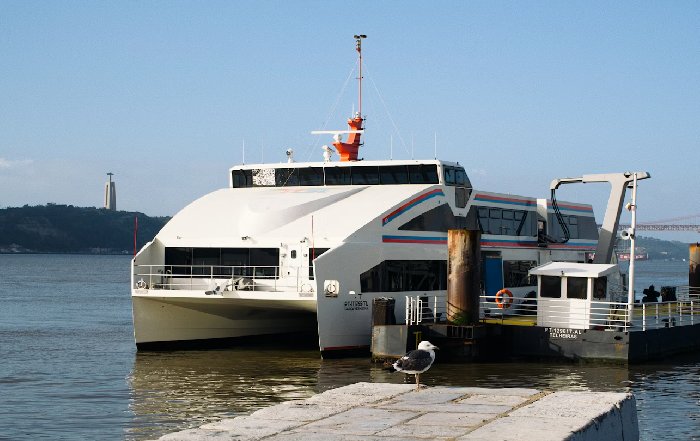
Multihull yachts, once considered niche, have become a central part of efficiency discussions, particularly among owners focused on long-range cruising, stability, and family-oriented voyages. Catamarans and trimarans offer increased deck and interior volume for a given length, while their slender hulls reduce resistance and allow for smaller engines or extended range at similar power levels. This combination of efficiency and comfort has proven especially attractive in markets such as France, Spain, South Africa, and the United States, where both private owners and charter operators seek vessels that can operate economically across diverse cruising grounds.
Wave-piercing bows and fine entries have further enhanced the performance and comfort of multihulls and select monohulls, reducing pitching and vertical accelerations in head seas. These features are particularly valued in the challenging waters of the North Atlantic, the Southern Ocean, and the Pacific, where long passages demand predictable motion and reduced fatigue for both guests and crew. For yacht-review.com, which frequently covers global routes in its travel and global sections, the real-world performance of such hulls on transoceanic passages is a recurring theme, illustrating how design choices translate into tangible benefits far from the shipyard.
In Asia-Pacific markets such as Thailand, Malaysia, and Singapore, where shallow waters and reef environments are common, multihulls also offer practical advantages in draft and stability, reducing the risk of groundings and expanding anchoring options. As interest in sustainable cruising and low-impact tourism grows, these hull forms are increasingly combined with solar arrays, hybrid propulsion, and advanced energy management systems, aligning with the broader sustainability narrative that is now central to the yachting industry and extensively explored in yacht-review.com's sustainability coverage.
Foils, Air Lubrication, and Advanced Drag-Reduction Technologies
Beyond hull geometry, a new generation of drag-reduction technologies is reshaping expectations of what is possible in yacht efficiency. Hydrofoils, once largely confined to racing sailboats and high-speed ferries, are now being adapted for certain performance-oriented motor yachts and chase boats, particularly in innovation-focused markets such as Italy, Sweden, Norway, and the United States. By lifting the hull partially or fully out of the water at speed, foils dramatically reduce wetted surface area and drag, enabling higher speeds with lower fuel consumption or, in some cases, fully electric operation with practical ranges.
While fully foiling superyachts remain a long-term prospect, partial foiling solutions and dynamic lift elements are being integrated into more conventional hulls to enhance efficiency and ride comfort. Meanwhile, air lubrication systems, which inject a controlled layer of air bubbles beneath the hull, are moving from commercial shipping into the upper tiers of the yacht market. These systems reduce frictional resistance and can deliver measurable fuel savings over long passages, making them particularly attractive for large yachts operating across the Mediterranean, Caribbean, and global cruising circuits. For readers seeking a broader perspective on the science and commercial deployment of these technologies, technical resources from organizations such as DNV provide valuable context that complements the practical case studies and sea trial analyses featured on yacht-review.com.
The integration of these technologies requires close collaboration between naval architects, classification societies, and technology providers, reinforcing the importance of expertise and rigorous engineering. For owners and project managers, understanding the operational profile of the yacht, from Mediterranean summer seasons to long-range expeditions in high-latitude regions such as Norway, Iceland, and Antarctica, becomes essential in determining whether foils, air lubrication, or other drag-reduction solutions will deliver a compelling return on investment.
Materials, Structure, and the Weight-Efficiency Equation
Hull efficiency is not solely a function of shape; it is inseparable from structural design and material selection. Advances in composite materials, aluminum alloys, and hybrid structures have enabled significant weight reductions without compromising strength or safety, with direct benefits for fuel consumption, speed, and range. Shipyards in Italy, the Netherlands, Germany, and the United States have become leaders in combining carbon fiber, glass fiber, and advanced core materials to create hulls that are lighter, stiffer, and more resilient than their predecessors.
For performance-oriented yachts and fast cruisers, particularly those based in the United States, Australia, and the Mediterranean, weight reduction translates into quicker acceleration, higher top speeds, and lower fuel burn at cruising speeds. For long-range expedition yachts aimed at high-latitude cruising in regions such as Norway, Greenland, and Antarctica, optimized structures allow for increased tankage and storage without excessive displacement, supporting greater autonomy and operational flexibility. Readers interested in the underlying material science and structural engineering developments can explore broader industry insights through sources such as Lloyd's Register, which often discuss how classification rules and safety standards evolve alongside new materials and construction techniques.
From the perspective of yacht-review.com, which closely follows construction trends in its technology and news coverage, the key question is how effectively builders translate these material advances into real-world efficiency gains. A technically sophisticated audience increasingly scrutinizes weight statements, structural design philosophies, and long-term maintenance implications, understanding that the efficiency benefits of advanced materials must be balanced against repairability, lifecycle cost, and resale value.
Digital Design, Simulation, and Data-Driven Optimization
The digitalization of yacht design has profoundly changed how hulls are conceived, tested, and refined. In 2026, leading naval architecture studios and shipyards rely on integrated digital workflows that combine three-dimensional modeling, computational fluid dynamics, and structural analysis with real-world sensor data collected from yachts in service. This feedback loop enables continuous improvement in hull designs, as performance data from yachts operating in the Mediterranean, Caribbean, North Atlantic, and Pacific informs the next generation of models.
Machine learning and artificial intelligence are increasingly used to explore vast design spaces, identifying subtle relationships between hull parameters, propulsion configurations, and sea states that would be difficult to uncover through traditional methods alone. These tools do not replace the experience and intuition of seasoned naval architects, but they augment their expertise, allowing for more precise optimization and more reliable performance predictions. For those interested in how digital technologies are reshaping maritime design more broadly, resources from organizations such as MIT's Department of Mechanical Engineering offer a glimpse into the research that underpins many of the tools now in commercial use.
For yacht-review.com, which aims to translate complex technical developments into actionable insights for owners, captains, and industry professionals, this data-driven evolution is particularly significant. Sea trial reports, long-term cruising feedback, and owner experiences from diverse regions-including the United States, United Kingdom, France, Italy, Spain, Singapore, and Brazil-provide a rich empirical basis for assessing whether promised efficiency gains are realized in practice. As more yachts share anonymized performance data with builders and technology partners, the industry's collective understanding of hull efficiency continues to deepen.
Efficiency, Sustainability, and Regulatory Momentum
Hull efficiency is increasingly intertwined with broader sustainability objectives and regulatory developments that affect yacht operations worldwide. Reduced fuel consumption directly lowers greenhouse gas emissions, aligning with global climate goals and the decarbonization strategies promoted by international bodies and national regulators. In Europe, North America, and Asia, emission control areas and port regulations are becoming more stringent, particularly in sensitive regions such as the Baltic Sea, the Mediterranean, and key coastal zones in the United States, Canada, and China.
Owners and charter operators are also responding to growing social expectations around environmental responsibility. Charter guests in markets such as the United Kingdom, Germany, Switzerland, and Scandinavia are increasingly aware of the environmental footprint of their travel choices, and they respond positively to yachts that can demonstrate tangible improvements in efficiency and emissions. Hull design, while not the only factor, is a foundational element of credible sustainability strategies, complementing alternative fuels, hybrid propulsion, and onboard energy optimization. Those seeking a wider context on the business implications of sustainability trends can learn more about sustainable business practices from mainstream management research, which increasingly highlights the financial and reputational benefits of proactive environmental performance.
Within yacht-review.com's sustainability and business coverage, hull innovation is consistently framed as both an environmental and economic opportunity. Efficient hulls reduce operating costs, extend range, and enhance regulatory resilience, protecting asset values in a world where carbon intensity and environmental ratings are likely to become more visible and more important in charter and resale markets.
Regional Perspectives: How Markets Around the World Are Adopting Efficient Hulls
Different regions are embracing innovative hull designs in distinct ways, reflecting variations in cruising grounds, regulatory environments, and owner preferences. In the United States and Canada, where coastal cruising, island hopping, and long-range passages to the Caribbean and Alaska are common, owners increasingly favor semi-displacement and fast-displacement hulls that provide flexibility across a wide range of speeds and sea conditions. In Europe, particularly in Italy, France, Spain, the Netherlands, Germany, and the United Kingdom, a broader mix of hull forms is evident, from classic displacement superyachts optimized for transoceanic passages to high-performance planing yachts and multihulls tailored to the Mediterranean and Atlantic.
In Scandinavia, including Sweden, Norway, Denmark, and Finland, efficiency and seakeeping are paramount, given the challenging weather and sea states, as well as strong environmental awareness. Builders in these countries often lead in integrating advanced hull forms, foils, and hybrid propulsion, aligning technical innovation with regional values around sustainability and safety. In Asia, markets such as China, Singapore, South Korea, Thailand, and Malaysia are increasingly receptive to technologically advanced hulls that combine prestige with practicality, while Australia and New Zealand continue to favor versatile designs capable of handling both coastal cruising and offshore passages in demanding conditions.
From the editorial position of yacht-review.com, which covers these developments through its global and lifestyle features, regional diversity is a source of innovation rather than fragmentation. Lessons from Scandinavian efficiency projects, Mediterranean multihull adoption, and North American fast-displacement success stories cross-pollinate, accelerating progress worldwide and offering readers a richer palette of options when considering new builds or refits.
Family, Lifestyle, and Onboard Experience: Efficiency Beyond Numbers
While hull efficiency is often discussed in technical or financial terms, its impact on lifestyle and family experience aboard is equally important. A more efficient hull generally delivers smoother motion, reduced noise and vibration, and more predictable behavior in varying sea states, all of which contribute to guest comfort and safety. For families cruising with children or older relatives, whether along the coasts of the United States and Canada, through the Greek islands, around the Balearics, or across the Pacific to New Zealand, these qualitative benefits can be decisive.
Efficient hulls also enable longer passages without refueling, opening up new itineraries and reducing logistical constraints. Owners who wish to explore remote destinations in South America, Africa, or the high latitudes can do so with greater confidence, knowing that their vessel's hull design supports extended autonomy and efficient operation. In the charter market, particularly in popular regions such as the Caribbean, Mediterranean, and Southeast Asia, yachts that combine efficient hulls with thoughtful interior layouts and family-friendly amenities often achieve higher utilization and stronger reputations, a dynamic that yacht-review.com explores in its family and cruising features.
Ultimately, the value of innovative hull designs is measured not only in fuel consumption figures or range calculations but also in the quality of the onboard experience. By reducing motion sickness, noise, and vibration, and by enabling access to more remote and diverse cruising grounds, efficient hulls directly enhance the lifestyle appeal that draws many owners and guests to yachting in the first place.
Looking or Drifting Ahead: The Future of Hull Efficiency in Yachting
As the industry looks forward, it is clear that hull innovation will remain a critical frontier for performance, sustainability, and competitive differentiation. Continued advances in computational design, materials science, and propulsion technology will enable even more refined hull forms, from ultra-efficient displacement yachts designed around alternative fuels to high-speed vessels that leverage partial foiling and advanced drag-reduction systems. Regulatory pressure and societal expectations around decarbonization will intensify, making hull efficiency not just desirable but essential for long-term viability.
For yacht-review.com, whose mission is to provide independent news coverage, rigorous, experience-based insight across reviews, technology, history, and events, the evolution of hull design is more than a technical storyline; it is a lens through which to understand the broader transformation of yachting itself. Owners, captains, designers, and industry stakeholders who engage deeply with hull efficiency-who ask hard questions, study real-world performance, and align design choices with clear operational and environmental objectives-will be best positioned to navigate the decade ahead.
As new generations of yachts take shape in shipyards across Europe, North America, Asia, and beyond, the most successful projects will be those that integrate innovative hull designs with coherent strategies for propulsion, energy management, and onboard experience. In doing so, they will not only reduce fuel consumption and emissions but also expand the horizons of what is possible in cruising, exploration, and family enjoyment at sea. For fantastic sea, loving community of yacht-review.com, following this evolution is not just an intellectual exercise; it is a practical guide to making informed, future-ready decisions in an industry where efficiency, expertise, and trustworthiness are now inextricably linked.