

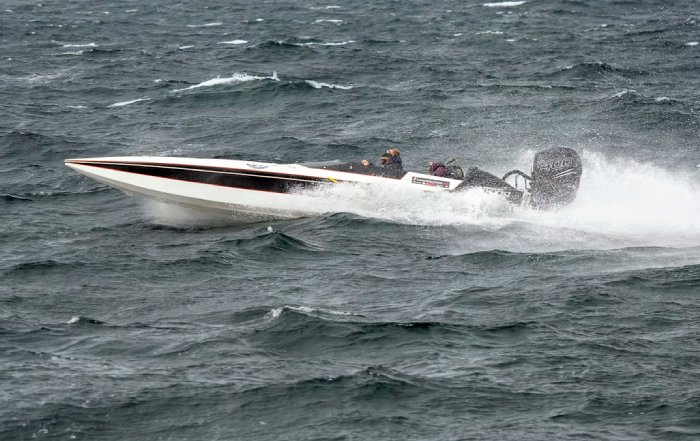
Sea Trials of Cutting-Edge Motor Yachts: Precision, Innovation, and Trust at Sea
Sea Trials as the Strategic Moment of Truth
Sea trials of cutting-edge motor yachts have become the decisive moment of truth in the global yachting industry, where engineering claims, brand positioning, and owner expectations converge and are either validated or exposed under real-world conditions. For the international readership of yacht-review.com, which includes owners, charter clients, family offices, shipyards, naval architects, captains, brokers, and technology partners across North America, Europe, Asia, Africa, and South America, this phase is now understood as far more than a technical formality; it is the stage on which Experience, Expertise, Authoritativeness, and Trustworthiness are demonstrated in measurable, repeatable, and transparent ways.
As buyers and charterers in key markets such as the United States, the United Kingdom, Germany, France, Italy, Spain, the Netherlands, Canada, Australia, Singapore, and the wider Asia-Pacific region become more technically informed, they increasingly arrive at negotiations armed with detailed prior knowledge. They draw on specialist platforms such as yacht-review.com, on independent classification bodies, and on high-quality industry resources such as Lloyd's Register and Bureau Veritas Marine & Offshore, and they expect sea trials to provide hard data rather than marketing rhetoric. Every knot of maximum speed, every decibel of cabin noise, every liter of fuel consumed, and every gram of COâ emitted is scrutinized, not only by the yard and its engineers but by surveyors, buyer's representatives, and in many cases by the future captain and crew.
In this environment, shipyards in Italy, the Netherlands, Germany, the United Kingdom, the United States, France, Spain, Turkey, the United Arab Emirates, China, South Korea, and emerging hubs such as Singapore and Thailand recognize that their ability to conduct transparent, professionally documented sea trials has become a critical competitive differentiator. For yacht-review.com, which has placed sea trial reporting at the core of its reviews, this shift has reinforced the platform's role as an independent, technically literate interpreter of performance claims for a sophisticated, business-focused audience.
From Traditional Checks to High-Fidelity Validation
Historically, sea trials were relatively modest affairs, largely confined to verifying that engines reached rated RPM, that steering and propulsion systems performed correctly, and that contractual speed and range guarantees were met in calm conditions near the shipyard. Instrumentation was basic, data recording was minimal, and much depended on the practical judgment of captains, surveyors, and yard engineers who relied on accumulated experience rather than high-resolution analytics.
In 2026, the situation is fundamentally different. Under the influence of structured frameworks established by organizations such as Lloyd's Register, Bureau Veritas, DNV, and other classification societies, sea trials have become highly organized, multi-day test programs that integrate naval architecture, computational fluid dynamics, advanced measurement systems, and regulatory compliance. Performance is measured across a wide range of displacements, trim settings, and sea states, and the resulting data is compared against tank test results and digital simulations that were developed years earlier in the design phase. Professionals who wish to follow the evolution of standards and safety requirements routinely consult resources such as DNV's maritime insights and the International Maritime Organization, recognizing how these frameworks shape the structure and objectives of modern trials.
This transformation has been driven by the increasing size and complexity of superyachts, the rapid adoption of hybrid and alternative propulsion systems, the growing emphasis on sustainability, and the tightening of global regulations on emissions and safety. For yacht-review.com, these developments have reinforced the importance of treating sea trials as an integral part of the editorial narrative, linking them directly to the themes explored in its design and technology coverage and ensuring that readers understand how theoretical design choices are validated at sea.
Designing with the Sea Trial in Mind
Leading naval architects and engineering teams now approach each new project with the sea trial as a clearly defined end test, shaping decisions from the earliest concept sketches to the final fairing of the hull. In the United States, the Mediterranean, Northern Europe, and Asia-Pacific, where high-performance planing and semi-displacement yachts remain in strong demand, computational fluid dynamics and virtual prototyping are used to predict resistance, trim, wake patterns, and seakeeping behavior long before the hull enters the water. These simulations create explicit performance promises that must be confirmed during trials through precise measurements of speed, acceleration, turning radius, fuel consumption, and motion characteristics.
Technical teams draw on extensive benchmark data from previous yachts and on open technical literature from bodies such as SNAME and academic institutions like MIT's Department of Mechanical Engineering, refining their assumptions and strengthening the credibility of their models. For long-range steel and aluminum yachts built in Germany, the Netherlands, Italy, the United Kingdom, and increasingly in Turkey and Asia, hull forms, bulbous bows, stabilizer placement, and propulsion configurations are optimized not only for calm-water efficiency but for performance in the varied and sometimes harsh conditions encountered on transoceanic passages and polar or high-latitude expeditions.
By the time a yacht approaches its first sea trial, the yard's management, design office, classification society, and future captain share a clear set of expectations for speed, range, comfort, and maneuverability. The trial program is therefore not a discovery exercise but a high-fidelity validation of years of design and engineering work. Within the boats and history sections of yacht-review.com, these trials are increasingly contextualized against the lineage of earlier models and iconic builds, allowing readers to understand how each new yacht advances or reinterprets established performance benchmarks.
The Structure of a Contemporary Sea Trial Program
A modern sea trial program in 2026 typically unfolds in carefully planned stages, moving from controlled harbor tests to demanding open-ocean runs. The process often begins with dockside verifications of electrical distribution, navigation electronics, safety systems, and hotel services, with each test meticulously recorded in digital logs that later form part of the yacht's technical documentation and maintenance planning.
Once clear of the harbor, the yacht progresses through a sequence of performance and handling tests. Acceleration runs validate propulsion behavior across the full engine load spectrum, whether the yacht is powered by conventional diesel engines, diesel-electric hybrids, fully electric systems, or alternative fuels such as HVO or methanol. Speed trials are conducted on reciprocal courses to average out wind and current effects, with GPS and inertial measurement instruments providing highly accurate over-ground speeds. Leading yards in Italy, the Netherlands, Germany, the United Kingdom, the United States, and France routinely repeat these tests at different fuel and water loads, offering owners realistic performance envelopes that reflect the yacht's likely operating conditions rather than idealized, light-ship scenarios.
Noise and vibration testing has become a central focus, as owners and charter guests from North America, Europe, the Middle East, and Asia expect near-residential comfort even at cruising speed. Acoustic specialists deploy calibrated microphones and accelerometers throughout guest and crew spaces, comparing results against contractual guarantees and internal yard targets. These measurements, when interpreted correctly, have a direct impact on resale value and charter appeal, particularly in competitive markets such as the Mediterranean, the Caribbean, Florida, the Pacific Northwest, and Southeast Asia. Readers of yacht-review.com who follow cruising and travel coverage increasingly look to these comfort metrics as a decisive factor in their selection of yachts and destinations.
Maneuverability tests, including tight turning circles, crash stops, dynamic positioning checks, and low-speed handling exercises with bow and stern thrusters, are essential for yachts that will operate in crowded marinas and confined anchorages. For owners who cruise extensively in the Mediterranean, the Caribbean, the Bahamas, New England, the Pacific coast of the Americas, or busy Asian hubs such as Singapore and Hong Kong, the ability of a yacht to respond predictably and safely in tight quarters is as important as its headline speed figures.
Data, Digital Twins, and Predictive Assurance
The most advanced yachts launched in 2026 leverage integrated digital ecosystems during sea trials, capturing real-time data from propulsion plants, stabilizers, navigation systems, hotel loads, and safety equipment. Many leading builders now create digital twins of their yachts, virtual replicas that mirror the behavior of the physical vessel under varying conditions. These digital twins enable engineering teams to compare predicted and actual performance in granular detail, closing the loop between design, construction, and operation.
Technology providers such as Siemens, ABB, and Rolls-Royce have been instrumental in developing these capabilities, and industry professionals closely follow initiatives such as ABB Marine & Ports to stay abreast of advances in maritime digitalization. When sea trial data aligns with or exceeds digital predictions, it strengthens confidence in the yard's design methods and simulation tools, reinforcing its reputation for technical competence and reliability. When discrepancies emerge, the digital twin allows rapid diagnosis of the root cause, whether it relates to propeller selection, hull fairness, control software, or onboard systems integration, and enables targeted adjustments before delivery.
For the business-oriented readership of yacht-review.com, this data-driven approach has direct implications for investment decisions. Prospective buyers, charter operators, and family offices increasingly request anonymized performance data from previous builds to benchmark new projects and negotiate pricing, warranties, and service agreements. The business section of yacht-review.com frequently explores how this growing transparency is reshaping negotiations and risk assessments, particularly in mature markets such as the United States, the United Kingdom, Switzerland, Germany, and Singapore, where yacht acquisition is often integrated into broader portfolio and asset management strategies.
Sustainability on Trial: Measuring Real-World Impact
Sustainability has moved from aspirational marketing language to a concrete, measurable dimension of sea trials. In 2026, owners from Europe, North America, Asia, and Oceania increasingly demand evidence that their yachts deliver genuine reductions in emissions and fuel consumption, not just theoretical potential. Trial programs therefore incorporate detailed fuel-flow monitoring across multiple speed regimes, enabling precise calculation of liters per nautical mile and associated COâ output. Environmentally conscious clients often benchmark these figures against frameworks and guidance from organizations such as the World Resources Institute and the OECD, and many deepen their understanding of maritime emissions and climate implications through resources such as the World Resources Institute.
Hybrid propulsion systems, combining diesel engines, electric motors, battery banks, and in some cases solar or wind-assist technologies, introduce additional layers of complexity. Trials must verify smooth transitions between operating modes, confirm that battery charging and discharging cycles behave as designed, and demonstrate that hotel loads can be supported efficiently during silent or low-emission operation. In progressive shipyards in Northern Europe, the Mediterranean, and Asia, sea trials increasingly include testing with alternative fuels such as HVO or methanol, and in a small but growing number of pilot projects, hydrogen-based systems are being evaluated, with emissions tracked against emerging international standards and research from bodies such as the International Council on Clean Transportation.
For yacht-review.com, which has significantly expanded its sustainability coverage, sea trials provide the most reliable basis for distinguishing between substantive innovation and superficial claims. By presenting clear, contextualized data on fuel efficiency, emissions, and energy management, and by linking these figures to real cruising profiles, the platform helps owners and charterers in Germany, Sweden, Norway, Denmark, Finland, the Netherlands, the United Kingdom, Canada, Australia, New Zealand, Singapore, and beyond to align their yachting choices with broader environmental commitments. This approach reinforces the site's authoritativeness and trustworthiness in a domain where transparency is increasingly demanded yet not always provided.
The Human Dimension: Captains, Crew, and Owner Confidence
Despite the growing sophistication of sensors, software, and analytics, sea trials remain fundamentally human experiences. They are often the first opportunity for the future captain and key crew members to operate the yacht in realistic conditions, to develop an intuitive understanding of her handling, and to identify potential operational challenges before the owner and guests step on board. Captains from established yachting nations such as the United Kingdom, Italy, France, Spain, the United States, the Netherlands, Germany, Australia, and South Africa bring with them a wealth of comparative experience, enabling them to benchmark a new yacht's behavior against previous builds and to provide immediate, practical feedback to shipyards and designers.
Owners, whether based in Europe, North America, Asia, the Middle East, or Latin America, are increasingly engaged with the trial process, even when not physically present. Many receive detailed digital reports, live video streams, and summary dashboards, and a growing number choose to participate in final acceptance trials, experiencing the yacht at speed and in varied conditions. For family-oriented owners in Canada, Australia, New Zealand, South Africa, Brazil, and across Asia, issues such as motion comfort, safety at sea, and ease of use for multi-generational cruising often outweigh the appeal of extreme top speeds. Within the family and lifestyle sections of yacht-review.com, particular attention is therefore paid to stabilization performance, deck safety, access, and the practical usability of living spaces as observed during trials.
Crew training is increasingly integrated into the trial period. Engineers, deck crew, and interior staff learn to operate complex integrated bridges, energy management systems, hotel automation platforms, and advanced safety equipment under real conditions. As yachts become more reliant on automation and remote diagnostics, the competence and confidence of the crew in managing these systems becomes a critical component of overall safety and reliability. Many professionals look to organizations such as The Nautical Institute, and resources like The Nautical Institute's guidance, for best practices in training and operational standards, recognizing that human performance is as important as technical specification in determining the long-term success of a yacht.
Globalization of Trials and Regional Expectations
The globalization of yacht ownership has not only diversified the client base but also broadened the scope and complexity of sea trials themselves. While many European-built yachts still conduct initial trials in the North Sea, the Baltic, or the Western Mediterranean, an increasing number of projects now incorporate extended shakedown cruises designed to reflect the vessel's intended cruising grounds. Yachts that will operate primarily in the Caribbean, the Bahamas, Florida, or the U.S. East Coast may undergo additional testing in warm-water conditions, while those destined for Asia-Pacific itineraries, including Singapore, Thailand, Indonesia, Australia, and New Zealand, may be evaluated for performance and systems resilience in tropical climates, monsoon seasons, and high-humidity environments.
Different owner demographics bring distinct expectations to the trial process. Clients from Germany, Switzerland, the Netherlands, and the Nordic countries often place particular emphasis on efficiency data, technical documentation, and long-term maintenance planning. Owners from Italy, France, Spain, and the United Kingdom may focus more on the interplay between performance, aesthetics, and onboard lifestyle, looking closely at how design choices translate into comfort and enjoyment underway. Buyers from China, South Korea, Japan, Singapore, and other Asian markets frequently prioritize technology integration, connectivity, cybersecurity, and future-proofing, expecting trial results to demonstrate not only current performance but also the yacht's capacity to accommodate upgrades over its life cycle.
Through its global and community coverage, yacht-review.com highlights these regional nuances, helping shipyards, designers, and brokers to understand and anticipate the preferences of a diverse international clientele. This perspective is particularly valuable as new markets in Asia, Africa, and South America mature and as first-time yacht owners in these regions quickly become as demanding and technically informed as their counterparts in Europe and North America.
From Technical Records to Market Narrative
Once sea trials are completed, their results move rapidly from internal technical documentation to public narratives that shape market perception, resale values, and future design directions. Shipyards release curated performance highlights, emphasizing top speed, cruising range, fuel efficiency, and noise levels in key guest areas, while independent platforms such as yacht-review.com provide more nuanced and critical analysis. Within the news and events sections, launch reports, boat show previews, and post-show debriefs increasingly reference trial data, enabling readers to distinguish between genuinely innovative yachts and those that offer only incremental improvements.
At major international events in Monaco, Cannes, Genoa, Fort Lauderdale, Miami, Palm Beach, Singapore, Dubai, Sydney, and elsewhere, discussions between owners, brokers, captains, and shipyards frequently revolve around how specific models performed on trial compared with their predecessors and direct competitors. Over time, a yard's record of delivering yachts that consistently meet or exceed sea trial promises becomes a core component of its brand equity. Builders in Italy, the Netherlands, Germany, the United Kingdom, and the United States that demonstrate reliability and honesty across multiple projects enjoy a virtuous cycle of trust, commanding stronger resale values, attracting repeat clients, and justifying premium pricing. Conversely, any pattern of underperformance or opaque reporting can undermine confidence, particularly when documented in detail by independent media.
Yacht-Review.com as an Independent Performance Interpreter
In a landscape defined by increasingly complex technology and abundant data, yacht-review.com serves as an independent interpreter of sea trial results for a global, professional audience. The platform's editorial team combines technical literacy in naval architecture and marine engineering with deep understanding of brokerage, charter, and onboard operations, enabling it to translate raw performance figures into insights that matter to owners, family offices, and corporate stakeholders. Through in-depth reviews, the site synthesizes speed curves, fuel consumption data, acoustic measurements, maneuverability assessments, and seakeeping observations with qualitative impressions of handling, comfort, and usability.
By situating sea trial analysis within broader business, technology, and lifestyle trends, yacht-review.com helps readers understand how each new yacht reflects the evolving priorities of the industry. Whether examining the operational implications of a new hybrid propulsion architecture, the comfort benefits of advanced stabilization systems, or the global cruising potential of an expedition-capable motor yacht, the platform continually returns to the sea trial as the most objective and revealing point in the vessel's lifecycle. For a readership that spans established markets in Europe and North America and rapidly growing communities in Asia, Africa, and South America, this combination of technical depth and practical perspective is central to informed decision-making.
Looking Beyond 2026: Continuous Trials and Evolving Expectations
As the industry looks beyond 2026, sea trials are poised to evolve from discrete events into the starting point of continuous performance verification throughout a yacht's operational life. Advances in sensor technology, satellite connectivity, cloud computing, and artificial intelligence will increasingly allow owners, captains, and shipyards to monitor real-world performance against original trial benchmarks in real time. This development promises to transform trials from a one-time acceptance test into the foundation of predictive maintenance strategies, lifecycle optimization, and transparent reporting to current and future owners.
Sustainability pressures will continue to intensify, driven by regulatory changes, societal expectations, and the personal values of a new generation of yacht owners in Europe, North America, Asia, and beyond. Shipyards will be required not only to test and validate more complex propulsion and energy systems but also to communicate their environmental performance in clear, credible terms. Resources such as sustainable business practices will increasingly inform both design decisions and owner expectations, and those builders and technology partners that can back their claims with robust trial data will be best placed to thrive.
In this evolving context, sea trials will remain the pivotal moment where promises meet reality, where the sea offers its impartial verdict on design, engineering, and craftsmanship. For the discerning global audience of yacht-review.com, understanding the nuances of modern sea trials is no longer a specialist concern but an essential part of navigating the yachting landscape with confidence. As new yachts are launched and new technologies introduced, yacht-review.com will continue to provide rigorous, independent coverage, ensuring that every claim is tested where it matters most and that every reader, whether in Europe, North America, Asia, Africa, or South America, can rely on a trusted, expert voice at the intersection of performance, innovation, and the enduring appeal of life at sea.