

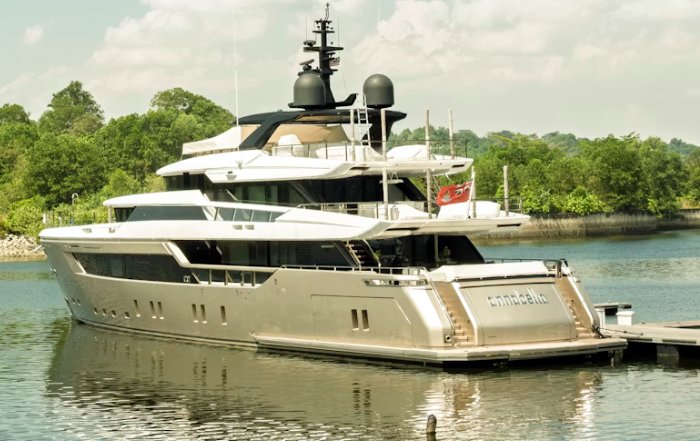
The Rise of the Gigayacht and Its Market Impact
A New Era for the Uppermost Tier of Yachting
The gigayacht has moved from an outlier at the fringes of maritime ambition to a defining symbol of the ultra-luxury segment, reshaping expectations across design, technology, ownership structures, and even global shipbuilding capacity. For the ocean experienced editorial team at Yacht Review, which has followed the evolution of superyachts and megayachts for more than a decade through detailed reviews, design features, and business analysis, the ascent of vessels exceeding 100 meters is not merely a matter of scale; it is a story about how concentrated wealth, technological innovation, and shifting lifestyle aspirations are converging to create a distinct category with its own economics, regulatory pressures, and cultural meaning.
The term "gigayacht" has no single legal definition, yet within the industry it is broadly used to describe private vessels of around 100 meters and above, often custom-built, with multi-deck layouts, expansive guest capacities, and integrated support fleets. These yachts, many of them commissioned by a narrow cohort of ultra-high-net-worth individuals and family offices, are altering how shipyards in Europe, Asia, and North America plan capacity, how designers conceptualize space at sea, and how destinations from the Mediterranean to Southeast Asia revise their infrastructure and regulatory frameworks to accommodate vessels that can rival boutique hotels in footprint and complexity. Against this backdrop, yacht-review.com has increasingly positioned its business coverage to decode the financial and strategic implications of this trend for owners, investors, and industry stakeholders worldwide.
Defining the Gigayacht: Scale, Complexity, and Cultural Significance
As superyachts have stretched beyond 60 meters and megayachts beyond 80 meters, the gigayacht category has emerged as a qualitative leap rather than just an incremental extension of length. These vessels often carry multiple pools, beach clubs, wellness centers, private spas, cinemas, helicopter decks, and dedicated owner's decks, while also integrating advanced security systems and complex hotel-style service operations. For many in the global yachting community, including long-time readers of yacht-review.com, the gigayacht is increasingly viewed as a floating private estate that must balance intimacy with grandeur, privacy with high-profile visibility, and indulgence with growing expectations of environmental responsibility.
From a cultural perspective, gigayachts function as both personal retreats and public symbols. In major ports such as Monaco, Miami, Dubai, Sydney, and Singapore, the arrival of a new 100-meter-plus vessel attracts attention not only from yachting enthusiasts but also from international media and local communities, reinforcing the perception that these yachts are bellwethers of global wealth flows. Organizations such as Credit Suisse and UBS have documented the continued growth of ultra-high-net-worth individuals, and while only a small fraction of this group will ever commission a gigayacht, their existence reflects the concentration of capital that underpins the segment. For a deeper macroeconomic context, readers can explore global wealth data and analysis provided by sources such as the World Bank and OECD, which help explain the financial backdrop within which this market has flourished.
Market Drivers: Wealth Concentration and Lifestyle Transformation
The rise of the gigayacht is inseparable from broader shifts in global wealth distribution and lifestyle preferences among billionaires and centimillionaires in the United States, Europe, the Middle East, and Asia-Pacific. Over the past decade, technology founders, private equity principals, family conglomerates, and sovereign investors from regions such as the United States, United Kingdom, Germany, Canada, Australia, France, Italy, Spain, the Netherlands, Switzerland, China, and Singapore have increasingly sought assets that combine privacy, mobility, and experiential luxury. Unlike trophy real estate or traditional art collections, a gigayacht offers the ability to move between the Mediterranean, the Caribbean, the South Pacific, and emerging Asian cruising grounds with a controlled environment and a highly curated onboard lifestyle.
At the same time, the pandemic-era acceleration of remote work and the revaluation of time and privacy have made long-duration cruising on large yachts more attractive. Owners and charter guests now expect reliable connectivity, office-quality workspaces, and wellness-oriented interiors that support extended stays at sea without sacrificing productivity or health. Publications such as the Harvard Business Review have chronicled how the global elite are reconfiguring their work and travel patterns, and this shift is clearly visible in the design briefs that leading naval architects and interior designers share with yacht-review.com for its design-focused features. The gigayacht, in this sense, is not only a status symbol but also an integrated platform for living, working, and entertaining across continents.
Shipyards and Supply Chains: Capacity, Risk, and Regional Competition
The demand for gigayachts has significant implications for shipyards and supply chains in Europe, Asia, and beyond. Established yards in Germany, the Netherlands, Italy, and the United Kingdom, as well as emerging players in Turkey and parts of Asia, have had to reconfigure their facilities to accommodate hulls that may exceed 120 meters and carry complex systems for propulsion, hotel services, and guest amenities. Companies such as Lürssen, Oceanco, Feadship, Fincantieri, and Benetti have invested heavily in dry docks, specialized workforce training, and project management capabilities to handle multi-year builds that can involve hundreds of subcontractors and suppliers across several countries.
This concentration of highly specialized orders creates both opportunity and vulnerability. On one hand, gigayacht projects carry high margins and can anchor a yard's order book for several years, providing stability and prestige. On the other hand, they tie up capacity, expose builders to client-specific financial risks, and require complex coordination with classification societies, flag states, and regulatory bodies. Industry observers who follow the global coverage at yacht-review.com have noted that geopolitical tensions, supply chain disruptions, and sanctions regimes can have outsized effects on this segment, particularly when clients or suppliers are based in sensitive jurisdictions. Reports and outlooks from organizations such as the International Monetary Fund offer valuable macroeconomic context on how shifting trade patterns and currency dynamics can influence shipyard order books and investment planning.
Design Innovation: From Floating Palaces to Hybrid Private Resorts
Designers working in the gigayacht space are now operating at the intersection of naval architecture, hospitality design, and experiential branding. With more volume and length to work with, teams can create multi-level beach clubs with direct sea access, indoor-outdoor wellness zones, winter gardens, and large-scale art installations that would be impossible on smaller yachts. The result is a new typology of floating private resort, where each deck may be programmed for a distinct function, from family living and children's play areas to formal entertaining, corporate meetings, and discreet wellness retreats.
The editorial staff at yacht-review.com has documented this evolution extensively in its design coverage and lifestyle features, noting that owners from the United States, the Middle East, and Asia increasingly request interiors that blend regional influences, sustainable materials, and advanced lighting to create a calming, residential feel rather than a traditional "nautical" aesthetic. At the same time, exterior styling has become more daring, with sculptural hull forms, integrated balconies, and glass-heavy superstructures that blur the boundaries between interior and exterior spaces. Architectural and design journals such as Dezeen provide additional insight into how trends in high-end residential and hospitality design are filtering into the gigayacht world, reinforcing the idea that these vessels are at the forefront of luxury spatial experimentation.
Technology and Engineering: Quiet Power, Smart Systems, and Autonomy
The technical demands of operating a gigayacht push the boundaries of marine engineering, digital integration, and onboard systems management. Propulsion packages increasingly feature hybrid diesel-electric systems, battery banks, and energy recovery technologies designed to reduce noise, vibration, and emissions while maintaining the range and redundancy that owners require for global cruising. Advanced hull forms and stabilizer technologies are deployed to ensure comfort in a variety of sea states, while dynamic positioning systems allow precise station-keeping without anchoring in sensitive marine environments.
For the readership of yacht-review.com, which frequently consults the site's technology section, the most compelling developments lie in the integration of smart ship systems and digital platforms. Centralized monitoring, predictive maintenance algorithms, and integrated bridge systems enable crews to manage complex hotel loads, security systems, and navigation functions with a high level of reliability and situational awareness. In parallel, owners and guests increasingly expect seamless connectivity for streaming, video conferencing, and real-time data access, which requires sophisticated satellite and network architecture. Organizations such as the International Maritime Organization and classification societies provide guidelines that influence the adoption of new technologies, particularly in areas such as cybersecurity and safety, reinforcing the need for gigayacht projects to integrate cutting-edge solutions within a tightly regulated framework.
Environmental and Regulatory Pressures: From Perception to Performance
As gigayachts have grown in size and visibility, they have also attracted greater scrutiny from regulators, environmental organizations, and the public. The perception of large private vessels as symbols of conspicuous consumption has intensified debates about emissions, marine biodiversity, and coastal access in regions such as the Mediterranean, the Caribbean, Southeast Asia, and the South Pacific. At the same time, the regulatory environment has become more demanding, with stricter requirements related to emissions control, waste management, and safety standards in key jurisdictions, including the United States, the European Union, and various Asian and Middle Eastern coastal states.
For owners, captains, and managers who follow the sustainability coverage at yacht-review.com, the challenge lies in aligning personal enjoyment and operational flexibility with emerging expectations of responsible stewardship. Shipyards and technology providers are responding with solutions such as advanced wastewater treatment systems, shore-power compatibility for major ports, alternative fuels research, and more efficient hull and propulsion designs. Organizations like the International Council on Clean Transportation and the United Nations Environment Programme document the broader environmental context and regulatory momentum that are shaping maritime policy, and these developments are increasingly influencing the conversations between owners, designers, and builders at the earliest stages of gigayacht projects.
Charter, Ownership Structures, and Financial Engineering
While many gigayachts remain privately used and closely held, there is a gradual evolution in how these assets are financed, structured, and occasionally monetized. Complex ownership vehicles, often involving holding companies in multiple jurisdictions, are used to manage liability, privacy, and tax considerations. In some cases, partial chartering is introduced to offset operating costs, although the charter market for 100-meter-plus vessels remains relatively thin and highly curated, with only a limited number of clients worldwide able to absorb the associated weekly rates and logistical requirements.
The business editors at yacht-review.com regularly analyze these trends within the context of broader yachting business developments, noting that family offices and private banks in financial centers such as New York, London, Zurich, Singapore, and Hong Kong are increasingly sophisticated in how they evaluate gigayacht investments relative to other illiquid assets. Advisory firms and consultancies, many of which contribute to thought leadership through outlets such as McKinsey & Company, highlight the importance of lifecycle cost analysis, regulatory risk assessment, and reputational considerations when high-profile clients consider commissioning or acquiring such vessels. This trend is particularly pronounced in Europe and North America, where public scrutiny and media coverage of ultra-luxury assets have intensified in recent years.
Global Cruising Patterns and Destination Infrastructure
Gigayachts are reshaping not only shipyards and ownership models but also global cruising patterns and destination development. Traditional hubs such as the French and Italian Rivieras, the Balearic Islands, the Greek archipelago, and the Caribbean's Leeward and Windward Islands remain central to seasonal itineraries, but there is growing interest in higher-latitude and more remote destinations, including Norway's fjords, Iceland, Alaska, the South Pacific, and parts of Southeast Asia. For ports and marinas in the United States, United Kingdom, Spain, the Netherlands, Monaco, the Middle East, Australia, and New Zealand, the ability to attract and service gigayachts can bring significant economic benefits through provisioning, maintenance, crew spending, and associated tourism.
However, infrastructure requirements for these vessels are demanding. Berths must accommodate deep drafts and large beams, shore-power systems must handle substantial loads, and security and privacy considerations must be carefully managed. The travel and cruising editors at yacht-review.com, drawing on insights shared through the site's cruising and travel sections, observe that destinations prepared to invest in gigayacht-capable marinas, support facilities, and regulatory clarity are better positioned to capture this segment, particularly as owners look beyond traditional hotspots for more exclusive and less crowded experiences. Tourism and economic development agencies, often guided by research from organizations such as the World Tourism Organization, increasingly recognize gigayachts as part of a broader high-value visitor strategy, though they must balance this against environmental and social considerations.
Family, Lifestyle, and Onboard Community
Despite the scale and complexity of gigayachts, their core function for many owners remains deeply personal: they are platforms for family life, intergenerational gatherings, and private celebrations that might otherwise be difficult to organize across multiple homes and time zones. The family-focused features at yacht-review.com, particularly in the family and lifestyle sections, highlight how layouts are increasingly tailored to multi-generational use, with dedicated children's areas, flexible guest suites, and wellness spaces that reflect a holistic approach to health and recreation.
The onboard community extends beyond the owner's family and guests to include professional crew, often drawn from across Europe, Asia, Africa, and the Americas, whose expertise in navigation, engineering, hospitality, and security is essential to the safe and smooth operation of a gigayacht. This creates a unique micro-society at sea, where cultural diversity, professional standards, and long-term working relationships intersect. For many crew members, serving on a gigayacht offers career advancement, specialized training, and financial opportunities that may not be available on smaller vessels, but it also demands a high level of discretion, resilience, and adaptability. The community-oriented reporting at yacht-review.com, showcased in its community section, increasingly examines how this human dimension shapes the lived reality of gigayacht life, beyond the headlines and exterior images.
Events, Visibility, and the Role of Media
Gigayachts play a prominent role at major yacht shows and events in Europe, North America, and Asia, where they serve as both showcases of shipyard capabilities and networking platforms for owners, brokers, designers, and suppliers. High-profile events in Monaco, Fort Lauderdale, Miami, Cannes, Dubai, and Singapore often feature at least one new or refitted gigayacht as a centerpiece, drawing attention from industry professionals and media outlets worldwide. For yacht-review.com, whose editors and contributors regularly attend and report on these gatherings through its news and events coverage, these shows provide critical access to firsthand insights, interviews, and onboard experiences that inform the site's detailed reviews and analytical features.
The visibility generated by such events contributes to the aspirational aura surrounding gigayachts, but it also amplifies public debates about luxury, inequality, and environmental responsibility. Mainstream and specialist media coverage, including analytical pieces in outlets such as the Financial Times and other global business publications, often use gigayachts as a lens through which to discuss broader questions about capitalism, taxation, and global governance. In this environment, owners and shipyards are increasingly aware that communications strategy, philanthropy, and demonstrable commitments to sustainability can influence how their projects are perceived, which in turn shapes design and operational decisions.
Historical Context and Future Outlook
From the perspective of maritime history, the emergence of the gigayacht is part of a long trajectory of private vessels growing in size, complexity, and symbolic importance, from the grand steam yachts of the late nineteenth century to the pioneering motor yachts of the post-war era and the explosion of superyacht construction in the late twentieth and early twenty-first centuries. The cited historical features at Yacht Review, curated in its history section, trace how advances in materials, propulsion, and global wealth patterns have periodically redefined what is possible and desirable in private yachting, and the gigayacht is the latest expression of this dynamic.
Looking on from here, the gigayacht market appears poised for continued, if selective, growth. The pool of potential owners remains small but globally distributed, spanning North America, Europe, the Middle East, and Asia, and the appetite for highly customized, technologically advanced vessels shows no sign of abating. At the same time, regulatory pressures, geopolitical uncertainty, and public scrutiny are likely to intensify, encouraging greater emphasis on environmental performance, transparency, and socially responsible positioning. The editorial team at yacht-review.com, through its integrated coverage of boats, business, technology, sustainability, and global trends, will continue to examine how these forces interact, providing owners, industry professionals, and enthusiasts with nuanced analysis and grounded insight.
In this evolving landscape, the gigayacht stands not only as a pinnacle of personal luxury but also as a complex, revealing artifact of its time, embodying the tensions and possibilities of a world in which mobility, privacy, technology, and environmental responsibility must be continually renegotiated. For the boating community of yacht-review.com, from the United States and Europe to Asia, Africa, and South America, understanding the rise of the gigayacht is ultimately about understanding how the very top of the yachting market influences design, innovation, and expectations throughout the entire industry, shaping the experiences of owners and charter guests on vessels of all sizes for years to come.