

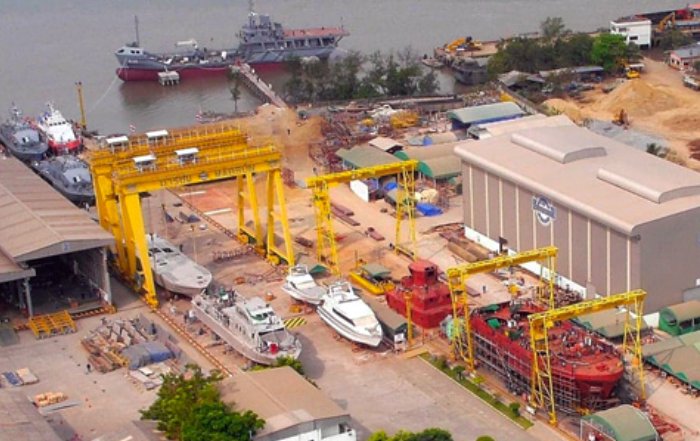
Asian Shipyards Gaining Ground in Custom Builds
A Strategic Shift in the Global Custom Yacht Landscape
The center of gravity in the custom superyacht market has begun to tilt in a new direction, with Asian shipyards emerging as serious contenders in a segment that for decades was dominated by European builders. For a long time, the conversation around fully bespoke yachts revolved almost exclusively around the great names of Italy, the Netherlands, Germany, and the United Kingdom, yet in recent years, owners, brokers, and designers interviewed by yacht review have increasingly pointed to a new reality: custom projects in South Korea, Japan, China, Singapore, Thailand, and across the broader Asia-Pacific region are no longer experimental outliers, but credible, competitive, and often highly innovative alternatives to the established Western order.
This transformation has not happened overnight. It is the product of steady investment in infrastructure, design talent, and advanced manufacturing, combined with the maturation of Asian high-net-worth and ultra-high-net-worth markets and the strategic repositioning of several commercial shipbuilders toward the luxury and leisure segment. The result is a new competitive dynamic that is reshaping how custom builds are conceived, financed, engineered, and delivered, and it is a development that the editorial team at yacht-review.com has been tracking closely across its coverage of reviews, design, cruising, and industry business trends.
From Commercial Strength to Custom Superyacht Credibility
Asian industrial shipbuilding has long been a global powerhouse, with Hyundai Heavy Industries, Samsung Heavy Industries, Mitsubishi Heavy Industries, and leading Chinese yards dominating commercial orders for tankers, container vessels, and LNG carriers. What has changed in the last decade is the willingness and ability of some of these groups, and a new generation of specialist yards, to translate that engineering muscle into the highly customized world of luxury yachts, where precision joinery, noise and vibration control, bespoke interiors, and complex owner requirements define success.
Analysts following global shipbuilding trends at organizations such as the OECD and UNCTAD have documented how Asian yards have continued to expand capacity and technological sophistication even as traditional European commercial yards have consolidated. At the same time, the commercial orderbook has become more cyclical and more exposed to macroeconomic volatility, prompting several Asian shipbuilders to look for higher-margin, lower-volume niches. The custom superyacht segment, though demanding and relatively small in absolute numbers, fits this strategic rebalancing, offering opportunities to deploy advanced engineering and digital design tools in a market that values craftsmanship, innovation, and long-term client relationships.
The transition has required more than capital expenditure on sheds and equipment. To be taken seriously by European and North American brokers, as well as by owners from the United States, the United Kingdom, Germany, Canada, Australia, France, Italy, Spain, the Netherlands, Switzerland, and beyond, Asian yards have had to demonstrate consistent build quality, transparent project management, and a deep understanding of class rules, flag requirements, and the expectations of an increasingly sophisticated clientele. This is where collaboration with international design studios, classification societies, and technology partners has proved essential, a theme that recurs in many of the custom projects now being profiled in yacht-review.com technology features.
Design Culture: East-West Collaboration and New Aesthetics
One of the most visible signs of Asia's rise in custom builds is the way leading naval architects and designers from Europe and North America are now regularly collaborating with Asian yards. Studios such as Winch Design, RWD, Nuvolari Lenard, and Espen Øino International have moved from one-off experimental collaborations to repeat engagements, often integrating local cultural references, materials, and spatial concepts into projects destined for owners in Asia, the Middle East, and increasingly North America and Europe.
For yacht-review.com, which has long focused on the intersection of aesthetics and engineering in its design coverage, this cross-pollination is one of the most compelling aspects of the current shift. Owners commissioning custom builds in South Korea, Japan, or China are no longer asking to replicate European archetypes; they are seeking hybrid identities that combine European exterior styling with interior layouts influenced by Japanese minimalism, Southeast Asian resort architecture, or contemporary Chinese art and craftsmanship. The result is a new design language that is simultaneously global and unmistakably rooted in Asian sensibilities.
This design evolution is supported by the rapid adoption of advanced visualization tools, from high-fidelity virtual reality walkthroughs to parametric design platforms that allow owners to experiment with different configurations in real time. Industry observers following digital transformation in manufacturing through platforms such as McKinsey & Company and BCG have noted that Asian yards, unencumbered by legacy systems, have in some cases leapfrogged traditional processes, implementing integrated digital twins from the earliest concept phase through to sea trials. For custom yacht clients, this means greater transparency, fewer surprises, and a more collaborative, iterative design journey.
Technology, Engineering, and the Quiet Power of Industrial DNA
The engineering depth of Asia's major shipbuilding nations has given their custom yacht divisions a robust foundation in structural design, hydrodynamics, and systems integration. While luxury yacht building demands a different mindset than commercial ship production, the underlying capabilities in finite element analysis, computational fluid dynamics, and complex systems engineering are highly transferable, and they are increasingly visible in Asia-built custom yachts that match or exceed European peers in efficiency, seakeeping, and reliability.
In conversations with project managers and surveyors who have worked across both European and Asian yards, a recurring theme is the disciplined approach to process control and quality assurance that comes from decades of building to the demanding standards of organizations such as DNV, Lloyd's Register, and Bureau Veritas. When adapted thoughtfully to the more bespoke world of luxury yachts, these methodologies can yield custom builds with exceptionally robust engineering foundations, particularly in areas such as redundancy, safety systems, and structural integrity.
This industrial DNA is now intersecting with rapid advances in yacht-specific technologies, from hybrid propulsion systems to advanced battery integration and smart onboard energy management. Owners considering a custom build in Asia are increasingly interested in hybrid or diesel-electric solutions that reduce noise, vibration, and emissions, both to enhance onboard comfort and to align with evolving environmental expectations. Technical deep dives in the technology section of yacht-review.com have highlighted a growing number of projects where Asian yards, in partnership with European system suppliers and classification societies, are delivering sophisticated energy architectures that support silent cruising, hotel loads at anchor, and future-readiness for alternative fuels.
The global regulatory environment has also acted as a catalyst. With the International Maritime Organization continuing to tighten emissions regulations and coastal states in Europe, North America, and Asia introducing stricter local rules, custom yacht owners are looking for builders that can integrate compliance into the design from day one. Resources such as the International Maritime Organization and Lloyd's Register provide guidance that Asian yards are now adept at incorporating, ensuring that new builds can operate seamlessly in sensitive areas from the Mediterranean and the Norwegian fjords to the Great Barrier Reef and marine protected zones in Southeast Asia.
Sustainability as a Differentiator, Not Just a Requirement
Sustainability has moved from a marketing talking point to a core strategic pillar in the custom yacht sector, and Asian shipyards are positioning themselves aggressively in this domain. The combination of strong local regulatory frameworks in countries such as Singapore, Japan, and South Korea, and the growing scrutiny of global supply chains by investors and clients, has encouraged yards to embed environmental, social, and governance considerations into their operations and product offerings.
At yacht-review.com, the editorial emphasis on responsible yachting and long-term ocean stewardship, reflected in its dedicated sustainability coverage, has found fertile ground in Asia's emerging custom build narrative. Many of the region's new-generation yards are designing facilities with energy-efficient infrastructure, waste reduction systems, and advanced water treatment from the outset, rather than retrofitting older sites. They are also working with material scientists and suppliers to source lower-impact composites, sustainably harvested woods, and recyclable interior materials, aligning with broader global initiatives that organizations like the World Economic Forum and UNEP have highlighted in their sustainable manufacturing and ocean protection programs.
From an owner's perspective, the sustainability agenda now extends beyond propulsion and materials to encompass the entire life cycle of the yacht, including refit potential, end-of-life recyclability, and operational carbon footprint. Asian shipyards that can provide credible, data-backed answers to these questions, supported by third-party verification and transparent reporting, are gaining an advantage with environmentally conscious clients in Europe, North America, and Asia-Pacific. Learn more about sustainable business practices through platforms like Harvard Business Review, which frequently explores how ESG considerations are reshaping luxury and mobility sectors.
Market Demand: Asian Owners and Global Clients Converge
The rise of Asian shipyards in custom builds cannot be understood without examining the parallel growth of wealth and yachting culture across Asia. Economies such as China, South Korea, Singapore, and India have produced significant numbers of ultra-high-net-worth individuals over the past decade, many of whom are first-generation entrepreneurs with strong technical backgrounds and a willingness to challenge traditional assumptions about where and how a yacht should be built.
For these owners, commissioning a custom build in Asia can offer both practical and symbolic advantages. Proximity allows for more frequent yard visits, easier involvement of local family offices and advisors, and smoother integration with regional cruising plans that extend from Thailand and Indonesia to Japan and the South Pacific. At the same time, selecting an Asian yard can be perceived as a statement of confidence in regional industrial capabilities and a contribution to the development of a local maritime ecosystem that includes designers, suppliers, crew, and service providers.
However, the client base for Asian custom builds is not limited to Asian owners. Brokers serving clients from the United States, the United Kingdom, Germany, Canada, Australia, and across Europe are increasingly presenting Asian yards as viable options, particularly for technically demanding projects or for owners who value engineering rigor and cost competitiveness. Coverage in the global section of yacht-review.com has documented cases where European or North American owners selected Asian yards for large expedition yachts, support vessels, or hybrid-powered cruisers designed for extended voyages in remote regions.
In these projects, the decision matrix often includes not only price and delivery time, but also the yard's experience with complex systems, its willingness to accommodate unconventional layouts or technical solutions, and its track record in after-sales support. As more custom builds from Asia enter charter fleets and are reviewed in independent outlets such as Boat International and SuperYacht Times, the perception gap that once separated Asian from European custom builders is narrowing.
Cruising Grounds, Lifestyle, and the Appeal of Asia-Based Yachts
Custom yachts built in Asia are naturally shaping cruising patterns and lifestyle expectations in the region, and yacht-review.com has increasingly integrated Asian itineraries into its cruising and travel coverage. Owners are commissioning vessels specifically tailored to explore the archipelagos of Indonesia, the remote islands of Thailand and Myanmar, the rugged coastlines of Japan, and the tropical waters of the Philippines and Malaysia, often with shallow drafts, extended-range capabilities, and enhanced tenders and toys for diving, surfing, and remote beach access.
These yachts frequently incorporate design elements that reflect the indoor-outdoor lifestyle associated with high-end Asian resorts, with expansive open decks, flexible dining spaces, and wellness-focused amenities such as spa suites, yoga decks, and dedicated areas for traditional therapies. This convergence of yacht and villa culture is particularly visible among owners from Singapore, Hong Kong, and mainland China, who are accustomed to world-class hospitality experiences in places such as Bali, Phuket, and the Maldives, and who expect their custom yachts to deliver a comparable or superior standard of comfort and service.
For family-oriented clients from Europe, North America, and Australia, custom builds in Asia are also appealing as platforms for multi-generational travel that combines adventure with cultural immersion. The yacht-review.com family and lifestyle features have highlighted how designers and yards are responding with layouts that balance children's play areas, secure deck spaces, and flexible cabins with adult-only retreats, dedicated workspaces, and sophisticated entertainment systems, ensuring that extended cruises across Asia, Oceania, or even onward to Africa and South America can be both enriching and logistically smooth.
Business Models, Partnerships, and the Role of Global Networks
Behind the visible growth in delivered yachts lies a more complex evolution in business models and partnerships. Many Asian shipyards entering the custom segment have chosen to collaborate with established European or Australian yacht specialists, either through joint ventures, technical cooperation agreements, or strategic alliances with design studios and project management firms. This allows them to combine local cost advantages and industrial capacity with imported know-how in luxury craftsmanship, interior outfitting, and client-facing processes.
Industry news tracked in the business section of yacht-review.com shows that several Asian yards have invested in dedicated superyacht divisions, hiring experienced managers from European builders and bringing in international consultants to refine their approach to specification, documentation, and owner communication. At the same time, global brokerage houses and management companies have established stronger presences in hubs such as Singapore, Hong Kong, and Seoul, ensuring that clients commissioning custom builds in Asia have access to the same level of representation, technical oversight, and operational planning that they would expect in traditional centers like Monaco, London, or Fort Lauderdale.
This networked approach extends into post-delivery operations, with service centers, refit facilities, and warranty support increasingly coordinated across regions. Owners based in the United States or Europe who commission a custom yacht in Asia need confidence that they will have access to parts, technicians, and yard time wherever they cruise, from the Mediterranean and Caribbean to the Baltic, the Pacific Northwest, or the Cape Town-Seychelles-Maldives corridor. Strategic investments in refit infrastructure and technician training, often in collaboration with global OEMs and classification societies, are therefore critical to the long-term credibility of Asian custom builders.
For observers seeking to understand how these evolving business ecosystems intersect with broader trends in luxury, mobility, and global trade, resources such as Deloitte's industry insights and PwC's global reports provide useful macro-level context, complementing the project-level analysis that yacht-review.com offers in its news coverage and in-depth reviews of individual yachts.
Community, Culture, and the Emerging Asian Yachting Identity
As shipyards in Asia gain ground in custom builds, a broader yachting culture is taking shape around them, encompassing marinas, yacht clubs, crew academies, and a growing calendar of regional events. The yacht-review.com community section has followed the expansion of yacht shows and regattas in Singapore, Thailand, China, and South Korea, where locally built custom yachts increasingly appear alongside European and American brands. These events are not just sales platforms; they are focal points for networking, knowledge-sharing, and the gradual formation of an Asian yachting identity that is distinct from, yet connected to, the established Mediterranean and Caribbean scenes.
This cultural dimension matters because custom yacht ownership is ultimately about more than hardware and engineering; it is about belonging to a community of like-minded individuals and families who share a passion for the sea, exploration, and craftsmanship. As Asian shipyards deliver more custom projects, they are also contributing to the development of local crew talent, technical specialists, and maritime professionals, creating career paths and expertise that will reinforce the region's capabilities over the long term. Coverage of education and skills development by organizations like the International Chamber of Shipping underscores how crucial human capital is to the sustainability of any maritime cluster, and Asia's emerging yacht hubs are no exception.
For yacht-review.com, which has always sought to connect hardware, people, and places in its lifestyle storytelling, this human element is central to understanding why Asian shipyards are gaining traction. Owners who feel supported by a vibrant community, who can participate in regional events, and who see their yachts as part of a broader narrative of innovation and exploration are more likely to commit to ambitious custom projects and to become ambassadors for the yards that built them.
What About Opportunities, Challenges, and the Rise of Yacht Review
The momentum behind Asian shipyards in the custom build segment is undeniable, yet it is not without challenges. Maintaining consistent quality across multiple complex projects, managing supply chain risks, navigating geopolitical tensions, and sustaining investment through economic cycles will all test the resilience of these emerging players. Established European builders are not standing still; they are innovating in sustainability, digitalization, and client experience, and they retain deep reservoirs of craftsmanship and brand equity that will continue to attract many owners from North America, Europe, and beyond.
Nevertheless, the competitive landscape is more diverse and dynamic than at any point in recent memory. For prospective owners, family offices, and advisors who turn to yacht-review.com as a impartial and independent guide, this diversity translates into a wider range of options, configurations, and strategic choices when considering a custom yacht project. Whether exploring expedition-capable vessels for high-latitude cruising, family-oriented yachts optimized for Southeast Asian archipelagos, or technologically advanced platforms designed for low-impact global navigation, the possibility of building in Asia now deserves serious, informed consideration.
As the industry continues to evolve, yacht-review will remain committed to providing independent, in-depth analysis across its core verticals, from boats and new builds to history and heritage, from events and shows to long-range cruising narratives. By examining not only the finished yachts but also the shipyards, technologies, business models, and communities that shape them, the publication aims to equip its global readership-from the United States and Europe to Asia, Africa, and South America-with the insight needed to navigate this new era of custom yacht building, in which Asian shipyards are no longer on the periphery, but firmly at the center of the conversation.