

Best Yacht Cruising Routes in Sweden: A Northern Odyssey for Discerning Owners
Sweden has quietly become one of the most compelling cruising destinations for yacht owners seeking a blend of natural drama, maritime heritage, and understated luxury. For a global audience accustomed to the Mediterranean and Caribbean circuits, the Swedish coast offers something distinctly different: a labyrinth of islands, sheltered waters, sophisticated marinas, and a nautical culture that has been refined over centuries. For daily readers of yacht-review, the country's cruising routes present an opportunity to experience high-latitude yachting at its most rewarding, combining pristine seascapes with a strong focus on safety, sustainability, and quality of service.
This article explores the key Swedish cruising routes most relevant to private yacht owners and charter guests, highlighting what makes each region special and how they fit into the broader experience of Northern European yachting. It draws on recent developments in marinas, infrastructure, and regulations, and is written with the expectations of experienced yacht owners, captains, and brokers in mind.
Why Sweden Belongs on the Global Cruising Map
Sweden's coastline stretches for thousands of kilometres if one includes its bays and inlets, and is fringed by more than 200,000 islands and skerries. The geography is particularly favourable to yachting, with the majority of routes sheltered from heavy seas and with relatively benign tidal ranges compared to many other parts of the world. The combination of rock-strewn outer archipelagos and forested inner channels has created a cruising environment that is both adventurous and accessible, once approached with appropriate charts, pilotage, and local knowledge.
In recent years, Swedish authorities and private stakeholders have invested in marina upgrades, guest harbours, and digital navigation aids, aligning with broader Northern European trends. The Swedish Transport Agency and Swedish Maritime Administration maintain detailed information on fairways and safety requirements, while digital services such as Navionics and Garmin charts are widely used to navigate the intricacies of the archipelagos. The result is a cruising environment that rewards careful planning but offers exceptional security and comfort once under way.
For yacht owners accustomed to the crowded anchorages of the Mediterranean, Sweden's key appeal lies in space, privacy, and the feeling of genuine exploration. From the perspective of yacht-review.com, it also offers a fertile ground for in-depth cruising features and route-focused reviews that go beyond the usual blue-water clichés.
The Stockholm Archipelago: The Capital's Island Realm
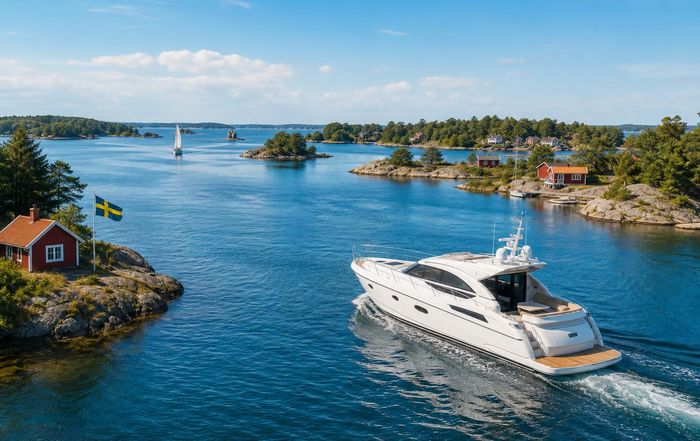
The Stockholm archipelago is the most famous of Sweden's cruising regions and a natural starting point for many itineraries. Stretching roughly 80 kilometres east of the capital and comprising around 30,000 islands and skerries, it combines easy access with extraordinary variety. Yachts can depart from central Stockholm, passing historic waterfronts and grand townhouses, before slipping into a maze of granite islets, pine forests, and sheltered channels that feel a world away from the city.
High-quality marinas, such as those at Vaxholm, Sandhamn, and Saltsjöbaden, offer services suitable for larger yachts, including fuel, shore power, and technical assistance. Many have invested in upgraded facilities in the last decade to attract more international visitors. Sandhamn, in particular, is a central hub for regattas and yachting events, and its Royal Swedish Yacht Club presence gives it a distinctive profile within Scandinavian sailing culture. Those interested in the competitive side of yachting can follow major Baltic regattas via organizations such as the Royal Swedish Yacht Club (KSSS) and broader coverage from platforms like World Sailing.
The archipelago's inner islands, including Grinda, Möja, and Nåttarö, cater to cruisers who appreciate a balance of nature and amenities, with guest harbours, restaurants, and walking trails. The outer archipelago, with islands like Sandhamn and Utö, offers more exposure to the Baltic but remains navigable and well-charted. Many yacht owners choose to combine nights in full-service marinas with evenings at anchor in secluded coves, often using traditional Swedish stern-to mooring with a line ashore to the rocks.
For email subscribing members and online readers of Yacht Review, the Stockholm archipelago encapsulates the essence of Swedish yachting: a sophisticated home port that transitions seamlessly into wilderness cruising. It is also a region where yacht design and layout considerations become particularly relevant, as owners weigh the benefits of shallow draft, efficient tenders, and flexible deck spaces for archipelago life.
The West Coast: From Gothenburg to the Bohuslän Archipelago
If the Stockholm archipelago offers sheltered Baltic cruising, the Swedish west coast provides a more Atlantic-influenced experience, with open horizons, tidal considerations, and a distinctive maritime culture shaped by the North Sea. The primary gateway is Gothenburg, Sweden's second-largest city and a major port, which has seen increasing interest from superyachts and larger cruising yachts over the past decade. The city's guest harbours and nearby marinas provide a capable base for provisioning, technical support, and crew changes.
North of Gothenburg lies the Bohuslän archipelago, widely regarded as one of Scandinavia's most beautiful cruising grounds. The coastline is dotted with polished granite islands, fishing villages, and narrow passages that demand precise navigation but reward yachts with dramatic scenery and characterful harbours. Destinations such as Marstrand, Smögen, and Fjällbacka are particularly popular among experienced cruisers.
Marstrand, with its historic fortress and strong regatta calendar, has emerged as a high-profile yachting hub. Smögen is known for its lively boardwalk, seafood restaurants, and summer energy, while Fjällbacka offers a more intimate atmosphere, combining classic wooden houses with access to nearby nature reserves and islets. The region has also been a point of interest for international visitors drawn by Swedish crime fiction and film adaptations, which has indirectly raised its profile among global travellers.
For yacht owners considering a broader North Sea and Skagerrak itinerary, the Bohuslän archipelago connects naturally with the Norwegian coast to the north and with Denmark to the south. The Norwegian Coastal Administration and Danish Maritime Authority provide complementary navigational resources, and many yachts combine Swedish cruising with a multi-country itinerary, which can be further contextualized through global yachting insights.
From a lifestyle perspective, the west coast offers an appealing mix of refined dining, especially seafood, and relaxed Scandinavian hospitality. The emphasis on high-quality local ingredients and understated luxury aligns closely with the preferences of many yacht owners and charter guests who prioritize authenticity over ostentation.
The Göta Canal and Inland Waterways: Crossing a Nation by Yacht
For those seeking a different kind of Swedish cruising experience, the Göta Canal and associated inland waterways offer a unique route from the Baltic Sea to the west coast, effectively allowing yachts to cross Sweden by water. Completed in the 19th century and often described as one of the engineering feats of its era, the canal system links with natural lakes, including Lake Vänern and Lake Vättern, creating a network that is both historically significant and scenically rich.
The Göta Canal is especially well-suited to motor yachts and smaller displacement vessels that can accommodate its dimensional restrictions. The canal authority and tourism organizations provide detailed specifications and operational rules, and recent seasons have seen continued investment in maintaining locks, quays, and service points. Information about the canal's technical aspects and booking procedures is available through official channels and is often summarized by travel and boating platforms such as Visit Sweden.
From a business and operational standpoint, the Göta Canal appeals to owners who value slow travel and experiential cruising, as the route encourages a more deliberate pace. It also presents an opportunity for crews and guests to engage with Swedish inland towns, cultural sites, and rural landscapes that are not accessible from the open sea. For readers of yacht-review.com, the canal system highlights how yachting can intersect with broader travel narratives, moving beyond coastal tourism into the heart of a country.
While superyachts and deep-draft vessels will not generally traverse the entire canal, some owners opt to integrate partial segments into a broader itinerary, using tenders or smaller support vessels to explore selected stretches. This approach reflects a growing trend toward modular cruising experiences, where the mothership serves as a base while guests enjoy more intimate adventures on inland or shallow waterways.
The Southern Coast and Öland: Baltic Light and Open Horizons
Southern Sweden, including the coasts of Skåne and the island of Öland, offers a different cruising character again, with longer open-water passages, sandier shores, and a climate that can be comparatively milder in summer. Ports such as Ystad, Simrishamn, and Karlskrona provide useful stopovers for yachts transiting between the Baltic and the North Sea, as well as for those heading toward Poland, Germany, or the Baltic States.
Karlskrona, a UNESCO World Heritage site, is particularly notable for its naval history and baroque urban layout, reflecting its origins as a strategic base for the Swedish Navy. The city's maritime museum and preserved naval facilities offer an engaging cultural dimension to a cruising itinerary and underline Sweden's long-standing commitment to naval architecture and seafaring. Those interested in the historical context of yacht and ship development can explore broader perspectives on maritime history and yacht evolution.
Öland, accessible by sea and connected to the mainland by a long bridge, is characterized by its limestone plateau, lighthouses, and traditional windmills. Its harbours and anchorages are well suited to cruisers who appreciate rural landscapes, birdlife, and a slower rhythm. The island's combination of nature reserves and small communities provides a contrast to the dense island clusters of the major archipelagos, and it can serve as a tranquil interlude in a longer Baltic itinerary.
For international yacht owners, the southern coast is often part of a broader Baltic circuit, linking Sweden with Germany, Denmark, Poland, and the Baltic States. Resources such as Navionics' Baltic Sea charts and regional cruising guides help plan these multi-country routes, which require attention to varying regulations, pilotage conditions, and port infrastructures.
The High Coast and Northern Baltic: Raw Beauty and Quiet Anchorages
Further north along Sweden's east coast lies the High Coast (Höga Kusten), a UNESCO World Heritage site famous for its steep cliffs, deep bays, and post-glacial rebound landscape. For yacht owners, this region offers a more remote and less trafficked experience, with dramatic scenery and a sense of wilderness that contrasts with the more populated archipelagos further south.
Ports such as Härnösand and Örnsköldsvik serve as gateways to the High Coast, providing essential services and provisioning opportunities. The area's fjord-like inlets and islands demand careful navigation but reward those who venture there with exceptional hiking, wildlife observation, and photographic opportunities. The High Coast has been increasingly promoted in recent years as a destination for nature-oriented tourism, and official Swedish tourism platforms have highlighted its suitability for boating and kayaking, which indirectly benefits the yachting sector as well.
For the readership of yacht-review.com, the High Coast represents a frontier-style cruising option within a stable, well-regulated country. It is particularly appealing to owners and captains who enjoy expedition-style planning without the logistical complexity associated with polar or ultra-remote cruising. When combined with the Stockholm archipelago and southern Baltic routes, it can form part of a comprehensive Swedish itinerary that spans different latitudes and cruising styles.
Seasonality, Weather, and Operational Considerations
Sweden's yachting season is strongly seasonal, with the main period for cruising generally running from late spring to early autumn. The precise window depends on latitude, local ice conditions, and marina opening times, but June, July, and August are usually considered the core months for leisure yachting, particularly in the archipelagos. During this period, long daylight hours, especially in the north, extend cruising days and enhance safety and enjoyment.
Weather conditions can vary significantly, and while many routes are sheltered, sudden changes in wind and visibility can occur. The Swedish Meteorological and Hydrological Institute (SMHI) provides detailed marine forecasts, which are widely used by local and visiting yachts alike. International services such as Météo-France Marine and NOAA also contribute to broader North Atlantic and Baltic forecasting, which is important for yachts transiting to or from Sweden.
Ice conditions are a critical factor outside the main season, particularly in the northern Baltic. The Swedish Maritime Administration publishes ice reports and navigation information for commercial and leisure traffic. Most private yachts avoid winter operations in these waters, although there is a niche market for ice-strengthened expedition yachts and specialized experiences.
From an operational perspective, Sweden's emphasis on digital infrastructure and reliable connectivity supports modern yacht management. Many marinas offer high-quality shore power, Wi-Fi, and technical services, aligning with the needs of contemporary yachts equipped with advanced navigation, communication, and hotel systems. For those interested in emerging onboard technologies and how they interface with Northern European cruising, technology-focused analysis provides additional context.
Sustainability and the Future of Cruising in Sweden
Sustainability is central to Sweden's national identity and policy framework, and this ethos increasingly shapes its yachting and marine tourism sectors. Environmental regulations govern waste disposal, grey water, and fuel handling, while many marinas have adopted eco-certifications and green initiatives. The Blue Flag program, administered by the Foundation for Environmental Education, recognizes marinas and beaches that meet specific environmental and safety criteria, and several Swedish facilities participate in this scheme.
Sweden has also been active in promoting cleaner propulsion technologies and shore power solutions for both commercial shipping and leisure vessels. While full-scale electrification of larger yachts remains a developing field, smaller electric boats and hybrid systems are becoming more visible in Swedish waters, supported by national and regional incentives. Industry bodies and research institutions, including the Chalmers University of Technology in Gothenburg, have contributed to studies on maritime emissions and sustainable ship design, which indirectly influence yacht builders and refit yards across Northern Europe. Those seeking a deeper understanding of these trends can learn more about sustainable business practices from global environmental organizations.
For the yacht-review.com audience, Sweden stands out as a case study in how high-end yachting can coexist with strong environmental values. Owners and charter guests are increasingly conscious of their footprint, and Sweden's marinas, authorities, and communities have responded with infrastructure and guidelines that make responsible cruising easier to achieve. This aligns with the themes explored in our dedicated coverage of sustainability in yachting, where Sweden frequently appears as a reference point.
Lifestyle, Culture, and Shore-Based Experiences
While Sweden's coasts and archipelagos are the primary draw, the onshore experience forms a vital part of any well-rounded itinerary. Swedish coastal towns and islands offer a blend of contemporary Nordic design, historic wooden architecture, and a culinary scene that has evolved significantly in recent years. From Michelin-starred restaurants in major cities to small island bistros specializing in local seafood, the gastronomic landscape is increasingly sophisticated and internationally recognized.
Cultural offerings range from maritime museums and historic fortresses to contemporary art galleries and music festivals. Stockholm, Gothenburg, and Malmö provide urban counterpoints to the quiet archipelagos, allowing guests to combine nature-focused cruising with city breaks that include shopping, dining, and cultural events. National cultural institutions and tourism bodies, such as Sweden's official tourism portal, provide updated information on exhibitions, festivals, and seasonal highlights that can be integrated into cruising plans.
The Swedish concept of "friluftsliv," loosely translated as open-air life, permeates coastal communities and encourages outdoor activities such as hiking, kayaking, and cycling. Many yacht owners appreciate the opportunity to balance time onboard with active shore excursions, particularly in regions like the High Coast and Bohuslän, where well-marked trails and nature reserves are readily accessible from anchorages and guest harbours.
For readers of yacht-review.com, Sweden's combination of relaxed sophistication and outdoor culture aligns closely with the evolving definition of yachting lifestyle, which increasingly values wellness, authenticity, and meaningful experiences. This broader lifestyle perspective is reflected in our coverage of yachting as a way of life, where Scandinavian destinations often serve as exemplary models.
Integrating Sweden into a Wider Northern European Itinerary
Sweden is rarely an isolated destination for larger yachts; instead, it often forms part of a wider Northern European itinerary that may include Norway, Denmark, Germany, Finland, and the Baltic States. Its strategic position in the Baltic Sea and proximity to major shipping lanes make it accessible from multiple directions, whether arriving from the North Sea via the Skagerrak and Kattegat, or from the east through the Gulf of Finland and central Baltic.
For yacht owners and captains planning such itineraries, Sweden provides both logistical and experiential advantages. Its marinas and service yards can support maintenance and refit needs, while its ports serve as efficient points for crew changes, provisioning, and regulatory procedures. The country's stable political and economic environment, combined with a strong rule of law and well-developed infrastructure, contributes to a sense of security and predictability that is highly valued in the yachting community. Those interested in the business and regulatory dimensions of operating in Northern Europe can find broader context in yachting business analyses.
As the global yachting community continues to diversify beyond traditional hotspots, Sweden's profile is likely to rise further. The increasing visibility of Northern European destinations in international yacht shows, charter listings, and media coverage reflects a growing recognition that the Baltic and Scandinavian coasts offer a compelling alternative for owners seeking new horizons without compromising on safety or service quality.
Sweden's Cruising Routes and the Future of High-Latitude Yachting
The best yacht cruising routes in Sweden, from the Stockholm archipelago and Bohuslän's granite isles to the Göta Canal, southern Baltic shores, and the High Coast, collectively demonstrate how a country can leverage its natural geography, maritime heritage, and modern infrastructure to create a world-class yachting environment. For the sea wet and happy audience here, Sweden represents not only a destination but also a model for how coastal regions can develop yachting in a way that is both aspirational and responsible.
As yacht owners, designers, and builders increasingly consider high-latitude and non-traditional cruising grounds, Sweden's experience offers valuable lessons. Its emphasis on environmental stewardship, digital navigation, and high-quality marinas aligns with the broader evolution of the yachting sector, where technology, sustainability, and experiential luxury intersect. This is reflected in our daily ongoing yacht reviews and route-focused features, which increasingly highlight destinations that combine natural beauty with thoughtful infrastructure.
Ultimately, Sweden's appeal lies in the balance it strikes between adventure and reassurance. The routes described here allow yacht owners and guests to experience the thrill of navigating intricate archipelagos and remote coasts, while still enjoying the comfort of well-managed harbours, reliable services, and a welcoming maritime culture. For those seeking to expand their cruising portfolio beyond the usual circuits, Sweden stands as an inspiring and strategically sound choice, and one that is likely to play an ever more prominent role in the global conversation about where yachting goes next.