

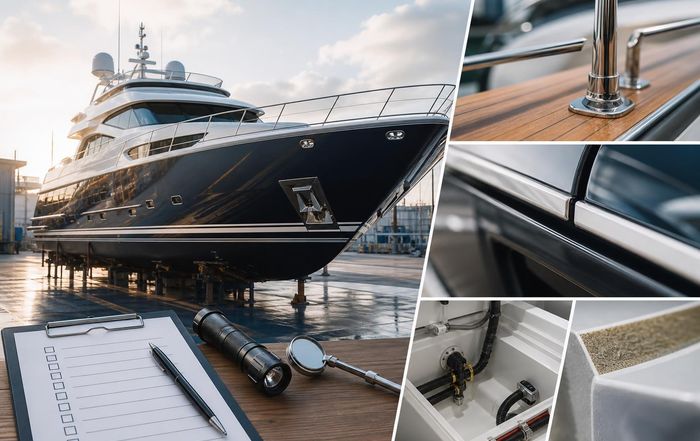
How to Assess Build Quality on a New Yacht
Assessing the build quality of a new yacht has become a more sophisticated exercise than ever before, as owners navigate a global market of advanced materials, complex systems and increasingly ambitious design. For our growing community, this is not simply a technical curiosity; it is a central business and lifestyle decision that influences safety, long-term value, resale prospects and the pleasure of every passage made. This boat based story explores how informed buyers, surveyors and industry professionals evaluate the build quality of a new yacht, drawing on established best practice, current classification standards and recent developments across leading yards in Europe, North America and Asia. It is written primarily from a third-person perspective, but anchored in the editorial experience and independent ethos that define yacht-review.com.
Understanding What "Build Quality" Really Means
Build quality in a new yacht is often misunderstood as a purely cosmetic attribute, yet experienced owners and professional surveyors treat it as a multidimensional concept that combines structural integrity, engineering execution, fit and finish, compliance with standards and the reliability of onboard systems over time. High-quality construction is not just about how a yacht looks in a boat show marina; it is about how it behaves after thousands of miles, in varying sea states and climates, and after repeated cycles of loading, unloading and maintenance.
Industry standards such as those published by ABYC in the United States and the International Organization for Standardization for small craft provide technical frameworks for safe design and construction, while classification societies such as Lloyd's Register and DNV set additional requirements for larger yachts seeking class certification. However, many yachts are built outside formal class, so the responsibility for assessing quality often rests with the buyer's team, including independent surveyors, captains and consultants.
For yacht-review.com, which regularly examines new models and custom projects in its reviews, build quality is treated as a continuum rather than a binary pass/fail measure. The key is to understand what is appropriate for the yacht's intended use, price point and operating profile, and whether the yard is delivering consistently and transparently against that promise.
Yard Reputation, Track Record and Governance
Before anyone inspects a hull or opens an engine hatch, the first indicator of build quality is the reputation and governance of the shipyard. Established yacht builders in Italy, the Netherlands, Germany, the United Kingdom and elsewhere have often spent decades refining processes, investing in skilled labor and building supplier networks that support consistent output. The same is increasingly true for high-quality builders in Turkey, Asia and North America, many of which now compete directly with traditional European yards.
Prospective owners routinely investigate how long a yard has been in operation, what kind of vessels it specializes in, and whether it has a documented history of delivering on time and on budget. Publicly available data, such as the annual Global Order Book compiled by Boat International, can provide an overview of a builder's activity, while independent classification society records and flag-state registries can reveal how many of its yachts are in class and where they are operating.
In recent years, corporate governance and financial stability have become even more relevant to build quality. A yard that invests in modern facilities, digital design tools and continuous training is more likely to execute complex builds reliably. Conversely, a builder facing financial stress may cut corners in less visible areas such as systems integration, documentation or post-delivery support. Buyers increasingly seek transparency on ownership structures, quality assurance procedures and after-sales commitments, treating the build as the start of a long-term relationship rather than a one-off transaction, a perspective that aligns closely with the business-focused coverage on yacht-review.com/business.
Design and Engineering: Where Quality Begins
The foundations of build quality are laid long before any laminate is infused or any aluminum is welded. Naval architecture, structural design and systems engineering determine how a yacht behaves at sea, how efficiently it can be maintained and how robustly it will age. Leading naval architecture firms, many of which are profiled in the design section of yacht-review.com, work closely with owners and yards to align performance, comfort and safety objectives with realistic construction methods and budgets.
High-quality builds typically begin with a full 3D digital model of the yacht, including structure, piping, wiring and equipment, which allows conflicts to be resolved virtually rather than on the shop floor. Tools such as finite element analysis for structural components, computational fluid dynamics for hull forms and dynamic simulations for stability and seakeeping are increasingly common even in mid-size projects, and are standard in large superyachts. According to guidance from RINA and other classification societies, early engineering decisions about scantlings, bulkhead spacing, tank placement and machinery foundations have a direct impact on noise, vibration and structural longevity.
Experienced buyers therefore examine not only the brand of the yard, but also the credentials of the naval architect, structural engineer and systems designer, as well as the extent to which the design is bespoke or derived from a proven platform. A new hull form or propulsion configuration can be attractive, but it may also carry more technical risk than an evolution of an established design with a track record in real-world cruising.
Materials and Structural Workmanship
The choice of materials and the quality of structural workmanship are central to any assessment of a new yacht. Whether the vessel is built in fiberglass, carbon fiber, aluminum, steel or a combination, the execution of the hull and deck structure will determine not only strength and safety but also vibration levels, weight, fuel efficiency and resistance to fatigue.
In composite yachts, which dominate the production and semi-custom segments, inspectors pay close attention to the lamination schedule, resin systems and core materials specified. Many high-end builders now employ vacuum infusion or resin transfer molding to improve consistency and reduce voids; in such cases, the quality of the process, including vacuum integrity and resin temperature control, is as important as the materials themselves. Independent standards such as those referenced by SAMSA and ISO for small craft composites provide benchmarks for acceptable practices.
In metal yachts, particularly larger steel and aluminum superyachts, weld quality, plate fairness and corrosion protection are critical. Professional surveyors will examine weld beads, check for adequate penetration and look for signs of distortion or unfairness in the plating. They will also assess the preparation and coating of bilges, tanks and void spaces, as these areas are often the first to reveal poor workmanship or insufficient attention to detail.
From the perspective of yacht-review.com, which often follows projects from keel-laying through sea trials in its boats coverage, consistent structural quality is one of the clearest differentiators between builders at different price points. Premium yards frequently go beyond minimum standards, adding local reinforcement in high-load areas, refining structural joints to reduce noise and vibration, and documenting their work thoroughly for future reference.
Systems Integration and Engineering Execution
Modern yachts are complex machines that integrate propulsion, electrical systems, HVAC, watermakers, stabilization, navigation electronics and increasingly sophisticated hotel services. Even when individual components are sourced from reputable manufacturers, the overall build quality depends heavily on how these systems are designed, installed and integrated.
Owners and their representatives increasingly view the engine room and technical spaces as the heart of the yacht, and they assess them with the same seriousness that they apply to the saloon or owner's suite. Clear labeling, logical layout, adequate access for maintenance and clean routing of pipes and cables are all signs of a yard that prioritizes long-term reliability. Industry guidance from organizations such as IMCA for marine operations and IEC for electrical standards informs many of the best practices adopted by top builders.
In the assessment of a new yacht, experienced surveyors often focus on the quality of hose clamps, the support of wiring looms, the segregation of AC and DC circuits, the protection of through-hull fittings and the installation of fire suppression and ventilation systems. They also examine documentation, including wiring diagrams, piping schematics and equipment manuals, which are essential for efficient troubleshooting and refit work over the life of the vessel.
At yacht-review.com, where technology trends are followed closely in the technology section, it is clear that the rise of integrated monitoring and control systems adds another layer of complexity to build quality. A well-engineered yacht will feature redundant networks, carefully tested software and clear human-machine interfaces, while a poorly executed installation can result in nuisance alarms, intermittent failures and difficult fault-finding.
Fit, Finish and Interior Craftsmanship
While structural and systems quality underpin safety and reliability, the more visible aspects of build quality are found in the yacht's interior and exterior finish. For many owners, this is where the emotional connection to the vessel is formed, and where the artistry of the yard's craftsmen and designers becomes most apparent.
High-quality joinery work is characterized by consistent grain matching, tight tolerances, smoothly operating doors and drawers, and careful finishing of edges and corners. Onboard, one often-cited indicator of craftsmanship is the alignment of veneers and the consistency of gaps between panels; small discrepancies can suggest rushed work or insufficient quality control. Upholstery, stonework and metal detailing are also scrutinized for precision and durability, especially around high-traffic areas and moving parts.
Exterior paint and coatings are another critical component of perceived build quality. Superyacht finishes, in particular, are judged by their gloss, fairness and resistance to fender marks and UV degradation. Reputable yards invest heavily in climate-controlled paint halls, skilled applicators and rigorous surface preparation, often working to standards recognized by coating manufacturers and classification societies. For those considering long-range cruising, as featured frequently in yacht-review.com/cruising, the durability and maintainability of exterior finishes can have a significant impact on operating costs and downtime.
It is important to recognize, however, that high-gloss interiors and flawless paint do not automatically guarantee overall build quality. A yacht can look spectacular at launch yet conceal weaknesses in structure or systems. The most discerning buyers therefore view fit and finish as one component of a broader, evidence-based assessment.
Sea Trials and Real-World Performance
A thorough sea trial is one of the most revealing stages in assessing build quality. While dockside inspections and yard visits provide valuable insights, it is only under way, with systems operating and the hull interacting with real sea conditions, that many aspects of construction quality become fully apparent.
During a professional sea trial, attention is paid to noise and vibration levels in key areas, including the owner's suite, main saloon and crew spaces, as well as in the wheelhouse and engine room. Excessive vibration at certain RPMs can indicate issues with shaft alignment, propeller balance or structural stiffness, while unexpected noise paths may reveal insufficient insulation or poorly isolated equipment. Guidance on acceptable levels can be found in documents from organizations such as ISO for small craft noise measurement, and in classification society rules for larger yachts.
Handling characteristics, including tracking, turning radius, response to helm input and behavior in following seas, are also critical indicators of how successfully the design and construction have been executed. Fuel consumption figures, acceleration and top speed measurements, and the performance of stabilization systems help confirm whether the yacht is meeting its specification. Equally important are the responses of onboard systems under load, such as the capacity of the electrical system to support air conditioning, galley equipment and hotel services simultaneously.
For yacht-review.com, which often reports on new launches and trials in its news coverage, feedback from captains and crew after the first season of use is especially valuable. Their experience can highlight strengths and weaknesses that are not always evident during short demonstration runs, reinforcing the importance of real-world testing in any evaluation of build quality.
Documentation, Standards Compliance and After-Sales Support
A well-built yacht is supported by comprehensive documentation and clear evidence of compliance with applicable regulations and standards. This includes builder's certificates, class and flag approvals where relevant, stability booklets, fire plan drawings, systems schematics and detailed equipment lists. For yachts operating commercially, compliance with the MCA Large Yacht Code or equivalent regulations is essential; even private yachts often follow similar standards to facilitate charter or resale.
High-quality builders provide structured handover processes, with systematic testing and commissioning records, crew training and clear maintenance schedules. They also maintain responsive after-sales departments, capable of assisting with warranty issues, spare parts and technical queries. In recent years, digital platforms that allow remote monitoring of systems and predictive maintenance planning have become more common, especially among larger yachts and fleet operators, reflecting a broader trend in maritime digitalization documented by organizations such as IMO.
From a business and investment standpoint, as explored regularly on yacht-review.com/global, after-sales support and documentation have a direct impact on resale value. A yacht with a well-documented maintenance history, clear records of upgrades and evidence of compliance with evolving regulations is generally more attractive to subsequent buyers and easier to insure and finance.
Sustainability and the Quality of Future-Proofing
Sustainability has moved from a peripheral concern to a central aspect of yacht design and construction, and it is increasingly intertwined with build quality. Owners who take a long-term view recognize that efficient hull forms, advanced propulsion solutions and responsible material choices not only reduce environmental impact but also enhance operational efficiency and regulatory resilience.
Leading builders now collaborate with technology partners to integrate hybrid propulsion, energy-recovery systems, advanced battery management and optimized HVAC solutions, many of which are documented by industry bodies such as Water Revolution Foundation and The Superyacht Life Foundation. The quality of these integrations, including redundancy, safety measures and ease of maintenance, is a critical part of the overall build assessment.
Materials selection also plays a role in sustainable quality. Durable, repairable finishes, responsibly sourced timbers and modular interiors that can be refitted without extensive demolition contribute to lower lifecycle impact and better long-term value. For readers of yacht-review.com, the intersection of sustainability and craftsmanship is explored in depth in the sustainability section, where case studies of innovative projects highlight how environmental responsibility and high build standards increasingly go hand in hand.
The Role of Independent Surveyors and Owner's Representatives
Even the most experienced owners generally rely on independent professionals to help assess build quality. Marine surveyors, classification society surveyors, captains and owner's representatives each bring distinct expertise to the process, from structural analysis and systems evaluation to operational practicality and crew workflow.
Independent surveyors typically conduct pre-delivery inspections that include structural checks, systems testing and verification of compliance with specifications and standards. They often use non-destructive testing methods, moisture meters and thermal imaging to identify potential issues that may not be visible to the naked eye. Many follow guidance from professional organizations such as IIMS or NAMSGlobal, which promote best practices in marine surveying.
Owner's representatives, often with backgrounds as captains or engineers, serve as the owner's eyes and ears at the yard, monitoring progress, attending tests and helping to resolve technical decisions in real time. Their role is particularly important in custom and semi-custom projects, where hundreds of small choices, from access hatches to equipment brands, can cumulatively influence build quality and future operating costs.
At yacht-review.com, which maintains close relationships with many of these professionals through its community coverage, there is a consistent observation that projects with engaged, technically literate representation tend to achieve higher build quality outcomes and smoother deliveries.
Aligning Build Quality with Lifestyle and Cruising Ambitions
Ultimately, the assessment of build quality must be grounded in the owner's intended use of the yacht. A long-range displacement explorer designed for high-latitude cruising, such as those often featured in yacht-review.com/travel, will prioritize redundancy, tank capacity, hull robustness and ease of maintenance in remote areas. A fast Mediterranean dayboat, by contrast, may place greater emphasis on lightweight construction, exterior social spaces and high-end finishes.
For family-oriented cruising, ergonomics, safety features, sound insulation and reliable hotel systems may be paramount, as discussed in yacht-review.com/lifestyle. Charter-focused yachts might prioritize flexible cabin layouts, durable materials and service-friendly design. In each case, build quality is assessed not only by technical criteria but by how well the yacht supports the desired lifestyle, travel patterns and business objectives.
The most successful projects are those in which the owner, designer, yard and technical team share a clear vision from the outset, and where build quality is treated as a strategic investment rather than an area for cost-cutting. This mindset allows for informed trade-offs, realistic expectations and a shared commitment to long-term satisfaction.
Conclusion: A Structured, Informed Approach to Quality
Assessing the build quality of a new yacht is a complex, multi-layered task that demands technical knowledge, practical experience and an appreciation of both the art and science of yacht construction. It encompasses the reputation and governance of the yard, the rigor of design and engineering, the execution of structure and systems, the craftsmanship of the interior, the evidence of performance at sea, the completeness of documentation and support, and the extent to which sustainability and future-proofing have been thoughtfully addressed.
For the audience online today many of whom are active owners, industry professionals and prospective buyers across North America, Europe, Asia and beyond, the message is clear: build quality is not a single attribute but a holistic outcome of many interrelated decisions. By approaching the process systematically, engaging qualified experts and aligning technical choices with real-world cruising and lifestyle ambitions, owners can significantly enhance the safety, enjoyment and long-term value of their yachts.
As the global yacht industry continues to innovate in materials, propulsion, digital systems and sustainable practices, the benchmarks for build quality will continue to evolve. Yet the core principles remain constant: transparency, craftsmanship, engineering rigor and a genuine commitment to the owner's experience. Those who prioritize these elements from the earliest concept discussions through to sea trials and beyond are best placed to enjoy the full rewards of yacht ownership, confident that the vessel beneath them has been built to stand the test of time and sea.