

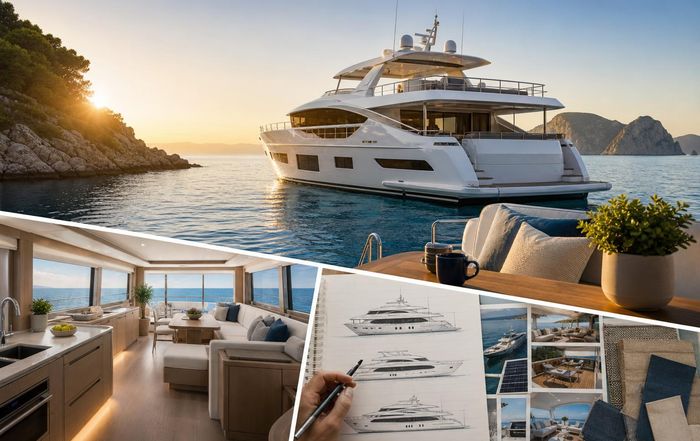
How to Choose the Right Yacht for Liveaboard Life
Choosing a yacht for full-time living is one of the most consequential decisions an owner can make, reshaping not only their cruising plans but their daily routines, finances and long-term lifestyle. For readers of yacht-review.com, where boats, cruising and design intersect with business, technology and sustainability, the question is no longer simply which yacht looks best at anchor, but which platform can reliably and comfortably support real life at sea over many years.
This article examines how prospective liveaboard owners can make disciplined, well-informed choices, drawing on the evolving practices of experienced cruisers, the latest developments in yacht design and propulsion, and the growing body of guidance from classification societies, regulators and industry associations.
Defining the Liveaboard Mission
The starting point for any serious selection process is a clear definition of the intended liveaboard mission. A yacht that works beautifully as a mobile waterfront apartment in Miami or the Côte d'Azur may be entirely unsuited to high-latitude passages or extended off-grid living in remote anchorages.
Liveaboard buyers increasingly begin by mapping their likely operational profile: coastal versus bluewater, seasonal versus year-round, and marina-based versus predominantly at anchor. Organizations such as World Cruising Club, which organizes the ARC transatlantic rally, regularly publish route advice and fleet reports that illustrate how very different yachts can successfully cross oceans when their capabilities are aligned with realistic expectations. Prospective owners who study such resources and speak with past participants often refine their ambitions in a more grounded direction, which then narrows the field of suitable designs.
From the perspective of yacht-review.com, it is helpful to think of three broad liveaboard archetypes. There is the coastal or regional cruiser who spends much of the year within a familiar cruising ground and values comfort and dockside amenities. There is the bluewater voyager who intends to cross oceans, accept longer passages and prioritize self-sufficiency. Finally, there is the hybrid owner who may be based in one region but plans periodic extended expeditions. Each profile points toward different compromises in hull type, rig or propulsion, tankage, storage and systems complexity, and it is the clarity of this mission statement that prevents expensive misalignment later.
Readers exploring different mission profiles can find practical impressions in the long-form boat evaluations on the yacht-review.com reviews section at yacht-review.com/reviews.html, where real-world use cases increasingly feature alongside technical commentary.
Choosing Between Sail, Power and Multihulls
The classic liveaboard debate remains whether to choose sail or power, and in recent years whether to opt for a monohull or multihull configuration. There is no universal answer; instead, there is a matrix of trade-offs that owners must evaluate against their mission and budget.
Sailing monohulls continue to dominate long-distance cruising fleets, in part because of their proven track record, relative fuel independence and generally lower acquisition and operating costs for a given length. Reports from events such as World Sailing's offshore safety seminars and the annual statistics published by Noonsite, a widely used cruising information portal, confirm that the majority of independently voyaging yachts remain sailing monohulls in the 35- to 55-foot range. For liveaboard sailors who value passage-making ability, manageable sail plans and the reassuring behavior of a ballasted hull in heavy weather, this remains a compelling solution.
Power yachts, by contrast, offer predictable schedules, easier handling in confined waters and large interior volumes, but they depend more heavily on fuel availability and impose higher running costs. The emergence of fuel-efficient displacement and semi-displacement trawler designs has broadened their appeal to liveaboard cruisers, with builders such as Nordhavn and Kadey-Krogen promoting long-range capabilities that rival many sailing yachts. Prospective owners comparing fuel burn, range and lifecycle costs increasingly consult independent technical analyses from sources such as Professional BoatBuilder and classification guidance from DNV or Lloyd's Register, which frame performance claims in a more rigorous context.
Multihulls, especially sailing catamarans, have seen a pronounced rise in popularity as liveaboard platforms, particularly in warmer regions. Their wide beam provides exceptional living space, privacy and shallow draft access to anchorages that many monohulls cannot reach. Industry data from builders such as Lagoon, Fountaine Pajot and Leopard show sustained demand for larger liveaboard-oriented models, a trend echoed in charter fleets and private ownership. However, multihulls introduce challenges in terms of marina berthing costs, availability of haul-out facilities, and in some cases more complex structural and rigging loads. Insurance requirements can also differ, and owners are well advised to study guidance from specialist marine insurers and organizations such as the International Union of Marine Insurance (IUMI), which periodically highlights risk trends in pleasure craft segments.
For readers comparing hull types and layouts, the design-focused articles in the yacht-review.com design section at yacht-review.com/design.html provide valuable context on how naval architects address these compromises in modern liveaboard-oriented yachts.
Getting Size and Layout Right for Real Life
Selecting the right length and layout is less about maximizing space and more about finding the smallest yacht that can comfortably support the intended lifestyle, while remaining manageable by the crew and financially sustainable. In the liveaboard context, "manageable" encompasses not only sailing or docking but also maintenance, systems oversight and the logistics of haul-outs, storage and insurance.
Industry surveys and anecdotal evidence from long-distance cruisers suggest that many couples find an optimal range between roughly 38 and 50 feet for sailing monohulls, with multihulls often running slightly larger to achieve equivalent payload and living space. Above these sizes, handling loads, dockage constraints and maintenance complexity tend to rise sharply. Organizations such as Cruising Club of America and Royal Yachting Association (RYA), which provide training and safety guidance, frequently emphasize that seamanship and crew capability are as important as length when judging what is appropriate for bluewater passages.
Layout decisions are equally critical. Liveaboard yachts benefit from generous storage, workable galley arrangements, secure sea berths, and easy access to machinery spaces for routine checks. Owners who have spent seasons aboard often stress the importance of dedicated workspaces, whether for remote business activity, technical projects or schooling, as remote work and "blue-nomad" lifestyles become more common. The interior should support both privacy and conviviality, with attention to natural light, ventilation and the ability to move safely in a seaway.
On yacht-review.com, the cruising-oriented content at yacht-review.com/cruising.html regularly highlights how different layouts perform over extended voyages, and readers can use these case studies to test their own assumptions about space, traffic flow and ergonomics.
Evaluating Build Quality and Seaworthiness
For a yacht that will serve as a primary residence, build quality and seaworthiness move from desirable attributes to non-negotiable requirements. A liveaboard yacht must not only survive heavy weather but must do so while protecting the systems and personal belongings that support daily life.
Prospective buyers are increasingly advised to look beyond glossy finishes and marketing materials to examine structural engineering, scantlings, bulkhead attachment, deck-to-hull joints and the quality of installations behind panels. Independent marine surveyors, particularly those accredited by bodies such as the Society of Accredited Marine Surveyors (SAMS) or the International Institute of Marine Surveying (IIMS), play a central role in this process. A pre-purchase survey tailored to liveaboard and offshore use will typically assess hull integrity, osmosis risk in older composites, rig condition on sailing yachts, grounding damage, and evidence of previous structural repairs.
Seaworthiness is also reflected in cockpit protection, companionway design, deck drainage, handhold placement and the ability to secure hatches and portlights in rough conditions. Regulatory frameworks, including the EU's Recreational Craft Directive (RCD) and associated design categories, offer a baseline, but many long-distance cruisers look for yachts that have a track record on demanding routes and that conform to or exceed relevant ISO and ABYC standards. Technical resources from organizations such as American Boat & Yacht Council (ABYC) and International Organization for Standardization (ISO) provide additional insight into best practice for systems and construction.
The historical evolution of bluewater yacht design, and how lessons from notable voyages have influenced modern standards, is explored in the yacht-review.com history section at yacht-review.com/history.html, which can help readers understand why certain features are still prized by experienced liveaboards.
Power Systems, Energy Management and Emerging Technologies
Energy independence has become a defining concern for liveaboard owners, as more onboard systems rely on electricity and as expectations for comfort, connectivity and office-grade functionality increase. The traditional model of relying primarily on a diesel generator is gradually giving way to more diversified energy strategies that combine solar, wind, hydrogeneration and high-capacity battery banks, supplemented by efficient alternators and, in some cases, hybrid propulsion.
Advances in lithium-ion battery technology, improved charge controllers and more efficient inverters now allow many liveaboard yachts to run refrigeration, communications, lighting and even moderate air-conditioning loads for extended periods without continuous generator use. However, these technologies require careful engineering, appropriate protective devices and adherence to safety standards. Guidance from ABYC, DNV and safety alerts published by national maritime authorities underline the importance of correct installation and thermal management for lithium systems, as well as the need for owner education.
Solar remains the backbone of many off-grid energy plans, with large rigid panels mounted on arches, biminis or hardtops. Wind generators and towed water generators provide additional redundancy, particularly on ocean passages. Owners considering more experimental technologies, such as fully electric propulsion or hydrogen fuel cells, should consult independent evaluations from sources like DNV's Maritime Forecasts and technical reports from International Council on Clean Transportation (ICCT), which offer sober assessments of current capabilities and infrastructure constraints.
The yacht-review.com technology section at yacht-review.com/technology.html follows these developments closely, helping liveaboard planners distinguish between robust, field-proven solutions and emerging concepts that may still be better suited to early adopters than to risk-averse long-term cruisers.
Comfort, Lifestyle and Mental Well-Being Afloat
A yacht that is technically capable but uncomfortable or poorly aligned with its owners' lifestyle will rarely serve as a happy home. Long-term liveaboards consistently emphasize the importance of ergonomics, climate control, noise levels, and the subtle psychological effects of light, color and spatial organization.
Ventilation and insulation are crucial for comfort across different climates. In tropical regions, a combination of effective shade, opening ports and hatches, fans and, where energy budgets permit, air-conditioning can transform daily life. In cooler or high-latitude environments, reliable heating, double-glazing and condensation control become essential. Guidance from organizations such as Royal Institute of Naval Architects (RINA) and technical articles in Practical Boat Owner and Yachting Monthly often highlight the importance of these "hotel" systems, which can be overlooked in favor of more glamorous equipment.
Noise and vibration management, particularly on power yachts and catamarans, also contributes significantly to perceived quality of life. Thoughtful mounting of machinery, sound insulation and the separation of sleeping quarters from noisy technical spaces are worth prioritizing, especially for owners who plan to work remotely or spend long periods aboard in marinas.
Social and psychological factors matter as much as technical ones. Many long-term cruisers report that a sense of community, whether in physical cruising hubs or via online forums and rallies, helps sustain the liveaboard lifestyle. Reputable organizations such as Ocean Cruising Club and Seven Seas Cruising Association facilitate knowledge sharing and mutual support among liveaboards worldwide. On yacht-review.com, the lifestyle-oriented articles at yacht-review.com/lifestyle.html explore how owners integrate fitness, culture, gastronomy and personal development into life afloat, offering inspiration that goes beyond hardware choices.
Financial, Regulatory and Insurance Considerations
From a business and financial perspective, a liveaboard yacht represents both an asset and an ongoing liability. Beyond the purchase price, owners must budget for maintenance, insurance, mooring or marina fees, periodic haul-outs, refits and eventual depreciation. Industry benchmarks often suggest annual running costs in the range of several percent of the yacht's value, but actual figures vary widely depending on cruising area, level of professional assistance and the owner's tolerance for deferred refit work.
Professional financial and legal advice can be valuable, particularly when considering flag state, ownership structures and potential charter activity. Resources from organizations such as Marine Money and legal briefings by maritime law firms provide insight into how different jurisdictions treat private and commercial yachts, VAT and import rules, and crew regulations. Owners planning to split time between multiple regions should also familiarize themselves with immigration and visa requirements, as highlighted in cruising guides and advisories from official sources such as U.S. Customs and Border Protection or the European Commission's Schengen information portals.
Insurance has become more complex in recent years, with some underwriters tightening requirements for older yachts, high-risk regions or extended bluewater passages. Prospective liveaboards are well advised to discuss their plans with specialist brokers early in the selection process, as insurers may have minimum standards for survey findings, rig age, storm season avoidance and crew qualifications. Industry associations such as International Yacht Brokers Association (IYBA) and Superyacht UK regularly note that early alignment between buyer, broker, surveyor and insurer reduces later friction.
For those considering the broader economic and industry context, the yacht-review.com business section at yacht-review.com/business.html examines market trends, brokerage dynamics and regulatory developments that can influence both the availability and long-term value of liveaboard-capable yachts.
Sustainability and Responsible Cruising Choices
Sustainability is no longer a niche concern in yachting; it is increasingly central to how responsible owners specify and operate their vessels. For liveaboards, who spend extended periods in sensitive marine environments and often become de facto ambassadors of the cruising community, the stakes are particularly high.
Technical advances in more efficient hull forms, renewable energy integration and waste management systems are helping to reduce the environmental footprint of long-term cruising. Organizations such as Water Revolution Foundation and Sailors for the Sea, an affiliate of Oceana, provide science-based guidance on cleaner antifouling strategies, grey and black water management, plastic reduction and wildlife-friendly anchoring practices. Owners who study these resources can make more informed choices about bottom paint, holding tank capacity, watermakers, and the adoption of reusable rather than disposable products aboard.
Route planning also plays a role. By choosing slower, more direct passages and favoring sail over engine where practical, liveaboards can reduce fuel consumption significantly. Some owners are experimenting with biofuels where available, though reputable sources such as International Maritime Organization (IMO) and FuelEU Maritime policy documents caution that fuel quality, compatibility and lifecycle emissions must be carefully assessed.
The yacht-review.com sustainability section at yacht-review.com/sustainability.html regularly highlights best practices and innovations in this space, encouraging liveaboard owners to see environmental stewardship not as a constraint but as an integral part of a modern, future-proof cruising lifestyle.
Learning from Real-World Voyagers
While technical specifications and regulatory frameworks provide an essential foundation, some of the most valuable insights into choosing a liveaboard yacht come from those already living the life. Long-form interviews, refit reports and voyage narratives published by established outlets such as Yachting World, Cruising World and Sail Magazine offer grounded perspectives on what has worked and what has not over many seasons.
Patterns emerge from these accounts. Owners often report that initial priorities such as maximum speed or the latest electronics fade in importance compared with reliability, ease of maintenance and the ability to live comfortably in a wide range of conditions. Many stress that they would, in hindsight, invest earlier in robust ground tackle, energy systems and weather information tools, and be more conservative about pushing departure dates in marginal conditions. Safety guidance from bodies such as RYA, US Sailing and World Sailing reinforces the principle that a well-found yacht, prudently handled, is the cornerstone of successful long-term cruising.
At yacht-review.com, the editorial team places particular emphasis on these lived experiences, integrating them into both yacht evaluations and destination coverage. Readers can explore global cruising stories and regional insights through the travel-oriented content at yacht-review.com/travel.html and yacht-review.com/global.html, which together illustrate how different yachts perform in varied cultural and climatic contexts.
A Structured Path to the Right Liveaboard Yacht
For those contemplating a transition to full-time life afloat, the decision process can feel daunting, but a structured approach helps transform aspiration into a practical plan. Defining a realistic mission, understanding the trade-offs between sail and power, monohull and multihull, and carefully matching size and layout to crew capability and budget form the foundation. From there, disciplined attention to build quality, systems engineering, energy management, comfort, financial planning and sustainability ensures that the chosen yacht is not only a beautiful object but a resilient, efficient and inspiring home.
The liveaboard community continues to evolve, shaped by remote work trends, advances in technology and a renewed appreciation for slow, experiential travel. As more owners share their journeys and as designers, builders and regulators respond with better-informed products and standards, prospective liveaboards have more resources than ever to guide their choices. By engaging with authoritative technical sources, learning from experienced cruisers and reflecting honestly on their own priorities, readers of yacht-review.com can navigate the selection process with confidence.
For ongoing coverage of new models, refits and industry developments that affect liveaboard decisions, the news and boats sections at yacht-review.com/news.html and yacht-review.com/boats.html provide regularly updated insights, while yacht-review.com serves as a hub for the broader conversation about how to live well, travel widely and act responsibly on the world's oceans.