

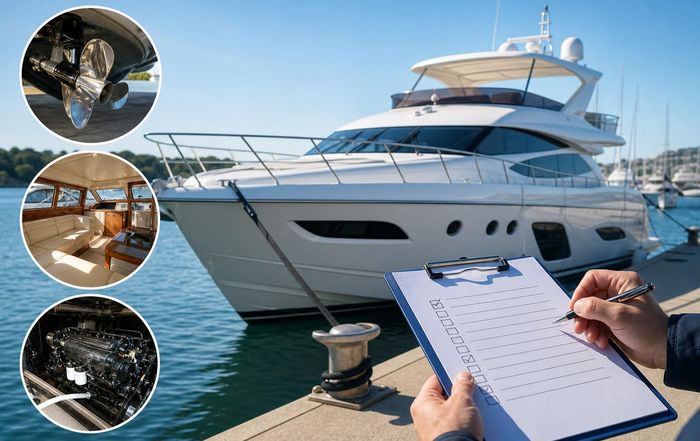
Yacht Survey Basics for First-Time Buyers
Yacht ownership begins long before any contract is signed or champagne is broken across a bow. For first-time buyers, the most decisive step in that journey is the pre-purchase survey, a structured, professional inspection that transforms a beautiful object of desire into a clearly understood asset. So the editorial team has seen, again and again, that buyers who approach surveys with preparation and the right expert support tend to enjoy smoother transactions, safer cruising, and stronger long-term value.
This feature introduces the fundamentals of yacht surveys for newcomers, explains how the process works in practice, and highlights how it fits into the broader ecosystem of yacht design, ownership, and operation. It draws on guidance from surveyor associations, classification societies, and leading industry bodies, and is written for readers who may be looking at their first serious purchase in the United States, Europe, or other mature yachting markets.
Why a Yacht Survey Matters More Than the Listing
A yacht listing tells a story curated by the seller or broker. A survey tells the story written in fiberglass, metal, electronics, and maintenance records. For a first-time buyer, the survey is both a risk-management tool and a learning experience that provides a realistic picture of what day-to-day ownership will actually entail.
In most established markets, reputable lenders and insurers will not finalize financing or coverage for a used yacht without a recent, independent survey. Organizations such as the American Boat and Yacht Council (ABYC) and the International Council of Marine Industry Associations (ICOMIA) have helped standardize expectations around safety and construction, and professional surveyors frequently reference these guidelines when assessing a vessel. A buyer who relies only on a sea trial and a visual walk-through is effectively accepting unknown structural, mechanical, and regulatory risks that can easily exceed any perceived savings in the purchase price.
For people exploring models and builders on the boats overview page, understanding survey fundamentals helps frame each potential yacht not just as a lifestyle object but as a complex technical system that must be evaluated on objective terms.
Types of Surveys First-Time Buyers Will Encounter
Although "survey" is often used as a catch-all term, several distinct types of inspection exist, each with its own scope and purpose. First-time buyers typically encounter three primary categories.
Pre-purchase (condition and valuation) survey
The pre-purchase survey is the most comprehensive and is the standard for used-yacht transactions. The surveyor inspects the hull, deck, superstructure, systems, and equipment to determine overall condition, identify deficiencies, and estimate a fair market value. This report forms the backbone of purchase negotiations and is usually the document that lenders and insurers rely on when making their own decisions.
Associations such as the Society of Accredited Marine Surveyors (SAMS) and the National Association of Marine Surveyors (NAMSGlobal) describe this format as the most detailed and time-consuming, often requiring a full day or more for yachts in the 40-80 foot range. Buyers who are considering larger custom vessels or complex refit projects should anticipate multiple days of on-site work and follow-up analysis.
Insurance survey
An insurance survey is usually more limited in scope and focuses on safety, structural integrity, and compliance with relevant standards. Insurers want to know whether the yacht is a reasonable risk to cover, whether any immediate hazards exist, and whether certain repairs or upgrades should be mandatory. For a first-time buyer, an up-to-date pre-purchase survey often satisfies this requirement, but older yachts or those with known issues may need a dedicated inspection.
Appraisal or valuation survey
In some cases, a buyer or owner may request a valuation-only survey, for example when refinancing, donating a vessel, or settling an estate. This type of survey typically does not include the same level of systems testing or haul-out inspection as a full pre-purchase survey, and therefore is not a substitute when evaluating a yacht before buying.
For readers comparing survey expectations across markets, resources such as Lloyd's Register and Bureau Veritas provide insight into how commercial and large yacht standards influence the broader industry, even when a vessel is privately registered.
Choosing the Right Surveyor: Independence and Credentials
From the perspective of yacht-review.com, the single most important decision a first-time buyer makes in the survey process is the choice of surveyor. Independence, relevant experience, and recognized credentials are crucial.
Reputable marine surveyors generally operate as independent professionals who are not financially tied to the seller, broker, or yard. Industry bodies such as SAMS and NAMSGlobal maintain directories of accredited surveyors and outline their training, continuing education, and ethical standards. These organizations do not guarantee performance, but they do provide a baseline of professionalism that is difficult to replicate in unaccredited practice.
For buyers in Europe, surveyors may also be members of regional professional groups and may have experience working with classification societies or flag-state administrations. Understanding whether a surveyor has particular expertise in sailboats, motor yachts, composite construction, or steel and aluminum hulls can be decisive, especially when considering complex designs or advanced materials. Readers interested in how these technical choices affect performance and maintenance can explore design-focused analysis on the yacht-review.com design section.
In practical terms, a first-time buyer might request sample reports, confirm insurance and liability coverage, and discuss the intended scope before engagement. A professional surveyor will typically welcome clear expectations and will explain what can and cannot be covered within a standard pre-purchase inspection.
What a Pre-Purchase Survey Actually Covers
While each surveyor has a unique style and methodology, most comprehensive pre-purchase surveys follow a recognizable pattern. For a buyer, understanding this structure in advance helps frame questions and interpret the final report.
Documentation and preliminary review
The process often begins with a review of ownership documents, registration or flag details, and, where available, maintenance and refit records. A well-documented service history can support both valuation and confidence in the yacht's condition. Regulatory guidance from authorities such as the U.S. Coast Guard and the UK Maritime and Coastguard Agency (MCA) influences what constitutes proper documentation for certain classes and sizes of yacht, especially when they are operated commercially.
For buyers who anticipate long-range cruising or charter operations, aligning survey findings with compliance requirements, such as the MCA Large Commercial Yacht Code, can prevent costly surprises later. Those planning extended voyages may wish to connect these considerations with destination-focused advice in the yacht-review.com cruising features.
Hull and structural inspection
A core component of any survey is the structural assessment. For fiberglass yachts, surveyors typically sound the hull and deck with a mallet or hammer, looking for changes in tone that may indicate voids, delamination, or water intrusion. Moisture meters and, in some cases, thermal imaging or more advanced non-destructive testing methods may be used to investigate suspect areas. For metal hulls, attention is paid to corrosion, plating thickness in critical areas, and the condition of welds and internal framing.
The yacht is generally hauled out so that the underwater body, keel, rudders, shafts, propellers, and through-hull fittings can be inspected. Surveyors look for evidence of grounding, blistering, damage repairs, or galvanic corrosion. Classification societies such as DNV and RINA publish rules and guidance on hull construction and maintenance that, while primarily aimed at commercial and large yachts, inform best practices across the sector and provide context for surveyor comments.
Deck, superstructure, and fittings
Surveyors also examine the deck, superstructure, windows, hatches, and external fittings for signs of leaks, stress cracking, or poor repairs. On sailing yachts, rigging, chainplates, and mast steps are inspected visually, and any corrosion or deformation is documented. Although a full rigging inspection may fall outside the standard survey scope and may require a specialist rigger, an experienced surveyor will flag visible concerns and recommend further evaluation where appropriate.
Machinery and systems
The condition of engines, generators, and auxiliary systems significantly influences both safety and long-term ownership cost. During a survey, machinery is typically inspected visually, with attention paid to signs of leaks, corrosion, alignment, and mounting. Oil analysis, compression testing, or borescope inspections may be recommended for higher-value transactions or older engines, though these are often treated as optional add-ons.
Electrical systems, fuel systems, plumbing, and HVAC equipment are evaluated for installation quality and general condition. Surveyors often reference standards such as those issued by ABYC or the International Organization for Standardization (ISO) when assessing wiring, overcurrent protection, and grounding practices. For first-time buyers considering advanced onboard technologies, the yacht-review.com technology coverage offers additional context on how modern systems can enhance safety and comfort when properly installed and maintained.
Safety equipment and regulatory compliance
Safety gear is typically checked for presence, condition, and, where applicable, expiration dates. This includes lifejackets, life rafts, flares, fire extinguishers, bilge pumps, and emergency signaling devices. Compliance requirements differ by flag state and intended operating area, so surveyors often note where equipment falls short of local or regional regulations.
Resources such as the Royal National Lifeboat Institution (RNLI) in the United Kingdom and the U.S. Coast Guard Boating Safety Division provide detailed public guidance on minimum safety equipment standards and best practices. A first-time owner who understands these fundamentals before commissioning a survey is better prepared to interpret recommendations and prioritize upgrades.
Sea trial
When possible, a sea trial is conducted in conjunction with the survey to observe the yacht under power and, for sailing vessels, under sail. The surveyor monitors engine performance, steering response, vibration levels, and the behavior of key systems. Issues such as overheating, abnormal noise, or steering irregularities can be more readily identified underway than at the dock.
For buyers who envision extended passages or bluewater cruising, the sea trial is also a chance to reflect on ergonomics and comfort. How the yacht feels in motion, how easily systems are accessed, and how crew can move safely around the deck are all practical considerations that complement the more technical findings documented in the survey report. Readers can relate these impressions to real-world experiences shared in the yacht-review.com travel features, where long-distance voyages are often discussed in detail.
Understanding the Survey Report: From Findings to Negotiations
Once the on-site work and sea trial are complete, the surveyor prepares a written report, usually delivered within several days. For a first-time buyer, this document can seem dense, but it is essentially organized around three themes: description, condition, and recommendations.
The report typically begins with general vessel data, including make, model, year, dimensions, and identification numbers, followed by a narrative description of the inspection scope and limitations. It then presents findings, often grouped by system or location, and assigns a condition or priority level to each item. Some surveyors distinguish between critical safety issues, significant defects, and cosmetic or routine maintenance items, which helps buyers and sellers focus discussions.
Valuation is another key component. Surveyors draw on market data, comparable listings, and their own experience to estimate fair market and replacement values. For high-profile or custom yachts, data from brokerage houses and industry analyses can supplement this assessment, though the surveyor's independent judgment remains central. Platforms such as BoatUS and Yachting Magazine periodically publish market overviews and ownership guidance that help contextualize how survey-based valuations align with broader industry trends.
From the perspective of yacht-review.com, the most constructive way for a first-time buyer to use the survey report is as a negotiation roadmap rather than a simple pass/fail verdict. A report that identifies several moderate issues but no structural or safety-critical defects may still support a successful purchase, provided the buyer and seller can agree on repair responsibilities or price adjustments. Conversely, serious structural or safety findings may justify walking away, even from a yacht that initially seemed ideal.
Integrating Surveys into the Broader Buying Process
A yacht survey does not exist in isolation; it sits alongside brokerage advice, legal review, financing, and insurance. First-time buyers benefit from understanding how these components interact.
In many jurisdictions, standard purchase agreements include a survey contingency, allowing the buyer to withdraw or renegotiate based on survey findings within a defined timeframe. Legal counsel familiar with maritime transactions can help ensure that this language is clear and enforceable. Industry organizations such as the International Yacht Brokers Association (IYBA) publish model contracts and guidance that illustrate how survey contingencies are commonly structured.
Financing institutions and insurers typically require the survey report before final approval. They may impose conditions, such as completion of specific repairs or upgrades within a set period. Buyers who plan to charter their yacht or operate it commercially may face additional survey and inspection requirements under flag-state or classification rules. The yacht-review.com business section frequently explores how evolving regulations and market practices influence the economics of yacht ownership and charter operations.
For readers who enjoy comparative reviews and real-world feedback, the yacht-review.com reviews hub offers insights that complement survey findings by focusing on how yachts perform and age in use, not just how they appear at the point of sale.
Sustainability, Refits, and the Evolving Role of Surveys
As environmental expectations and regulations evolve, the scope and emphasis of yacht surveys are gradually changing. Surveyors today are more likely to encounter hybrid propulsion systems, advanced battery banks, alternative fuels, and more sophisticated waste and water-management systems than they did even a decade ago. These technologies can offer significant benefits in fuel efficiency, emissions reduction, and onboard comfort, but they also introduce new complexities in terms of safety, maintenance, and lifecycle cost.
Organizations such as the Water Revolution Foundation and SeaKeepers Society promote more sustainable practices in yacht design, construction, and operation, while classification societies and regulatory bodies are developing frameworks for alternative propulsion and energy systems. For first-time buyers, this means that surveys increasingly need to address not just whether systems function, but also whether they are installed and managed in line with emerging standards and best practices. Readers interested in the intersection of yachting and environmental responsibility can explore more on the yacht-review.com sustainability pages.
Refits are another context in which surveys play a critical role. A buyer considering an older yacht with plans for a major refit should treat the pre-purchase survey as the foundation for a realistic project plan. The survey can identify structural and systems issues that must be addressed before or alongside cosmetic work, helping to avoid the common pitfall of underestimating refit scope and cost. For inspiration on how refits can transform classic yachts into modern, efficient cruisers, the yacht-review.com history section often highlights notable restoration projects and their technical challenges.
From Survey to Ownership: Setting Expectations for the First Years Afloat
The survey process does more than facilitate a transaction; it sets the tone for responsible ownership. A thorough report effectively becomes a baseline condition survey that owners can refer to during future maintenance, upgrades, and annual haul-outs. Items noted as "monitor" or "service soon" in the initial report can be tracked over time, allowing owners to plan work proactively rather than reactively.
For a first-time owner, the survey is also a practical education in how a yacht is put together and where its vulnerabilities lie. Many surveyors welcome buyer participation during the inspection, within safety and logistical limits, because it allows them to explain findings in context and answer questions directly. This interaction can demystify complex systems and encourage a more confident, hands-on approach to ownership.
Owners who continue to engage with industry news and best practices, for example through the news coverage and broader **lifestyle features](https://www.yacht-review.com/lifestyle.html), are better equipped to align their maintenance and upgrade decisions with evolving standards and technologies. Over time, this informed approach can support higher resale values, lower operating risks, and a more enjoyable experience on the water.
A Foundation for Confident Cruising
For many readers of yacht-review.com, the dream of yacht ownership is rooted in images of quiet anchorages, bluewater passages, and time shared with family and friends. The pre-purchase survey may seem, at first glance, to belong to a different world of technical checklists, valuation spreadsheets, and regulatory acronyms. In practice, however, the survey is one of the most powerful tools for transforming that dream into a sustainable reality.
By choosing an independent, qualified surveyor, understanding the scope and limitations of the inspection, and using the final report as both a negotiation instrument and a long-term reference, first-time buyers can significantly reduce uncertainty and align their purchase with their cruising ambitions. Whether the goal is coastal weekends, transatlantic passages, or a future in charter operations, the survey process builds a foundation of knowledge and trust that supports every mile sailed thereafter.
As the global yachting community continues to evolve, with new technologies, sustainability imperatives, and emerging destinations, the role of the survey remains constant: to provide a clear, objective view of a vessel's condition at a specific moment in time. For first-time buyers, embracing that clarity is not merely a formality; it is the first real act of seamanship and stewardship that comes with becoming a yacht owner.
Folks who are beginning this journey are encouraged to continue exploring the broader world of yachting, from in-depth boat and yacht reviews to global perspectives on cruising and ownership in the international coverage. Armed with a solid understanding of survey basics, they will be better prepared to ask the right questions, make informed decisions, and ultimately enjoy the full measure of what life on the water can offer.