

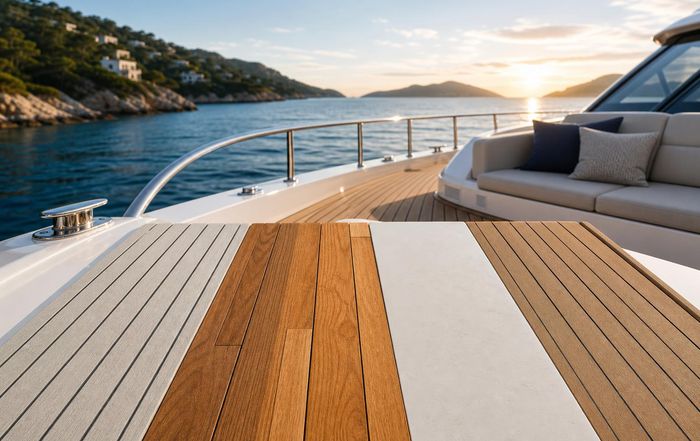
Best Deck Materials for Comfort and Durability
Selecting the right deck material is one of the most consequential decisions in yacht ownership, with long-term implications for comfort underfoot, maintenance workloads, resale value and even environmental impact. Across the global yachting community, from Mediterranean cruising grounds to Pacific passagemaking routes, owners and builders are revisiting long-held assumptions about traditional teak, exploring advanced composites and re-evaluating how deck surfaces contribute to safety, aesthetics and onboard lifestyle.
This article, written for boat and yacht loving individuals, examines the principal deck materials in use today, the innovations reshaping the market, and the practical trade-offs that experienced owners and professionals are weighing as they specify or refit their vessels.
Why Deck Material Choice Matters
Decking is more than an aesthetic choice. It is a working surface that must provide secure footing in wet and dry conditions, comfort in bare feet across a wide temperature range, resistance to abrasion and impact, and compatibility with the structure beneath. For cruising yachts, the deck is also a primary living area, where guests congregate, children play and crew operate under demanding conditions, often at night or in poor weather.
Beyond functional criteria, deck materials influence:
The acoustic character of the yacht, as some surfaces transmit or dampen noise more effectively; the thermal environment, with darker or denser materials often becoming significantly hotter in intense sun; the maintenance regime, since some surfaces require regular sanding, caulking or chemical cleaning; and the perceived quality of the vessel, as many buyers still associate certain materials, notably teak, with classic yachting luxury.
As yacht-review.com has highlighted in multiple boat reviews and sea trials, the best deck material is rarely an abstract winner but rather the one that aligns most closely with how a yacht is used, where it cruises, and what level of upkeep an owner is prepared to sustain.
Teak: The Benchmark Traditional Decking
For decades, teak has been regarded as the gold standard for yacht decking. Its natural oils, tight grain and relative dimensional stability have made it a preferred choice for builders from Feadship and Oceanco to performance yards such as Nautor Swan and Baltic Yachts.
Teak offers a combination of tactile warmth, non-slip properties when properly finished, and a visual character that many owners still consider irreplaceable. The wood can be finished in various ways, from a scrubbed natural silver-grey to oiled surfaces that deepen its colour, each approach influencing maintenance needs and long-term appearance. When laid and caulked correctly, a solid teak deck also has a forgiving feel underfoot, which can be particularly appreciated on long passages and during extended periods of standing at the helm.
However, the durability of teak decking is highly dependent on thickness, installation quality and maintenance. Traditional decks were often laid with planks more than 10 millimetres thick, mechanically fastened and designed to be sanded multiple times over their lifespan. Many modern production yachts have used thinner teak veneers, sometimes bonded over composite substrates, which can reduce weight and cost but may limit the number of heavy refinishings possible before replacement is required.
Environmental and sourcing concerns have become increasingly prominent. Natural teak is slow growing and historically has been associated with deforestation in parts of Southeast Asia. Reputable builders now emphasise certified sources, with organisations such as the Forest Stewardship Council promoting responsibly managed forestry, yet supply constraints and regulatory scrutiny have driven both price increases and industry-wide re-evaluation of alternatives.
For owners who prioritise authenticity, tactile quality and traditional aesthetics, teak remains compelling. Nonetheless, the combined pressures of cost, sustainability and maintenance are prompting many to consider engineered solutions that mimic teak's strengths while reducing its drawbacks.
Synthetic Teak and PVC-Based Decking
Synthetic teak, generally based on PVC or similar polymers, has matured significantly over the past two decades. Brands such as Flexiteek and Permateek have shifted perceptions from early, less convincing imitations to modern products that closely replicate teak's appearance while offering distinct performance advantages.
These systems are typically supplied as prefabricated panels or custom-templated layouts that are heat-welded or bonded into place. They aim to provide a non-slip surface, visual resemblance to real teak, and lower maintenance requirements. Owners of busy family cruisers, charter yachts and high-use dayboats often value the ability to clean synthetic decks with straightforward washing, without the need for regular sanding or careful scrubbing that can wear down natural wood.
Several manufacturers have introduced formulations that claim reduced surface temperature compared with earlier generations, responding to long-standing concerns that dark synthetic decks could become uncomfortably hot in tropical sun. Independent comparative testing reported by specialist marine media such as Yachting World and Boat International has indicated that while some modern synthetic products do run cooler than older versions, they may still become warmer than well-maintained natural teak in certain conditions, especially in darker colourways. Owners cruising in equatorial regions therefore often specify lighter tones and may incorporate additional shading solutions.
From a durability perspective, synthetic teak resists staining, does not splinter, and is unaffected by rot, although prolonged UV exposure can eventually lead to colour changes or surface wear. The lifespan of these products varies with formulation, climate and care, but many manufacturers position them as long-term solutions with multi-year warranties.
The environmental profile of PVC-based decking is more complex. While it reduces pressure on natural teak forests and eliminates the need for harsh teak cleaners, PVC production and end-of-life disposal raise questions about recyclability and microplastic generation. Some suppliers now promote partial recycling schemes or alternative polymers, yet independent life-cycle assessments remain relatively limited. Owners focused on responsible cruising often combine synthetic decks with broader measures such as reduced fuel consumption and lower-impact itineraries, as explored in the sustainability section of yacht-review.com.
Advanced Composites and Foam-Cored Solutions
Beyond teak and its synthetic analogues, advanced composite decking has gained ground, particularly in performance-oriented and large custom projects. These solutions often combine lightweight cores with high-tech skins, aiming to deliver strength, stiffness and weight savings while allowing a variety of surface finishes.
On racing yachts and high-performance cruisers, weight aloft is a critical factor, and builders increasingly specify thin non-slip coatings directly over composite structures instead of heavy timber decks. This approach, common in grand-prix sailing, has filtered into semi-custom and even some series production models. The resulting decks can be extremely durable and low maintenance, though they may lack the traditional warmth and visual richness associated with teak.
Some composite decks incorporate foam cores that provide thermal and acoustic insulation, reducing heat transfer into the interior and attenuating noise from footfalls or wave impacts. This can be particularly valuable on large motor yachts where guest comfort and privacy are paramount. The choice of topcoat or overlay-ranging from sprayed polyurethane systems to glued-down synthetic planks-determines the final aesthetic and underfoot feel.
Specialist coatings, including polyurethane-based non-slip paints, are widely used on workboats, expedition yachts and tenders. These products, supplied by companies such as Awlgrip and International Paint, offer customisable textures and colours, with maintenance largely limited to periodic cleaning and recoating. Industry guidance on marine coatings from sources like AkzoNobel and PPG underscores the importance of correct surface preparation and environmental conditions during application to ensure longevity and adhesion.
For owners commissioning new builds or major refits, composite and coated decks allow a high degree of design flexibility, which aligns with the evolving trends in yacht design and innovation. The trade-off is often a reduced sense of traditional luxury, which some owners address by combining composite working decks with teak or synthetic teak in guest areas.
Cork and Natural-Fibre Alternatives
Cork-based decking has emerged as a notable alternative for those seeking a natural, renewable material with strong comfort credentials. Products such as Marinedeck and other cork composites use granulated cork bound with resins to form planks or panels that can be laid in patterns similar to teak.
Cork offers several intrinsic advantages. It is naturally non-slip, even when wet, and has a softer, slightly cushioning feel underfoot that many owners describe as more forgiving than either teak or synthetic PVC. Its thermal properties help keep deck surfaces cooler in direct sun and provide modest insulation benefits. Being derived from the bark of cork oak trees, which can be harvested without felling the tree, cork is widely recognised as a renewable resource, and organisations such as WWF have highlighted sustainable cork forestry as a positive environmental model in Mediterranean regions.
Durability is influenced by the specific formulation and the quality of installation. While cork is resilient and compressible, it can be more vulnerable to sharp impacts and point loads if not properly supported. Most marine cork systems use a protective topcoat or sealing treatment to resist staining and UV degradation. Owners who have adopted cork on cruising yachts often cite a balance of comfort, safety and environmental appeal, though long-term comparative data across diverse climates is still developing.
Other natural-fibre approaches, including thermally modified woods and engineered timber products, are also under investigation by builders and material scientists. Some European yards have experimented with alternatives such as sustainably sourced iroko or modified ash, promoted as "teak-like" in appearance and performance. Independent assessments, including those discussed by the Royal Institution of Naval Architects, suggest that while some of these woods perform well in specific applications, they may not yet fully replicate teak's combination of dimensional stability and weathering behaviour in all marine environments. As a result, they are often used selectively or in combination with other materials.
EVA Foam and Soft Decking for Recreational Use
Foamed EVA (ethylene-vinyl acetate) decking, widely recognised from brands such as SeaDek, has become increasingly visible on smaller powerboats, RIBs, personal watercraft and swim platforms. These soft, closed-cell foam pads are typically CNC-cut to custom patterns and adhered directly to the substrate, offering a cushioned, non-slip surface that is particularly comfortable for barefoot use and watersports activities.
From a comfort perspective, EVA foam is highly regarded for its shock absorption and grip, which can reduce fatigue and provide a sense of security when moving around at speed or in choppy conditions. The material is also buoyant and does not absorb water. Colour and pattern options are extensive, allowing owners to personalise their decks and coordinate with upholstery or hull graphics, a trend that aligns with the lifestyle-driven customisation seen in many dayboat and cruiser reviews on yacht-review.com.
The main limitations relate to long-term durability and heat. In very strong sunlight, darker EVA surfaces can become hot, and while many products incorporate UV inhibitors, extended exposure may lead to fading or surface degradation over time. Heavy point loads, such as the sharp edges of metal furniture or dropped tools, can damage the foam. For these reasons, EVA is most often used on smaller craft and specific zones of larger yachts rather than as a full-deck solution on high-end superyachts.
From an environmental standpoint, EVA is a synthetic polymer, and while some manufacturers have begun exploring recycling programmes or lower-impact formulations, comprehensive independent life-cycle analyses are still limited. Owners focused on long-distance cruising and minimal maintenance often see EVA as a practical, user-friendly solution for platforms, cockpit soles and tender decks rather than a universal material.
Comfort, Safety and Thermal Performance
Across all materials, three experiential factors consistently influence owner satisfaction: comfort, safety and thermal behaviour. These considerations cut across brand preferences and aesthetic trends, and they are frequently highlighted in cruising reports and owner feedback.
Comfort underfoot depends not only on softness but also on micro-texture and resilience. Traditional teak, when properly maintained, offers a subtly yielding surface with a fine grain that is gentle on skin yet provides grip. Synthetic teak and cork composites aim to replicate or enhance this feel, while EVA foam emphasises cushioning. Hard composite decks with non-slip coatings can be very secure but may feel harsher during long periods of standing, especially for crew.
Safety is closely tied to slip resistance in both wet and dry conditions. International standards and classification societies provide guidelines for acceptable friction coefficients, and reputable manufacturers test their products accordingly. Real-world performance, however, also depends on contaminants such as sunscreen, spilled drinks or fuel residues. Many professional captains and shipyards stress the importance of regular cleaning and the avoidance of overly aggressive polishes or waxes that could reduce grip, regardless of the base material. Independent guidance from organisations like the Royal Yachting Association and US Coast Guard on safe deck practices reinforces that material choice is only one part of a broader safety culture.
Thermal performance has become a more visible differentiator as yachts spend longer periods in high-sun regions, from the Caribbean and Bahamas to the Eastern Mediterranean and Southeast Asia. Darker surfaces of almost any material will absorb more heat, but density, specific heat capacity and colour formulation all play roles. Owners and designers increasingly combine material selection with practical shading solutions, such as pergolas, awnings and retractable roofs, to ensure that primary guest areas remain usable throughout the day.
Maintenance and Lifecycle Considerations
The long-term cost and effort associated with deck maintenance can be as significant as the initial investment. Teak requires thoughtful care: over-aggressive scrubbing can erode the surface, while inappropriate cleaners can strip natural oils or damage caulking. Experienced captains often adopt gentle, frequent rinsing and periodic light cleaning with specialised teak products, a regime that has been documented in professional guidance from established yards and service providers.
Synthetic teak reduces many of these concerns, since it can typically be cleaned with soap and water, and light sanding can sometimes restore uniform appearance. However, owners must follow manufacturer instructions to avoid damaging welded seams or adhesives. Cork and EVA decks also have specific cleaning and protection requirements, particularly regarding solvents and high-pressure washing.
From a lifecycle perspective, the question of replacement and disposal is increasingly important. Natural teak, if responsibly sourced and maintained, can offer decades of service and is biodegradable, though removal and replacement can be labour-intensive and costly. Synthetic and composite systems may last similarly long but raise questions about recycling and end-of-life treatment. Some builders and suppliers are beginning to address this through take-back schemes and material innovation, aligning with broader trends in sustainable business practices in yachting.
Owners planning multi-year cruising programmes or considering eventual resale often view deck condition as a key indicator of overall care. A well-maintained deck, regardless of material, sends a strong signal to prospective buyers and surveyors, which can positively influence market value and time on the market.
Design, Lifestyle and Regional Preferences
Deck material selection also reflects lifestyle choices and regional influences. In Northern Europe, where cooler climates and shorter summers prevail, owners may prioritise thermal insulation and year-round practicality, often favouring lighter colours and materials that perform well in rain and low temperatures. In Mediterranean and tropical regions, the focus may shift towards heat management, barefoot comfort and integration with open-air social spaces.
High-end superyacht clients frequently still request teak for its association with classic luxury and the visual continuity it offers from foredeck to swim platform. However, some of the most forward-looking custom projects, including hybrid-powered and expedition-style yachts, have embraced alternative materials as part of a broader narrative of innovation and environmental responsibility. Coverage from outlets such as Superyacht Times and Boat International has highlighted recent launches where cork, synthetic teak or advanced composites feature prominently in guest-facing areas, signalling a gradual but meaningful cultural shift.
For owners whose yachting life revolves around family activities, watersports and informal entertaining, softer and more forgiving surfaces on swim platforms and cockpits can enhance enjoyment and reduce the risk of minor injuries. This family-oriented perspective is reflected in many of the lifestyle-focused features, where real-world usability often ranks as highly as pure aesthetics.
Emerging Trends and Future Directions
Material science and environmental expectations are driving rapid evolution in deck technologies. Several trends are particularly noteworthy for owners and industry professionals monitoring the market.
First, there is growing interest in bio-based polymers and recycled content within synthetic decking. Some manufacturers are experimenting with incorporating recycled plastics or bio-derived resins, aiming to reduce reliance on virgin petrochemicals while maintaining performance. Independent verification of these claims, through third-party certifications or environmental product declarations, will be critical to building trust.
Second, digital manufacturing and customisation are reshaping how decks are designed and installed. CNC cutting, 3D scanning and templating, and parametric design tools allow more precise fits, complex patterns and integration of lighting or hardware. This digital approach supports the broader shift towards bespoke solutions that reflect each owner's aesthetic and functional priorities, an evolution that aligns with the personalised experiences highlighted in global yachting coverage.
Third, there is a steady convergence between deck materials and onboard technology. Non-slip coatings that incorporate reflective pigments, surfaces designed to work optimally with integrated deck heating in colder climates, and materials compatible with embedded sensors or smart-lighting systems are moving from concept to reality. Industry analysis from organisations such as DNV and the International Council of Marine Industry Associations (ICOMIA) points to continued innovation at the intersection of materials, safety and digital systems, which readers can explore further through specialised marine technology resources.
Finally, regulatory and classification frameworks may increasingly influence material choice. As environmental regulations evolve and class societies refine their guidance on fire performance, emissions and sustainability, certain materials may gain or lose favour. Owners commissioning new builds or major refits are well advised to engage early with naval architects, classification societies and experienced shipyards to ensure that their preferred decking solutions align with both current and anticipated standards.
Choosing the Right Deck for Each Yacht
For the professional and aspirational audience of Yacht Review, the central question is not whether one material is universally superior, but how to match the deck solution to the vessel's mission profile, cruising grounds and ownership style.
A long-range bluewater cruiser, expected to operate with a small crew in varied climates, may benefit from a low-maintenance synthetic or composite deck that balances comfort and durability with minimal upkeep. A bespoke superyacht designed as a showcase of craftsmanship and traditional elegance may still justify the investment in certified natural teak, perhaps complemented by cork or foam surfaces in select areas to enhance guest comfort. A high-use family dayboat or watersports platform might prioritise EVA foam in key zones for safety and barefoot enjoyment, accepting a shorter replacement cycle as part of its active lifestyle.
In every case, informed decision-making depends on clear, verified information rather than marketing claims alone. Owners and project teams are increasingly drawing on independent testing, expert consultancy and real-world feedback from peers. Resources such as yacht-review.com's news and analysis, historical perspectives on yacht construction and cruising and travel features provide additional context on how deck materials perform over time and across diverse operating environments.
As the industry continues to innovate, the most successful deck solutions are likely to be those that combine proven durability with enhanced comfort, reduced environmental impact and a design language that resonates with contemporary owners. Whether through responsibly sourced timber, advanced composites, renewable natural materials or next-generation synthetics, the evolution of yacht decking reflects a broader commitment to thoughtful, future-oriented yachting-one that places equal value on the experience of being on deck today and the responsibility of preserving the oceans for tomorrow.